← Back to Insights
Aclymate Team
March 12, 2026
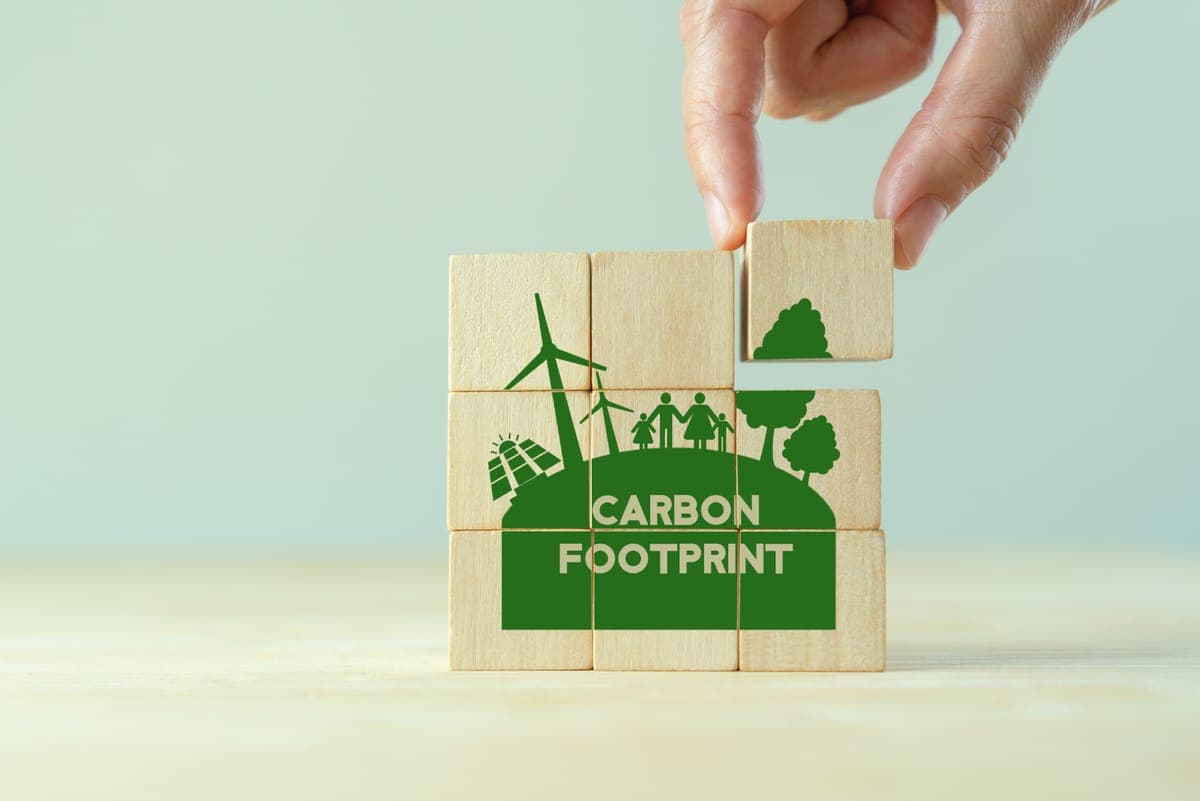
Sustainability has shifted from a voluntary initiative to a core business expectation.
Investors increasingly evaluate environmental performance before allocating capital. Enterprise buyers request emissions data from suppliers. Governments are introducing climate disclosure requirements across major markets. Customers expect transparency about environmental impact.
At the center of these expectations is one measurable concept: a company’s carbon footprint.
A carbon footprint reflects the greenhouse gas emissions produced by a business through its operations, energy use, supply chains, travel, and other activities. Understanding that impact allows organizations to identify inefficiencies, manage climate risk, and make better operational decisions.
Businesses that measure emissions gain a clear view of how their operations affect the climate. They can then prioritize improvements that both reduce environmental impact and strengthen long-term resilience.
Many organizations begin by learning how carbon footprint calculators work and how emissions are categorized across operations.
This guide walks through the complete carbon footprint journey for businesses, including:
By the end of this guide, you will understand how carbon footprint management moves from theory to practical business strategy.
A carbon footprint represents the total greenhouse gas emissions generated by an activity, organization, product, or individual.
In a business context, this includes emissions from:
If you'd like a deeper explanation, see our full guide on the carbon footprint definition.
Greenhouse gases included in carbon footprints typically include:
These gases are expressed in CO₂e (carbon dioxide equivalent) so their climate impact can be compared on a standardized scale.
Most businesses measure emissions using the Greenhouse Gas Protocol, which divides emissions into three categories.
Scope 1 — Direct emissions
These emissions come from sources a company directly controls, such as company vehicles or on-site fuel use.
Scope 2 — Energy emissions
These emissions come from purchased electricity, heating, or cooling used in operations.
Scope 3 — Value chain emissions
These emissions occur throughout the supply chain, including suppliers, logistics, product use, and employee commuting.
For most businesses, Scope 3 represents the largest share of total emissions, often accounting for more than 70 percent of a company’s carbon footprint.
Understanding emissions allows organizations to:
Companies that understand their carbon footprint are better positioned to adapt to evolving climate regulations and market expectations.

Measuring emissions is the foundation of any credible sustainability program.
Businesses typically rely on structured tools and standardized methodologies to convert operational activity into emissions data.
Calculating a carbon footprint requires more than a simple formula. Credible carbon accounting follows established methodologies, such as the Greenhouse Gas Protocol, to define organizational boundaries, collect activity data, apply emission factors, and calculate emissions across Scope 1, Scope 2, and Scope 3.
This structured approach ensures emissions data is consistent, transparent, and useful for decision-making.
To learn more about the frameworks and methods used in carbon accounting, explore our guide on carbon footprint methodology.
A carbon footprint calculator is a tool that estimates greenhouse gas emissions produced by business activities.
These calculators convert operational data into emissions values expressed in CO₂e.
Learn more in our full guide on what a carbon footprint calculator is.
Typical emissions sources measured include:
Carbon footprint calculators provide the baseline measurement businesses need to begin managing sustainability.
Carbon footprint calculators follow a consistent methodology:
Activity data × emission factors = emissions
If you want to explore this process in detail, see our guide to business carbon footprint calculators.
Operational inputs may include:
Emission factors convert this activity data into emissions using scientific datasets from organizations such as the EPA and the Intergovernmental Panel on Climate Change.
As businesses grow, emissions calculations become more complex.
A company carbon footprint calculator must account for:
For a deeper look at these systems, explore our guide to company carbon footprint calculators.
Modern platforms automate much of this work, making it easier for businesses to track emissions across operations.
Choosing the right emissions measurement tool depends on your company’s complexity and sustainability goals.
Key considerations include:
A strong carbon accounting foundation ensures emissions data is reliable enough for reporting and strategic planning.
Once emissions are measured, businesses interpret results by:
These insights help organizations prioritize actions that deliver meaningful reductions.
After calculating emissions, businesses typically break their carbon footprint down by source.
Common categories include:
Many organizations discover that supply chains drive the majority of their emissions.
This insight helps leadership teams focus on the highest-impact opportunities for reduction.
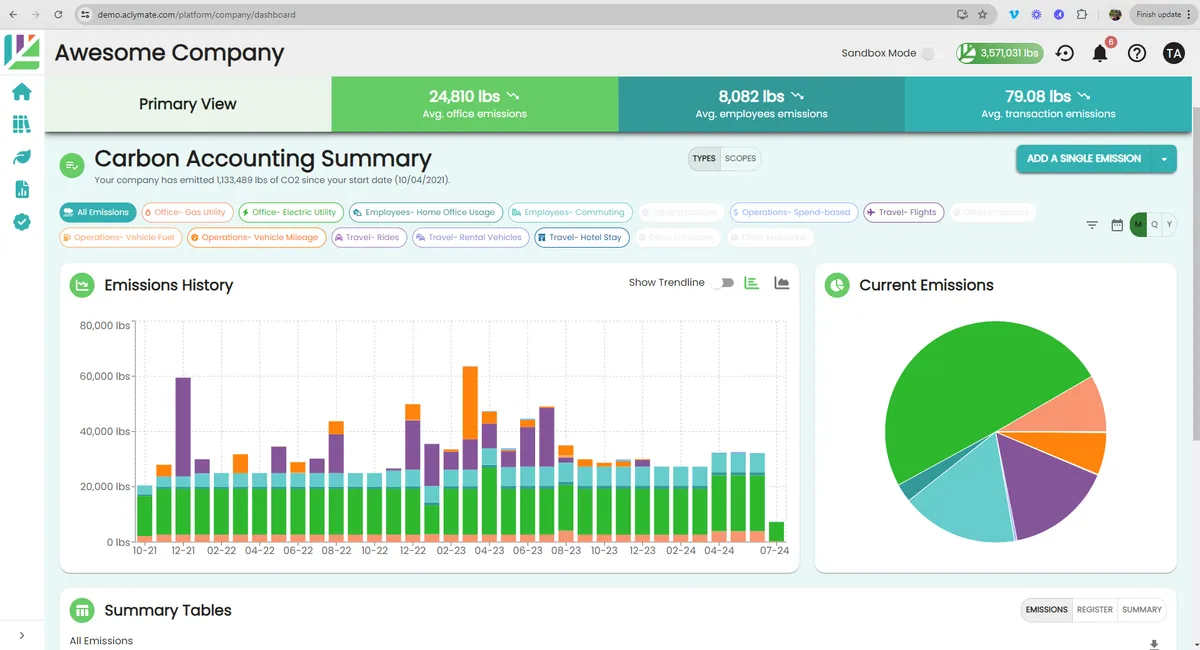
While calculators estimate emissions, businesses often need more advanced platforms to manage sustainability programs.
These platforms are known as carbon footprint apps.
Explore our overview of the best carbon footprint apps for businesses.
Carbon footprint apps typically provide:
These tools allow companies to manage sustainability data at scale.
Once emissions are measured, companies can begin implementing reduction strategies.
For a full breakdown of reduction methods, see our guide on how to reduce business carbon footprint.
Common reduction strategies include:
Energy efficiency improvements
Renewable energy adoption
Travel optimization
Supply chain improvements
Waste reduction
Many of these improvements reduce operational costs while lowering emissions.
Some businesses go beyond emissions reduction and pursue carbon neutrality.
A carbon neutral company balances the greenhouse gases it produces with an equivalent amount removed or offset.
Learn more in our full guide on what it means to be a carbon neutral company.
The typical pathway includes:
Carbon neutrality is often the first milestone on a longer path toward net-zero emissions.
Sustainability initiatives succeed when employees understand how emissions work.
Many companies build awareness through internal training programs and knowledge assessments.
One engaging way to do this is through a carbon footprint quiz.
These quizzes help employees understand:
Improving carbon literacy across teams strengthens sustainability programs and encourages smarter operational decisions.
Carbon footprint measurement increasingly supports regulatory compliance and ESG reporting.
Organizations commonly report emissions using frameworks such as:
Large companies are also requesting emissions data from suppliers as part of procurement processes.
Accurate carbon accounting ensures businesses can respond confidently to these reporting requirements.
Managing a carbon footprint is not a one-time project. It requires ongoing measurement, monitoring, and improvement.
Aclymate helps businesses simplify this process by combining carbon accounting technology with expert guidance.
With Aclymate, organizations can:
Rather than relying on manual spreadsheets, companies gain a structured system for managing sustainability data.
If your organization is ready to measure, reduce, and report its emissions, explore how Aclymate can support your carbon footprint strategy.
Carbon footprint management is becoming a fundamental part of modern business operations.
Companies that measure emissions gain clarity.
Companies that reduce emissions gain efficiency.
Companies that report emissions gain trust.
The path forward begins with understanding your carbon footprint and building a strategy based on reliable data.
Whether your goal is regulatory readiness, operational efficiency, or climate leadership, structured carbon accounting provides the foundation for long-term sustainability success.
Get Aclymate's practical sustainability content delivered weekly.

AI is creating new opportunities for businesses, but it also comes with an environmental cost. Carbon offsets can help address some of those emissions, but businesses need to understand what they are offsetting, how offsets work, and why measuring and reducing emissions should come first.
Read Article
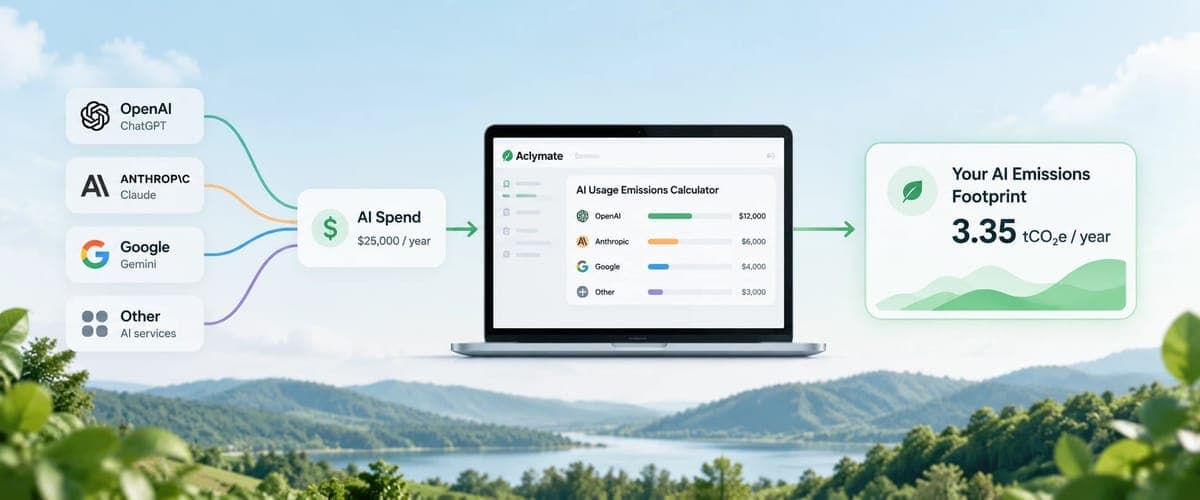
AI carbon emissions are becoming a new consideration for companies adopting ChatGPT, Claude, Gemini, Copilot and other artificial intelligence tools. Here’s how Aclymate estimates the carbon emissions from a company’s AI usage today—and how we expect the methodology to improve as AI providers release better usage and emissions data.
Read Article
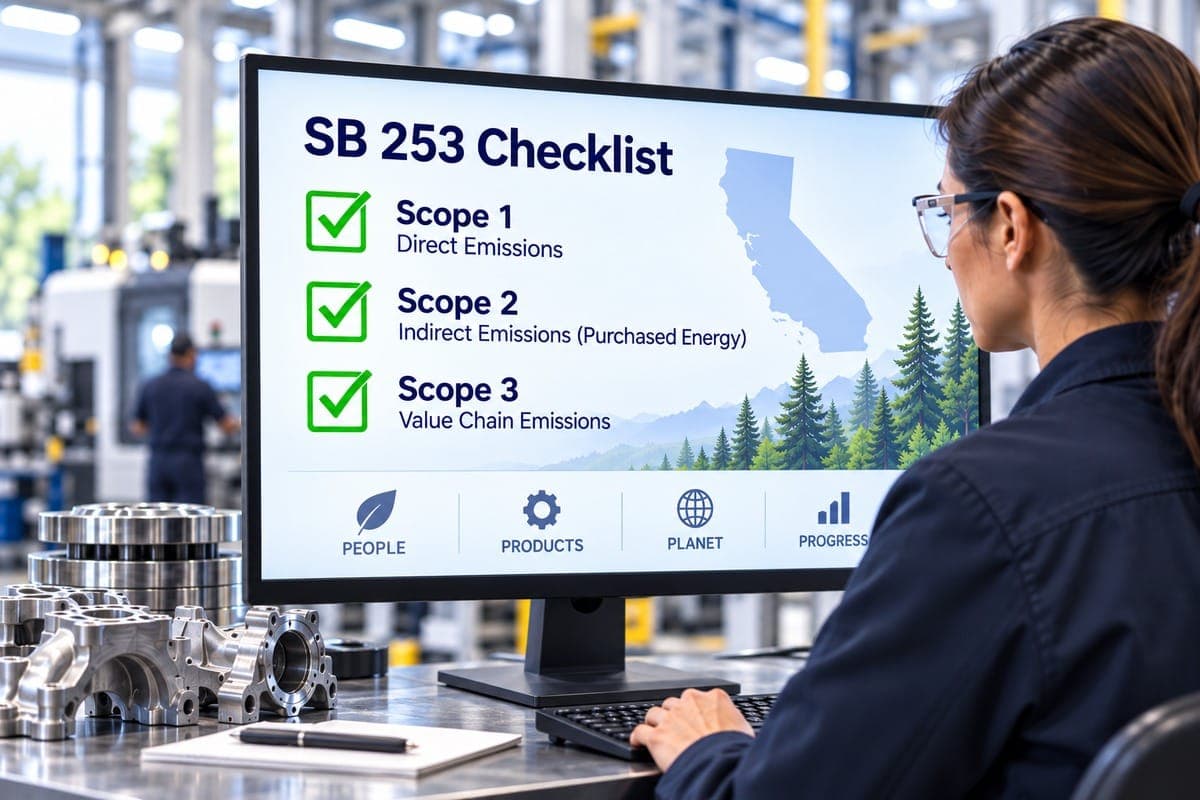
California SB 253 applies to companies over $1B in revenue — but its Scope 3 requirement reaches the automotive suppliers underneath them. What to expect and how to prepare.
Read Article
Talk with a Sustainability Expert, see a demo, or start free to put the Aclymate platform and experts to work for your team.