← Back to Insights
Aclymate Team
November 12, 2025

Many small business owners want to operate more sustainably but feel stuck. You may lack in-house sustainability expertise or the budget to hire consultants.
After all, managing carbon emissions, tracking waste, or staying on top of new regulations seems overwhelming when you’re already juggling daily operations.
The good news is that sustainability doesn’t have to be expensive or complicated. With the right approach, you can create a small business sustainability plan that cuts costs and reduces your environmental impact.
This guide breaks down the steps to building an effective sustainability plan for small businesses.
To develop a successful plan, you should first understand the definition of sustainability.
Many small business owners confuse the term “going green” with being sustainable. Green business practices focus on reducing environmental harm, while sustainability is a broader concept. It involves building long-term systems that balance growth with environmental responsibility.
Sustainability goes far beyond recycling bins or switching to renewable energy. It is about managing your company’s impact on people, profit, and the planet, which is known as the triple bottom line.
In other words, think about more than just profit. Consider how your business operations affect your employees, customers, suppliers, and the environment.
When you start to see your organization as part of a connected ecosystem, sustainability becomes an important business strategy and helps you to avoid the false choice between economic success and environmental outcomes.
Once you understand what sustainability means for your small business, the next step is to find out where you stand.
Conduct a sustainability audit to identify how your company uses resources and where waste or emissions occur.
This involves reviewing your energy bills, water usage, transportation habits, and material purchases. Search for patterns, such as high utility costs or excessive packaging, that reveal inefficiencies.
Gather data from every part of your operation, including your supply chain, to understand your overall environmental impact. If possible, measure your waste output and note where products end up after use.
The goal is to create a clear snapshot of your current environmental performance. Once you have the numbers, you can prioritize the biggest problem areas.
Regulatory compliance is the foundation of any sustainability plan. It protects your company from fines and shows customers you take responsibility seriously.
You need to learn the environmental laws and regulations that apply to your operations. Start by researching local, state, and federal environmental requirements for your industry.
Here are the key U.S. regulations that affect many small companies:
After fully understanding your operations and legal obligations, the next step is to measure your business’s carbon footprint.
This means calculating the total greenhouse gas emissions your company produces, directly and indirectly.
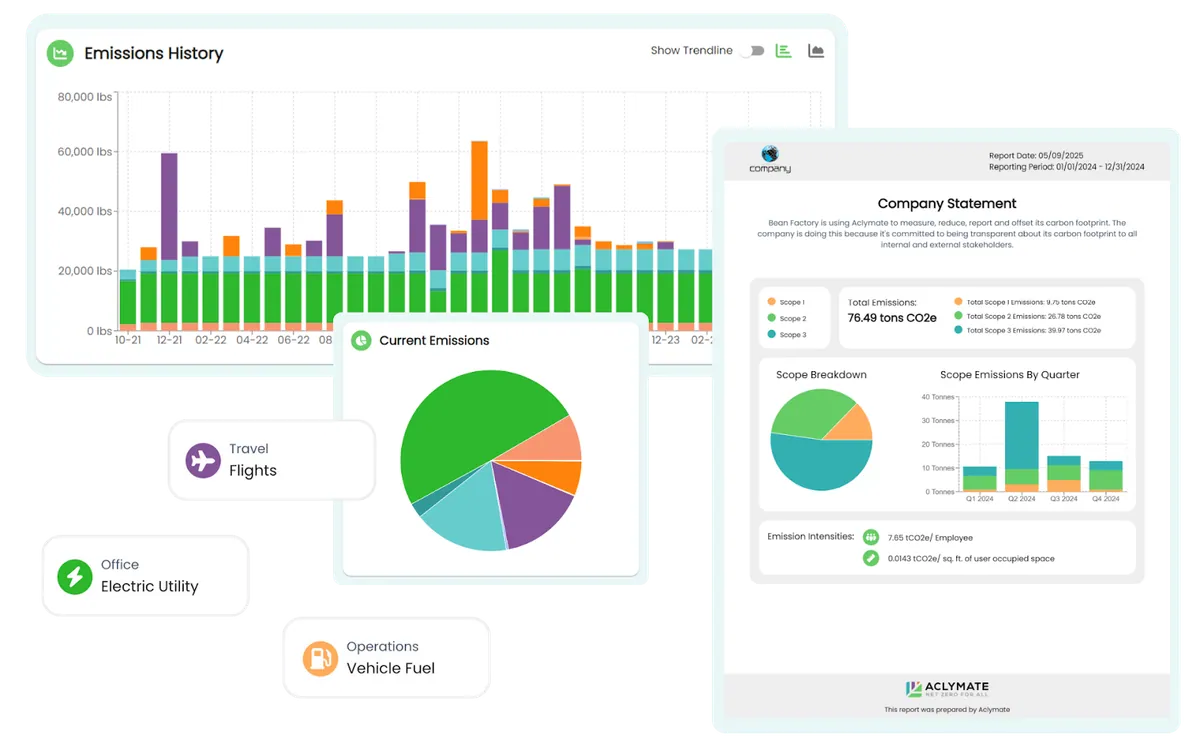
To measure your carbon footprint, you need to learn the three different categories of emission sources. Here's a brief breakdown:
Many small companies use carbon accounting software like Aclymate to calculate Scope 1, 2, and 3 emissions.
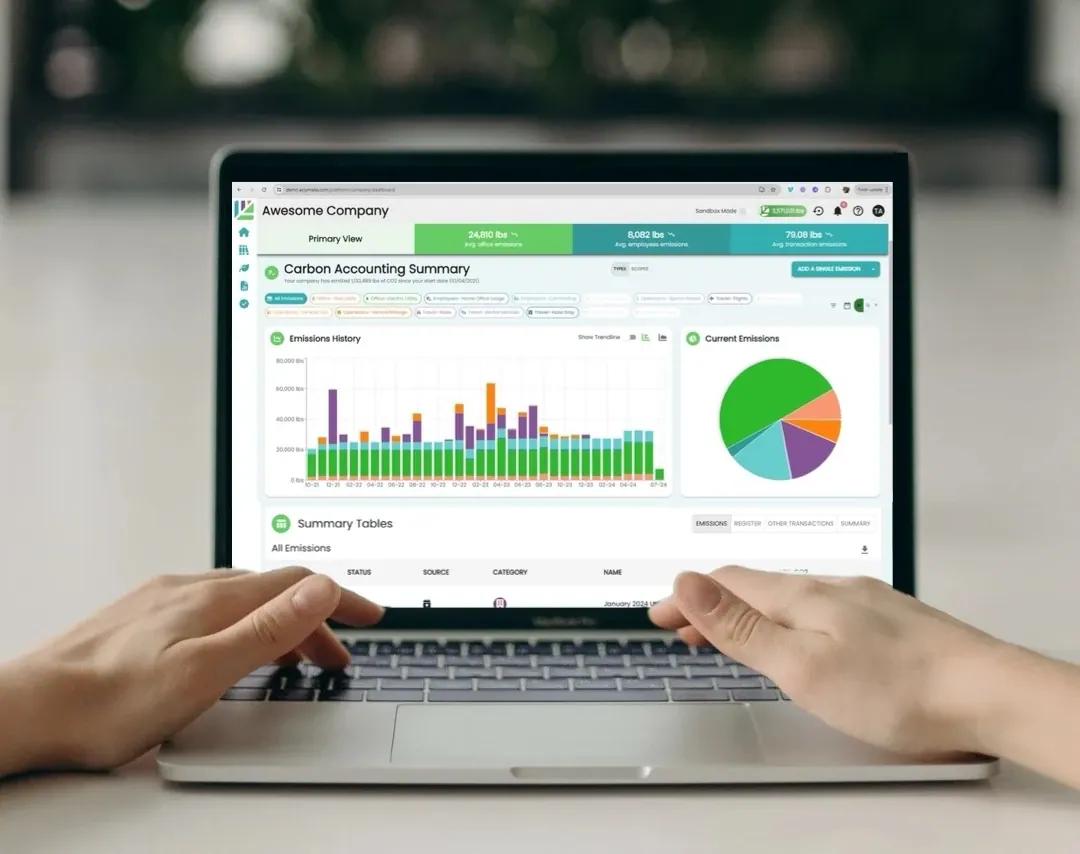
Carbon accounting tools convert resource data into measurable emissions figures. However, the goal isn’t just to get a number. These platforms help you understand where your largest emissions come from.
Once you've identified the main emission sources, such as transportation or energy use, you can create a sustainability plan that focuses on those areas first.
Now that you've measured your impact, it's time to define clear goals. Use the SMART framework for setting sustainability objectives: Specific, Measurable, Achievable, Relevant, and Time-bound.
Review your audit results and carbon data to identify opportunities for improvement. Focus on areas where you can make real change, such as reducing energy consumption, cutting fuel use, or avoiding unnecessary plastic use.
For example, you might set a goal to minimize waste by 25% in the next year or reduce energy costs by switching to LED lights.
You can also include goals for sourcing sustainable products or materials from responsible suppliers.
With SMART goals, your sustainability plan becomes actionable. This helps your team stay accountable and motivated to reach each milestone.
Integrate environmental sustainability practices into your daily business operations.
You can upgrade to LED lighting, maintain equipment properly, and switch to renewable energy sources if possible. Avoid fossil fuels to reduce emissions and save money over time.
You should also consider your supply chain and production materials. Choose suppliers that use recycled or responsibly sourced raw materials. To simplify this task, you can invite your vendors to take an emissions survey.
If your business produces or uses plastics, find ways to reduce or replace them with recyclable packaging. Doing so helps fight plastic pollution, cut emissions, and conserve natural resources.
Sustainability works best when everyone in your small business is involved. Engage employees, customers, suppliers, and company leaders in your sustainability program.
Help your team understand the importance of sustainability. Explain why it matters for the planet but also for business growth and cost savings. Then, encourage employees to recycle, minimize paper use, reduce waste, and avoid single-use items.
Most importantly, leadership must be on board. Executives and managers should communicate progress and address sustainability challenges.
On the other hand, clients and investors value transparency. Share clear climate reports showing your company’s sustainability initiatives and achievements.
When your entire business works together toward the same sustainability goals, your plan becomes easier to sustain over time.
Tracking your progress is what keeps your sustainability journey moving forward.
Focus on metrics that match your goals, such as energy use, waste reduction, water savings, or emissions levels. Even small improvements can make a big difference over time, especially when you measure them consistently.
Use reports or dashboards to record data each month and compare it against your starting point.
Feedback is just as important as data. Ask employees, customers, and suppliers how your sustainability changes affect them. This input helps you find new opportunities to improve and strengthen your commitment to social responsibility.
By evaluating both performance metrics and stakeholder feedback, you gain a clearer picture of what’s working and what’s not.
As your business grows, your operations, suppliers, and technologies will change. What worked a year ago may not work today.
To make a lasting and significant impact on the environment, society, and local economy, you need to constantly refine your sustainability policies.
Start by reviewing your sustainable business practices to see which efforts are delivering results and which need improvement.
Look at new data, track changes in regulations, and pay attention to emerging environmental concerns in your industry.
Update your goals and strategies based on this information. Involve your leadership team and employees in these reviews so they understand what’s changing and why.

Here are the business benefits of a sustainability plan:
Implementing sustainable and ethical business practices often leads to lower operational expenses. Simple steps like improving energy efficiency, reducing waste, and managing resources smartly can save thousands annually.
Small businesses that track and optimize energy use often see noticeable savings in utility bills within months.
Aside from reducing utility costs, sustainability can lower long-term expenses by minimizing material waste and streamlining production. These savings free up cash flow that you can reinvest in growth, innovation, or new equipment.
Small businesses that apply smart sustainability strategies often attract loyal customers, win new contracts, and qualify for government incentives.
When you cut emissions, reduce material costs, and improve waste disposal, your profit margins naturally rise.
Sustainability also opens doors to new product lines, partnerships, and funding opportunities that may not be available otherwise.
Modern consumers expect companies to take responsibility for their actions. In fact, 57% of all buyers consider climate in their purchasing decisions.
Building a sustainability plan demonstrates a commitment to reducing your environmental footprint and fighting against climate change.
Positive environmental action also builds brand credibility and helps you stand out as a leader in your industry.
A sustainability plan helps your small business comply with rules on waste disposal, energy use, and emissions reporting.
Proactive compliance reduces the risk of fines, inspections, or penalties while positioning your company as a responsible organization.
In some cases, strong environmental performance can even speed up the certifying process or qualify your company for preferred vendor status.
Consumers and investors are increasingly drawn to companies that support clean energy, fair labor, and responsible sourcing.
A structured and transparent sustainability plan indicates that your business shares these values. It shows that you care about the environment and not just about making a profit.
Eco-conscious customers are willing to pay more for green products. Over 80% of consumers are willing to pay a premium for sustainably produced or sourced goods, with the average shopper prepared to spend roughly 9.7% more on these products.
Meanwhile, investors prefer brands with clear environmental goals. In fact, 72% of B2B buyers are more likely to buy from socially responsible companies.
Highlighting your sustainability initiatives in marketing materials, reports, and climate certifications can help you attract eco-conscious audiences and improve customer loyalty.
Individuals want to work for companies that make a difference, with 64% of millennials citing that they will only work for climate-conscious companies. Gen Zs also share the same sentiment. According to a study, 79% of respondents are more likely to join a company that openly pledges to address climate change.
A sustainability plan encourages teamwork and purpose across the organization.
When employees see efforts to improve air quality, support recycling practices, or conserve resources, they feel motivated to contribute to your small business.
In addition to higher engagement, sustainable workplaces often have increased retention rates. Employees who align with the company’s mission are more likely to stay for the long term.
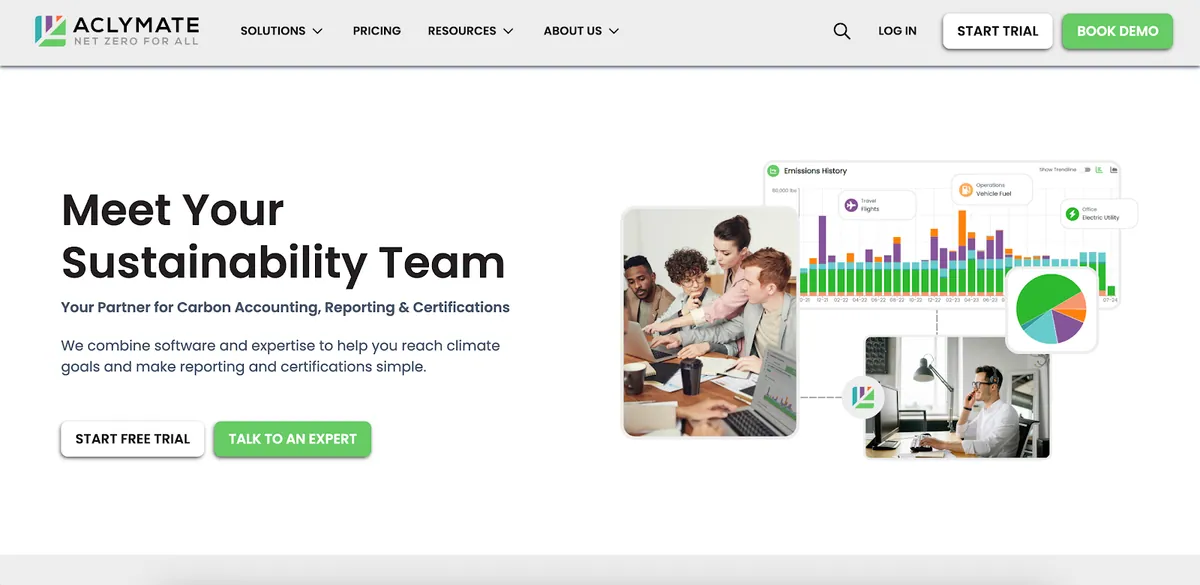
Aclymate offers an all-in-one climate solution designed for small and mid-sized businesses without sustainability teams.
The platform combines carbon accounting software, reporting tools, expert services, and verified offsets to help you reach your climate goals.
With Aclymate's Turn Key solution, you also gain access to climate bookkeepers and consultants who will handle complex tasks for you. You no longer need to worry about evolving regulations, meeting deadlines, or hiring sustainability experts.
Aclymate's hybrid model gives you the best of both worlds. The software is affordable and easy to use for small businesses. Plus, experts will support you every step, from emissions tracking to carbon reduction and reporting.
Sign up today to meet your sustainability team!
Need further advice on how to get started with your sustainability journey? Schedule a demo right now to talk with Aclymate's climate experts.
Sustainability isn’t just for major corporations. Small businesses should also do their part to reduce waste, conserve natural resources, and address global warming.
Sustainable practices, like cutting energy use, managing materials wisely, and reducing emissions, allow small businesses to make a meaningful difference. Even small changes, when done consistently, contribute to a more sustainable economy.
The five C’s are commitment, consistency, collaboration, creativity, and communication. They remind small businesses to stay focused, work together, and share results openly with relevant stakeholders. These values also guide companies to make sustainable purchasing decisions that reduce environmental impact.
Most business owners think that sustainability is all about the environment. However, it's a broader concept. The four pillars of sustainability are environmental, social, economic, and human.
Environmental focuses on protecting natural resources, while social emphasizes fairness and community support. Economic sustainability ensures your business stays profitable without harming future opportunities, and human sustainability prioritizes well-being across different communities.
Small businesses can start with simple steps like recycling, reducing waste, improving energy efficiency, and donating to tree-planting causes. They can also identify products that meet sustainability criteria, source responsibly, and apply plastic pollution prevention techniques.
Get Aclymate's practical sustainability content delivered weekly.

AI is creating new opportunities for businesses, but it also comes with an environmental cost. Carbon offsets can help address some of those emissions, but businesses need to understand what they are offsetting, how offsets work, and why measuring and reducing emissions should come first.
Read Article
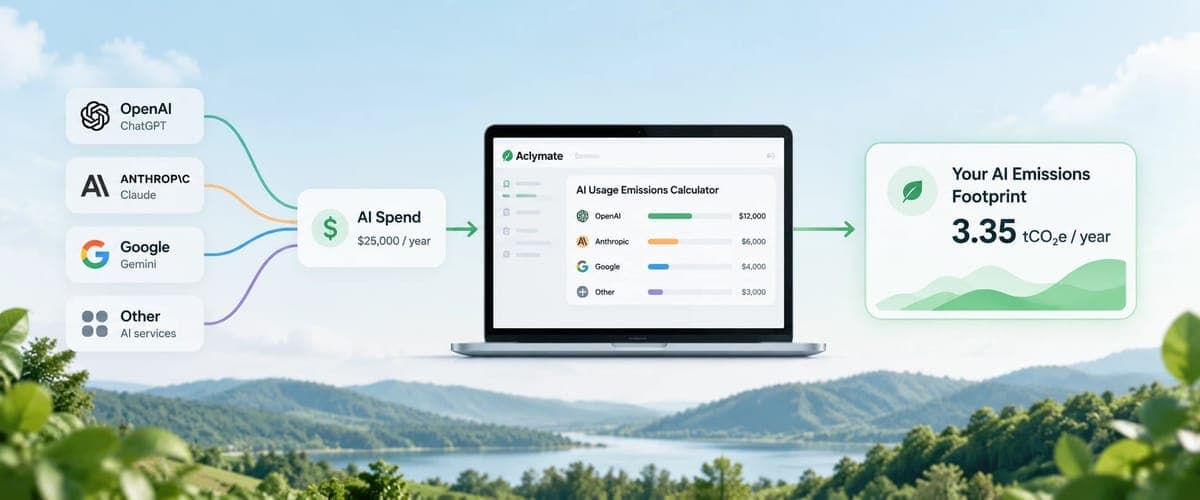
AI carbon emissions are becoming a new consideration for companies adopting ChatGPT, Claude, Gemini, Copilot and other artificial intelligence tools. Here’s how Aclymate estimates the carbon emissions from a company’s AI usage today—and how we expect the methodology to improve as AI providers release better usage and emissions data.
Read Article
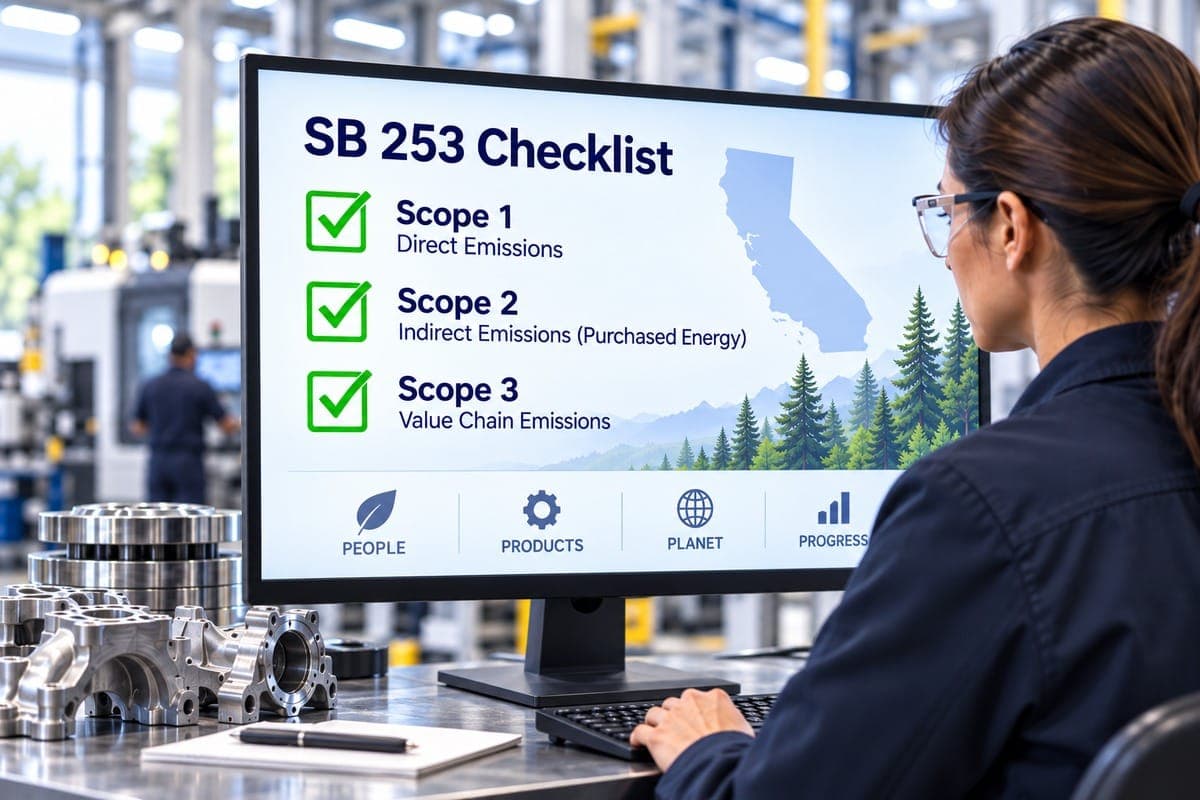
California SB 253 applies to companies over $1B in revenue — but its Scope 3 requirement reaches the automotive suppliers underneath them. What to expect and how to prepare.
Read Article
Talk with a Sustainability Expert, see a demo, or start free to put the Aclymate platform and experts to work for your team.