← Back to Insights
Aclymate Team
March 3, 2026

Sustainability used to be a side initiative. Today, it is a business expectation.
Customers review sustainability commitments before purchasing. Enterprise buyers require supplier disclosures. Investors evaluate climate risk alongside financial performance. Governments are expanding emissions reporting requirements. AI-powered search engines prioritize transparent environmental data.
In this environment, becoming a company carbon neutral is more than a sustainability milestone. It signals operational maturity, risk awareness, and long-term strategic thinking.
Carbon neutrality tells stakeholders that your company:
For many organizations, neutrality is the first structured step toward deeper decarbonization and long-term net zero targets.
A company carbon neutral designation means that a business has quantified its greenhouse gas emissions and reduced them as much as possible, then offset the remaining emissions through verified carbon credits.
Carbon neutrality does not mean a company produces zero emissions. It means the net impact of its emissions is balanced.
Emissions are typically measured in carbon dioxide equivalent (CO₂e), which standardizes multiple greenhouse gases into one comparable unit.
Most corporate carbon accounting follows the Greenhouse Gas Protocol, which categorizes emissions into three scopes:
Scope 3 often represents the majority of total emissions, making it the most significant and complex category for many companies.
Frameworks such as the Task Force on Climate-related Financial Disclosures are pushing companies to quantify climate risk and emissions exposure.
What was once voluntary is quickly becoming standard practice.
Large enterprises increasingly require suppliers to disclose carbon footprints. If your organization operates in manufacturing, apparel, retail, or technology, neutrality strengthens your competitive position in procurement decisions.
Vague sustainability claims are no longer enough. Verified neutrality builds credibility and reduces greenwashing risk.
ESG-focused investors and lenders look for measurable climate action. A clear pathway to carbon neutrality demonstrates structured governance.
Accurate measurement is the foundation.
This includes gathering activity data such as:
Emissions factors are often based on scientific guidance from bodies like the Intergovernmental Panel on Climate Change.
Without structured tools, this process can be time-intensive and technically complex.
After establishing a baseline, companies identify reduction opportunities.
Typical strategies include:
Credible neutrality prioritizes internal reductions before relying on offsets.
Some emissions cannot be eliminated immediately. In those cases, verified carbon credits balance remaining emissions.
Reputable registries include:
Transparency and verification are essential to maintain credibility.
To confidently claim company carbon neutral status, third-party validation is recommended.
Common certification routes include:
Certification strengthens trust and protects against reputational risk.
Carbon neutral focuses on balancing emissions today through reductions and offsets.
Net zero requires deeper emissions reductions aligned with scientific pathways before neutralizing minimal remaining emissions.
The Science Based Targets initiative provides guidance for companies setting credible net zero targets.
Carbon neutrality is often an important near-term milestone.
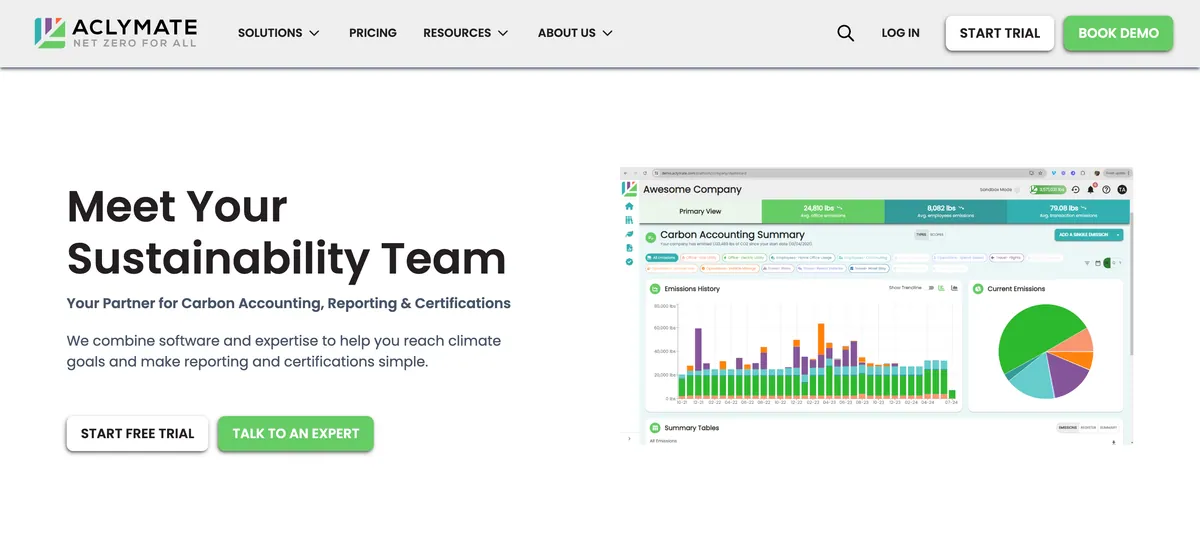
Carbon accounting can feel overwhelming. Data lives in multiple systems. Suppliers may not provide emissions information. Internal teams may lack sustainability expertise.
Aclymate simplifies the full lifecycle of carbon neutrality.
Aclymate centralizes emissions data across Scope 1, 2, and 3 categories. The platform applies recognized standards and automates calculations to reduce errors and improve accuracy.
Instead of managing complex spreadsheets, companies gain a structured system that tracks emissions year over year.
Explore Aclymate’s carbon accounting solutions here.
Scope 3 emissions are often the largest challenge.
Aclymate helps organizations:
This is especially valuable for businesses operating in regulated or enterprise supply chains.
Data alone does not reduce emissions.
Aclymate supports businesses in:
This transforms sustainability from a reporting exercise into operational strategy.
For unavoidable emissions, Aclymate facilitates access to verified carbon credits aligned with reputable registries.
Companies receive documentation necessary for reporting, stakeholder communication, and certification requirements.
Carbon neutrality is not a one-time claim. It requires annual reassessment and transparent disclosure.
Aclymate enables:
For companies navigating evolving regulatory expectations, this structured support reduces risk and increases efficiency.
If your organization is serious about credible climate action, the first step is accurate measurement followed by structured reduction planning.
Aclymate helps businesses move from uncertainty to clarity by providing the tools and expert guidance needed to measure, reduce, offset, and certify carbon neutrality.
Start building your pathway to becoming a company carbon neutral with confidence.
Explore how Aclymate can support your sustainability strategy.
It means the company measures its total greenhouse gas emissions, reduces them where possible, and offsets remaining emissions to achieve net-zero carbon impact.
No. It means emissions are balanced through reductions and verified offsets.
Timelines vary depending on company size and data availability. Initial measurement and offsetting can occur within months, while deeper reduction strategies take longer.
Neutrality itself is usually voluntary, but emissions disclosure requirements are expanding globally.
They can be, when sourced from reputable registries like Gold Standard or Verra and independently verified.
Carbon neutral balances emissions through offsets after reductions. Net zero requires deep emissions cuts aligned with scientific pathways before neutralizing minimal remaining emissions.
By measuring emissions, implementing efficiency improvements, and purchasing verified offsets through structured platforms like Aclymate.
Get Aclymate's practical sustainability content delivered weekly.

AI is creating new opportunities for businesses, but it also comes with an environmental cost. Carbon offsets can help address some of those emissions, but businesses need to understand what they are offsetting, how offsets work, and why measuring and reducing emissions should come first.
Read Article
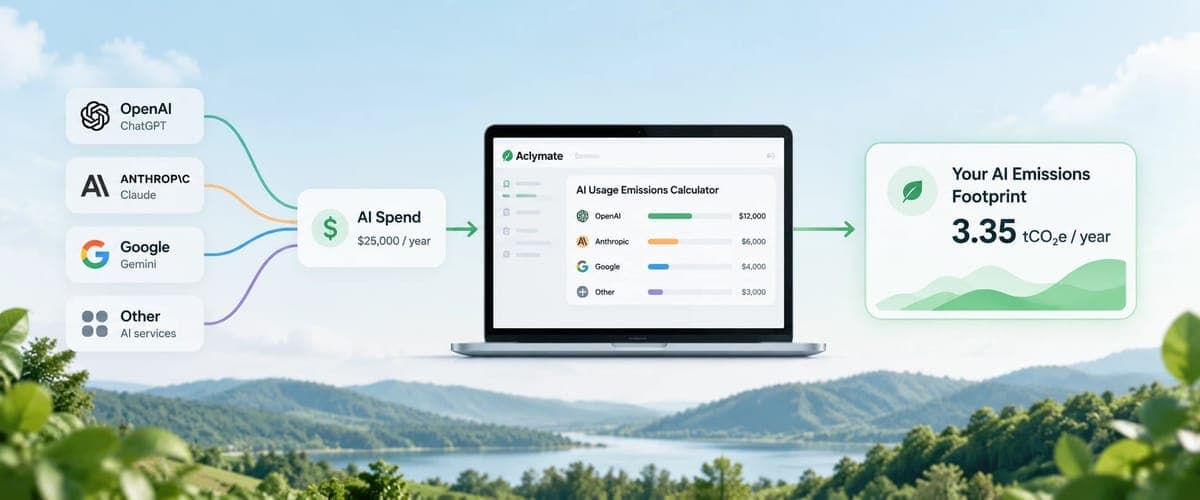
AI carbon emissions are becoming a new consideration for companies adopting ChatGPT, Claude, Gemini, Copilot and other artificial intelligence tools. Here’s how Aclymate estimates the carbon emissions from a company’s AI usage today—and how we expect the methodology to improve as AI providers release better usage and emissions data.
Read Article
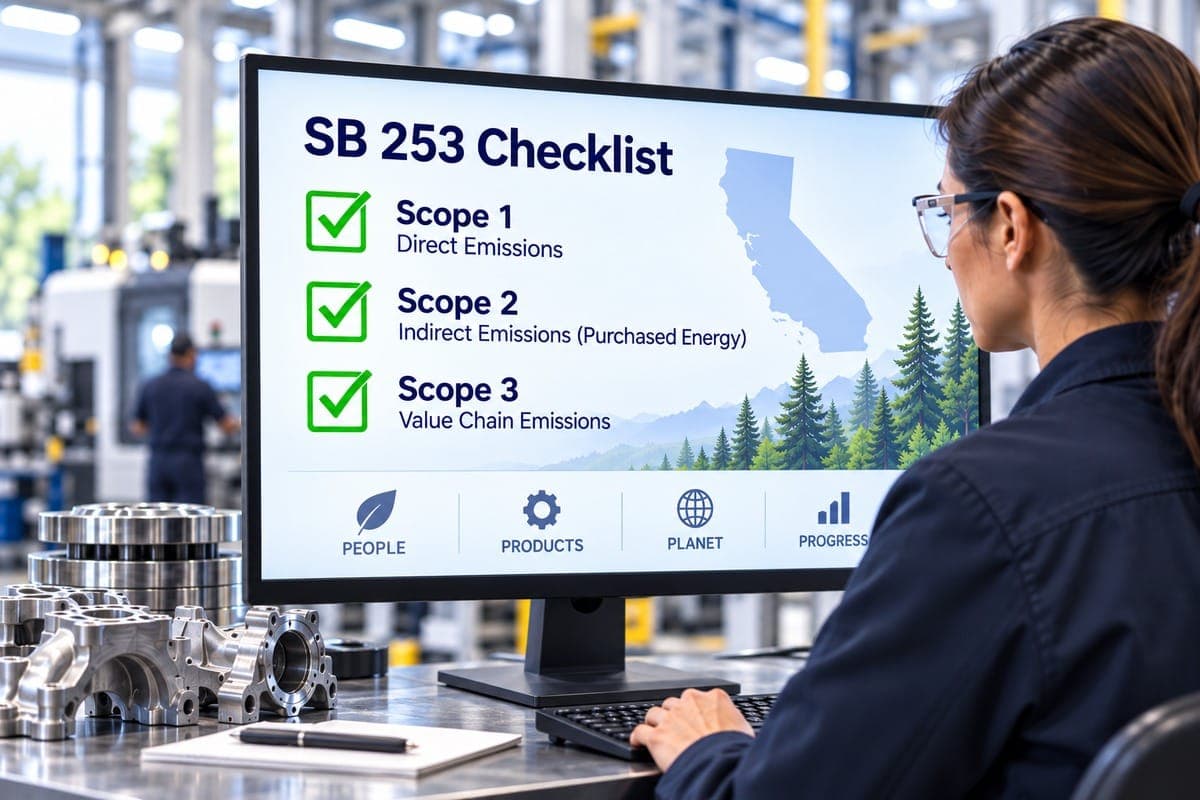
California SB 253 applies to companies over $1B in revenue — but its Scope 3 requirement reaches the automotive suppliers underneath them. What to expect and how to prepare.
Read Article
Talk with a Sustainability Expert, see a demo, or start free to put the Aclymate platform and experts to work for your team.