← Back to Insights
Aclymate Team
January 27, 2026
Sustainability is no longer a side conversation in business. It’s a core operational issue. Customers want transparency, investors expect climate data, and regulations are quickly catching up. That’s why more companies are asking how a business carbon footprint calculator works and whether they really need one.
A business carbon footprint calculator is a tool that measures the greenhouse gas emissions produced by a company’s operations and value chain. It turns everyday business activities, like energy use, shipping, purchasing, and travel, into clear, standardized emissions data.
For modern businesses, this isn’t about perfection or public image. It’s about understanding impact, managing risk, and making better decisions with real data.
A business carbon footprint calculator is a structured system used to quantify the total greenhouse gas emissions associated with a company’s activities. These emissions are typically expressed in carbon dioxide equivalent (CO₂e), allowing different greenhouse gases to be compared on a single scale.
Unlike simple online calculators meant for individuals, business carbon calculators are designed to handle:
They are built around internationally recognized frameworks, most commonly the Greenhouse Gas Protocol.
At a basic level, carbon calculators follow a simple logic:
Activity data × emission factors = emissions
The complexity lies in gathering the right data and applying the correct emission factors.
The calculator starts by collecting data related to how your business operates. This may include:
The more complete the data, the more accurate the footprint.
Emission factors translate business activity into emissions. For example:
These factors are sourced from scientific and regulatory databases, ensuring consistency and credibility.
Business carbon footprint calculators organize emissions into three scopes.
These come from sources your business directly controls, such as:
These include emissions from purchased electricity, heating, cooling, or steam used in your facilities.
Scope 3 covers emissions you influence but don’t directly control, including:
For most businesses, Scope 3 represents the largest share of total emissions.
Many companies delay carbon accounting because it feels complex or premature. In reality, waiting often creates more risk than starting early.
Climate-related disclosures are increasingly required across regions and industries. Even if your business is not directly regulated, customers or partners may request your emissions data as part of their own reporting.
A business carbon footprint calculator ensures your data is structured, defensible, and ready when requested.
Climate risk is now considered financial risk. Investors want to understand how exposed a business is to rising energy costs, supply chain disruptions, and regulatory changes. Reliable emissions data signals that a company understands its risks and is managing them proactively.
Claims like “eco-friendly” or “sustainable” mean little without data behind them. Measuring emissions allows businesses to communicate honestly and avoid greenwashing while building credibility with customers.
Carbon calculators often uncover inefficiencies that businesses didn’t realize were costing them money, such as:
Reducing emissions often improves operational efficiency at the same time.
The exact data depends on your size and industry, but most calculators request information in these areas:
You don’t need perfect data to start. Most platforms allow estimates that improve over time as data quality increases.
Some businesses rely on rough estimates or spreadsheets. While this may work temporarily, it creates limitations.
Simple estimates:
Business carbon footprint calculators:
For companies planning long-term sustainability strategies, calculators provide a much stronger foundation.
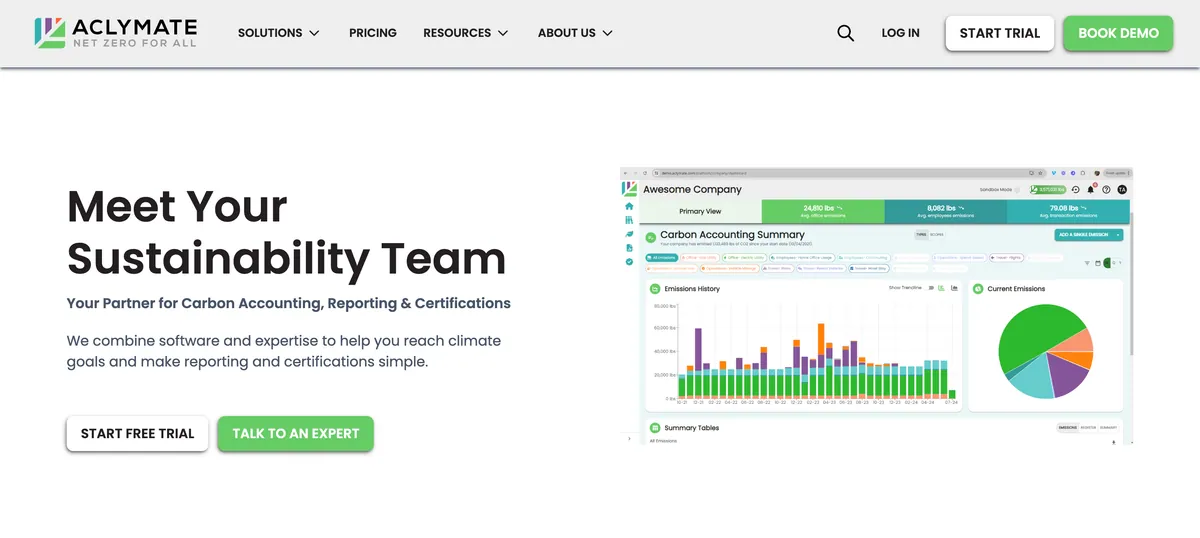
For many small and mid-sized businesses, carbon accounting feels like something built for large enterprises with dedicated sustainability teams. The reality is that most companies want to measure their emissions responsibly but don’t have the time, technical expertise, or resources to manage complex reporting systems. Aclymate is designed to meet businesses where they are and make carbon accounting practical, accurate, and manageable.
Aclymate focuses on how businesses actually operate day to day. Instead of forcing teams to adapt to rigid sustainability frameworks, the platform translates normal business data, such as energy use, purchasing, travel, and logistics, into structured emissions categories. This allows companies to measure their footprint without completely changing how they work.
Aclymate supports measurement across Scope 1, Scope 2, and Scope 3 emissions, giving businesses a complete view of their impact. While many tools focus heavily on direct emissions, Aclymate helps companies understand the indirect emissions tied to suppliers, services, and operational decisions. This is especially important because Scope 3 often represents the largest portion of a business’s footprint.
One of the biggest barriers to carbon accounting is data collection. Aclymate reduces this friction by guiding users through what data is needed and how it should be categorized. The platform helps structure inputs so that even partial data can be used responsibly, allowing businesses to start measuring now and refine their accuracy over time.
Aclymate prioritizes clarity over technical jargon. Emissions data is presented in a way that business owners and leadership teams can easily understand, making it simpler to identify high-impact areas and track progress. This also makes it easier to respond to customer questionnaires, investor requests, or internal planning discussions without needing to translate complex reports.
Measuring emissions is only useful if it leads to action. Aclymate helps businesses identify practical opportunities to reduce their footprint based on their specific operations. Rather than generic recommendations, the platform highlights where changes are likely to have the most impact, helping teams focus their efforts where it matters most.
As businesses grow, their sustainability needs evolve. Aclymate is built to scale with that growth, allowing companies to track emissions over time, establish baselines, and monitor changes year over year. This creates a reliable foundation for setting internal goals, preparing for future reporting requirements, and aligning with broader sustainability strategies.
Many companies hesitate to start carbon accounting because they worry about needing consultants or external experts. Aclymate reduces that barrier by providing structured guidance throughout the process. Users gain clarity on what the data means and how to use it, without the cost or complexity of traditional sustainability consulting.
Understanding your emissions is the first step toward managing them. A business carbon footprint calculator gives you clarity, credibility, and control over your environmental impact.
If you’re ready to explore how carbon accounting can fit into your business without unnecessary complexity, learn more about Aclymate’s approach to business carbon measurement.
It’s a tool that measures all greenhouse gas emissions associated with a company’s operations and value chain, expressed in CO₂e.
Accuracy depends on data quality and emission factors. Tools based on recognized scientific standards provide reliable, consistent results.
Yes. Even small businesses are increasingly asked for emissions data by customers, partners, and investors.
For most businesses, yes. Scope 3 often represents the majority of emissions and provides the most meaningful insight into real impact.
Get Aclymate's practical sustainability content delivered weekly.

AI is creating new opportunities for businesses, but it also comes with an environmental cost. Carbon offsets can help address some of those emissions, but businesses need to understand what they are offsetting, how offsets work, and why measuring and reducing emissions should come first.
Read Article
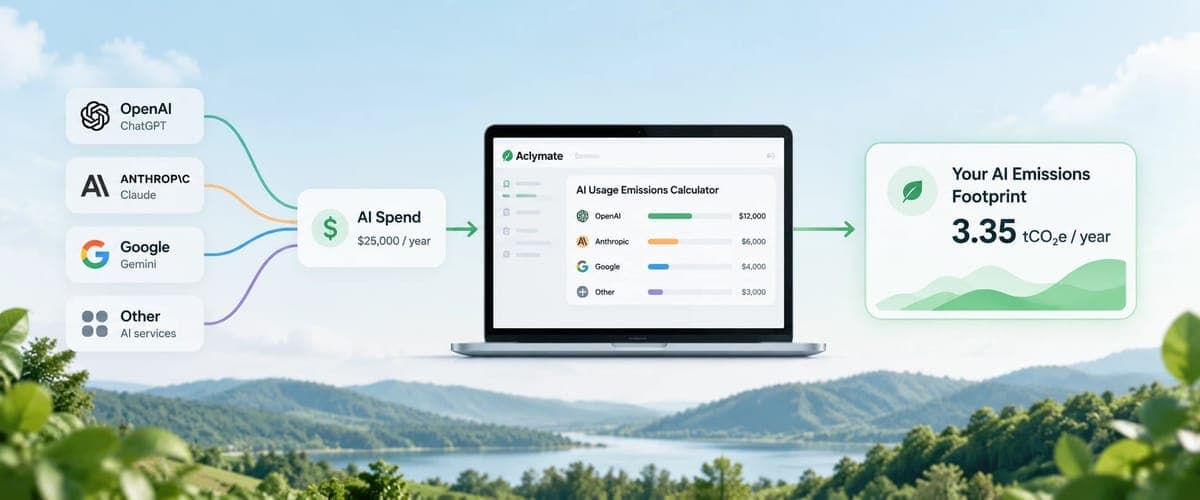
AI carbon emissions are becoming a new consideration for companies adopting ChatGPT, Claude, Gemini, Copilot and other artificial intelligence tools. Here’s how Aclymate estimates the carbon emissions from a company’s AI usage today—and how we expect the methodology to improve as AI providers release better usage and emissions data.
Read Article
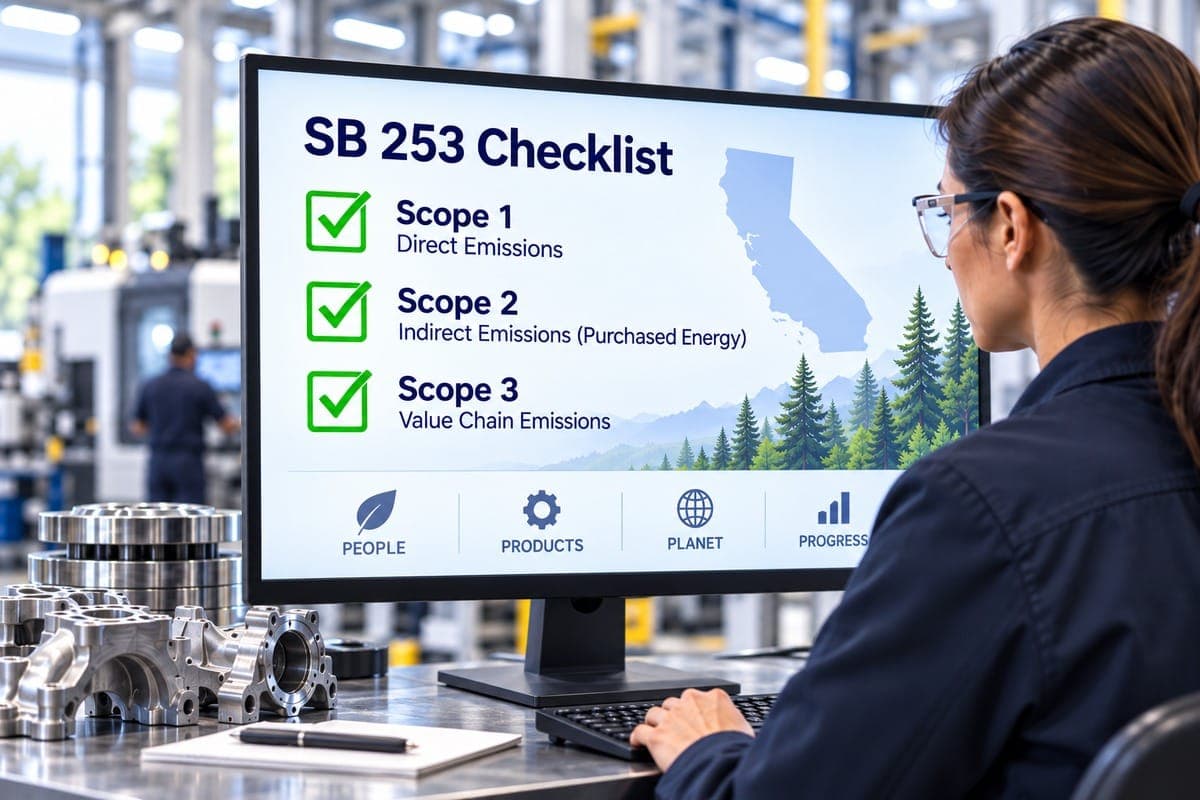
California SB 253 applies to companies over $1B in revenue — but its Scope 3 requirement reaches the automotive suppliers underneath them. What to expect and how to prepare.
Read Article
Talk with a Sustainability Expert, see a demo, or start free to put the Aclymate platform and experts to work for your team.