← Back to Insights
Aclymate Team
February 20, 2026
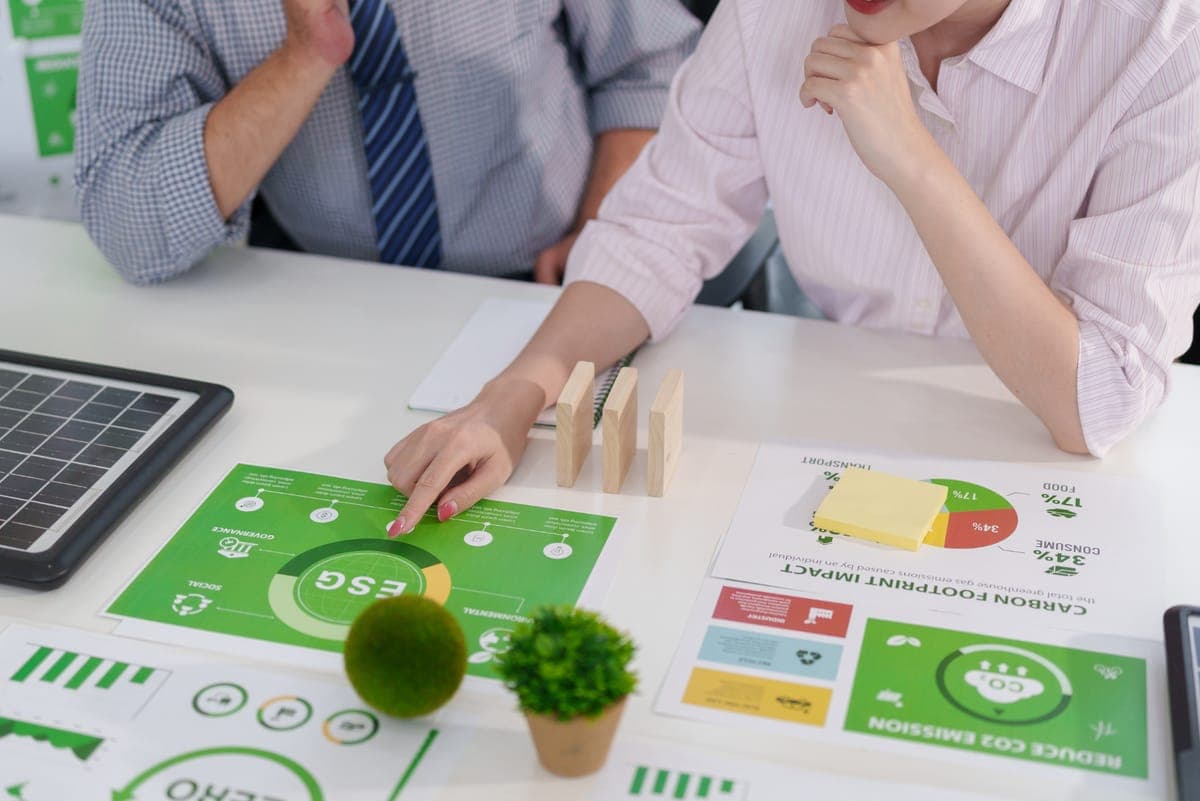
Being sustainable and knowing your carbon footprint has become a business requirement.
Companies are being asked about their emissions by customers, partners, suppliers, investors, lenders, and even employees. Understanding climate responsibility starts with something simple: knowledge. Understanding your impact on the environment starts with knowing your carbon footprint.
A carbon footprint quiz is a practical way to test what you know about emissions, carbon accounting, and reduction strategies. Many people assume they understand how carbon footprints work, but the details matter. Knowing the difference between Scope 1, 2, and 3 emissions, understanding how emission factors convert activity into emissions, or recognizing why CO₂e is used can dramatically change how a business approaches sustainability.
If you’re new to the topic, you may want to review what a carbon footprint is and how carbon accounting works for businesses before taking the quiz.
This quiz is designed to challenge both individuals and business leaders. It covers the fundamentals of emissions measurement and connects them to real-world decision-making. Whether you’re exploring sustainability for the first time or strengthening your company’s strategy, this quiz helps clarify where you stand.
Before we begin, here’s a quick refresher:
A carbon footprint measures the total greenhouse gas emissions associated with an activity, organization, or product, typically expressed in carbon dioxide equivalent (CO₂e). For businesses, this includes energy use, logistics, supply chains, travel, and more.
Let’s test your knowledge.
A) Only carbon dioxide emissions
B) All greenhouse gas emissions converted into CO₂e
C) Electricity usage only
D) Transportation emissions only
Correct Answer: B
A carbon footprint includes multiple greenhouse gases such as methane and nitrous oxide. These gases are converted into carbon dioxide equivalent (CO₂e) so their impact can be compared using one standard measurement.
A) Emissions from suppliers
B) Emissions from purchased electricity
C) Direct emissions from sources a company controls
D) Employee commuting emissions
Correct Answer: C
Scope 1 emissions come from sources a business directly owns or controls, such as company vehicles or on-site fuel use.
A) Scope 1
B) Scope 2
C) Scope 3
D) None of the above
Correct Answer: C
For most organizations, Scope 3 emissions—those across the value chain—represent the largest share of total emissions. This includes suppliers, purchased goods, logistics, and travel. This can be hard to measure and is often done best with a reliable partner like Aclymate.
A) Kilowatts
B) CO₂e
C) BTUs
D) Carbon points
Correct Answer: B
CO₂e standardizes emissions by accounting for the different warming effects of various greenhouse gases.
A) It supports regulatory compliance
B) It improves transparency with investors and customers
C) It identifies inefficiencies and cost-saving opportunities
D) All of the above
Correct Answer: D
Measuring emissions supports compliance, builds credibility, and helps identify areas where operational improvements can reduce both emissions and costs.
A) A climate regulation
B) A government tax
C) A value used to convert activity data into emissions
D) A renewable energy certificate
Correct Answer: C
Emission factors translate real-world activity (like fuel consumption or electricity use) into measurable greenhouse gas emissions.
Correct Answer: False
Every business, including service businesses, SaaS companies, professional firms, and retailers all generate emissions through energy use, travel, cloud computing, and supply chains.
A) Buying carbon offsets
B) Switching suppliers immediately
C) Measuring current emissions
D) Announcing sustainability goals
Correct Answer: C
You can’t manage what you don’t measure. Establishing a baseline is the foundation of any credible reduction strategy. Remember this mantra for your priority list: Measure, Reduce, Offset
This carbon footprint quiz isn’t just about getting answers right. Each question highlights a key concept that shapes how businesses approach sustainability.
For example:
When leaders understand these fundamentals, sustainability becomes part of strategy rather than a side initiative.
6–8 Correct:
You have a strong understanding of carbon accounting principles and how they apply to business operations. You’re likely ready to move beyond awareness and into structured measurement.
Next Step: You’re ready to take action. Consider calculating your business footprint with Aclymate and turn your knowledge into measurable data.
3–5 Correct:
You understand the basics, but there are opportunities to deepen your knowledge, especially around Scope 3 emissions and reduction strategies.
Next Step: A short strategy conversation can help clarify your current position and identify practical next moves. Book a free consultation to explore how structured carbon measurement could fit into your operations.
0–2 Correct:
This is a great place to start. Carbon accounting can seem technical, but understanding the core ideas makes it far more approachable.
Next Step: Build your foundation with Aclymate Academy. Structured learning modules can help you confidently understand emissions, scopes, and reduction planning before implementing tools.
Taking a carbon footprint quiz may feel educational, but the implications are strategic. Climate data is increasingly tied to financial performance. Businesses that understand their footprint are better positioned to adapt to evolving expectations.
Understanding emissions helps businesses:
If you're preparing for reporting obligations, review our overview of sustainability reporting requirements and how carbon data supports a strong ESG strategy for business.
Many companies discover that:
These gaps are common, and they’re fixable.
A carbon footprint quiz builds awareness. The next step is application.
To move forward, businesses typically:
This structured process turns sustainability from a vague goal into measurable progress.
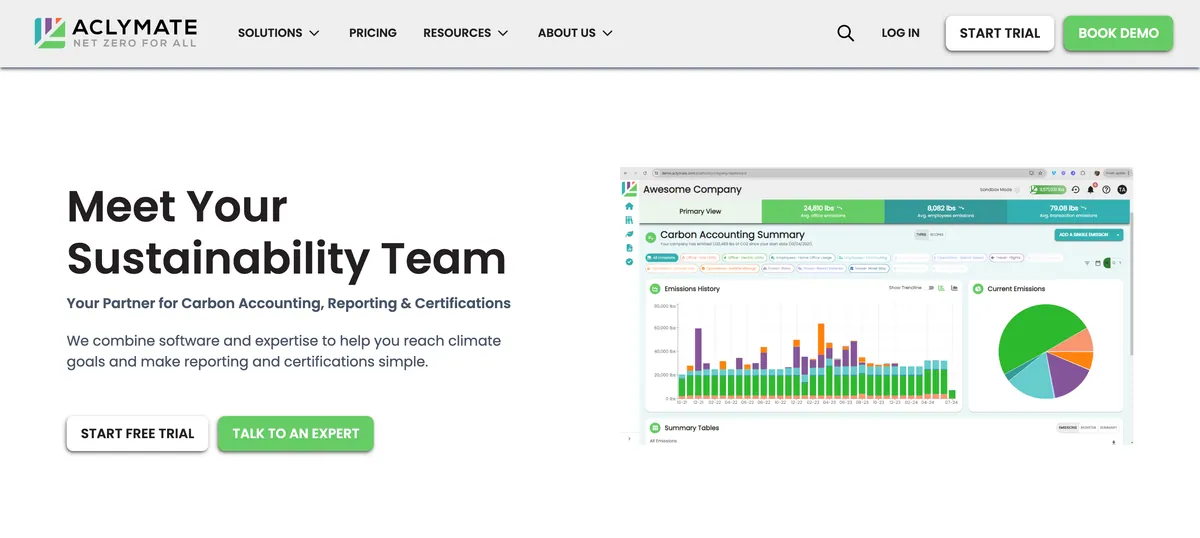
Understanding the concepts behind a carbon footprint quiz is valuable. Knowing what Scope 3 means or how CO₂e works builds awareness. But awareness alone doesn’t reduce emissions. Real progress happens when knowledge turns into structured, measurable action.
That’s where Aclymate comes in.
Aclymate helps businesses bridge the gap between understanding sustainability and implementing it in daily operations. Instead of leaving carbon accounting as a theoretical exercise, the platform translates climate concepts into clear, trackable business data.
Most businesses already collect operational data, such as utility bills, travel expenses, procurement records, and vendor payments. The challenge isn’t collecting information. It’s knowing how to convert that information into meaningful emissions insights.
Aclymate maps everyday business activities into structured emissions categories aligned with recognized carbon accounting standards. Energy usage becomes Scope 2 data. Fleet fuel becomes Scope 1. Supplier and purchasing activity feeds into Scope 3.
This structured translation makes sustainability measurable without disrupting existing workflows.
Scope 3 emissions often feel overwhelming because they extend across the entire value chain. Many companies delay carbon accounting simply because Scope 3 seems too complex.
Aclymate helps break Scope 3 into manageable segments. Instead of treating it as one large unknown category, businesses can see how travel, logistics, procurement, and services contribute individually. This level of visibility allows companies to focus on high-impact areas rather than guessing where reductions will matter most.
Carbon data is only useful if it’s understandable. Dense spreadsheets and technical reports often create friction rather than clarity.
Aclymate presents emissions data in structured, business-friendly dashboards that show:
This clarity allows leadership teams to quickly see where emissions are concentrated and how they change year over year.
Carbon accounting should inform decisions, not just satisfy reporting requirements. Aclymate helps businesses connect emissions data directly to operational strategy.
For example:
This shifts sustainability from reactive compliance to proactive planning and resource management efficiency.
One-time measurement isn’t enough; even annual tracking leaves a lot of gaps. Sustainable progress requires consistent tracking. Aclymate supports ongoing measurement, allowing businesses to establish a baseline and monitor changes over time.
Baseline data helps answer important strategic questions:
Long-term tracking transforms sustainability from a static report into a dynamic performance metric.
Sustainability often involves multiple stakeholders, from finance teams to operations leaders to external partners. Clear emissions reporting improves alignment across departments.
With structured data, businesses can:
Transparency becomes easier when the data is consistent and organized.
As companies grow, their operations become more complex. Emissions data needs to scale accordingly. Aclymate is designed to grow with the business, supporting expanded operations, new suppliers, and evolving reporting expectations.
This ensures that sustainability efforts don’t need to restart from scratch as the organization expands.
A carbon footprint quiz gives you insight into what you understand. But real sustainability impact comes from applying that knowledge consistently.
When businesses measure their footprint accurately, they gain:
The goal isn’t perfection. It’s progress built on reliable information.
Now that you’ve completed the carbon footprint quiz, the real opportunity begins: applying what you know to your own operations.
Knowledge creates awareness. Measurement creates accountability. Action creates change.
If you’re ready to measure your business emissions and build a structured sustainability strategy, you can start by calculating your footprint with Aclymate and turning operational data into clear, trackable insights.
If you’d prefer to deepen your understanding first, Aclymate Academy offers structured courses that break down carbon accounting, Scope 1–3 emissions, and practical reduction strategies in a way that’s easy to apply.
And if you want expert guidance tailored to your organization, schedule a conversation with the Aclymate team to explore how structured carbon measurement can support compliance, reporting, and long-term growth.
Wherever you are in the journey, the next step is simple: move from theory to implementation.
What is a carbon footprint quiz?
A carbon footprint quiz is an interactive assessment designed to test your understanding of greenhouse gas emissions, carbon accounting concepts, and sustainability strategies. It helps individuals and businesses evaluate their knowledge before implementing reduction plans.
Why should businesses take a carbon footprint quiz?
A carbon footprint quiz helps businesses identify knowledge gaps around emissions measurement, Scope classifications, and reporting standards. Understanding these fundamentals improves decision-making and reduces compliance risks.
How accurate are carbon footprint quizzes?
A quiz does not measure your actual emissions. Instead, it tests your knowledge about how carbon footprints work. To measure real emissions, businesses need structured carbon accounting tools.
What happens after taking a carbon footprint quiz?
After completing a carbon footprint quiz, businesses should assess whether they have a clear emissions baseline. If not, the next step is gathering operational data and applying recognized carbon accounting frameworks.
Can a small business benefit from a carbon footprint quiz?
Yes. Even if you’re not the owner, understanding carbon accounting makes you more valuable inside your organization. Many small businesses underestimate their emissions, especially Scope 3. Knowing how emissions are measured helps you contribute to smarter decisions, stronger reporting, and more credible sustainability conversations.Carbon literacy isn’t just good for the business. It strengthens your professional edge.
Is measuring a carbon footprint complicated?
It can seem complex at first, especially when dealing with Scope 3 emissions. However, structured tools and standardized methodologies simplify the process and make tracking manageable over time.
Get Aclymate's practical sustainability content delivered weekly.

AI is transforming carbon credit verification through satellite monitoring, automated analysis, and anomaly detection. But can technology solve the voluntary carbon market’s credibility problem? Discover the limitations of AI verification and how businesses can evaluate carbon credits while keeping emissions reductions ahead of offsetting.
Read Article

AI is creating new opportunities for businesses, but it also comes with an environmental cost. Carbon offsets can help address some of those emissions, but businesses need to understand what they are offsetting, how offsets work, and why measuring and reducing emissions should come first.
Read Article
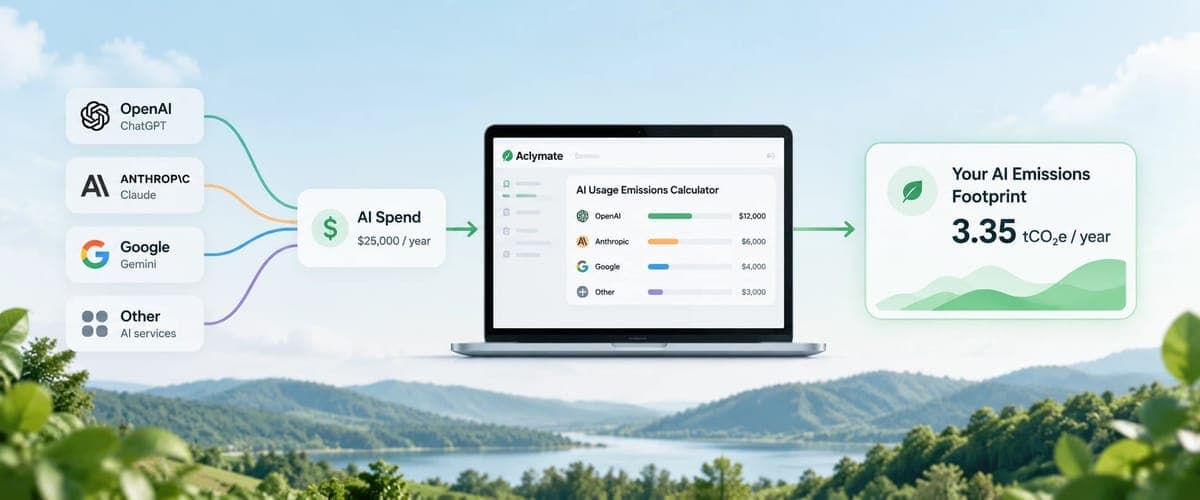
AI carbon emissions are becoming a new consideration for companies adopting ChatGPT, Claude, Gemini, Copilot and other artificial intelligence tools. Here’s how Aclymate estimates the carbon emissions from a company’s AI usage today—and how we expect the methodology to improve as AI providers release better usage and emissions data.
Read Article
Talk with a Sustainability Expert, see a demo, or start free to put the Aclymate platform and experts to work for your team.