← Back to Insights
Aclymate Team
November 12, 2025

Customers, investors, suppliers, and government entities are increasingly demanding that companies disclose their environmental impacts. According to PwC, 76% of consumers would discontinue purchasing from firms that neglect environmental, employee, or community well-being.
Environmental reporting shows your company's commitment to sustainability. McKinsey reports that more than 90% of S&P 500 businesses share environmental, social, and governance (ESG) reports, making it clear that disclosures are now expected across industries.
However, this process often feels complex for small to mid-sized companies without in-house sustainability expertise or the budget to hire consultants. Evolving regulations, certification needs, and complex data tracking all add to the challenge.
But to those that evaluate and report their footprint, they are getting ahead not only of regulatory developments, but are also identifying the real financial risks associated with environmental liabilities and avoiding stranded assets.
Fortunately, this guide breaks down the process step by step. You’ll learn what environmental reporting means, why it matters, and how sustainability software like Aclymate can make the process simple and affordable for any business.
Environmental reporting is the process of collecting and sharing data about how your company's actions affect the environment.
It typically covers energy use, water consumption, greenhouse gas emissions (GHG), and waste management. It may also include resource efficiency, biodiversity impacts, supply chain activities, and community well-being.
Reports demonstrate accountability, proving that your company understands its environmental impact and is taking measurable steps to reduce it.
Transparent reporting also shows customers, investors, and regulators that you take corporate social responsibility seriously. It's an effective way to communicate sustainability efforts to all relevant stakeholders.
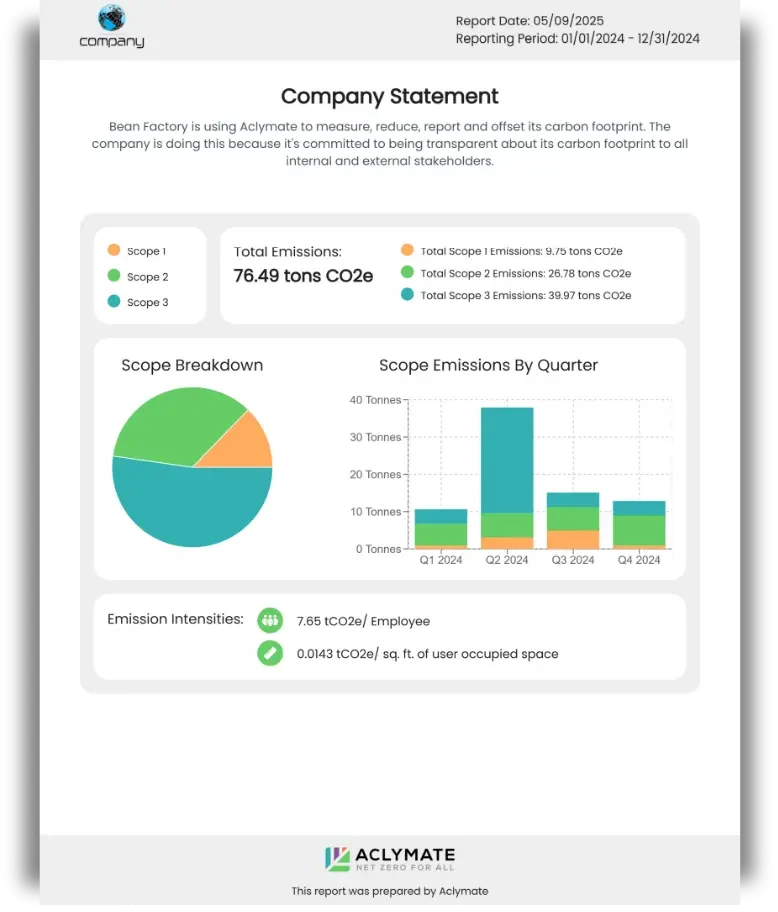
Environmental reporting matters for several reasons.
Investors want to hear about a company's ESG-related commitments. According to PwC, more than 80% expect detailed reports about progress toward ESG objectives.
Environmental reporting helps you remain transparent about your business activities. Measurable data shows stakeholders that sustainability isn’t just talk, and it’s proven through action.
This transparency builds trust, improves credibility, and addresses stakeholder concerns before they escalate.
Companies that publish environmental reports stand out as leaders in sustainability.
Clear reporting demonstrates your commitment to environmental stewardship and boosts your brand image. This enhanced reputation helps you attract customers who value environmentally responsible brands.
Consider that 57% of all buyers consider climate in their purchasing decisions. Meanwhile, 72% of B2B buyers are more likely to purchase from socially responsible companies.
Regulations are expanding across industries, and companies that don’t track their emissions or waste data risk environmental violations and penalties.
Structured reporting helps you stay ahead of environmental laws, avoid fines, and maintain good standing with regulatory bodies.
Accurate data reporting is often the first step toward earning sustainability certifications.
For example, B Corp certification specifically requires emissions reporting, net-zero targets, and climate transition plans.
Earning these recognitions proves your company’s environmental performance and gives you a competitive advantage.
Consistent environmental reporting shows you’re serious about creating a more sustainable future.
It helps you set clear sustainability goals, track progress, and deliver measurable improvements every year.
This type of reporting also supports your broader ESG strategy by connecting data to company action. It proves your company’s long-term environmental commitment.
A structured environmental report usually includes the following sections:
To create credible and consistent reports, businesses rely on recognized reporting standards. These frameworks define what to measure, how to report, and how to compare results.
The Global Reporting Initiative is the most widely used standard for sustainability and environmental reporting. It provides a comprehensive framework covering topics like energy consumption, carbon emissions, water usage, waste, and labor practices.
GRI is designed for organizations of all sizes and industries, from manufacturers to service providers. However, it is particularly relevant for large corporations with global supply chains.
GRI reports promote transparency by using consistent indicators and metrics. This makes it easier for stakeholders to compare performance across companies.
The GHG Protocol offers a global standard for measuring and managing greenhouse gas emissions. It classifies emissions into three scopes:
This reporting structure helps you identify where your emissions are highest and where you can reduce your carbon footprint.
The GHG Protocol is widely adopted in multiple industries, including manufacturing, energy, transportation, retail, and government.
It provides a clear foundation for setting carbon reduction targets and tracking progress toward net-zero goals.
ISO 14001 is an international standard for environmental management systems (EMS). It builds structured processes to reduce waste, manage resources, and comply with regulations.
ISO 14001 applies across different sectors. However, it is often pursued by companies looking to formalize their environmental performance.
This standard does not require specific reporting content. However, it helps you identify environmental issues and establish appropriate controls and objectives.
The Sustainability Accounting Standards Board provides industry-specific guidelines that help businesses disclose financially material sustainability information to investors.
SASB standards cover 77 industries, focusing on the most relevant environmental and social factors for each sector. For example, water usage is key in agriculture, while emissions matter more in manufacturing.
The SASB framework helps companies report data that investors can use to assess environmental risks and long-term financial performance.
It’s particularly useful for businesses preparing ESG disclosures or those looking to integrate sustainability into traditional financial reporting.
The Corporate Sustainability Reporting Directive is a European Union regulation that improves sustainability reporting transparency and comparability for companies operating in the EU. Even non-European businesses may need to comply if they engage with the EU market.
CSRD requires firms to provide detailed environmental disclosures that meet the European Sustainability Reporting Standards (ESRS).
Each report should cover various ESG topics, including pollution, GHG emissions, climate change mitigation, human rights, and community impacts.
CSRD helps you show corporate responsibility while supporting better-informed investment decisions.
The CDP is a global disclosure platform where companies voluntarily report data on climate change, water security, and deforestation. CDP scores organizations based on transparency and action, making it a powerful benchmarking tool.
Many corporations and investors use CDP reporting standards to assess supplier performance and environmental risk.
Participating in CDP reporting can prove accountability, attract investment, and identify areas for improvement.

Here's a step-by-step guide to creating environmental reports:
The first step is establishing a clear environmental objective.
What do you want to achieve by disclosing environmental initiatives? Do you simply want to comply with regulatory standards, or share progress with stakeholders, too? An effective report aligns with both while meeting global sustainability goals.
You should also determine what the report will cover. Identify which parts of your business operations are included. Set boundaries by choosing the locations, reporting periods, and activities that your audit will assess.
Then, determine which environmental topics (emissions, waste, or energy) are most relevant to your work. Doing so keeps your reporting efforts focused.
You should collect data that represents your current environmental impact. This baseline becomes the foundation for all future comparisons and improvement tracking.
Gather environmental information about energy consumption, waste generation, water usage, emissions, and materials sourcing. Conduct a comprehensive analysis of these areas to understand where your biggest impacts occur.
Use reliable internal data from utility bills, supplier reports, and transportation logs. You can also request external data from vendors or contractors to determine Scope 3 emissions.
Consistency is the key to accurate environmental reporting. Use standardized methods for measurement so your data can be verified later.
Don't forget to identify data gaps and document assumptions. This may reveal unexpected sustainability issues, such as operational inefficiencies or resource overuse.
After collecting your baseline data, the next step is to evaluate how your business activities affect the environment.
Conduct an impact assessment to determine both direct and indirect effects. Review each operational area to determine how it influences air, soil, water quality, human health, or local ecosystems.
Use environmental performance metrics, such as energy use (in kWh) or waste reduction (in cubic meters), to compare performance across departments or facilities.
Then, prioritize the most significant issues that need attention, whether that's excessive GHG emissions or high energy consumption.
The goal is to identify opportunities for improvement and create practical strategies that lead to better future performance.
Once you've determined current environmental challenges and impacts, you can build realistic plans to address them. Focus on prevention first, then improvement.
For example, if you have high power usage, you can switch to renewable energy and replace outdated equipment that wastes energy.
Using carbon offsets also balances out unavoidable emissions, especially during the early stages of reduction.
Think about long-term mitigation strategies. Consider implementing a circular business model to minimize waste and make the most out of resources.
Seek input from the people who are affected by or influence your sustainability efforts. This means engaging stakeholders, such as employees, customers, investors, suppliers, and even local communities.
Share draft results or key findings from your environmental analysis. Ask for opinions on whether your goals are clear, realistic, and meaningful.
Then, encourage open discussion about priorities, such as emissions reduction or supply chain transparency.
You can collect this feedback through surveys, interviews, or meetings.
Now that you have all the data and feedback, it’s time to organize everything into a clear and professional report.
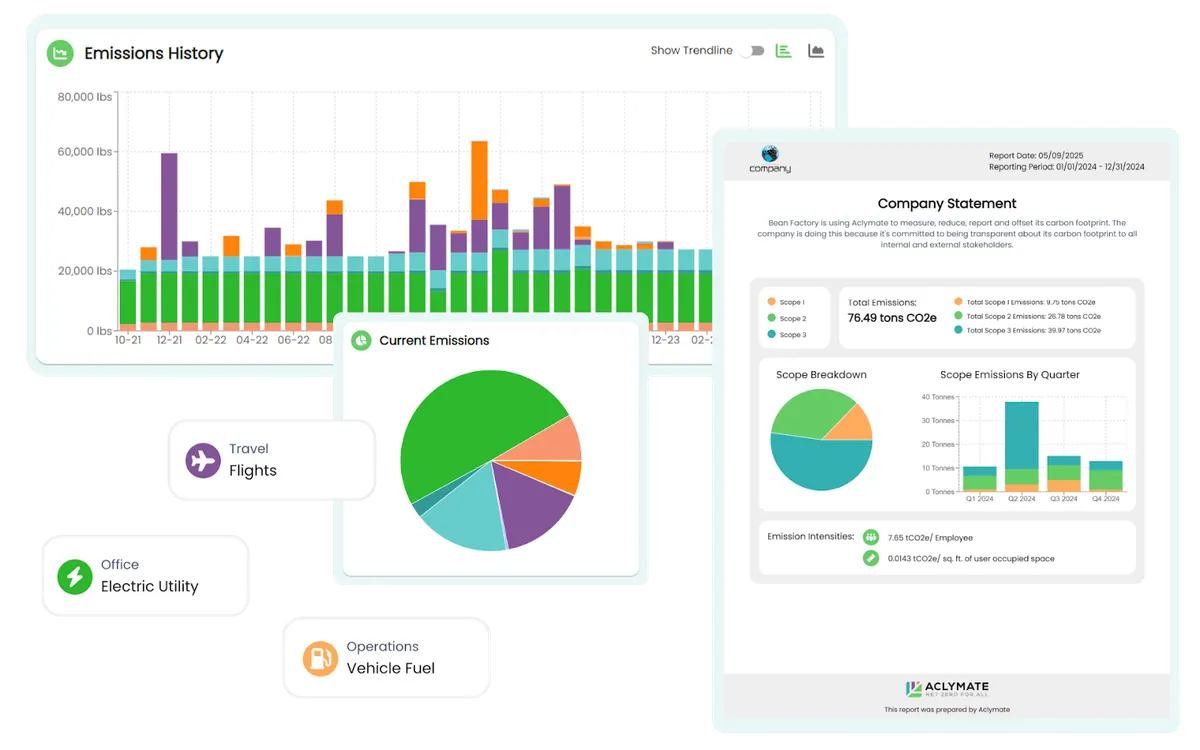
Combine all findings, such as your goals, data, analysis, and mitigation plans, into one consistent format. Use charts, tables, and visuals to show progress over time and make complex data easy to understand.
Consider using digital tools to simplify the reporting process, save time, and ensure compliance with evolving regulations.
Before sharing or publishing the report, you should carefully review the contents to ensure accuracy and completeness.
Check that all data, charts, and statements reflect your company’s performance and match the defined scope. Then, verify calculations and references to prevent errors or inconsistencies.
Consider having an internal review team or an external auditor to validate your information. Independent verification adds credibility and helps strengthen your environmental sustainability initiatives.
Lastly, confirm that your report aligns with globally recognized standards and frameworks, such as GRI or ISO 14001.
Aclymate offers powerful yet user-friendly reporting tools designed for companies without a full sustainability team.
The platform syncs with your accounting platforms to gather baseline environmental data. It also breaks down emissions by category, scope, and activity.
Aclymate will then generate audit-ready reports that meet industry-standard frameworks and help you obtain certifications like B Corp and EcoVadis.
Want done-for-you reporting? Aclymate's Turn Key solution provides access to climate bookkeepers and consultants to help you save time without the consultant-level price.
However, Aclymate is more than an environmental reporting tool. It offers all-in-one climate software, expert services, and a verified offset marketplace.
This helps you measure emissions across Scopes 1, 2, and 3, reduce your carbon footprint, and purchase a portfolio of offsets to improve your company's reputation.
Sign up today to start delivering compliance-ready reports for regulators and customers! You can also schedule a demo with our friendly team to see the Aclymate platform in action.
Environmental reporting is the process of collecting, analyzing, and sharing data about how your business affects the environment. It includes tracking emissions, resource use, waste generation, and other environmental factors that may contribute to climate change.
The main objectives of environmental reports are to measure impact, identify risks, communicate results clearly, and support strategic decision-making.
These benefit your business in several ways, such as enhanced reputation, improved compliance, and increased stakeholder trust.
Environmental incidents include chemical spills, air or water pollution, excessive waste disposal, or energy overuse. Reporting such events helps companies take responsibility, minimize damage, and prevent recurrence through better controls.
The seven key principles are accuracy, balance, clarity, comparability, reliability, timeliness, and completeness. These principles guide consistent reporting efforts to provide honest, clear, and useful information for all relevant stakeholders.
Get Aclymate's practical sustainability content delivered weekly.

AI is creating new opportunities for businesses, but it also comes with an environmental cost. Carbon offsets can help address some of those emissions, but businesses need to understand what they are offsetting, how offsets work, and why measuring and reducing emissions should come first.
Read Article
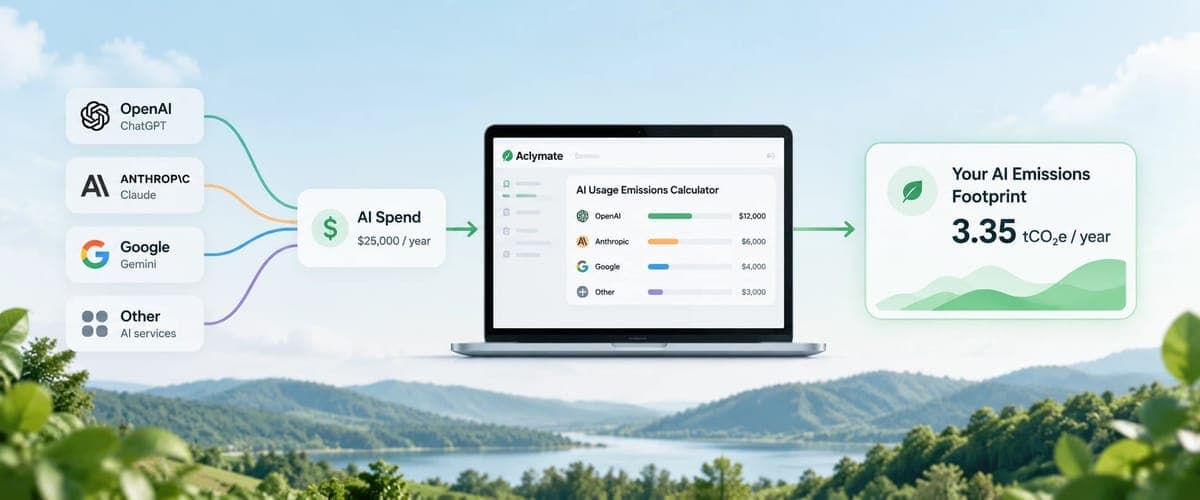
AI carbon emissions are becoming a new consideration for companies adopting ChatGPT, Claude, Gemini, Copilot and other artificial intelligence tools. Here’s how Aclymate estimates the carbon emissions from a company’s AI usage today—and how we expect the methodology to improve as AI providers release better usage and emissions data.
Read Article
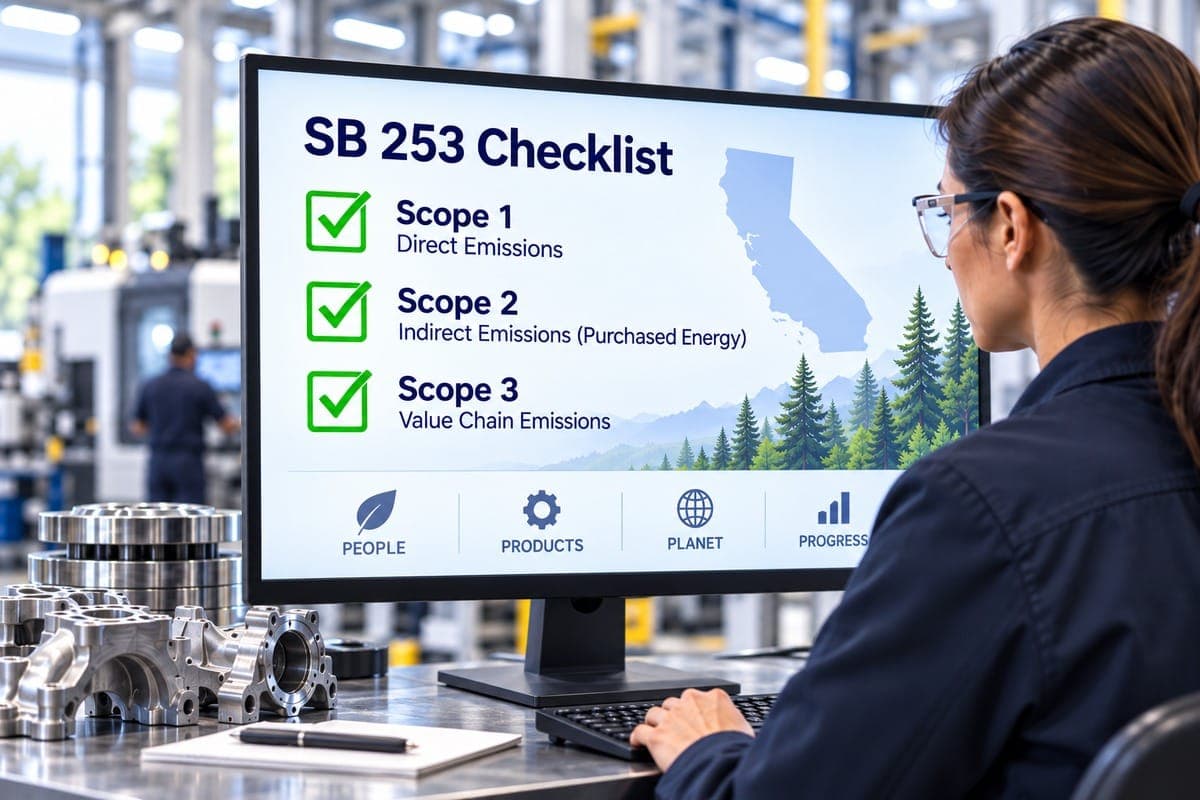
California SB 253 applies to companies over $1B in revenue — but its Scope 3 requirement reaches the automotive suppliers underneath them. What to expect and how to prepare.
Read Article
Talk with a Sustainability Expert, see a demo, or start free to put the Aclymate platform and experts to work for your team.