← Back to Insights
Aclymate Team
December 18, 2025
If you’ve been paying attention to sustainability trends, chances are you’ve heard the question “what is a carbon footprint calculator?” more than once. Businesses of all sizes are facing growing pressure from customers, investors, and regulators to understand and disclose their environmental impact. A carbon footprint calculator helps you measure the greenhouse gas emissions your business creates, from the electricity you use to the products you buy.
Knowing your footprint matters for several reasons. It helps you stay compliant with new requirements, use your resources more efficiently, and build trust with people who care about responsible business practices. Even if you’re a small shop or a scaling startup, getting your footprint right is becoming a basic part of operating in a climate-aware world.
Every ton of greenhouse gas emissions contributes to global warming, and humanity is now emitting carbon far faster than the planet can absorb it. This widening gap is what scientists refer to as ecological overshoot, a state where resource demand exceeds Earth’s ability to regenerate and stabilize climate systems.
Carbon emissions are one of the largest drivers of this overshoot. They trap heat, accelerate climate change, weaken natural ecosystems, and increase the frequency of extreme weather events. By measuring carbon footprints accurately, businesses gain visibility into how their operations contribute to global emissions and where reductions can meaningfully support climate stability. Understanding your footprint isn’t just about compliance. It’s about operating within the planet’s ecological limits.
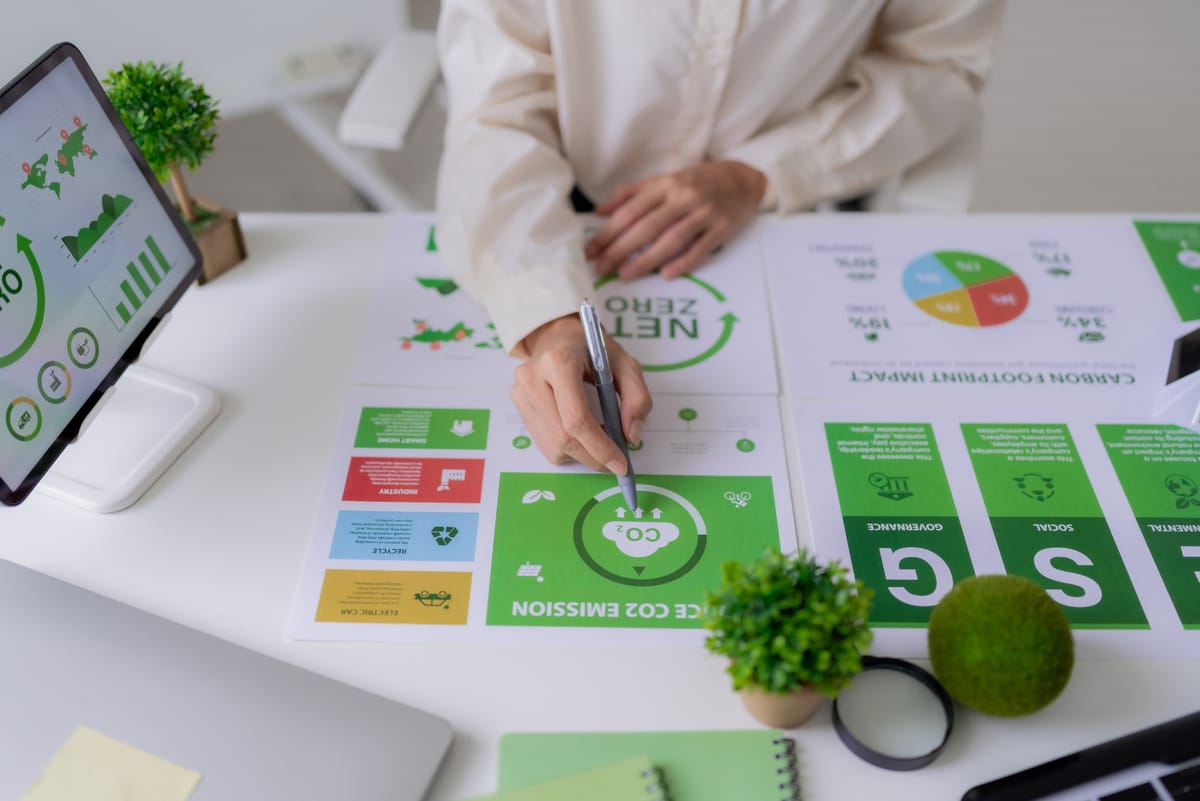
A carbon footprint calculator converts your business activities into measurable emissions using standardized data called emission factors. These factors come from reputable scientific and regulatory bodies like the EPA, IPCC, and the World Resources Institute (WRI).
A strong calculator follows the Greenhouse Gas (GHG) Protocol, which categorizes emissions into three scopes. Here’s the simple breakdown.
These are emissions from sources you directly control.
Examples include:
These emissions are usually the easiest to measure because they come directly from activities your business operates.
This includes purchased electricity, heat, cooling, or steam. Even if you didn’t generate the electricity yourself, it still represents emissions tied to your operations.
This is the broadest and most complex category. It covers the emissions you influence but don’t directly control.
Examples:
For most businesses, especially service businesses, Scope 3 makes up the majority of their total footprint. Good calculators account for this to give you a realistic picture rather than an incomplete one.
If you want to dig deeper into the official documentation, the GHG Protocol’s public resources are here: https://ghgprotocol.org/
Carbon footprint calculators rely on the scientific link between greenhouse gases and global warming. Different activities, like burning fuel, manufacturing goods, or generating electricity, release different gases, each with its own global warming potential (GWP). To simplify analysis, calculators convert everything into a common unit called CO₂e (carbon dioxide equivalent).
This approach is based on decades of scientific research summarized by the Intergovernmental Panel on Climate Change (IPCC). The IPCC defines how gases behave in the atmosphere and how much heat they trap over time. By translating activities into CO₂e using IPCC factors, calculators provide a consistent, science-based way to compare emissions and understand the impact of business decisions on the climate.
You may be tempted to do a quick estimate, but surface-level numbers won't get you far in today's regulatory and business environment. Here's why accuracy matters.
Governments are rolling out new reporting rules fast. Examples include:
Even if your company isn’t directly covered, your customers might be. When they report, they’ll ask you for your data.
Investors see emissions as part of business risk. According to McKinsey's sustainability research, companies with strong climate accounatability tend to perform better long-term because they understand their operational vulnerabilities.
The Word Resources Institute (WRI) and other global organizations have tracked a steady rise in consumer interest in climate-friendly brands. Clear carbon data helps you build trust and stand apart from competitors.
A calculator helps you spot inefficiencies you might not see otherwise. That could mean:
These changes often reduce emissions and save money at the same time.
If your business wants to align with global climate goals, your footprint is the starting point. Tools like the Science Based Targets initiative (SBTi) rely on accurate baseline numbers.
A carbon footprint calculator focuses specifically on greenhouse gas emissions, but carbon is just one part of a company’s broader environmental impact. Organizations also influence land use, water consumption, waste generation, supply chain resource use, packaging, and more. Scientists categorize these combined impacts under the idea of an ecological footprint, a measure of how much nature a company or population requires to support its activities.
Carbon footprints are often the largest and most measurable component of that footprint. By understanding carbon emissions first, businesses build the foundation for tackling other sustainability priorities over time. Many companies begin with carbon accounting because it’s standardized and widely regulated, then expand into topics like waste reduction, water stewardship, packaging sustainability, or full lifecycle impact assessments. A carbon footprint calculator is an entry point to a much larger sustainability journey.
For many organizations, measuring emissions is no longer a “nice to have.” It is becoming a commercial expectation driven by customers, procurement teams, investors, and enterprise partners. Businesses that cannot provide credible emissions data increasingly risk losing opportunities.
Here’s how that reality plays out across different types of companies.
Retail businesses operate in an environment where brand trust directly affects revenue. Customers are paying closer attention to sourcing, sustainability claims, and environmental impact. Simply saying “eco-friendly” is no longer enough.
A local boutique that cannot explain its environmental footprint may struggle to maintain credibility, especially if competitors begin sharing measurable sustainability data.
Measuring emissions allows the retailer to:
In competitive consumer markets, brand differentiation increasingly depends on transparency. Carbon measurement supports that transparency.
Restaurants face rising scrutiny around food sourcing, packaging waste, and energy use. Customers often associate sustainability with quality, health, and community values.
A café that promotes local sourcing or responsible practices must be able to demonstrate that commitment. Refrigeration, food deliveries, packaging, and energy consumption all contribute to emissions. Without measurement, these impacts remain invisible.
Using a carbon footprint calculator helps a café:
In local markets, reputation spreads quickly. Measurement ensures that sustainability is operational, not just promotional.
Tech startups often assume their digital nature means minimal environmental impact. In reality, cloud hosting, hardware procurement, business travel, and vendor services contribute significantly to Scope 3 emissions.
More importantly, climate transparency is increasingly part of funding conversations. Investors are integrating ESG metrics into due diligence processes. Large enterprise clients may also require emissions disclosures from vendors.
For growth-stage startups, measuring emissions can:
In many cases, climate reporting is no longer theoretical. It can directly influence access to capital and strategic partnerships.
Manufacturing suppliers face some of the most direct pressure. Large brands are increasingly required to report Scope 3 emissions, which includes emissions from their suppliers. As a result, those brands now expect emissions data from the companies they work with.
A supplier that cannot provide credible carbon data may lose out on contracts.
Measuring emissions allows manufacturing suppliers to:
In supply chain ecosystems, emissions transparency is quickly becoming part of the qualification process. Suppliers who measure their footprint gain a competitive edge. Those who do not risk being excluded from future opportunities.
Across retail, hospitality, tech, and manufacturing, one pattern is clear:
Carbon measurement is shifting from optional sustainability initiative to commercial necessity.
Whether driven by brand trust, investor scrutiny, procurement standards, or regulatory readiness, businesses increasingly need structured emissions data to compete, grow, and protect their position in the market.
Strong calculators rely on high-quality, internationally recognized sources such as:
These data sources ensure your footprint is measured using recognized scientific standards rather than rough estimates.
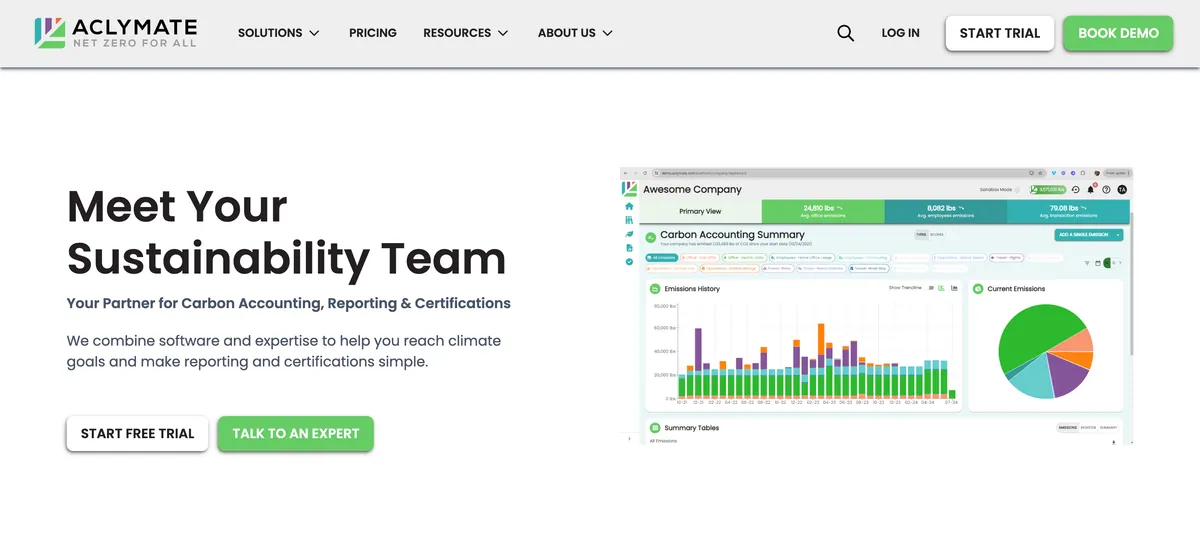
Aclymate captures the full set of emissions you generate, including less obvious categories like shipping, employee commuting, remote work, cloud services, and vendor purchases. Many companies discover that their largest impact isn’t electricity use, but the upstream emissions from the goods and services they rely on.
With full-scope coverage, you establish a more accurate baseline and gain clarity on where reduction efforts will have the most meaningful impact.
Gathering emissions data is often the biggest hurdle for smaller teams. Aclymate reduces the manual burden by structuring the data you already collect and aligning it with recognized emissions categories.
Instead of wrestling with spreadsheets and inconsistent inputs, businesses can centralize their data, reduce reporting errors, and maintain cleaner year-over-year tracking.
Carbon accounting can quickly become technical and difficult to interpret. Aclymate focuses on clarity. Emissions are presented in structured dashboards, segmented by scope, category, and timeframe.
This makes it easier to:
Clear reporting turns emissions data into something leadership teams can actually use.
Once your footprint is measured, the next step is knowing what to do with it. Aclymate helps identify practical reduction opportunities across operations, procurement, and strategy.
Rather than offering generic sustainability advice, the platform highlights where emissions are concentrated so businesses can prioritize the highest-impact areas first.
This enables structured goal setting that aligns with your size, industry, and growth plans.
Emissions and financial performance are closely connected. Energy waste, inefficient logistics, and outdated equipment often increase both costs and carbon output.
Aclymate helps businesses understand where operational adjustments may lower emissions and reduce expenses at the same time. This reframes sustainability from a compliance requirement into a strategic financial decision.
You don’t need to master every detail of climate legislation or memorize the GHG Protocol to begin measuring emissions. Aclymate guides businesses step by step, clarifying what data is needed, how it’s categorized, and how to interpret the results.
This structured support makes carbon accounting manageable, even for teams without prior sustainability experience.
For businesses that want additional guidance beyond software tools, Aclymate Turnkey provides a more comprehensive, hands-on solution.
The Turnkey Tier is designed for organizations that:
Instead of navigating measurement alone, Turnkey provides structured assistance to help ensure data is collected correctly, emissions are categorized properly, and reporting aligns with recognized standards.
This service layer reduces the internal burden on teams and increases confidence that emissions measurement is accurate, defensible, and audit-ready.
For businesses facing growing stakeholder expectations, the Turnkey option can accelerate implementation while minimizing disruption to daily operations.
You can learn more about the Turnkey Tier here: https://aclymate.com/pages/turn-key-tier
It measures the greenhouse gases your business produces and converts that data into CO₂e so you can understand your environmental impact.
You’ll typically provide operational data such as energy bills, fuel use, shipping records, purchasing spend, travel, and waste information.
This data does more than calculate emissions. It enables you to produce credible reports that enterprise customers and procurement teams increasingly require. Without structured emissions data, you risk missing out on contracts or losing clients with sustainability mandates.
The right data helps you qualify, compete, and retain the customers you want to win.
Yes. Even small companies are now asked for emissions data by their clients, suppliers, or partners. It’s also a smart way to uncover inefficiencies and reduce costs.
Calculators using EPA, IPCC, and WRI emission factors provide standardized, reliable results. Accuracy improves when your data is complete and up to date.
Most businesses use the data to identify improvement opportunities, set targets, or respond to customer or investor requests. It’s also the foundation for long-term sustainability planning.
A carbon footprint calculator measures only greenhouse gas emissions (Scope 1, 2, and 3). An ecological footprint calculator measures much more—land use, resources, food, waste, and overall environmental demand. Businesses typically use carbon calculators because they align with reporting and compliance requirements.
Most companies start with carbon measurement because it’s standardized and required for certifications and regulations. Ecological footprint tools are useful for education or high-level benchmarking, but carbon accounting is the core requirement for sustainability reporting and target setting.
Carbon emissions are a major driver of climate change and ecological overshoot—when humanity’s resource use exceeds the planet’s ability to regenerate. Measuring your footprint helps identify where emissions come from and how your business can operate within environmental limits.
Get Aclymate's practical sustainability content delivered weekly.

AI is transforming carbon credit verification through satellite monitoring, automated analysis, and anomaly detection. But can technology solve the voluntary carbon market’s credibility problem? Discover the limitations of AI verification and how businesses can evaluate carbon credits while keeping emissions reductions ahead of offsetting.
Read Article

AI is creating new opportunities for businesses, but it also comes with an environmental cost. Carbon offsets can help address some of those emissions, but businesses need to understand what they are offsetting, how offsets work, and why measuring and reducing emissions should come first.
Read Article
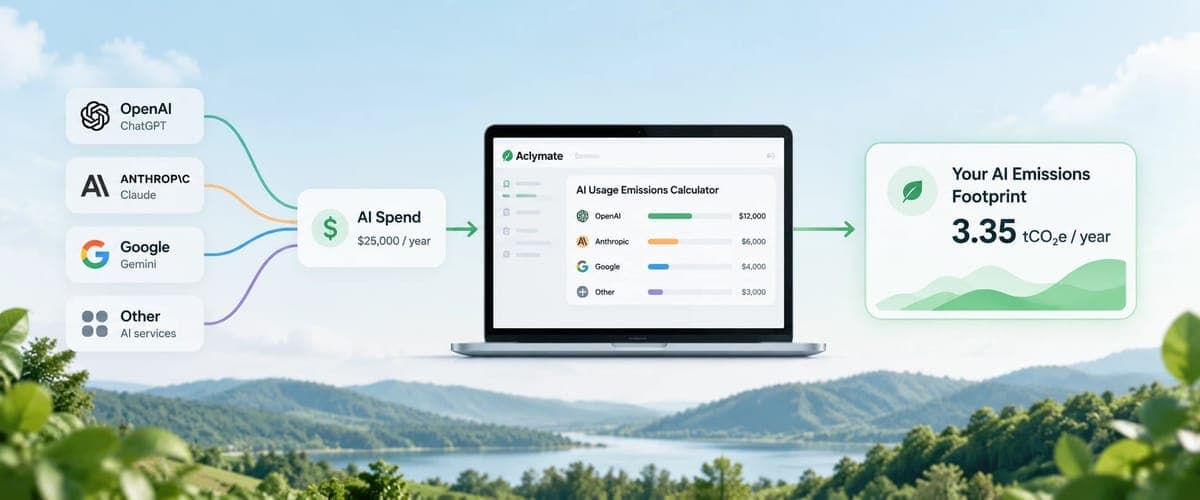
AI carbon emissions are becoming a new consideration for companies adopting ChatGPT, Claude, Gemini, Copilot and other artificial intelligence tools. Here’s how Aclymate estimates the carbon emissions from a company’s AI usage today—and how we expect the methodology to improve as AI providers release better usage and emissions data.
Read Article
Talk with a Sustainability Expert, see a demo, or start free to put the Aclymate platform and experts to work for your team.