← Back to Insights
Aclymate Team
March 6, 2026
Sustainability reporting has moved from optional to expected.
Investors want credible ESG data. Customers are more skeptical of green claims. Regulators across the U.S., EU, and Asia are tightening climate disclosure rules. Frameworks like the Greenhouse Gas Protocol and reporting standards from the International Sustainability Standards Board are shaping how companies measure and disclose emissions.
At the same time, supply chains are demanding transparency. Large enterprises now require vendors to provide carbon data before signing contracts. If you cannot measure your emissions, you risk losing opportunities.
This is where a carbon footprint app becomes essential.
Instead of relying on manual spreadsheets, businesses can automate emissions tracking, generate audit-ready reports, and identify reduction strategies inside one centralized system. The right app does more than calculate numbers. It turns sustainability into a strategic advantage.
If you’re new to carbon accounting, Aclymate’s educational resources break down how measurement works, how emissions are categorized, and what businesses should prioritize first.
A carbon footprint app is a digital platform that helps businesses:
Most reputable tools align with the Greenhouse Gas Protocol to ensure data accuracy and consistency.
The best platforms combine automation with strategic insight so companies can move from measurement to meaningful action.
Not all solutions are built the same. When evaluating options, focus on these essentials:
Look for integrations with accounting systems, utilities, travel platforms, and procurement tools. Automation reduces errors and saves time.
Scope 3 emissions often represent 70 to 90 percent of total emissions. A serious carbon footprint app must account for supply chains, business travel, freight, waste, and purchased goods.
Choose a platform that generates exportable reports aligned with ISSB, CDP, and other disclosure frameworks.
Measurement alone is not enough. The platform should help you prioritize actions that actually reduce emissions.
If your company is pursuing carbon neutrality, the app should provide access to credible offset projects and clear documentation support.
Aclymate’s sustainability guides at aclymate.com explain the difference between carbon accounting, reduction strategies, and neutralization in more depth.
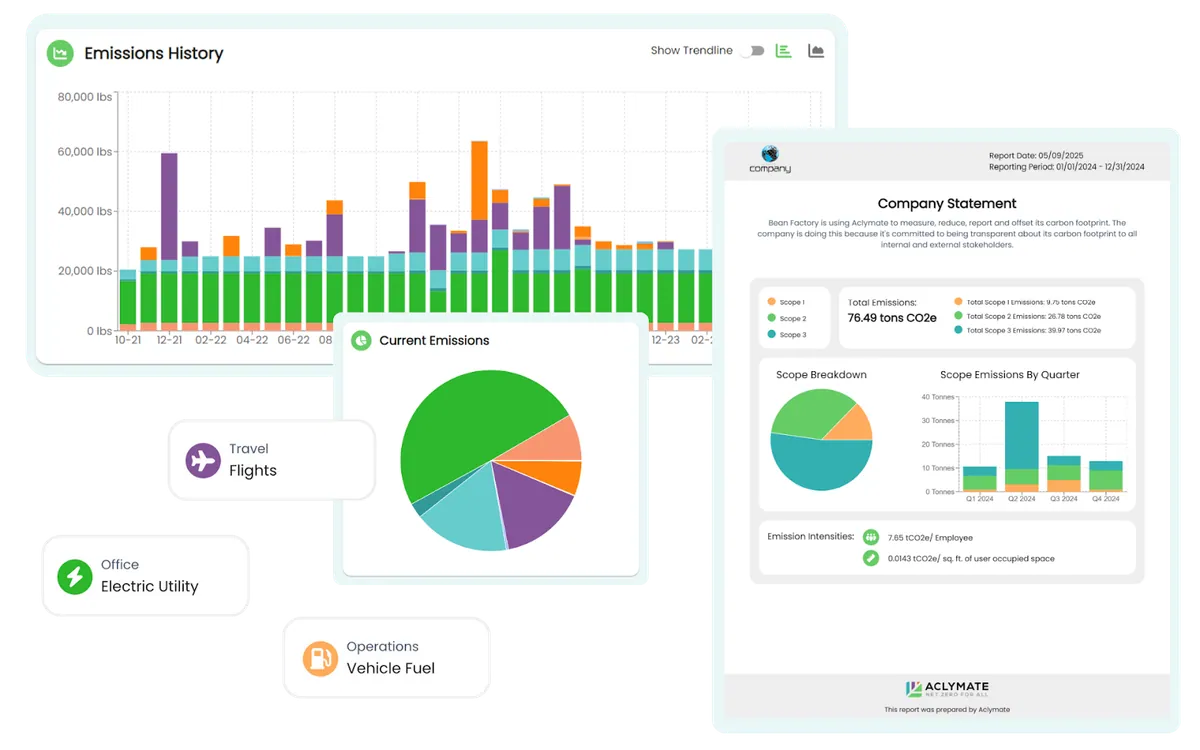
Aclymate is designed specifically for small and mid-sized businesses that need structured carbon accounting without building an internal sustainability department.
It combines automation with expert guidance, which makes it practical for companies entering ESG reporting for the first time.
What makes Aclymate different:
Comprehensive Scope 1, 2, and 3 Tracking
Aclymate captures emissions from utilities, fuel, purchased goods, freight, business travel, commuting, and waste. Since Scope 3 often represents the majority of emissions, this depth is critical for credibility.
Automated Data Conversion
Businesses upload financial and operational data, and the platform converts it into CO₂e values using methodologies aligned with the Greenhouse Gas Protocol. This reduces spreadsheet errors and improves accuracy.
Expert-Backed Support
Unlike purely DIY calculators, Aclymate pairs its technology with climate experts who help interpret results, identify reduction opportunities, and plan realistic sustainability goals.
Reduction-Focused Strategy
The platform highlights emission hotspots and provides guidance on operational improvements, supplier engagement, and efficiency initiatives.
Carbon Neutrality Pathways
For companies pursuing neutrality, Aclymate supports measurement, reduction planning, access to verified offsets, and documentation to substantiate claims.
Audit-Ready Reporting
Reports can support investor disclosures, customer questionnaires, vendor ESG requirements, and board-level reporting.
Aclymate’s internal resources at aclymate.com provide detailed explanations of carbon neutrality, Scope 3 measurement, and sustainability certification pathways.
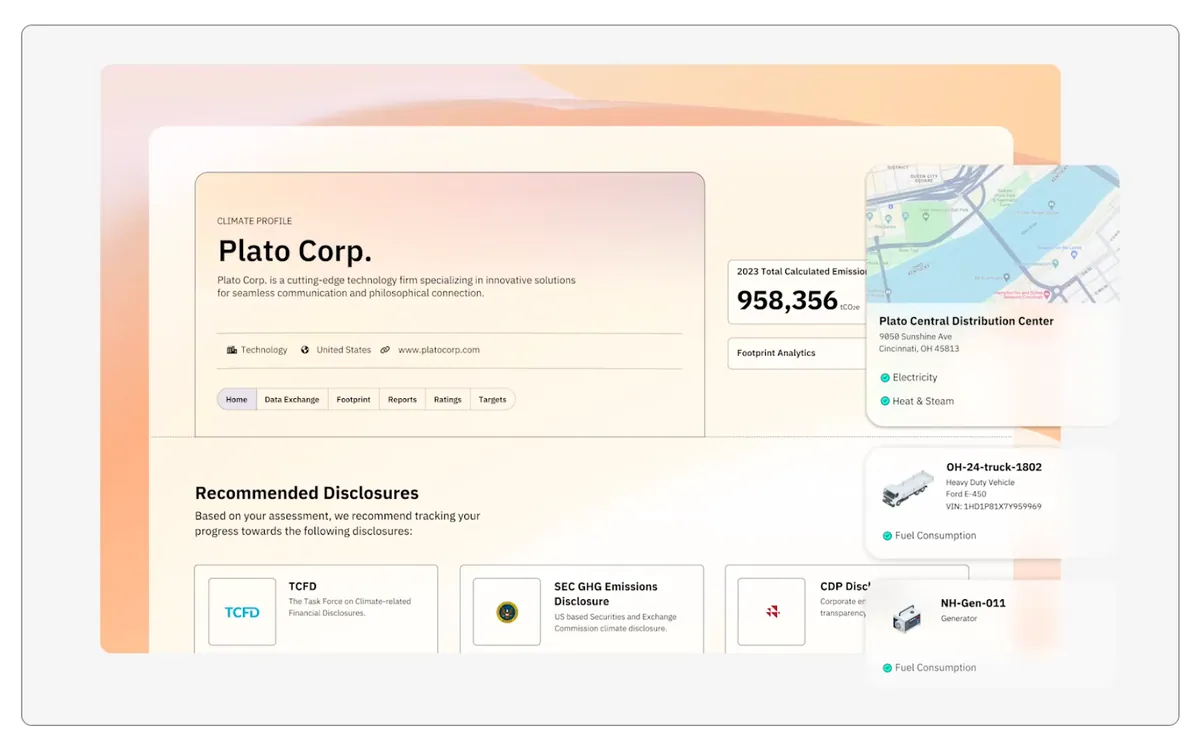
Persefoni focuses on enterprise-level carbon accounting and financial-grade disclosure.
Best suited for large organizations facing complex regulatory requirements.
Strengths:
It may be more robust than smaller businesses require, but it is powerful for multinational enterprises.
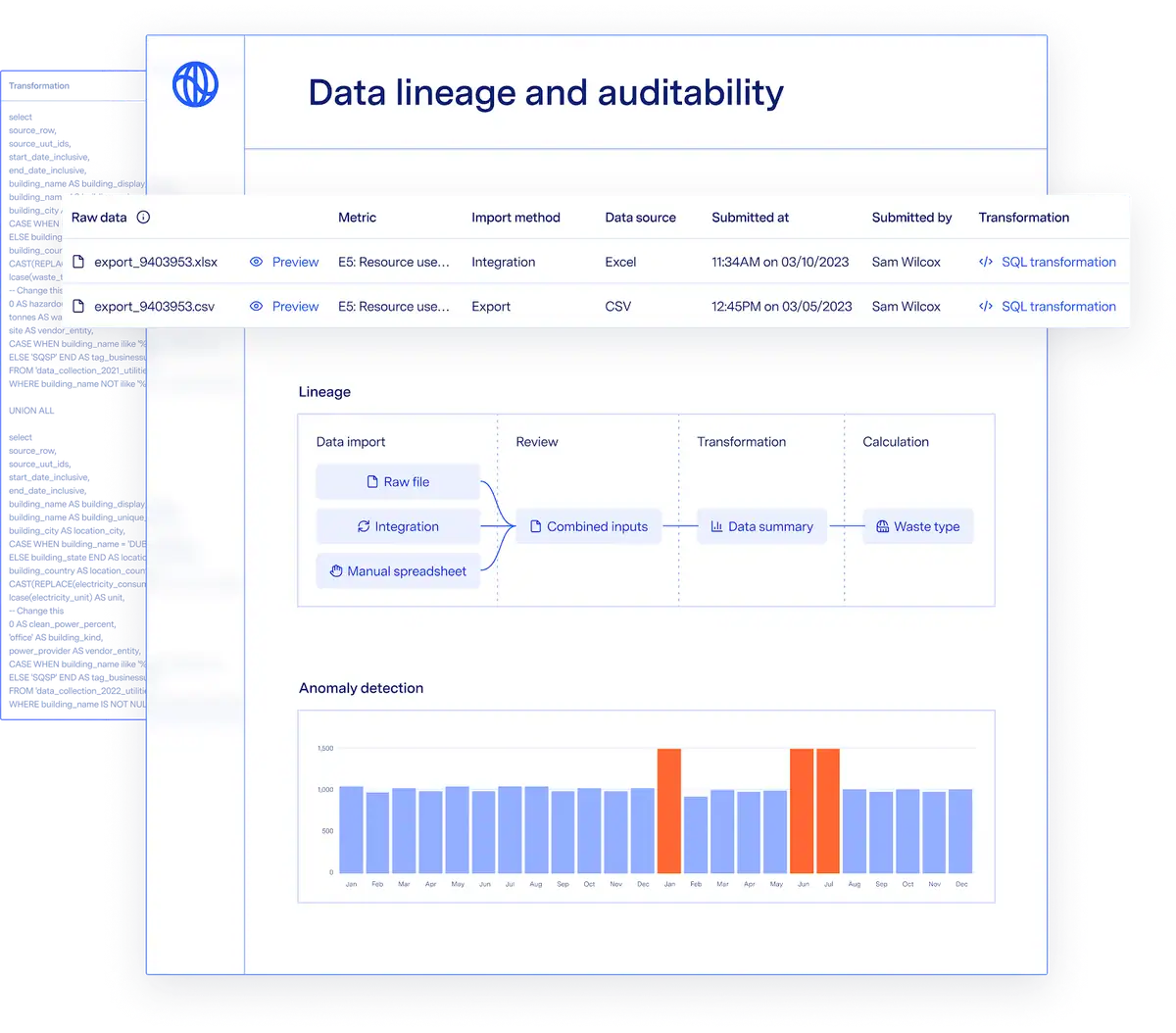
Watershed offers detailed emissions analytics and decarbonization modeling tools.
Best for companies that want advanced reduction planning alongside tracking.
Strengths:
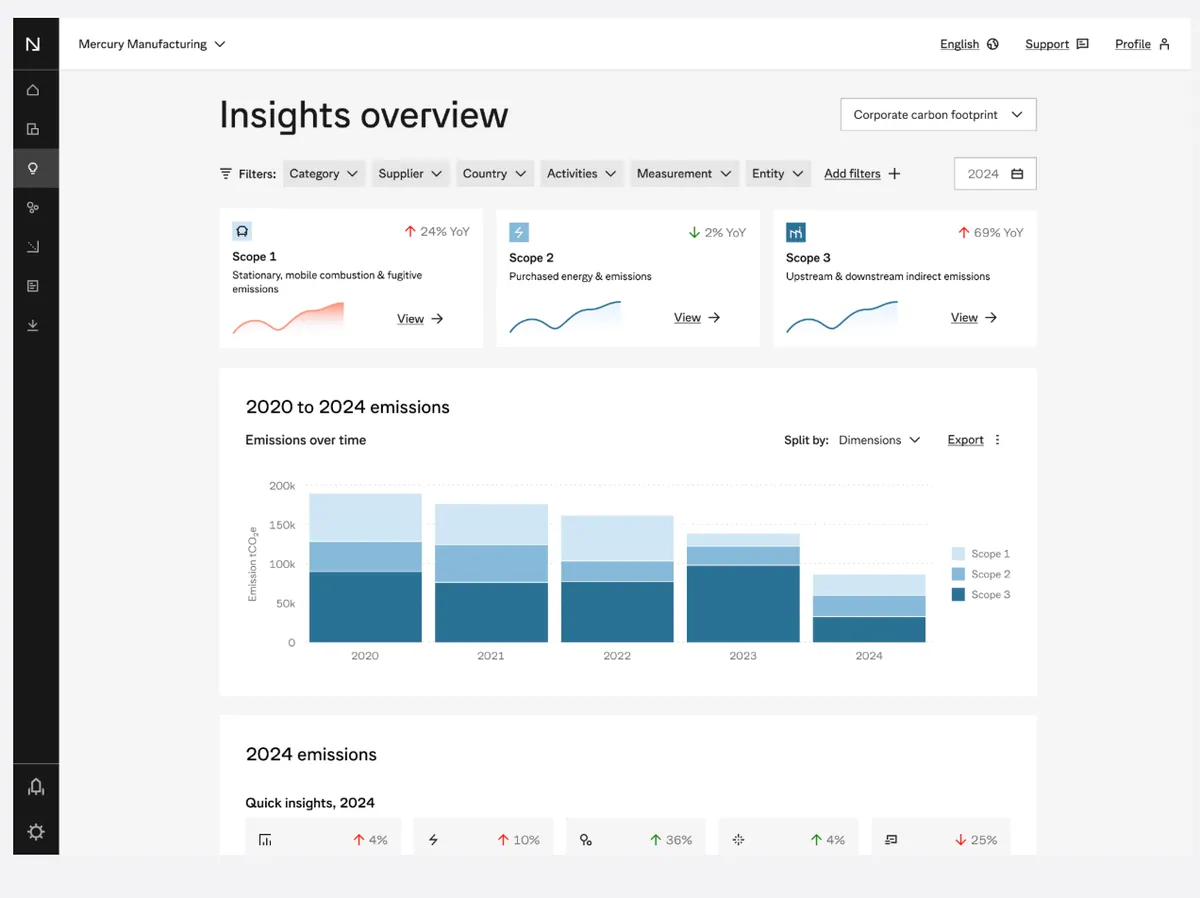
Normative emphasizes science-based carbon accounting aligned with international standards.
Best for companies pursuing formal science-based targets.
Strengths:
The best carbon footprint app depends on your company’s size, regulatory exposure, and sustainability maturity.
Ask yourself:
Smaller teams often benefit from platforms that combine automation and support. Larger enterprises may require more technical systems with global integration capabilities.
Implementing a carbon footprint app delivers tangible advantages:
Sustainability has shifted from a marketing initiative to a core business function. Measurement is the first step toward resilience and long-term competitiveness.
If your business is ready to move beyond spreadsheets and manual carbon calculations, now is the time to adopt a carbon footprint app that simplifies tracking and strengthens your sustainability strategy.
Aclymate combines automated carbon accounting, expert guidance, and reduction planning in one streamlined platform. Whether you're responding to customer ESG requests or building a carbon neutrality roadmap, Aclymate helps you move forward with clarity.
Visit aclymate.com to explore how your company can measure, reduce, and report emissions more effectively.
Watch the Aclymate Demo.
Small businesses typically benefit from platforms that combine automation with expert support. Aclymate is designed specifically for growing teams that need structure and guidance without hiring a full ESG department.
Reputable apps follow the Greenhouse Gas Protocol and use standardized emission factors. Accuracy depends on the quality of data inputs and the depth of Scope 3 coverage.
Yes. Many platforms generate reports aligned with ISSB, CDP, and other disclosure frameworks, helping companies prepare for climate-related regulations.
The best tools do both. They measure emissions and provide insights, reduction strategies, and supplier engagement support to drive measurable improvement.
Costs vary by company size and complexity. However, automation significantly reduces the labor and consulting expenses traditionally associated with sustainability reporting.
Get Aclymate's practical sustainability content delivered weekly.

Learn how to calculate an event carbon footprint in 4 steps: set the boundary, gather activity data, apply emission factors, and total it. Includes an example.
Read Article

An event carbon footprint is the total emissions from travel, lodging, venue energy, food, and waste. See which sources matter most and why.
Read Article

AI is transforming carbon credit verification through satellite monitoring, automated analysis, and anomaly detection. But can technology solve the voluntary carbon market’s credibility problem? Discover the limitations of AI verification and how businesses can evaluate carbon credits while keeping emissions reductions ahead of offsetting.
Read Article
Talk with a Sustainability Expert, see a demo, or start free to put the Aclymate platform and experts to work for your team.