← Back to Insights
Aclymate Team
March 20, 2026
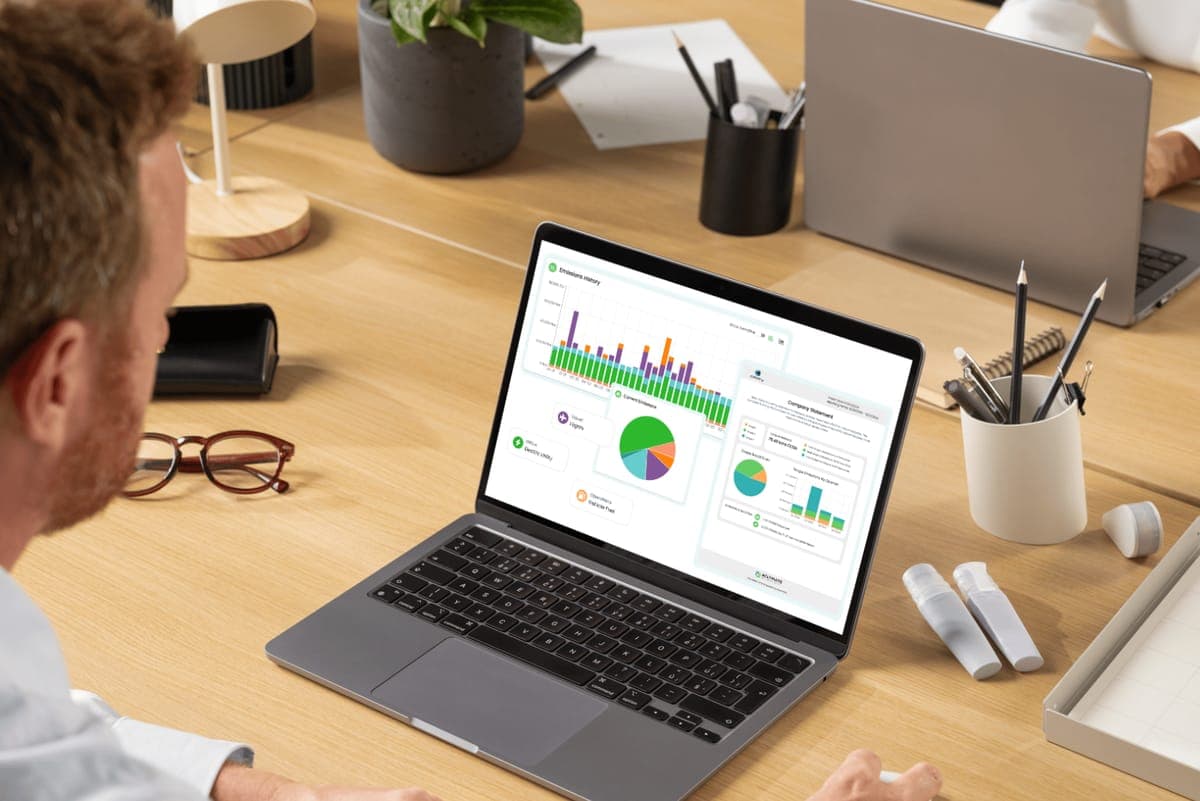
As sustainability reporting becomes more important, businesses must accurately measure their greenhouse gas emissions. Investors, regulators, and customers increasingly expect companies to track and disclose their environmental impact.
This is where carbon accounting tools come in.
Carbon accounting tools help organizations measure emissions across their operations, convert activity data into standardized greenhouse gas metrics, and track sustainability performance over time. These tools simplify complex calculations and make it easier for companies to understand their carbon footprint.
Instead of relying on spreadsheets and manual calculations, many organizations now use dedicated platforms designed specifically for emissions tracking.
Carbon accounting tools are software platforms that help businesses measure, manage, and report greenhouse gas emissions.
These tools typically collect operational data such as energy consumption, fuel usage, travel activity, and supply chain inputs. The software then applies emission factors to calculate emissions in carbon dioxide equivalents (CO₂e).
Most carbon accounting tools track emissions according to the framework developed by the Greenhouse Gas Protocol:
Using a standardized framework ensures emissions reporting is consistent and comparable across organizations.
While platforms vary in design, most carbon accounting tools provide several core capabilities that support emissions measurement and sustainability reporting.
Carbon accounting tools collect operational data from multiple sources across an organization.
These sources may include:
Centralizing this information allows businesses to create a a complete emissions inventory.
One of the most valuable features of carbon accounting tools is automated emissions calculations.
These tools apply verified emission factors to operational data, converting activity inputs into emissions values.
For example:
Fuel consumption × emission factor = carbon emissions
Emission factors are often sourced from environmental databases such as those provided by the U.S. Environmental Protection Agency or other climate reporting agencies.
Automation reduces the risk of manual errors and improves reporting accuracy.
Effective carbon accounting tools allow businesses to measure emissions across all three scopes.
Tracking emissions by scope helps organizations identify where their largest environmental impacts occur. In many industries, Scope 3 emissions from suppliers and logistics partners represent the largest share of a company’s carbon footprint.
Research from the International Energy Agency shows that value chain emissions often represent the majority of corporate emissions.
Carbon accounting tools also help companies prepare sustainability reports and climate disclosures.
Many platforms align reporting with global frameworks such as:
These frameworks guide companies in disclosing climate data to investors, regulators, and stakeholders.
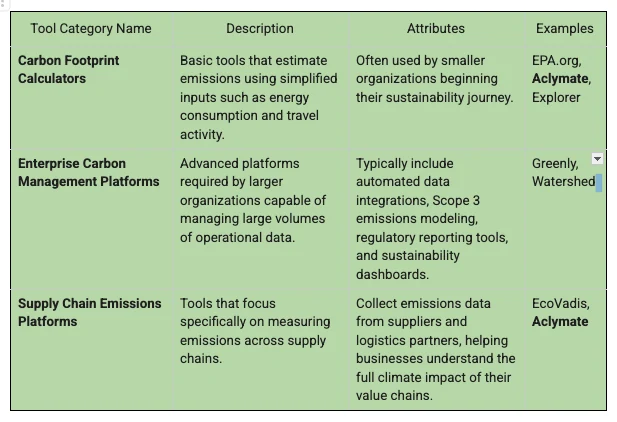
Businesses may use several types of tools depending on their size and sustainability goals.
Basic carbon footprint calculators estimate emissions using simplified inputs such as energy consumption and travel activity.
These tools are often used by smaller organizations beginning their sustainability journey.
You can learn more about how these tools work in our article on carbon footprint calculators for businesses.
Larger organizations often require more advanced platforms capable of managing large volumes of operational data.
Enterprise carbon management platforms typically include:
These systems help organizations track emissions across multiple departments and facilities.
Some tools focus specifically on measuring emissions across supply chains.
These platforms collect emissions data from suppliers and logistics partners, helping businesses understand the full climate impact of their value chains.
Companies interested in reducing emissions after measurement may find our guide on reducing business carbon footprints helpful.
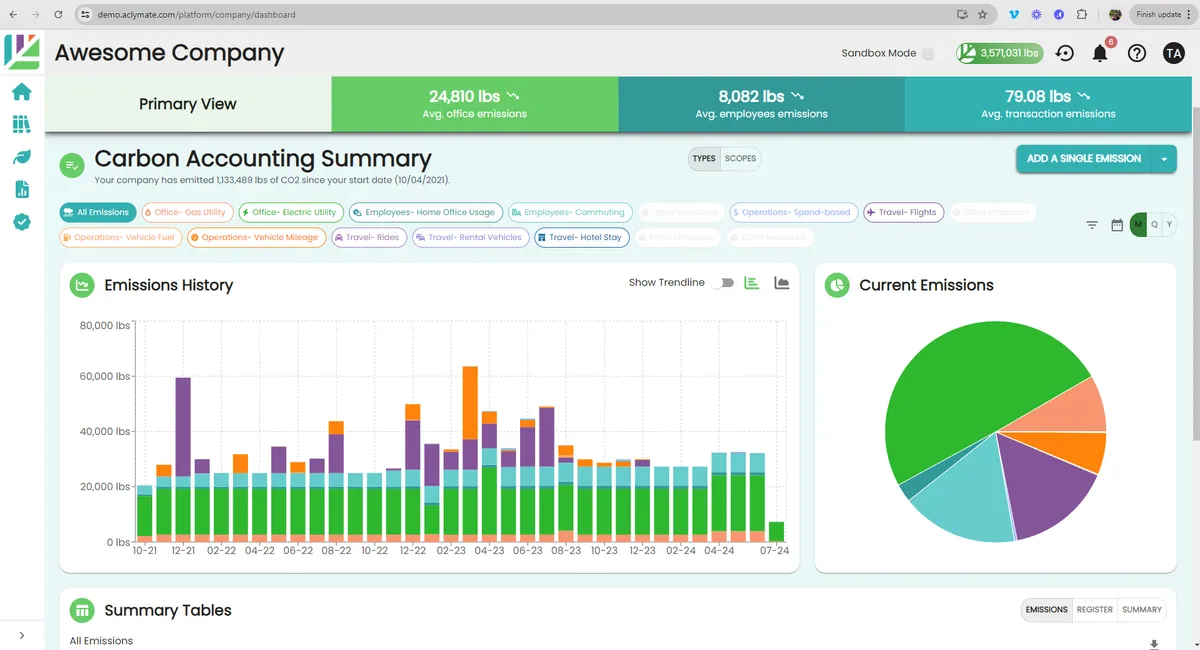
Many companies struggle with fragmented emissions data, manual calculations, and inconsistent reporting methods.
Platforms like Aclymate simplify carbon accounting by bringing emissions measurement and reporting into one system.
Aclymate helps businesses:
By automating calculations and organizing sustainability data, Aclymate helps businesses move from measuring emissions to actively managing them.
For a deeper look at the methodology behind emissions measurement, see our article on how carbon accounting works.
Selecting the right carbon accounting tool depends on a company’s operations, reporting requirements, and sustainability goals.
Businesses should evaluate tools based on:
Organizations that adopt the right tools can build more reliable emissions inventories and make better climate decisions.
Carbon accounting tools are evolving quickly as sustainability expectations grow.
Advances in automation, data integration, and supply chain emissions tracking are helping businesses move beyond simple reporting toward continuous climate performance management.
As climate disclosure regulations expand worldwide, these tools will become essential infrastructure for sustainability programs.
Understanding emissions is the first step toward reducing them.
Modern carbon accounting tools make it easier for businesses to measure their carbon footprint, identify reduction opportunities, and prepare sustainability reports with confidence.
Looking for a simpler way to measure and manage your company’s emissions?
Explore how Aclymate helps businesses track Scope 1, Scope 2, and Scope 3 emissions while streamlining sustainability reporting.
Carbon accounting tools are software platforms that help businesses measure, track, and report greenhouse gas emissions from their operations and supply chains. These tools convert operational data into standardized emissions metrics such as carbon dioxide equivalents (CO₂e).
Carbon accounting tools simplify emissions measurement and sustainability reporting. They automate calculations, centralize emissions data, and help organizations comply with climate disclosure frameworks.
Without these tools, companies often rely on manual spreadsheets that can lead to inaccurate emissions reporting.
Effective carbon accounting tools typically include:
These features help organizations maintain accurate and transparent emissions inventories.
Carbon accounting tools multiply activity data such as fuel consumption or electricity usage by emission factors sourced from environmental databases. This converts operational inputs into greenhouse gas emissions measured in carbon dioxide equivalents.
Many organizations now use digital carbon management platforms to measure and track emissions. Platforms such as Aclymate help businesses monitor sustainability performance, calculate emissions automatically, and prepare climate disclosures more efficiently.
Get Aclymate's practical sustainability content delivered weekly.

AI is creating new opportunities for businesses, but it also comes with an environmental cost. Carbon offsets can help address some of those emissions, but businesses need to understand what they are offsetting, how offsets work, and why measuring and reducing emissions should come first.
Read Article
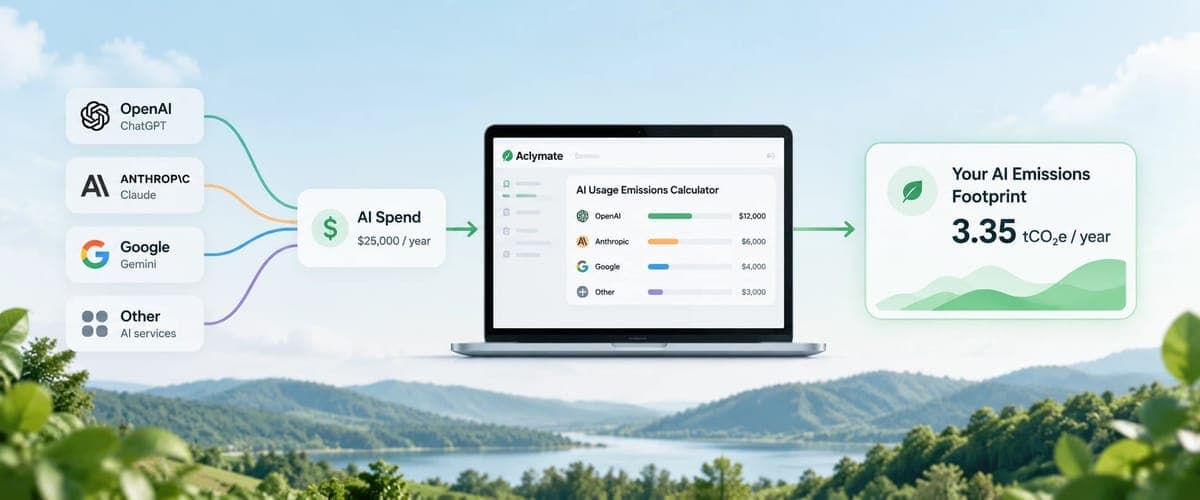
AI carbon emissions are becoming a new consideration for companies adopting ChatGPT, Claude, Gemini, Copilot and other artificial intelligence tools. Here’s how Aclymate estimates the carbon emissions from a company’s AI usage today—and how we expect the methodology to improve as AI providers release better usage and emissions data.
Read Article
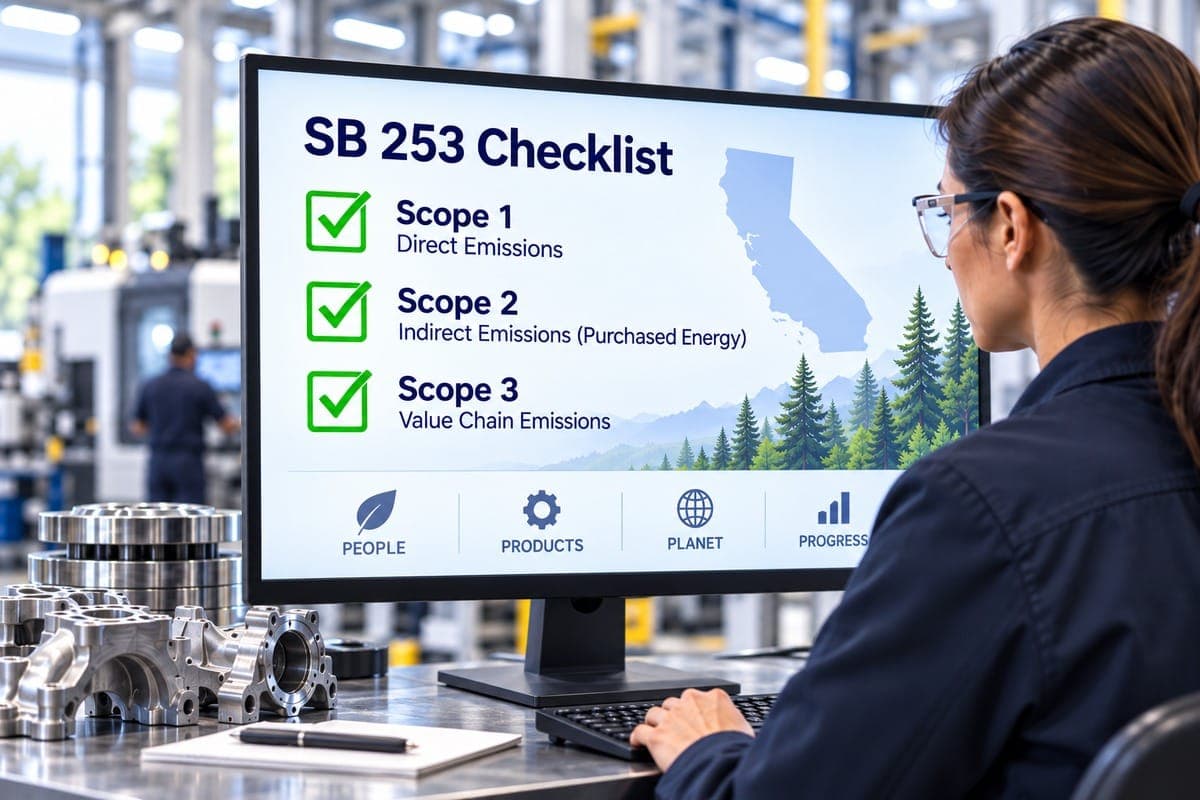
California SB 253 applies to companies over $1B in revenue — but its Scope 3 requirement reaches the automotive suppliers underneath them. What to expect and how to prepare.
Read Article
Talk with a Sustainability Expert, see a demo, or start free to put the Aclymate platform and experts to work for your team.