← Back to Insights
Aclymate Team
March 10, 2026

Businesses are increasingly expected to measure, report, and reduce their environmental impact. As sustainability becomes a key priority for organizations, many leaders have questions about how carbon footprints work, how they are calculated, and what actions companies can take to reduce emissions.
This carbon footprint FAQ answers the most common questions businesses have about carbon emissions, sustainability reporting, and practical ways to reduce environmental impact.
Whether your company is just beginning its sustainability journey or looking to improve existing climate initiatives, understanding the basics of carbon footprints is the first step toward meaningful action.
Many organizations start by using a business carbon footprint calculator to estimate emissions and identify where improvements can be made.
A carbon footprint refers to the total amount of greenhouse gas emissions produced by an individual, organization, product, or activity. These emissions typically include carbon dioxide (CO₂), methane (CH₄), and other greenhouse gases that contribute to climate change.
For businesses, a carbon footprint includes emissions from operations, energy use, transportation, supply chains, and product life cycles.
The Greenhouse Gas Protocol is the most widely used global framework for measuring and reporting corporate emissions.
Corporate emissions are divided into three categories:
Scope 1 – Direct emissions
These emissions come from sources owned or controlled by a company, such as fuel used in company vehicles or manufacturing equipment.
Scope 2 – Indirect energy emissions
These emissions come from purchased electricity, heating, or cooling used by the business.
Scope 3 – Value chain emissions
These include emissions from suppliers, transportation, business travel, employee commuting, and product use.
According to research from the World Resources Institute, Scope 3 emissions often represent the largest portion of a company’s total carbon footprint.
Measuring a carbon footprint helps organizations understand where emissions occur across operations and supply chains.
Businesses measure emissions to:
• Identify areas where emissions can be reduced
• Track sustainability progress
• Prepare ESG and sustainability reports
• Meet regulatory requirements
• Respond to customer and investor expectations
Carbon measurement provides the data companies need to build effective climate strategies.
Businesses calculate their carbon footprint by collecting operational data and converting it into greenhouse gas emissions using standardized emission factors.
Common data sources include:
• Energy consumption
• Fuel usage
• Business travel
• Employee commuting
• Purchased goods and services
• Shipping and logistics
Many organizations simplify this process using carbon accounting platforms that automate calculations and provide emissions insights.
Carbon accounting is the process of measuring, tracking, and reporting greenhouse gas emissions generated by a company.
It works similarly to financial accounting but focuses on environmental impact rather than financial performance.
Carbon accounting helps businesses:
• Measure emissions across Scope 1, 2, and 3
• Track sustainability progress
• Identify emission hotspots
• Prepare climate disclosures
Platforms like Aclymate make carbon accounting easier by automatically collecting and analyzing emissions data across business operations.
Carbon reduction and carbon offsetting are two different approaches to managing emissions.
Carbon reduction involves lowering emissions directly through operational improvements such as energy efficiency, renewable energy adoption, and waste reduction.
Carbon offsetting involves compensating for emissions by funding projects that remove or prevent greenhouse gases, such as reforestation or renewable energy projects.
Most sustainability frameworks recommend reducing emissions first before using offsets to address remaining emissions.
A carbon neutral company balances the amount of greenhouse gases it produces with an equivalent amount removed or offset.
Organizations typically achieve carbon neutrality by:
• Measuring their carbon footprint
• Reducing emissions through operational improvements
• Offsetting remaining emissions through verified climate projects
Many businesses pursue certification to demonstrate that they operate as a carbon neutral company.
Some industries produce significantly more emissions due to energy use, manufacturing processes, or supply chain complexity.
Examples include:
• Manufacturing
• Transportation and logistics
• Energy production
• Construction
• Agriculture
However, companies in every industry can reduce their carbon footprint through operational improvements and sustainable practices.
Businesses can reduce emissions through a variety of strategies.
Common approaches include:
• Improving energy efficiency
• Transitioning to renewable energy
• Reducing business travel
• Optimizing logistics and transportation
• Working with sustainable suppliers
• Reducing waste and packaging
Many companies also set science-based climate targets to align their emissions reductions with global climate goals.
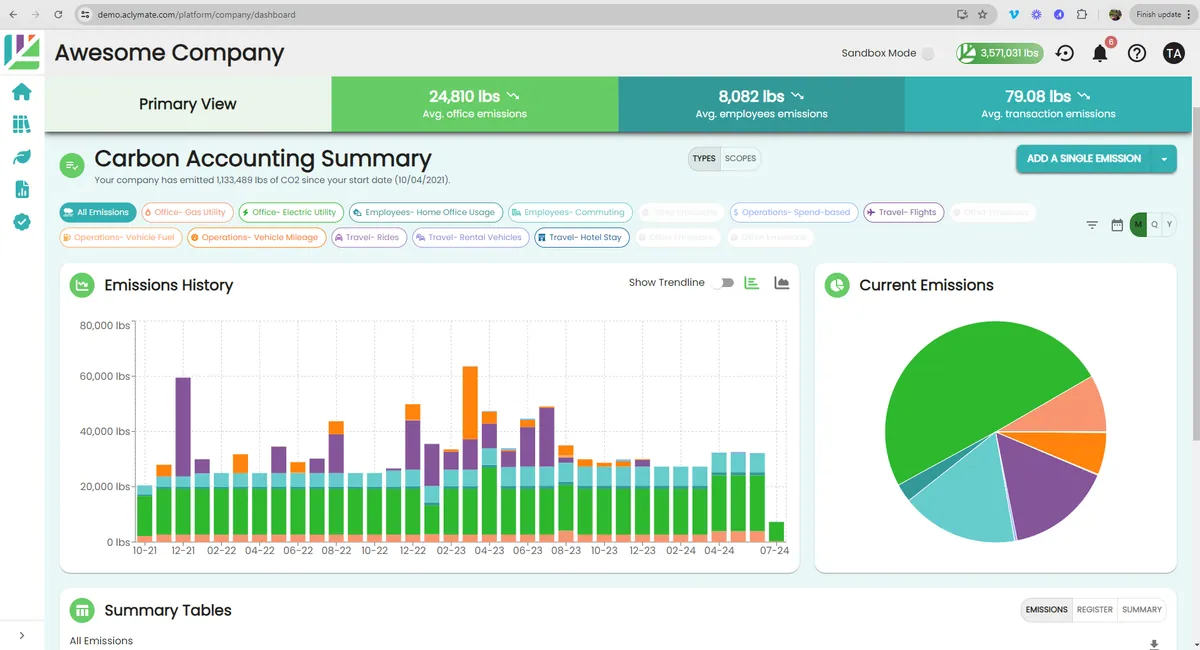
Managing emissions can become complex without the right tools. Businesses often struggle to collect data, calculate emissions, and track sustainability progress across operations.
Aclymate helps businesses simplify carbon management by providing a platform that measures emissions and supports sustainability initiatives.
Through Aclymate, organizations can:
• Measure carbon emissions across Scope 1, 2, and 3
• Track sustainability progress
• Generate sustainability and ESG reports
• Identify opportunities to reduce emissions
• Access expert guidance for climate strategies
With better visibility into emissions data, businesses can make informed decisions that reduce environmental impact while improving operational efficiency.
Get started with Aclymate and see how simple carbon management can be for your organization.
Not necessarily. While carbon accounting can be complex, modern tools make the process much easier.
Many small businesses begin by using a carbon footprint calculator to estimate emissions from common activities such as energy consumption and travel.
Platforms like Aclymate automate much of the process, helping businesses track emissions and identify reduction opportunities.
Transparency helps build trust with customers, investors, and stakeholders.
Companies that openly report emissions and sustainability progress demonstrate accountability and commitment to climate action.
Transparent reporting also helps businesses stay ahead of regulatory requirements and industry sustainability standards.
Understanding your carbon footprint is the first step toward reducing emissions and building a sustainable business.
Organizations that measure their emissions and track sustainability initiatives are better positioned to improve efficiency, meet regulatory expectations, and respond to growing environmental concerns.
Explore how Aclymate can help your company measure emissions, track sustainability progress, and simplify carbon management.
Get Aclymate's practical sustainability content delivered weekly.

AI is creating new opportunities for businesses, but it also comes with an environmental cost. Carbon offsets can help address some of those emissions, but businesses need to understand what they are offsetting, how offsets work, and why measuring and reducing emissions should come first.
Read Article
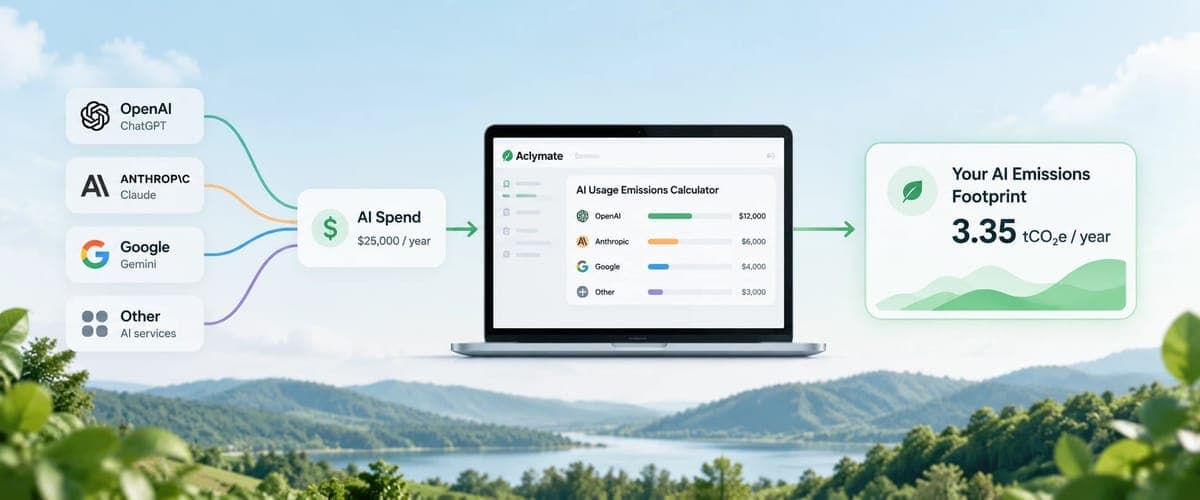
AI carbon emissions are becoming a new consideration for companies adopting ChatGPT, Claude, Gemini, Copilot and other artificial intelligence tools. Here’s how Aclymate estimates the carbon emissions from a company’s AI usage today—and how we expect the methodology to improve as AI providers release better usage and emissions data.
Read Article
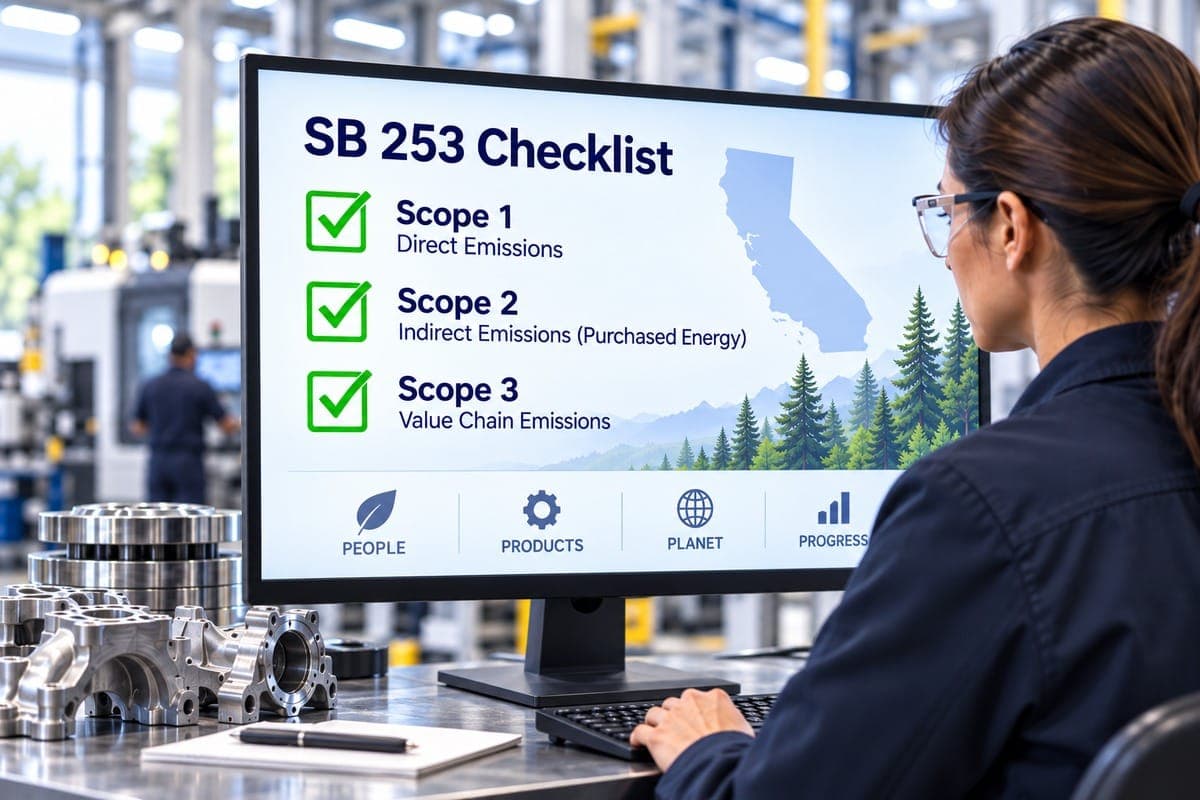
California SB 253 applies to companies over $1B in revenue — but its Scope 3 requirement reaches the automotive suppliers underneath them. What to expect and how to prepare.
Read Article
Talk with a Sustainability Expert, see a demo, or start free to put the Aclymate platform and experts to work for your team.