← Back to Insights
Aclymate Team
April 21, 2026
For manufacturers and apparel companies, sustainability isn’t just a brand story. It’s built into how products are made, moved, and used.
Every step in the value chain carries an environmental cost. Raw materials are extracted or produced. Fabrics are processed and dyed. Products are assembled in factories, shipped across continents, sold, used, and eventually discarded. Each of these stages generates emissions, often across different countries, partners, and systems.
That’s what makes carbon accounting both critical and challenging in these industries.
Unlike simpler business models, manufacturers and apparel brands don’t have a single source of emissions. They operate across complex, multi-layered supply chains where most of the environmental impact happens outside direct control. This makes visibility difficult and data fragmented.
At the same time, pressure is increasing from every direction. Regulators are tightening reporting requirements. Large buyers are asking suppliers for emissions data. Consumers are questioning sustainability claims. Investors want measurable progress, not vague commitments.
Carbon accounting provides a way to bring structure to all of this.
It allows manufacturers and apparel companies to map their emissions across the entire lifecycle of a product, from raw material to end-of-life. More importantly, it turns that data into something usable, helping businesses identify inefficiencies, reduce impact, and make better decisions.
This guide breaks down how carbon accounting works specifically for manufacturers and apparel companies, the challenges they face, and how to approach it in a practical way.
Manufacturing and apparel businesses operate in some of the most emissions-intensive environments.
Unlike service-based companies, their impact is tied to physical production and global logistics. This includes:
Because of this, emissions are not only higher, they’re also harder to track.
Frameworks like the Greenhouse Gas Protocol provide a standardized way to measure emissions across Scope 1, 2, and 3, helping companies bring consistency to otherwise complex data.
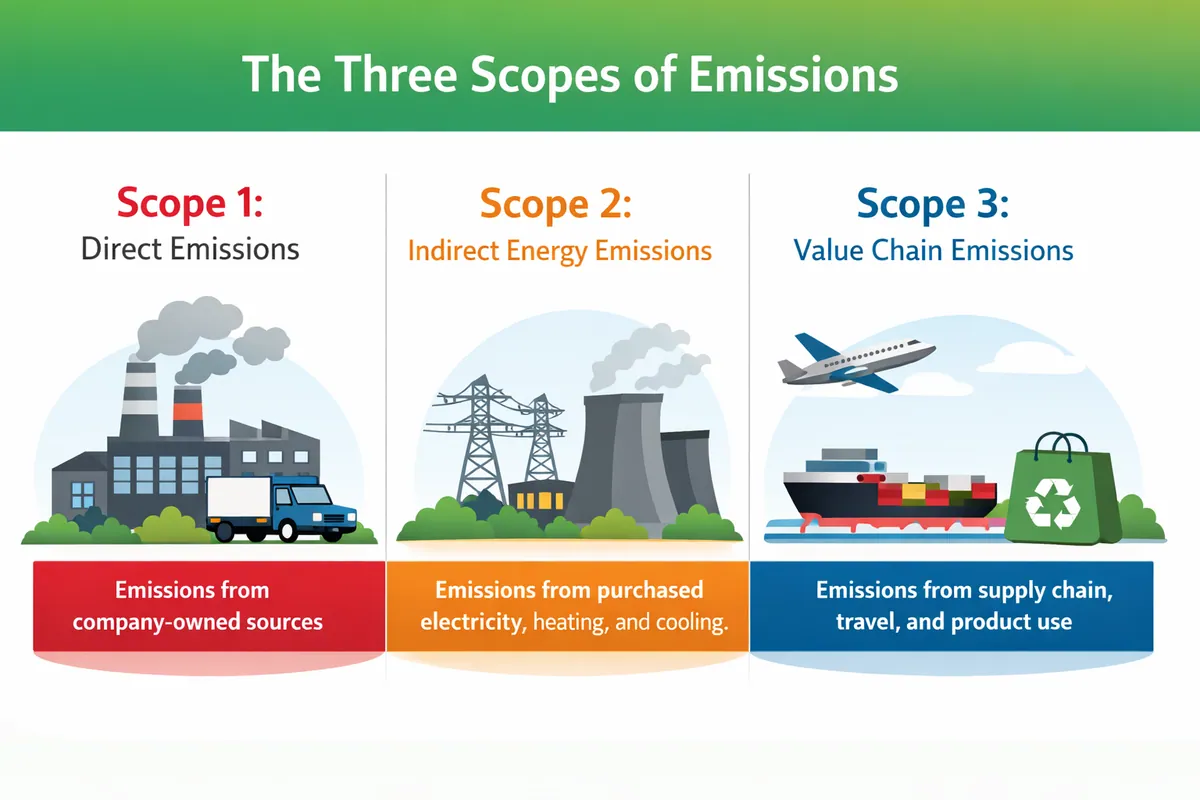
For manufacturers and apparel companies, emissions span the full lifecycle of a product.
These include emissions from on-site fuel use, machinery, production lines, and company-owned facilities.
Electricity used in factories, warehouses, and offices often represents a major share of operational emissions, especially in energy-heavy processes like textile production.
This is where the majority of emissions typically occur.
Scope 3 includes:
In apparel especially, Scope 3 can account for over 70–90% of total emissions, making it the most important area to measure and manage.
Manufacturers often rely on layered supplier networks, where Tier 1 suppliers source from Tier 2 and Tier 3 vendors.
This creates a visibility problem. Even if you have data from direct suppliers, emissions deeper in the supply chain may remain unclear.
Suppliers operate in different countries with varying standards, tools, and levels of data maturity.
Some may provide detailed emissions data, while others rely on estimates or don’t track emissions at all.
Operational data is rarely stored in one place. It’s spread across:
Without integration, building a complete emissions picture becomes time-consuming and error-prone.
Due to limited supplier data, many companies rely on industry averages or emission factors.
While useful, this reduces precision and makes it harder to identify exact reduction opportunities.
Sustainability reporting standards and regulations are evolving quickly.
Manufacturers need systems that can adapt without requiring constant manual updates.
Bringing emissions-related data into a single platform is one of the most effective ways to improve accuracy and efficiency.
This eliminates duplication, reduces errors, and simplifies reporting.
Suppliers play a major role in emissions.
Leading companies are:
Over time, this improves both data quality and overall impact.
Instead of trying to measure everything at once, focus on areas that contribute the most emissions, such as:
This approach delivers faster, more meaningful results.
Following frameworks like the Greenhouse Gas Protocol ensures your data is consistent and credible.
It also makes it easier to align with regulatory and investor expectations.
Manual tracking simply doesn’t scale in complex environments.
If you're exploring tools, this guide on carbon accounting platforms can help you evaluate the right solution for your business.
The apparel industry brings additional layers of complexity due to its global footprint and product lifecycle.
Key considerations include:
Because of this, apparel brands need visibility not just into production, but into how products are used and disposed of.
In apparel, additional frameworks often complement the Greenhouse Gas Protocol.
Organizations like the Sustainable Apparel Coalition provide tools such as the Higg Index, which helps companies assess environmental and social impacts across the value chain.
These tools improve transparency and make it easier to benchmark performance.
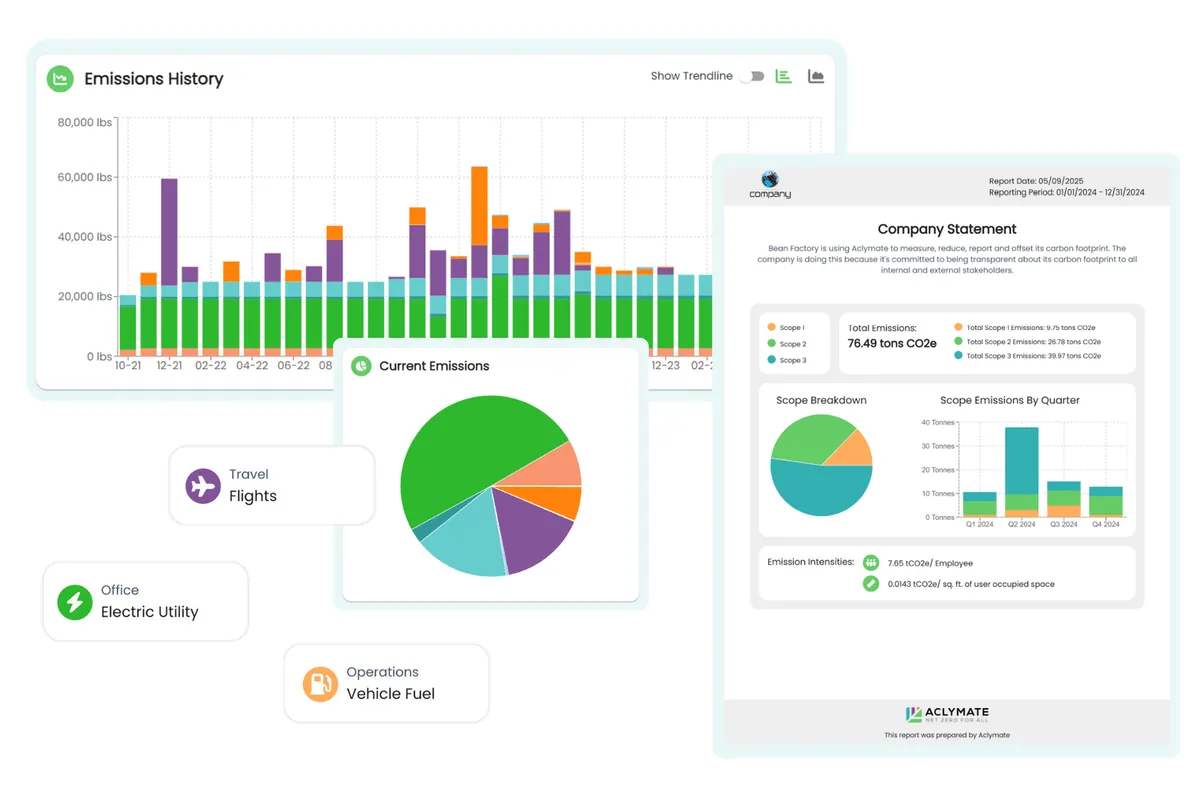
Aclymate is designed to handle the complexity that comes with manufacturing and apparel operations.
It centralizes emissions data from across your business, automates calculations, and aligns everything with recognized standards. Instead of managing disconnected systems, your team gets a clear and organized view of your emissions.
What makes it especially valuable is its ability to scale with your operations. Whether you're working with a handful of suppliers or a global network, Aclymate helps you stay consistent, accurate, and ready for reporting.
Carbon accounting for manufacturers and apparel companies is complex, but it’s also where the biggest opportunities exist.
These industries have the ability to drive meaningful emissions reductions across entire value chains. But that starts with visibility.
By building the right systems, collaborating with suppliers, and using the right tools, businesses can turn carbon accounting from a reporting requirement into a competitive advantage.
Managing emissions across global operations doesn’t have to be overwhelming.
Get started with Aclymate and simplify how your business tracks, manages, and reports emissions. From production data to supply chain insights, Aclymate helps you turn complexity into clarity.
Start building a more efficient and sustainable operation today.
1. Why is carbon accounting important for manufacturers?
Because manufacturing processes and supply chains generate significant emissions that need to be measured and managed.
2. What makes carbon accounting difficult in apparel companies?
Complex global supply chains and lifecycle emissions make data collection and accuracy challenging.
3. What is Scope 3 in manufacturing?
It includes emissions from suppliers, logistics, product use, and disposal.
4. How can manufacturers reduce emissions effectively?
By improving energy efficiency, optimizing supply chains, and collaborating with lower-emission suppliers.
5. Are there industry-specific tools for apparel companies?
Yes. Organizations like the Sustainable Apparel Coalition offer tools like the Higg Index.
6. How do companies start carbon accounting in manufacturing?
They begin by collecting operational data, applying standardized frameworks, and using platforms to streamline tracking and reporting.
7. What is the biggest challenge in carbon accounting for manufacturers?
Gaining accurate visibility across complex, multi-tier supply chains.
Get Aclymate's practical sustainability content delivered weekly.

Learn how to calculate an event carbon footprint in 4 steps: set the boundary, gather activity data, apply emission factors, and total it. Includes an example.
Read Article

An event carbon footprint is the total emissions from travel, lodging, venue energy, food, and waste. See which sources matter most and why.
Read Article

AI is transforming carbon credit verification through satellite monitoring, automated analysis, and anomaly detection. But can technology solve the voluntary carbon market’s credibility problem? Discover the limitations of AI verification and how businesses can evaluate carbon credits while keeping emissions reductions ahead of offsetting.
Read Article
Talk with a Sustainability Expert, see a demo, or start free to put the Aclymate platform and experts to work for your team.