← Back to Insights
Aclymate Team
November 13, 2025

As customers, investors, and governments demand greater climate transparency, businesses are now expected to measure how much carbon they produce across their daily operations.
This process is called carbon accounting. It involves measuring, tracking, and reporting carbon dioxide (CO₂) and other greenhouse gas (GHG) emissions to understand a company's environmental impact.
In this guide, we'll discuss the definition and importance of carbon accounting. We'll also cover the different scopes, methodologies, and standards used for measuring carbon emissions.
Carbon accounting refers to the process of measuring your company's greenhouse gas emissions. It helps you understand how much carbon dioxide and other industrial gases your daily operations release into the atmosphere.
These emissions may come from energy consumption, business travel, product manufacturing, and even supply chain activities.
Accurate carbon accounting provides a clear view of your climate impact. This helps you develop effective strategies for reducing carbon emissions and achieving net zero.
In fact, 64% of companies that measure the full scope (Scope 1, 2, and 3) of their emissions reported a significant reduction in emissions.
Every company’s greenhouse gas emissions fall into three main scopes defined by the Greenhouse Gas Protocol. These scopes help you identify where your emissions come from, whether inside your operations or across your supply chain.
Scope 1 covers direct emissions from sources you own or control. This includes leaking refrigerants from your air conditioning systems or fuel burned by company vehicles, boilers, furnaces, and equipment.
For example, if your factory uses natural gas to power machines, the resulting CO₂ is a Scope 1 emission.
These kinds of emissions are the easiest to measure because they come directly from your organization’s activities.
Scope 2 covers indirect emissions that come from the electricity, heating, or cooling your business purchases. Although you don’t produce these emissions yourself, they happen because of your energy consumption.
For instance, the power plant generating your office electricity emits carbon dioxide that counts toward your Scope 2 total.
The World Nuclear Association (WNA) reports that electricity generation accounts for over 40% of global CO₂ emissions.
It's important to track Scope 2 emissions to identify opportunities where you can switch to renewable energy and lower overall impact.
Scope 3 covers all other indirect emissions in your value chain, both upstream and downstream. These may include supplier activities, business travel, employee commuting, product shipping, and waste disposal.
For many companies, Scope 3 represents over 90% of total greenhouse gas emissions. That's why it plays an important role in decreasing your organization's carbon footprint.
However, Scope 3 emissions are the hardest to measure because they come from external partners and complex supply chains.
You can calculate your company's carbon emissions in two main ways: either through financial data or through activity-based data. Some companies use both to get more accurate results.
Choosing the right carbon accounting method depends on the level of detail and data your organization can access.
The spend-based method calculates emissions based on how much money your company spends on goods or services. It uses economic data to link spending to emission factors.
Let's say your company spends $50,000 a year on flights and hotels, but you lack access to detailed travel records, like fuel use or distance flown.
In this case, you can apply an average emission factor per dollar spent on air travel and accommodation. Doing so allows you to calculate the carbon footprint of corporate travel without needing specific trip information.
The spend-based method is often used when you lack detailed environmental data or when your business is in the early stages of carbon accounting. It’s commonly applied to procurement, travel, or services where energy use data is unavailable.
Pros:
Cons:
The activity-based method focuses on real operational data instead of financial information. It calculates emissions based on measurable units, such as electricity use (kWh), fuel consumption (liters or gallons), or distance traveled (miles).
This accounting method applies verified emission factors to convert activity data to carbon dioxide equivalents.
For example, a company may multiply its total diesel fuel use by an emission factor from the Environmental Protection Agency (EPA).
Since this approach reflects actual usage, it delivers a more accurate view of where emissions occur.
It’s often used in manufacturing, logistics, or energy-intensive operations that rely on complete data to guide targeted emission reduction actions.
Pros:
Cons:
A hybrid approach combines both spend-based and activity-based accounting methods to create a more complete carbon accounting model.
It allows you to use spend-based methods for areas with data gaps and apply activity-based methods where accurate data exists.
For instance, you can use activity data for energy and fuel, but rely on financial data for supplier purchases.
This balance gives you a practical way to measure both direct and indirect greenhouse gas emissions, even if you lack complete carbon data. Over time, as more information becomes available, you can gradually replace spend-based estimates with activity-based figures.
Pros:
Cons:
You can follow established sustainability standards and frameworks to guide your carbon accounting processes. Here are the most common ones:
The GHG Protocol is the most widely used framework for carbon accounting. In fact, more than 90% of Fortune 500 companies rely on it to measure and report their emissions.
Developed by the World Resources Institute (WRI) and the World Business Council for Sustainable Development (WBCSD), it sets the foundation for most climate reporting systems.
It provides clear rules for measuring and reporting greenhouse gas emissions across Scopes 1, 2, and 3.
The ISO 14064 standard, created by the International Organization for Standardization (ISO), offers a global framework for quantifying and reporting greenhouse gas emissions.
It focuses on three main areas: organizational-level accounting, project-level emissions, and verification procedures.
Companies use ISO 14064 to validate their emissions data for audits and sustainability certifications. This standard ensures transparency and comparability in emissions reporting, which builds confidence among investors and regulators.
CDP is a nonprofit organization that runs a global disclosure system for companies, cities, and governments to report their environmental impact.
CDP collects data on greenhouse gas emissions, climate risks, and sustainability actions. Nearly 130 countries disclose critical environmental data through CDP. Those who do can reduce their direct emissions by 7-10%.
Once you submit annual CDP reports, you'll receive a score based on the quality and completeness of your environmental disclosures. High scores can improve brand reputation and attract sustainability-focused investors.
The Science-Based Targets initiative guides companies in setting emission reduction goals that align with the Paris Agreement.
SBTi reviews and validates corporate emissions targets to confirm they are based on scientific evidence.
You can use SBTi to align climate action strategies with international standards and investor expectations.
The TCFD provides recommendations for reporting how climate-related risks and opportunities affect a company’s finances.
Established by the Financial Stability Board (FSB) in 2015, TCFD helps businesses integrate environmental risks into their financial reporting. It’s mostly adopted by banks, investors, and publicly traded companies.
The framework focuses on four key areas: governance, strategy, risk management, and metrics and targets.
In 2023, TCFD disbanded after having finished its development work and handed it over to the International Sustainability Standards Board (ISSB) and its IFRS Foundation. The TCFD standard continues to exist under the IFRS S2 standard and is still frequently just referred to as TCFD.

Carbon accounting matters because it helps you understand your company's environmental impact and implement strategies to reduce your carbon footprint. Below are several reasons why carbon accounting is important:
Governments and regulators are introducing stricter disclosure rules that require businesses to prove responsible carbon management.
Carbon accounting enables organizations to meet these sustainability reporting requirements. It provides the foundation for transparent, verifiable emissions disclosures that meet stakeholder expectations.
This helps you avoid regulatory fines while positioning your company as a responsible market participant.
Carbon accounting helps you demonstrate environmental accountability with real data instead of vague promises.
This transparent reporting builds trust among customers, investors, and employees. Stakeholders see that you take sustainability seriously, which improves your company’s overall credibility.
Adopting carbon accounting gives your business a clear competitive edge.
Many large corporations now require their suppliers to measure and report emissions before signing contracts. By tracking and managing your corporate carbon footprint, you can qualify for new supply chain opportunities.
Carbon accounting also helps attract investors looking for environmentally responsible partners. Sustainability credentials can be a deciding factor in winning new business, especially in the manufacturing, logistics, and technology sectors.
Many individuals want to work for companies that act on climate change. Employees, especially younger generations, value sustainability as part of corporate culture. In fact, 64% of millennials will only work for climate-conscious companies.
When your business tracks and reports emissions, it shows that you’re serious about creating a responsible workplace.
A strong environmental commitment is not only good for talent acquisition. It also helps you maintain morale and higher engagement across your teams.
Carbon accounting enables businesses to make better-informed environmental decisions. It helps you plan for a net-zero future by aligning sustainability goals with financial priorities.
Accurate emissions data can also inform product design, sourcing, and investment decisions. For example, understanding your emissions footprint might help you choose lower-carbon materials or partners.
This data-driven approach strengthens your long-term business resilience and investor confidence. At the same time, it prepares you for carbon pricing policies and future disclosure rules.
Carbon accounting helps you see exactly where your emissions come from, whether in energy use, logistics, or supply chains.
By breaking down these numbers, you can find ways to cut waste and save costs. For example, switching to renewable energy or optimizing transportation routes can reduce both emissions and operational expenses.
Many companies discover inefficiencies once they start tracking their data. These improvements lead to leaner operations and measurable sustainability gains.
Here's a complete breakdown of the carbon accounting process.
The first step is to identify where direct and indirect emissions come from. These may include on-site fuel use, electricity, transportation, and purchased goods or services. Understanding which activities cause emissions sets the foundation for accurate carbon reporting.
You’ll classify each emission source as either direct or indirect based on whether your organization controls it. Direct emissions come from your own operations, while indirect ones come from purchased energy or external suppliers.
2. Collect Accurate Emissions Data
After identifying emission sources, you need to gather reliable data for each one. Make sure to record fuel receipts, electricity bills, travel logs, and supplier reports, among other documents.
Data collection is the foundation of carbon accounting because the quality of your information determines the accuracy of your results.
Use the same time frame and data units across departments to ensure consistent carbon data.
Then, upload all information to spreadsheets for easy tracking.
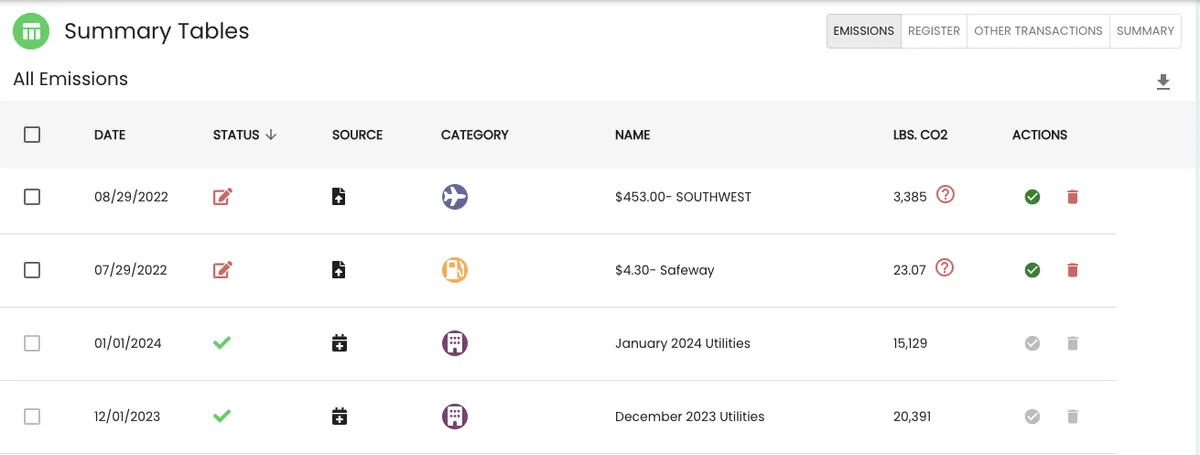
Better yet, consider adopting carbon tracking platforms to simplify data entry and save time. You'll find it easier to review trends, detect anomalies, and verify information later in the process.
Organize all emissions produced by your company's operations into Scope 1, 2, and 3 categories.
This way, you can quickly understand which parts of your business contribute most to your carbon footprint.
Then, you can prioritize areas for emissions reduction and align reporting with global standards.
Emission factors convert your activity data into measurable greenhouse gas emissions.
For example, if you record fuel combustion, you multiply the amount of fuel burned by the appropriate emission factor provided by authorities, such as the Environmental Protection Agency.
Selecting accurate emission factors is important to get reliable results. These factors vary by fuel type, region, and activity.
Some companies use national databases, while others rely on sector-specific datasets. Choose one that matches your unique operational needs.
At this stage, you use the collected data and chosen emission factors to perform carbon calculations.
This is where GHG accounting comes into play. You multiply the activity level by its emission factor to get total emissions, expressed in carbon dioxide equivalents (CO₂e).
For example, gallons of diesel fuel used multiplied by the emission factor for diesel gives you Scope 1 emissions.
You repeat this process across all scopes to get a detailed picture of your company’s total greenhouse gas output.
Now that you have the results, it's time to review and verify them for accuracy.
Internal audits or third-party verifications help confirm that your data meets compliance standards. You may compare your emissions data against past years or industry benchmarks.
This validation process ensures that the data is credible and transparent, which is important for public reporting.
Take note of unusual patterns or data gaps during this step. Then, implement strategies to improve carbon accounting and reporting in the future.
Once verified, you can compile the results into a formal carbon accounting report. These reports summarize total emissions, trends, and progress toward sustainability goals.
Depending on your framework, you may submit reports to organizations such as the CDP, SBTi, or regulatory bodies.
Through effective reporting, you can communicate your environmental performance clearly to investors, clients, and employees. You can also integrate these results into your company's annual sustainability or ESG reports.
The final step in corporate carbon accounting involves setting measurable reduction targets and tracking progress over time.
Set goals for absolute reductions and intensity-based targets. Alternatively, you can compensate for residual emissions with carbon offsets.
Don't forget to monitor progress to measure improvements, identify setbacks, and refine strategies as needed.
When you set clear targets, you often achieve stronger results and improved operational efficiency. Meanwhile, tracking progress annually helps you see the long-term impact of your sustainability actions.
Carbon accounting comes with several challenges. Here are the difficulties you might face and how to solve them:
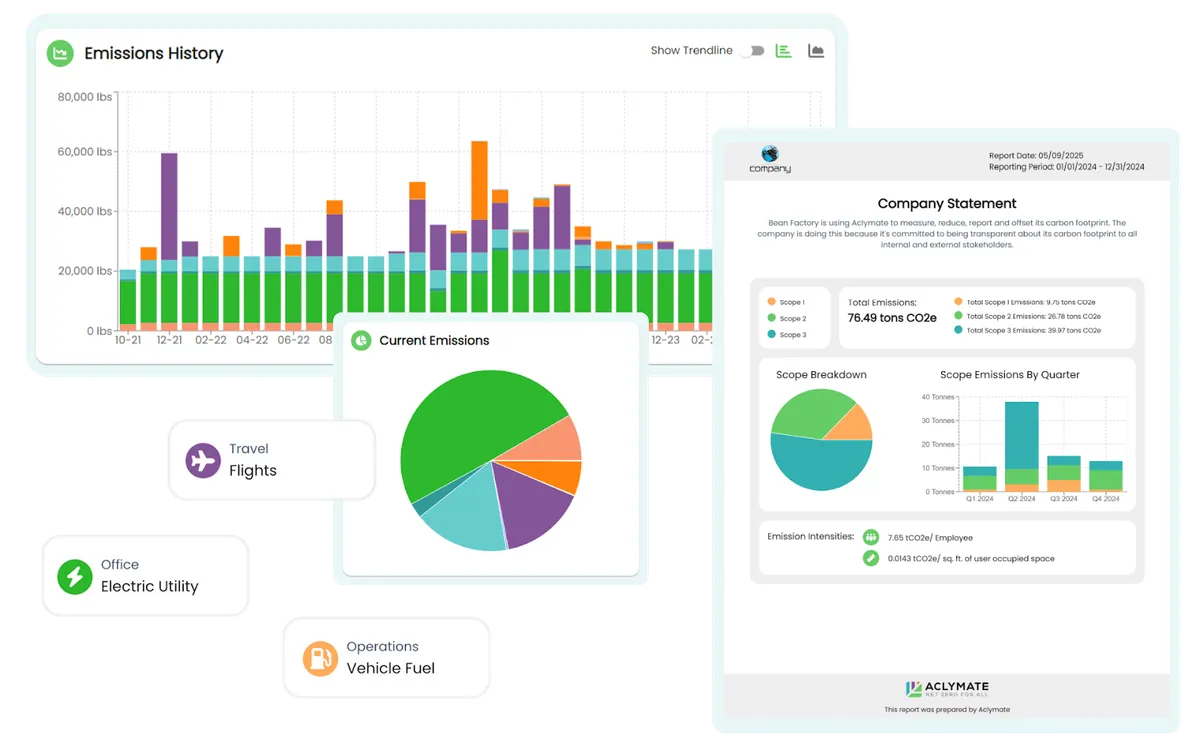
Aclymate addresses these challenges by offering user-friendly carbon accounting software and expert services in one. Their Turn Key service provides access to carbon bookkeepers and climate consultants without the consultant-level price tag.
Professionals will handle data collection, vendor outreach, greenhouse gas accounting, and compliance reporting for you. They will also help you find the most effective ways to reduce emissions. This ensures you meet global standards and stay ahead of new climate regulations.
Aside from carbon accounting and reporting, Aclymate's partnership with CNaught allows you to purchase a portfolio of offsets that have been extensively reviewed. Meanwhile, the built-in offset marketplace offers meaningful projects that either pull greenhouse gases out of the atmosphere or prevent them from ending up there.
Get started today to enjoy a 17-day free trial!
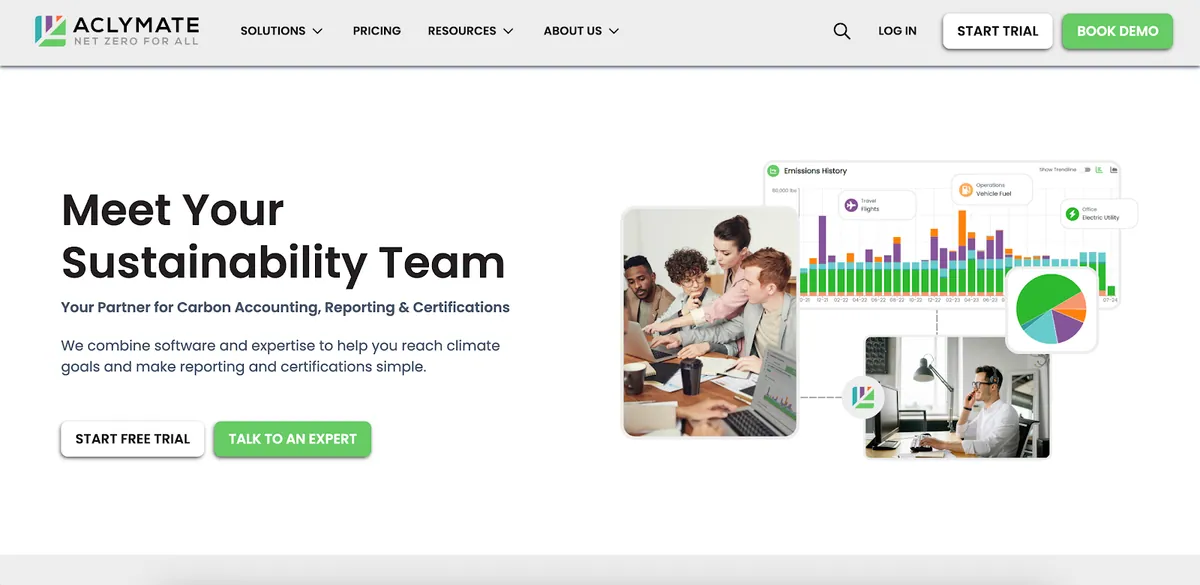
Aclymate makes carbon accounting simple, affordable, and complete. Dedicated climate bookkeepers and climate consultants will handle every detail for you, from data collection to carbon measurement and reporting for third-party certifications. You get accurate results without needing an in-house sustainability team.
The intuitive platform also provides an easy-to-understand breakdown of business emissions by category and by scope. This helps you reduce your carbon footprint and minimize environmental impacts.
Within Aclymate, you can even browse carbon offsets and select the project that is most meaningful to your business.
Sign up for a 17-day free trial to achieve net-zero emissions right now! You can also schedule a demo to learn how Aclymate helps your business win on climate.
Carbon accounting is the process of measuring and tracking greenhouse gas emissions from a company’s activities. It’s similar to financial accounting, but instead of tracking money, it measures environmental impact.
The five key principles of carbon accounting are relevance, completeness, consistency, transparency, and accuracy. These principles guide how businesses collect and report emission data. Following them helps ensure carbon reports are reliable, comparable, and credible for stakeholders.
Yes, carbon accounting can be difficult due to data complexity, expertise gap, and compliance pressure. Many businesses use carbon accounting systems to make the process easier through automated data collection, calculations, and reporting.
ESG stands for environmental, social, and governance, which are three factors that investors use to evaluate a company’s long-term sustainability. Carbon accounting supports the environmental part of ESG by providing measurable data on emissions.
Get Aclymate's practical sustainability content delivered weekly.

AI is creating new opportunities for businesses, but it also comes with an environmental cost. Carbon offsets can help address some of those emissions, but businesses need to understand what they are offsetting, how offsets work, and why measuring and reducing emissions should come first.
Read Article
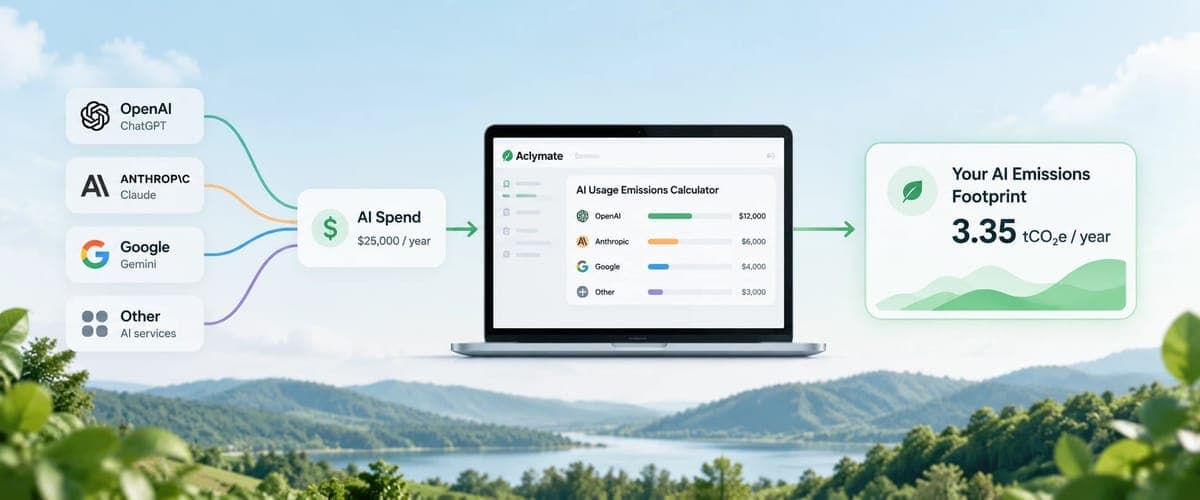
AI carbon emissions are becoming a new consideration for companies adopting ChatGPT, Claude, Gemini, Copilot and other artificial intelligence tools. Here’s how Aclymate estimates the carbon emissions from a company’s AI usage today—and how we expect the methodology to improve as AI providers release better usage and emissions data.
Read Article
California SB 253 applies to companies over $1B in revenue — but its Scope 3 requirement reaches the automotive suppliers underneath them. What to expect and how to prepare.
Read Article
Talk with a Sustainability Expert, see a demo, or start free to put the Aclymate platform and experts to work for your team.