← Back to Insights
Aclymate Team
February 26, 2026
Fashion is under pressure.
Retailers are demanding supplier disclosures. Investors are scrutinizing ESG data. Consumers are questioning green claims. Regulators are expanding climate reporting requirements.
According to the United Nations Environment Programme, the fashion industry is responsible for a significant share of global greenhouse gas emissions and resource consumption. Meanwhile, disclosure platforms like CDP and science-based frameworks from the Science Based Targets initiative are raising expectations for credible, measurable climate action.
The era of “eco-friendly” marketing is over.
The era of documented sustainable fashion practices has begun.
Sustainable fashion practices are the operational, environmental, and reporting actions apparel brands take to reduce environmental impact and improve transparency across the product lifecycle.
They go beyond materials and design. They include:
Today, sustainable fashion practices must be measurable, reportable, and defensible.
Without data, practices are just claims.
Mid-sized apparel companies are increasingly required to report emissions due to:
If you sell into larger supply chains, sustainable fashion practices must align with standards like the Greenhouse Gas Protocol.
Carbon reporting is no longer optional. It is a procurement requirement.
Large retailers and enterprise buyers often require:
Sustainable fashion practices must now include structured carbon accounting and documentation — not just good intentions.
Modern consumers want:
Brands that cannot back up claims risk reputational damage.

Below are the most impactful sustainable fashion practices in 2026.
The foundation of all credible sustainable fashion practices is measurement.
Carbon accounting allows brands to:
Without carbon accounting, sustainability efforts remain incomplete.
For apparel brands, most emissions occur in:
Scope 3 management is one of the most important sustainable fashion practices because it addresses supply chain emissions.
Leading brands engage suppliers and standardize data collection processes.
Sustainable fashion practices include sourcing:
But material choice must connect to measurable carbon impact.
Material swaps without emissions data may not produce meaningful reductions.
Apparel manufacturing is resource intensive.
Best-in-class sustainable fashion practices include:
Tracking reductions strengthens reporting credibility.
Sustainable fashion practices must align with trusted frameworks to build credibility.
Common frameworks include:
Alignment signals seriousness to buyers and investors.
Certifications transform sustainable fashion marketing from claims into competitive advantage.
They:
Certifications backed by verified data outperform generic sustainability claims.
Below are the primary certification categories apparel brands should consider:
(Most directly aligned with carbon accounting and reporting)
These certifications validate emissions measurement and reduction efforts — the foundation of credible sustainable fashion marketing.
These certifications require accurate Scope 1, 2, and 3 emissions data aligned with the Greenhouse Gas Protocol.
(Industry-recognized performance and materials benchmarks)
These certifications are particularly relevant for fashion and textile brands.
These certifications support product-level sustainability claims and material transparency.
(Labor, governance, and holistic sustainability validation)
These certifications enhance brand credibility beyond environmental metrics.
These certifications are particularly powerful in consumer-facing sustainable fashion marketing.
(Operational systems and compliance credibility)
These certifications validate structured environmental management systems.
ISO certifications demonstrate that sustainability is embedded in operational processes — not just marketing.
Retail buyers and enterprise procurement teams increasingly evaluate:
Recognized certifications:
Most importantly, certifications require structured carbon accounting and reporting infrastructure — which is why sustainability software and expert support are often necessary to earn and maintain them.
Most apparel brands under 1,000 employees do not have:
Yet they are expected to deliver enterprise-grade sustainability programs.
Many companies rely on:
This fragmentation increases cost and reduces consistency.
Offsets should follow measurement and reduction — not replace them.
Credible sustainable fashion practices prioritize:
Not the other way around.
Establish a carbon baseline aligned with GHG Protocol standards.
Automation improves:
Manual processes do not scale.
Create structured processes for:
Supplier engagement is central to sustainable fashion practices.
Align reduction goals with SBTi pathways and industry benchmarks.
Use verified certifications and transparent reporting to support marketing and sales efforts.
Sustainable fashion practices become revenue drivers when properly documented.
For mid-sized apparel brands, the challenge isn’t desire.
It’s execution.
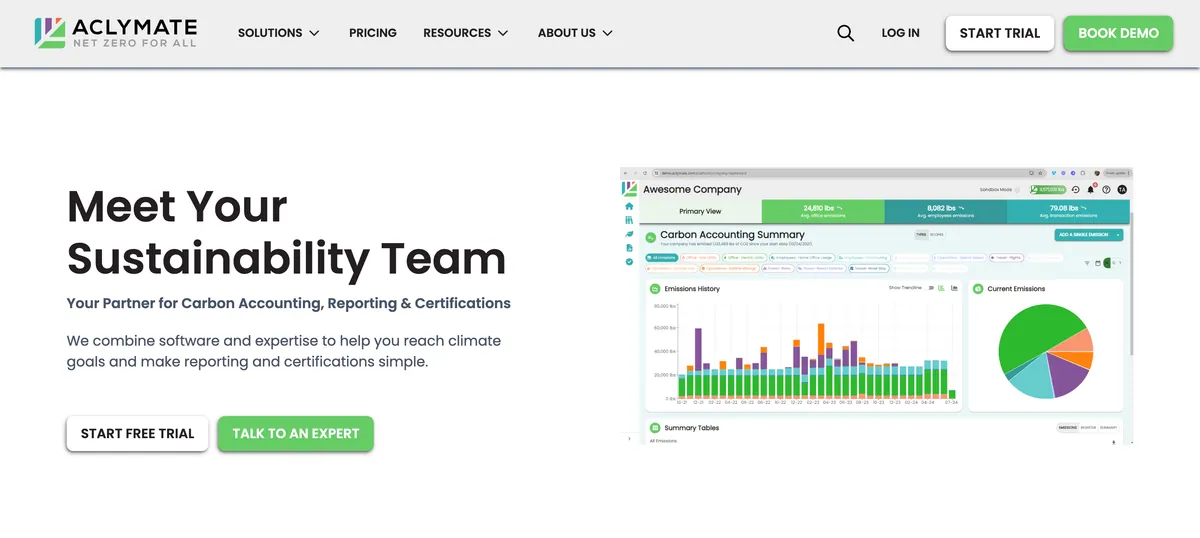
Aclymate provides:
Instead of hiring a full ESG team, brands get:
Your Sustainability Team — without the headcount.
Aclymate helps apparel companies:
Sustainable fashion practices become manageable, structured, and credible.
If you’re building a sustainable apparel brand, these guides may help:
These resources help launch and grow your brand.
Carbon accounting ensures your sustainable fashion practices stand up to scrutiny.
Sustainable fashion practices are no longer optional. They are strategic operating systems.
In the past, sustainable fashion was largely about materials, messaging, and mission statements. Brands highlighted organic fabrics, recycled blends, and ethical sourcing policies. These actions signaled good intentions, but they often lacked measurable impact, structured reporting, and executive accountability.
Today, sustainable fashion practices must begin with clear goals, move into structured plans, and ultimately be supported by disciplined execution and infrastructure.
Leading apparel brands now start by defining measurable climate goals aligned with recognized standards. They build detailed implementation plans that identify emission hotspots, supplier responsibilities, and reporting timelines. Then they operationalize those plans with systems that collect data, automate carbon accounting, manage Scope 3 emissions, and prepare audit-ready disclosures.
The most important sustainable fashion practices in 2026 include:
These are not marketing tactics. They are operational capabilities that protect revenue, strengthen retail partnerships, reduce regulatory risk, and improve brand resilience.
Sustainability now requires infrastructure: systems, data governance, executive visibility, and ongoing accountability. Without infrastructure, goals remain aspirations and plans stall in spreadsheets.
Brands that treat sustainability as a core business function — not a campaign — will win in procurement, attract better partners, and withstand regulatory scrutiny. Those that delay will face rising compliance costs, supplier friction, and reputational risk.
It’s time to get serious about sustainability — whether you build the capability in-house or outsource it to a trusted partner like Aclymate to provide the software, expertise, and infrastructure required to lead.
Book a demo with Aclymate and see how carbon accounting + expert support can power your apparel brand’s sustainability strategy.
They are measurable operational actions apparel brands take to reduce environmental impact, including carbon accounting, material sourcing, waste reduction, and verified reporting.
No. While materials matter, carbon accounting, Scope 3 management, reporting, and certification are equally important.
Yes. Even if not directly regulated, they are often required to provide emissions data to retailers or supply chain partners.
They increase credibility, improve buyer confidence, strengthen RFP performance, and reduce compliance risk.
Get Aclymate's practical sustainability content delivered weekly.

Learn how to calculate an event carbon footprint in 4 steps: set the boundary, gather activity data, apply emission factors, and total it. Includes an example.
Read Article

An event carbon footprint is the total emissions from travel, lodging, venue energy, food, and waste. See which sources matter most and why.
Read Article

AI is transforming carbon credit verification through satellite monitoring, automated analysis, and anomaly detection. But can technology solve the voluntary carbon market’s credibility problem? Discover the limitations of AI verification and how businesses can evaluate carbon credits while keeping emissions reductions ahead of offsetting.
Read Article
Talk with a Sustainability Expert, see a demo, or start free to put the Aclymate platform and experts to work for your team.