← Back to Insights
Aclymate Team
November 14, 2025
For many businesses, sustainability reporting feels like a major challenge. Collecting accurate data, understanding carbon accounting terms, and meeting complex disclosure rules can be confusing and time-consuming.
Many teams struggle to know what to measure, which sustainability reporting framework to follow, or how to turn numbers into meaningful action.
However, sustainability reporting doesn’t have to be complicated. With the right approach and knowledge, it becomes a powerful tool that helps you track progress, meet compliance needs, and strengthen your company's reputation.
Reporting also helps you identify the financial risks associated with environmental liabilities and avoid stranded assets.
This article breaks down the top nine benefits of sustainability reporting. But first, let's discuss what it means and why it matters for your business.
Sustainability reporting is the process of measuring and disclosing a company's environmental, social, and governance (ESG) performance. It shows how sustainability activities affect people, the planet, and daily business operations.
This report provides transparency to stakeholders, such as investors, customers, and government regulators, about your company’s overall sustainability performance beyond financial results.
Reporting on environmental, social, and governance factors can build public trust. It proves your business is serious about reducing its environmental impact while being transparent about progress and risks.
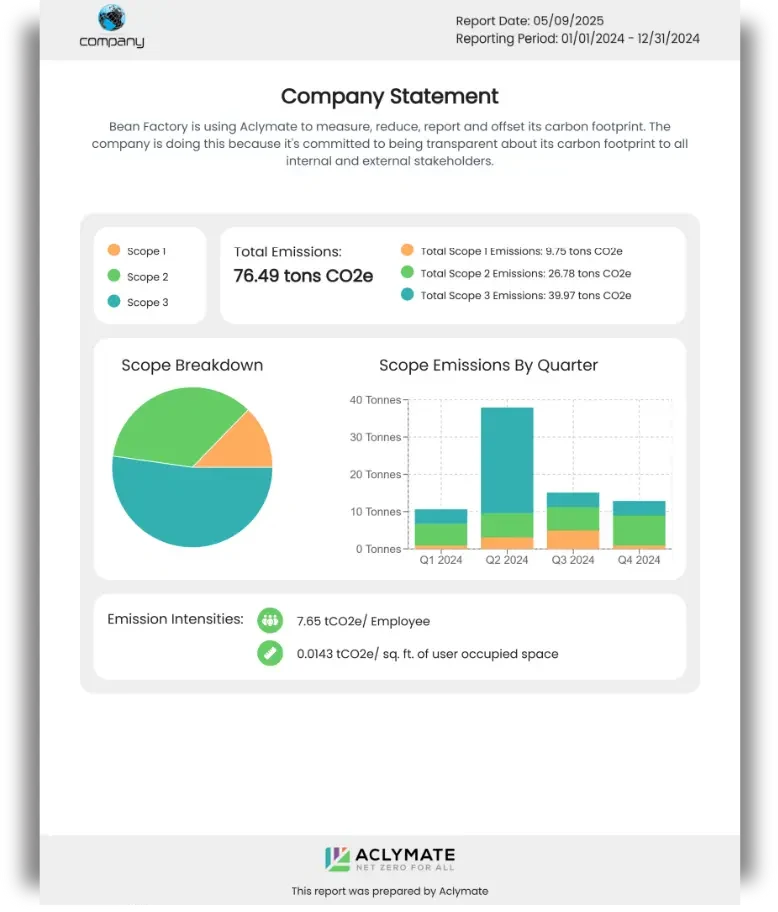
Sustainability reporting matters because regulatory changes mean it is no longer optional. It’s become mandatory.
In the U.S., California SB 253 requires companies doing business in California with global annual revenues over $1 billion to disclose their Scope 1 and 2 greenhouse gas (GHG) emissions beginning in 2026, and Scope 3 emissions in 2027.
Meanwhile, California's SB 261 mandates companies with global annual revenues over $500 million to report on climate-related financial risks on or before January 1, 2026.
In Europe, the EU Corporate Sustainability Reporting Directive (CSRD) requires large and listed companies (including non-EU firms with significant EU turnover) to publish detailed disclosures on ESG issues from the 2024 financial year onwards.
Sustainability reporting is also increasingly a requirement to get desirable certifications. For example, if you aim for B Corp Certification, you need to disclose how you achieved your score on the B Impact Assessment.
Platforms like EcoVadis and CDP (formerly the Carbon Disclosure Project) expect companies to submit detailed sustainability disclosures.
Even if your business isn’t required by law or a certification standard to report sustainability data, voluntary disclosure sets your brand apart. It attracts customers, investors, and employees who care about responsible operations.

Sustainability reporting offers numerous benefits for any business. Here’s how it helps your company grow stronger, smarter, and more accountable.
Governments are enforcing stricter rules on how companies track and share their ESG performance.
Sustainability reporting helps your business stay aligned with growing regulatory requirements around climate disclosure and transparency.
By following a recognized sustainability reporting framework, such as the Global Reporting Initiative (GRI) or the European Sustainability Reporting Standards (ESRS), you meet the expectations of both regulators and investors. These frameworks guide you in collecting accurate data and presenting it in a consistent way.
Reporting also prepares your company for future mandates that the International Sustainability Standards Board (ISSB) is developing. The IFRS Foundation oversees the ISSB to shape global ESG reporting rules.
Regulatory compliance becomes simple if you have verified sustainability data. This helps you avoid penalties, prevent legal implications, and maintain credibility.
In addition to ensuring compliance, sustainability reporting helps your company manage risks before they grow into bigger problems.
When you track and share ESG data, you gain insight into where your business is most exposed. This includes global supply chain disruptions, resource shortages, or climate-related financial risks that could impact profits.
Reporting also reveals sustainability issues affecting your daily operations, like waste, energy use, and emissions. By identifying these early, you can take action to reduce costs and improve your company's performance across ESG areas.
Sustainability reporting supports better economic performance by linking your environmental goals to your bottom line or financial statements.
When you track emissions, waste, resource use, and sustainability management, you uncover opportunities for cost savings that directly improve profitability.
For example, switching to renewable energy can significantly reduce electricity costs. Alternatively, encouraging commuting by bicycling and walking can cut health insurance expenses. These small improvements add up over time.
Reporting also helps you collect accurate financial data tied to sustainability initiatives and programs. This gives investors and business partners a clearer view of your company's value.
Sustainability reporting helps your business prepare for climate change and set meaningful sustainability targets that improve performance every year.
Effective ESG reporting can identify and disclose climate-related risks that could affect your daily operations. This makes it easier to plan ahead for challenges linked to climate change, from rising energy costs to resource shortages.
Companies that measure their sustainability data consistently are better equipped to manage uncertainty and show investors they are planning for the future.
In other words, sustainability reporting builds resilience by turning awareness into action and long-term business value.
Sustainability reporting helps build credibility with the people who matter most — your customers, investors, and employees.
It helps you communicate sustainability efforts while establishing your commitment to responsible action and transparency. Trust grows naturally when stakeholders see real data instead of empty claims.
Producing sustainability reports also shows that you take accountability seriously. It demonstrates that your business is measuring progress, not just making promises. This kind of transparency separates genuine efforts from greenwashing and helps maintain a positive public image.
A credible report can even turn sustainability into a competitive advantage that strengthens your brand. This helps you stand out in a market where values drive investment decisions.
Investors want proof that a company understands its operational challenges and long-term goals. They often read sustainability reports to assess how well a company manages climate-related risks, resource use, and corporate social responsibility.
Clear sustainability reporting meets stakeholder expectations for transparency and accountability. It shows that your business tracks its environmental and social impact with the same care as its financial performance.
Once investors see measurable results and credible sustainability disclosures, they gain confidence in your leadership and are more likely to support your long-term plans.
For your business, this means decreased risk of capital flight and access to sustainability-focused investment.
Sustainability reporting helps attract skilled professionals who want to work for responsible businesses. More job seekers now look for sustainability information when choosing employers. They want proof that a company acts on its values, not just talks about them.
In fact, 64% of Millennials and Gen Z won’t work for an organization with poor ESG practices. A survey also revealed that 58% of respondents said they will consider a company’s commitment to sustainability when choosing their next employer.
Sustainability reports show that you care about the planet and society, not just profits. Candidates can see your goals, progress, and results, which builds trust before they even apply.
Transparent ESG reporting can also engage existing employees. When they know their work contributes to a greater purpose, they're more likely to participate and stay for the long term.
Sustainability reporting can help your business qualify for government incentives that reward responsible operations.
Many programs now require proof of emissions tracking across Scope 1, 2, and 3, waste reduction, or renewable energy use. Accurate reporting gives you that documentation.
Governments and agencies often review annual reports or sustainability disclosures to decide which companies meet eligibility criteria for grants, tax credits, or low-interest financing. Businesses that can show verified data have a clear advantage.
For public companies, sustainability reports can also demonstrate compliance with government-funded projects or contracts that prioritize climate responsibility. Reporting shows accountability, which increases your chance of winning bids and securing investor support.
Sustainability reporting supports companies in making better-informed decisions by collecting and analyzing data.
It highlights areas where you can save resources, reduce risks, improve performance, and contribute to a more sustainable future.
For example, regular carbon reporting reveals top emissions sources. Once you've determined hot spots, you can set goals that reduce your organization's carbon footprint.
Accurate reporting also helps build a sustainable future by encouraging progress toward sustainable development goals.
When your decisions are backed by real data, you can track which sustainability efforts work, correct what doesn’t, and stay accountable.
Over time, this creates a culture of transparency and continuous improvement that benefits your business, the environment, and society's well-being.

Now that you understand the benefits, you're probably excited to disclose your company's sustainable practices. Here are some tips to help you start reporting in a clear, structured way.
First, identify what matters most to your business. Conduct stakeholder surveys or materiality assessments to determine your current environmental and social impact.
Next, set goals that reflect your company’s sustainability strategy and align with your values, industry, and operations. Common goals include decreasing your carbon footprint, reducing waste, or improving resource efficiency.
Then, set measurable key performance indicators (KPIs) to track real progress over time.
Selecting the right sustainability reporting framework helps your business disclose consistently and credibly.
Some of the most popular reporting frameworks are the Global Reporting Initiative (GRI), the Sustainability Accounting Standards Board (SASB), the International Integrated Reporting Council (IIRC), and the Task Force on Climate-Related Financial Disclosures (TCFD).
Choose one that fits your size, sector, and reporting goals. For example, GRI focuses on broad corporate transparency, while SASB emphasizes investor relevance.
The next step involves gathering data that reflects your company’s sustainability activities and results.
Focus on energy use, water consumption, waste management, and emissions. You’ll also need information about your workforce, suppliers, and community engagement.
Don't forget to involve department heads to ensure data accuracy and completeness. If possible, assign a dedicated person, such as a chief sustainability officer, to oversee data verification.
Many companies start with simple tracking tools before adopting advanced platforms. Consistent data collection helps reveal patterns, measure progress, and support sustainable practices throughout your business.
Sustainability reporting works best when everyone participates.
Include leaders, employees, suppliers, and even customers in the reporting process. Their insights will help you understand risks, set realistic goals, and prioritize actions.
Hold regular meetings to review results and collect feedback. This open communication strengthens accountability.
Once the report is complete, it’s time to communicate your results. Publish sustainability reports on your website, social media, or a public docket provided by regulatory bodies.
Make your findings easy to read and accessible to both internal and external audiences. Highlight key achievements and explain how you plan to improve next year.
Publishing your report regularly shows your business is serious about progress and accountability. It keeps investors, customers, and employees informed.
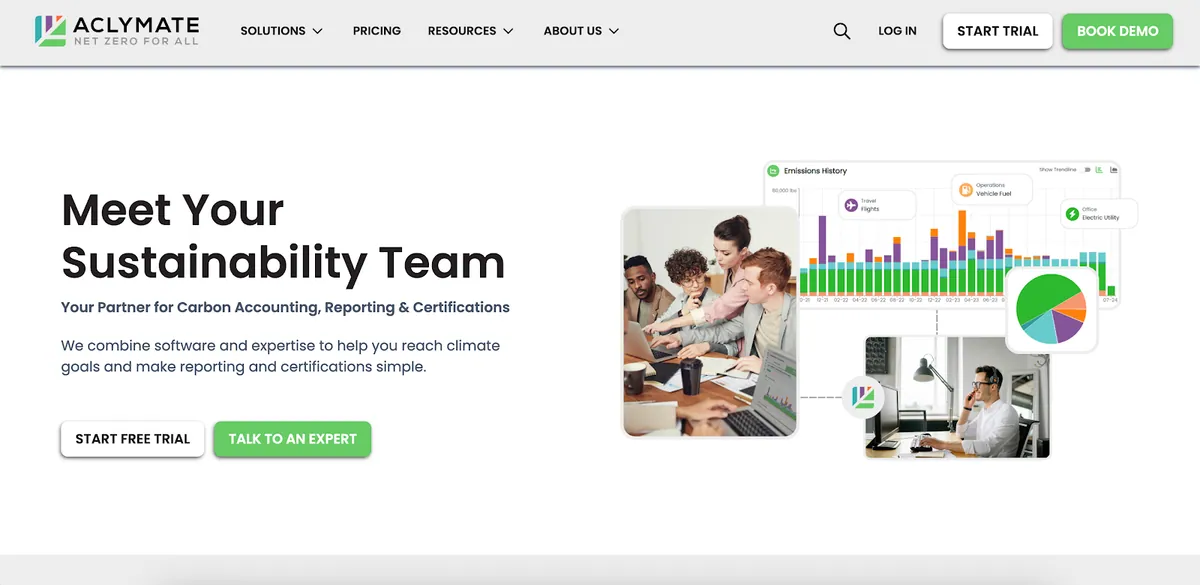
Aclymate simplifies sustainability reporting with automated data collection, AI-powered categorization, and high-quality outputs. The platform generates compliance-ready reports you can send to regulators and customers with confidence.
Aclymate also offers full-service support through its Turn Key tier. Climate bookkeepers will handle data entry, emissions measurement, and certification support by providing a clear pathway to B Corp, EcoVadis, SBTi, and more.
However, Aclymate is more than just another reporting platform. It stands out for its all-in-one climate solution that empowers you to measure, report, and reduce your carbon emissions while retaining and winning large-contract customers.
Sign up today to enjoy a 17-day free trial! You can also book a demo to see how Aclymate has helped businesses report their carbon emissions with ease.
Sustainability reporting helps businesses track their environmental and social impact. It builds trust with investors, customers, and employees while improving brand reputation. Unlike traditional financial reporting, it measures both profits and responsibility to show how a company operates sustainably over time.
Mandatory sustainability reporting ensures consistency and accountability. It pushes companies to disclose verified data and meet public standards. This transparency reduces greenwashing, supports fair competition, and helps governments track progress toward national climate goals.
Businesses that report their impact build a strong online reputation and attract investors, customers, and employees. Transparent data sets them apart from competitors and opens new market opportunities linked to ESG compliance and sustainability-focused procurement.
The main goals are to measure progress, manage environmental and social risks, and support long-term growth. Sustainability reporting helps companies set clear targets, improve performance, and communicate results openly to all relevant stakeholders.
Get Aclymate's practical sustainability content delivered weekly.

AI is creating new opportunities for businesses, but it also comes with an environmental cost. Carbon offsets can help address some of those emissions, but businesses need to understand what they are offsetting, how offsets work, and why measuring and reducing emissions should come first.
Read Article
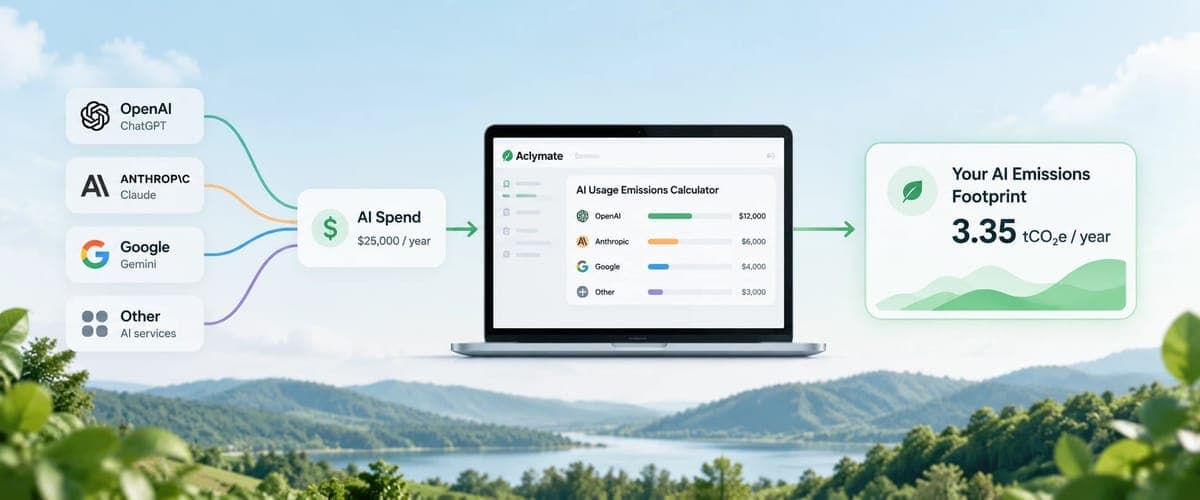
AI carbon emissions are becoming a new consideration for companies adopting ChatGPT, Claude, Gemini, Copilot and other artificial intelligence tools. Here’s how Aclymate estimates the carbon emissions from a company’s AI usage today—and how we expect the methodology to improve as AI providers release better usage and emissions data.
Read Article
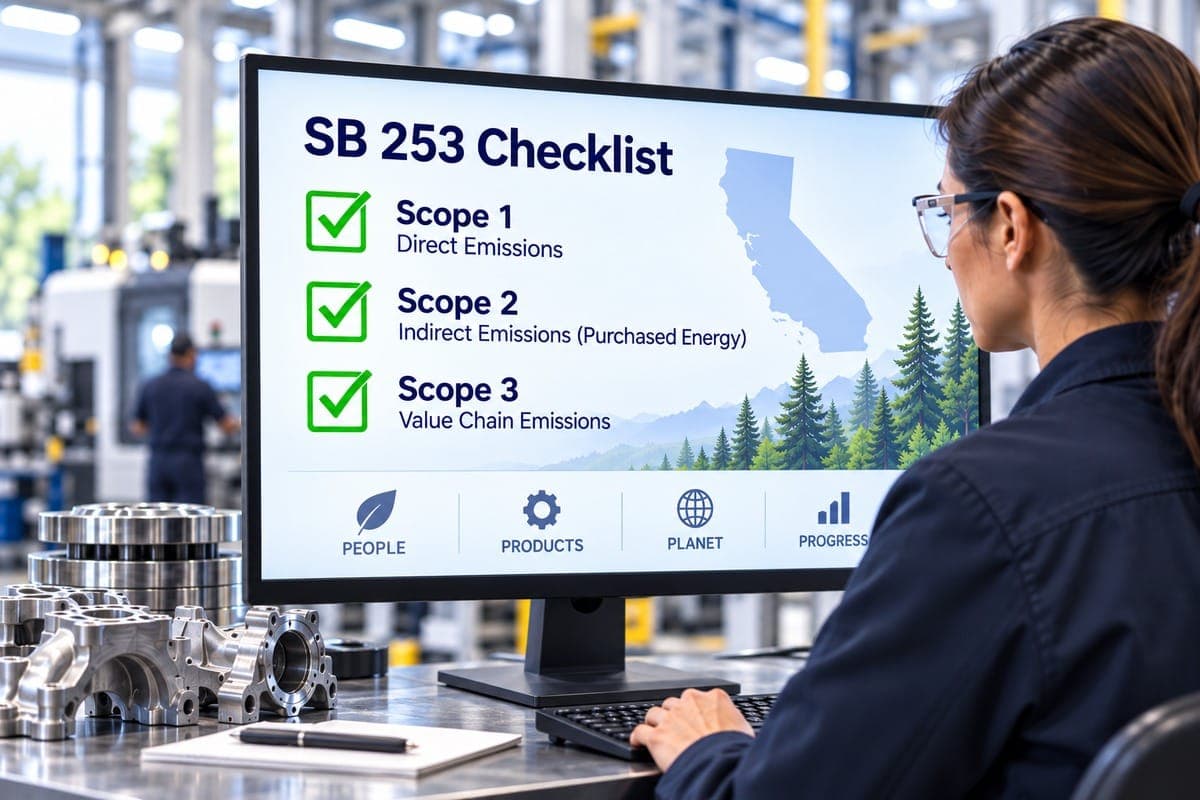
California SB 253 applies to companies over $1B in revenue — but its Scope 3 requirement reaches the automotive suppliers underneath them. What to expect and how to prepare.
Read Article
Talk with a Sustainability Expert, see a demo, or start free to put the Aclymate platform and experts to work for your team.