← Back to Insights
Aclymate Team
April 15, 2026

For a long time, sustainability sat on the sidelines of business strategy. It was something companies talked about in reports, not something that shaped day-to-day decisions.
That’s changed.
Today, carbon accounting is becoming a core part of how businesses operate, much like finance or operations. It gives companies a clear view of their environmental impact and turns that into something measurable, trackable, and actionable.
The real value isn’t just in reporting emissions. It’s in what businesses can do once they understand them. From reducing costs to winning new business, carbon accounting is now tied directly to performance, risk management, and long-term growth.
At its core, carbon accounting helps businesses answer a simple but critical question: where are our emissions coming from?
Using frameworks like the Greenhouse Gas Protocol, companies break down emissions into Scope 1, 2, and 3, covering everything from direct operations to supply chains.
If you want a quick refresher on how this works, you can check this overview of carbon accounting basics.
But beyond definitions, carbon accounting creates structure. It organizes scattered operational data into a system that businesses can actually use to guide decisions.
It allows companies to:
Without this structure, emissions data is fragmented and difficult to act on.
Without carbon accounting, sustainability often lives in presentations and marketing materials.
With it, sustainability becomes operational.
Teams can:
This shift is critical. It means sustainability is no longer separate from the business. It becomes part of how the business runs.
Regulatory pressure around emissions is growing fast, and it’s not limited to large corporations anymore.
Governments and regulatory bodies are introducing requirements tied to:
Companies that rely on manual processes or incomplete data often struggle to keep up.
By contrast, businesses using structured carbon accounting already have:
That readiness reduces compliance risk and avoids last-minute data scrambling.
One of the most overlooked benefits of carbon accounting is how it exposes inefficiencies.
When emissions are mapped across operations, patterns start to appear. Businesses often discover:
These insights are hard to see without structured data.
And here’s the key: reducing emissions often overlaps with improving efficiency. That means sustainability efforts can directly impact the bottom line.
Carbon transparency is quickly becoming a competitive requirement, not just a differentiator.
Many organizations now require emissions data from:
This is especially true in global supply chains, where Scope 3 reporting is gaining importance.
Businesses that already have carbon accounting in place can:
Those without it risk losing opportunities simply because they can’t provide the data.
Setting sustainability goals without data is like setting a budget without knowing your expenses.
Carbon accounting provides the baseline needed to make goals meaningful.
With accurate emissions data, businesses can:
This turns broad goals like “reduce emissions” into clear, measurable action plans.
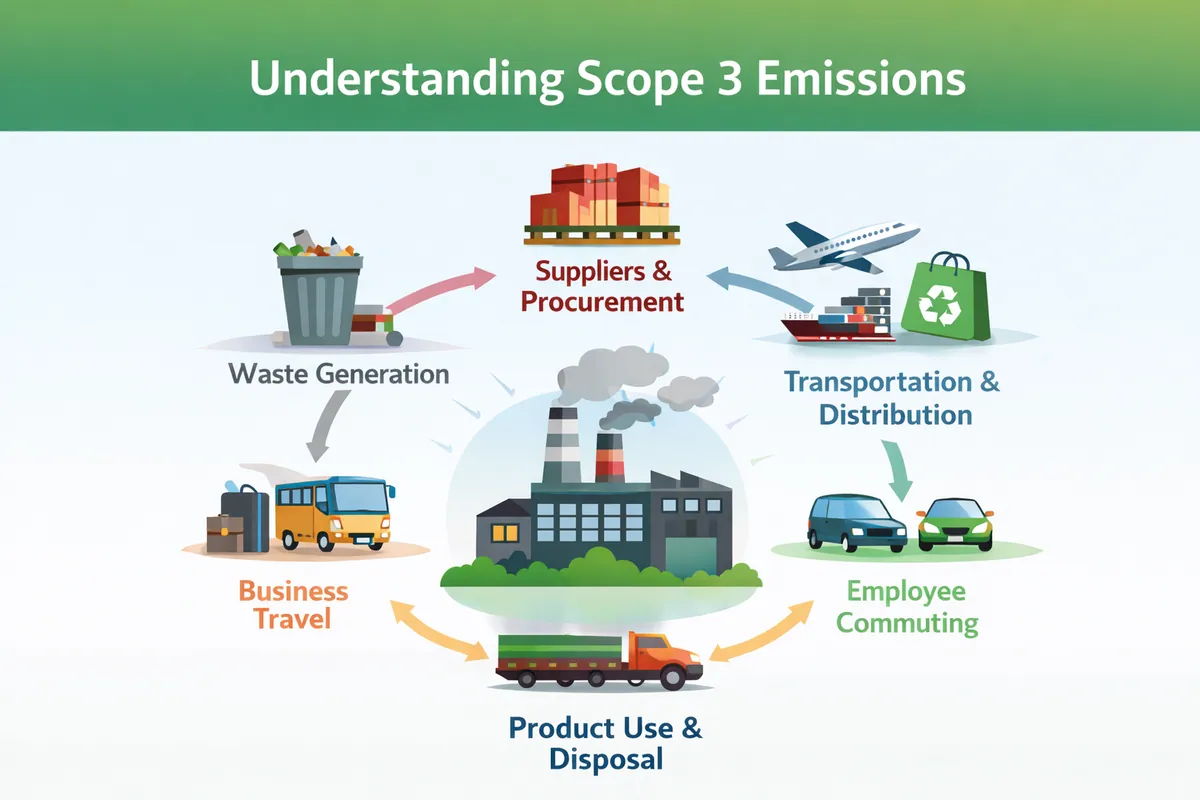
Scope 3 emissions are becoming the biggest focus in carbon accounting, especially for large enterprises.
These emissions include everything outside direct operations, such as suppliers, logistics, and product use.
As larger companies work to report Scope 3 emissions, they increasingly rely on data from smaller businesses within their value chain.
That means even if your company isn’t directly regulated, you may still be expected to provide emissions data.
Carbon accounting ensures you’re ready for that shift, rather than scrambling to catch up.
Carbon accounting also plays a role in identifying and managing business risks.
These include:
By making emissions visible, businesses can anticipate and respond to these risks more effectively.
If you're evaluating tools that can support your carbon accounting efforts, explore this guide on carbon accounting platforms to compare features and find the right fit.
Aclymate is built to simplify carbon accounting so businesses can focus on decisions, not data wrangling.
It brings all your emissions data into one place, automatically applies standardized calculations, and generates clear, audit-ready reports. Instead of managing spreadsheets and disconnected systems, your team gets a structured view of your carbon footprint in real time.
What makes it especially effective is how it balances simplicity with capability. You can get started quickly, without a steep learning curve, while still having the tools needed to scale your sustainability efforts over time.
So, why is carbon accounting important?
Because it connects sustainability with real business outcomes.
It gives companies the visibility to understand their impact, the structure to manage it, and the insight to improve it. In a business environment where transparency and accountability are becoming essential, carbon accounting is no longer optional.
It’s a foundation for smarter decisions, stronger performance, and long-term resilience.
If you’re ready to move from assumptions to real data, now’s the time to start.
Get started with Aclymate and simplify how your business tracks, reports, and reduces emissions. With automated data collection and clear insights, you can focus less on gathering information and more on taking action.
Start building a more efficient and future-ready business today.
1. Why is carbon accounting important for businesses today?
It helps companies measure emissions, stay compliant with regulations, and make informed operational decisions.
2. Does carbon accounting only benefit large companies?
No. Businesses of all sizes can benefit from improved efficiency, better reporting, and increased transparency.
3. How does carbon accounting improve business performance?
It identifies inefficiencies and areas for optimization, which can reduce costs and improve operations.
4. What role does carbon accounting play in ESG?
It provides the environmental data needed for ESG reporting and helps demonstrate sustainability performance.
5. Why is Scope 3 becoming more important?
Because it often represents the largest share of emissions and is increasingly required in reporting and supply chain transparency.
6. How can businesses start with carbon accounting?
By collecting activity data, using standardized frameworks, and adopting tools that simplify tracking and reporting.
7. Is carbon accounting a long-term investment?
Yes. It helps businesses stay compliant, competitive, and prepared for future regulations and market expectations.
Get Aclymate's practical sustainability content delivered weekly.

An event carbon footprint is the total emissions from travel, lodging, venue energy, food, and waste. See which sources matter most and why.
Read Article

AI is transforming carbon credit verification through satellite monitoring, automated analysis, and anomaly detection. But can technology solve the voluntary carbon market’s credibility problem? Discover the limitations of AI verification and how businesses can evaluate carbon credits while keeping emissions reductions ahead of offsetting.
Read Article

AI is creating new opportunities for businesses, but it also comes with an environmental cost. Carbon offsets can help address some of those emissions, but businesses need to understand what they are offsetting, how offsets work, and why measuring and reducing emissions should come first.
Read Article
Talk with a Sustainability Expert, see a demo, or start free to put the Aclymate platform and experts to work for your team.