← Back to Insights
Aclymate Team
March 19, 2026
Companies today face growing pressure to understand and disclose their environmental impact. Investors want climate transparency, customers increasingly support sustainable brands, and governments are introducing new reporting requirements.
To respond effectively, organizations must understand how carbon accounting works.
Carbon accounting is the structured process businesses use to measure greenhouse gas emissions from their operations and value chains. By turning operational data into emissions data, companies can identify risks, reduce environmental impact, and prepare for climate disclosure requirements.
Carbon accounting is the process of measuring, calculating, and reporting greenhouse gas emissions produced by an organization’s activities.
These emissions are usually expressed as carbon dioxide equivalents (CO₂e), a standardized unit that accounts for multiple greenhouse gases based on their warming potential.
The purpose of carbon accounting is simple: determine how much climate impact a company creates.
Once emissions are measured, businesses can set reduction targets, improve efficiency, and report sustainability performance to stakeholders.
For a deeper explanation of carbon footprint measurement, see the guide from World Resources Institute on greenhouse gas accounting standards.
Most organizations measure emissions using a framework developed by the Greenhouse Gas Protocol. This framework divides emissions into three categories known as Scope 1, Scope 2, and Scope 3.
Scope 1 emissions come from sources that a company directly owns or controls.
Examples include:
Because these emissions occur within company operations, they are usually the easiest to measure.
Scope 2 emissions come from the electricity, heating, or cooling that a company purchases.
Although the emissions occur at the power plant rather than the company facility, they are attributed to the organization because the energy demand comes from its operations.
Examples include:
Understanding Scope 2 emissions allows businesses to evaluate the climate impact of their energy sources.
Scope 3 emissions occur across a company’s entire value chain, both upstream and downstream.
These emissions are generated by suppliers, logistics partners, customers, and product disposal.
Examples include:
According to research from the International Energy Agency, value chain emissions often represent the largest share of a company’s carbon footprint.
For more detail on calculating emissions, you may also want to explore our guide on carbon footprint calculation methods.
Understanding how carbon accounting works requires looking at the steps businesses follow to measure emissions.
Companies first determine which business units, subsidiaries, and facilities are included in the emissions inventory.
Organizations may use either:
This ensures the emissions inventory accurately reflects company operations.
The next step is identifying all activities that generate greenhouse gas emissions.
These can include:
Each emission source is then categorized under Scope 1, Scope 2, or Scope 3.
Activity data represents the real-world inputs that generate emissions.
Examples include:
Accurate activity data is the foundation of reliable carbon accounting.
For businesses looking to estimate emissions quickly, our article on carbon footprint calculators for businesses explains how these tools work.
Emission factors convert activity data into greenhouse gas emissions.
For example:
The calculation follows this basic formula:
Activity Data × Emission Factor = Emissions (CO₂e)
Emission factors are often sourced from environmental agencies such as the U.S. Environmental Protection Agency and climate databases used in sustainability reporting.
Once emissions are calculated for each activity, they are aggregated and categorized into Scope 1, Scope 2, and Scope 3.
The result is a complete carbon footprint for the organization.
This allows companies to:
Organizations pursuing climate targets often align their reporting with frameworks such as the Science Based Targets initiative.
Reliable carbon accounting depends on high-quality data collected from across the organization.
Common data sources include:
Because these datasets often sit in separate systems, many organizations adopt sustainability platforms to centralize and automate emissions calculations.
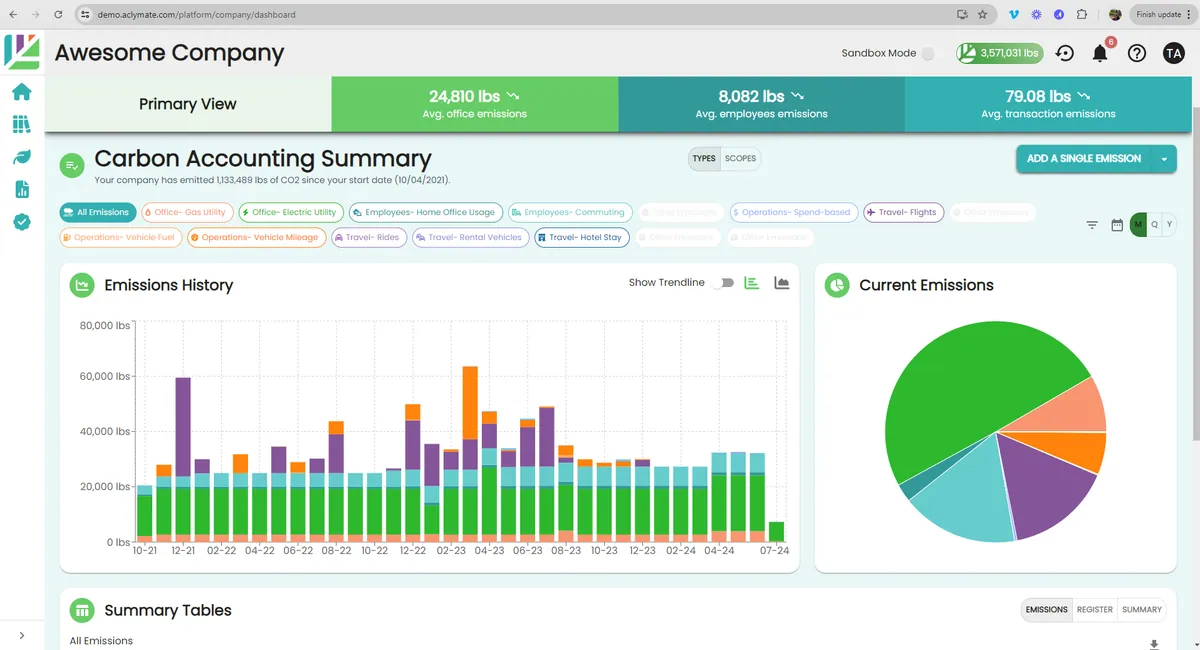
As carbon accounting becomes more complex, many organizations are moving away from manual spreadsheets and disconnected data sources.
Managing emissions across Scope 1, Scope 2, and Scope 3 requires gathering data from multiple departments, applying accurate emission factors, and maintaining consistent methodologies.
This is where digital carbon management platforms help.
Solutions like Aclymate simplify how carbon accounting works by automating emissions calculations and centralizing sustainability data in one place.
Instead of manually compiling energy bills, fuel records, travel logs, and procurement data, businesses can input operational data into a structured platform that converts activity data into verified emissions.
Platforms like Aclymate help companies:
By reducing the complexity of emissions tracking, businesses can focus more on reducing their carbon footprint rather than calculating it.
You can also explore our practical guide on reducing business carbon footprints for strategies companies use after measuring emissions.
Carbon accounting is rapidly evolving as climate regulations expand around the world.
Frameworks such as the Task Force on Climate-related Financial Disclosures and new disclosure laws are pushing companies to measure emissions more accurately and consistently.
At the same time, investors are increasingly evaluating businesses based on climate transparency and environmental performance.
Organizations that build strong carbon accounting systems today will be better positioned to manage climate risk and demonstrate credible sustainability progress.
Ready to measure your company’s emissions more accurately?
Learn how Aclymate helps businesses track Scope 1, Scope 2, and Scope 3 emissions, automate carbon calculations, and simplify sustainability reporting.
WATCH THE DEMO NOW
Carbon accounting is the process companies use to measure and track greenhouse gas emissions produced by their operations and value chains. It converts activity data such as fuel consumption, electricity use, and supply chain activities into standardized emissions metrics known as carbon dioxide equivalents (CO₂e).
Carbon accounting works by collecting operational data, identifying emission sources, and applying emission factors to convert that data into greenhouse gas emissions.
The typical process includes:
The result is a company’s total carbon footprint.
These emissions categories were defined by the Greenhouse Gas Protocol to standardize emissions reporting.
Scope 3 emissions often represent the majority of a company’s climate impact.
Carbon accounting helps businesses understand their environmental impact and identify opportunities to reduce emissions. It also supports sustainability reporting, regulatory compliance, and investor transparency.
Many climate disclosure frameworks now require companies to measure and report emissions.
Many companies now use digital carbon management platforms to simplify emissions tracking. Platforms such as Aclymate help businesses collect operational data, calculate emissions automatically, and monitor Scope 1, Scope 2, and Scope 3 emissions in a centralized system.
These tools reduce manual calculations and make sustainability reporting more accurate and efficient.
Get Aclymate's practical sustainability content delivered weekly.

AI is creating new opportunities for businesses, but it also comes with an environmental cost. Carbon offsets can help address some of those emissions, but businesses need to understand what they are offsetting, how offsets work, and why measuring and reducing emissions should come first.
Read Article
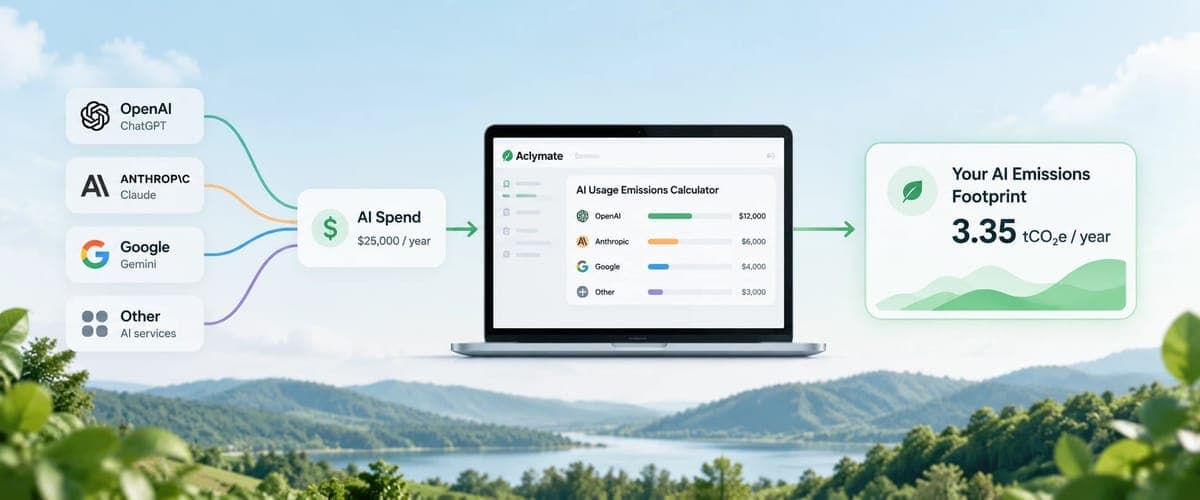
AI carbon emissions are becoming a new consideration for companies adopting ChatGPT, Claude, Gemini, Copilot and other artificial intelligence tools. Here’s how Aclymate estimates the carbon emissions from a company’s AI usage today—and how we expect the methodology to improve as AI providers release better usage and emissions data.
Read Article
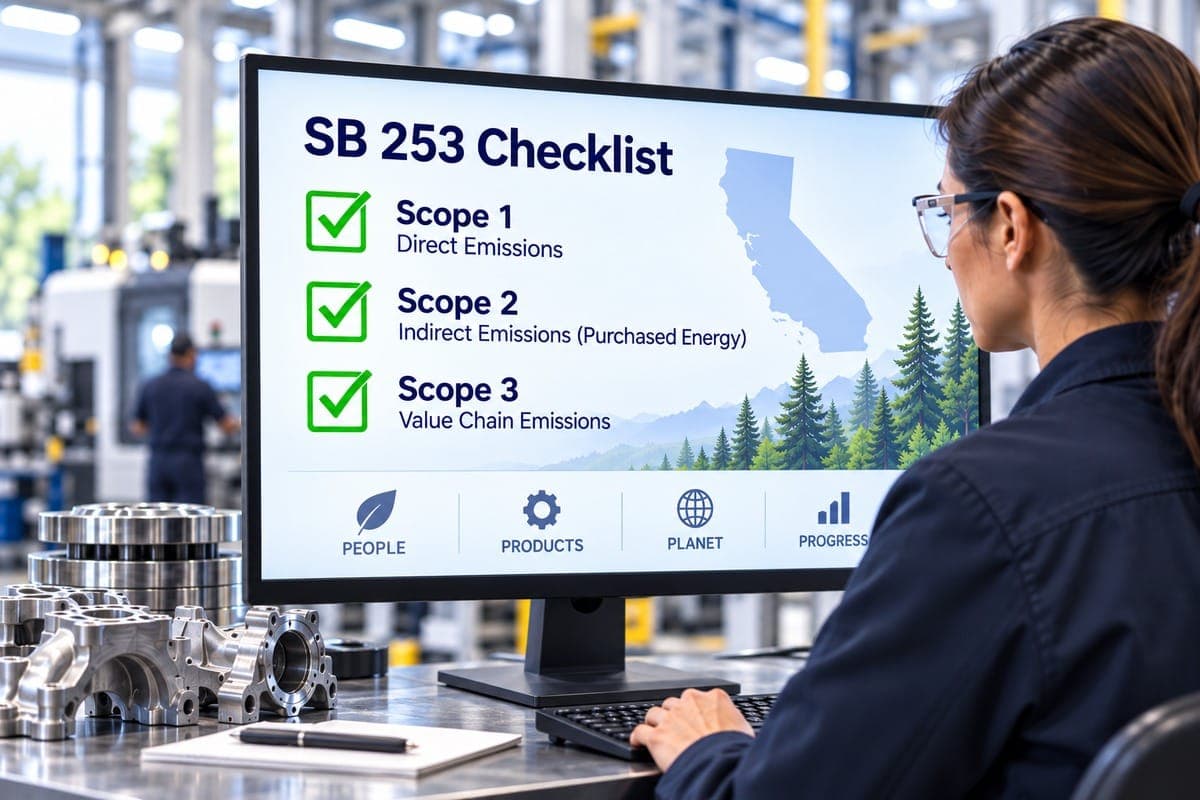
California SB 253 applies to companies over $1B in revenue — but its Scope 3 requirement reaches the automotive suppliers underneath them. What to expect and how to prepare.
Read Article
Talk with a Sustainability Expert, see a demo, or start free to put the Aclymate platform and experts to work for your team.