← Back to Insights
Aclymate Team
April 9, 2026
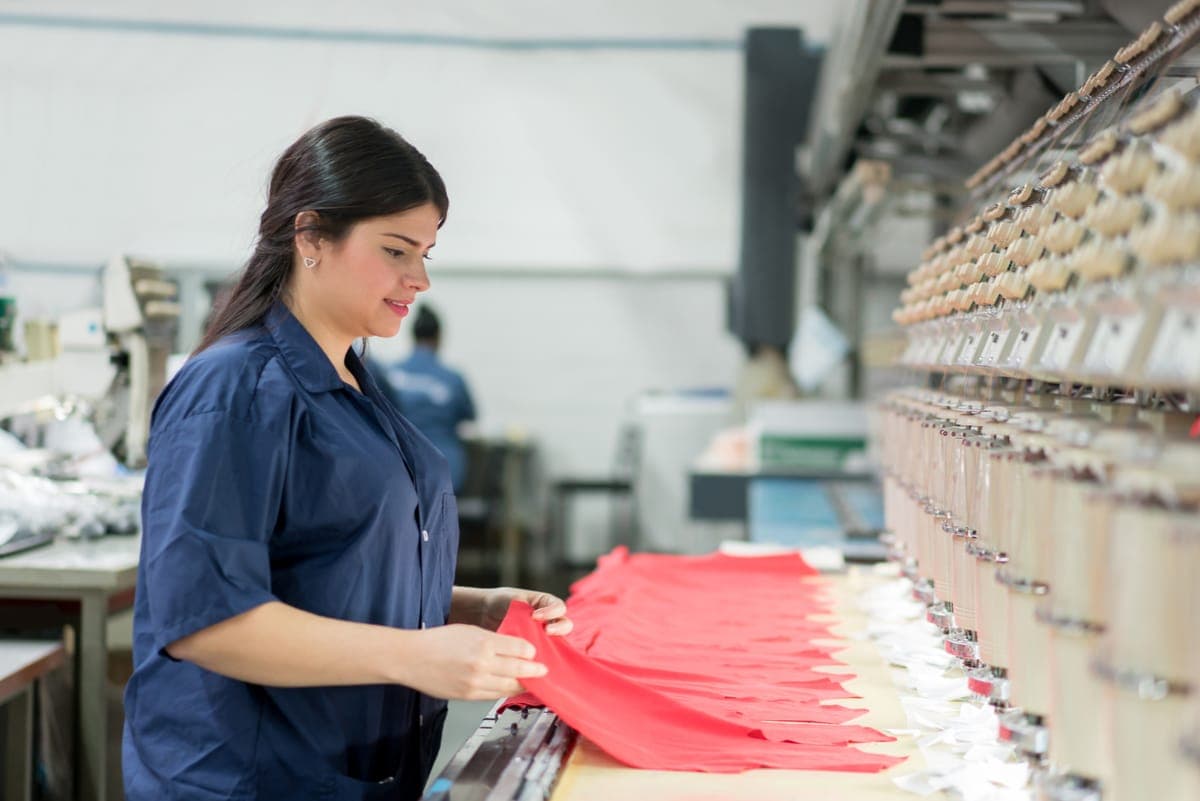
You may have already heard the term from a retail buyer, a sustainability consultant, or a vendor questionnaire. The Higg Index is the apparel industry's most widely used framework for measuring environmental and social sustainability across the supply chain and it is becoming a baseline expectation for brands, manufacturers, and suppliers who want to do business with major retailers.
Over 40,000 organizations worldwide use the Higg Index tools today, including Nike, Adidas, H&M, Patagonia, Levi's, and many of the mid-market brands that sit in Aclymate's sweet spot. If you supply REI, Nordstrom, Target, or any retailer with a published sustainability program, understanding the Higg Index is no longer optional, it is increasingly a condition of doing business.
This guide explains what the Higg Index is, which tools apply to your organization, and how your carbon accounting program connects to Higg compliance.
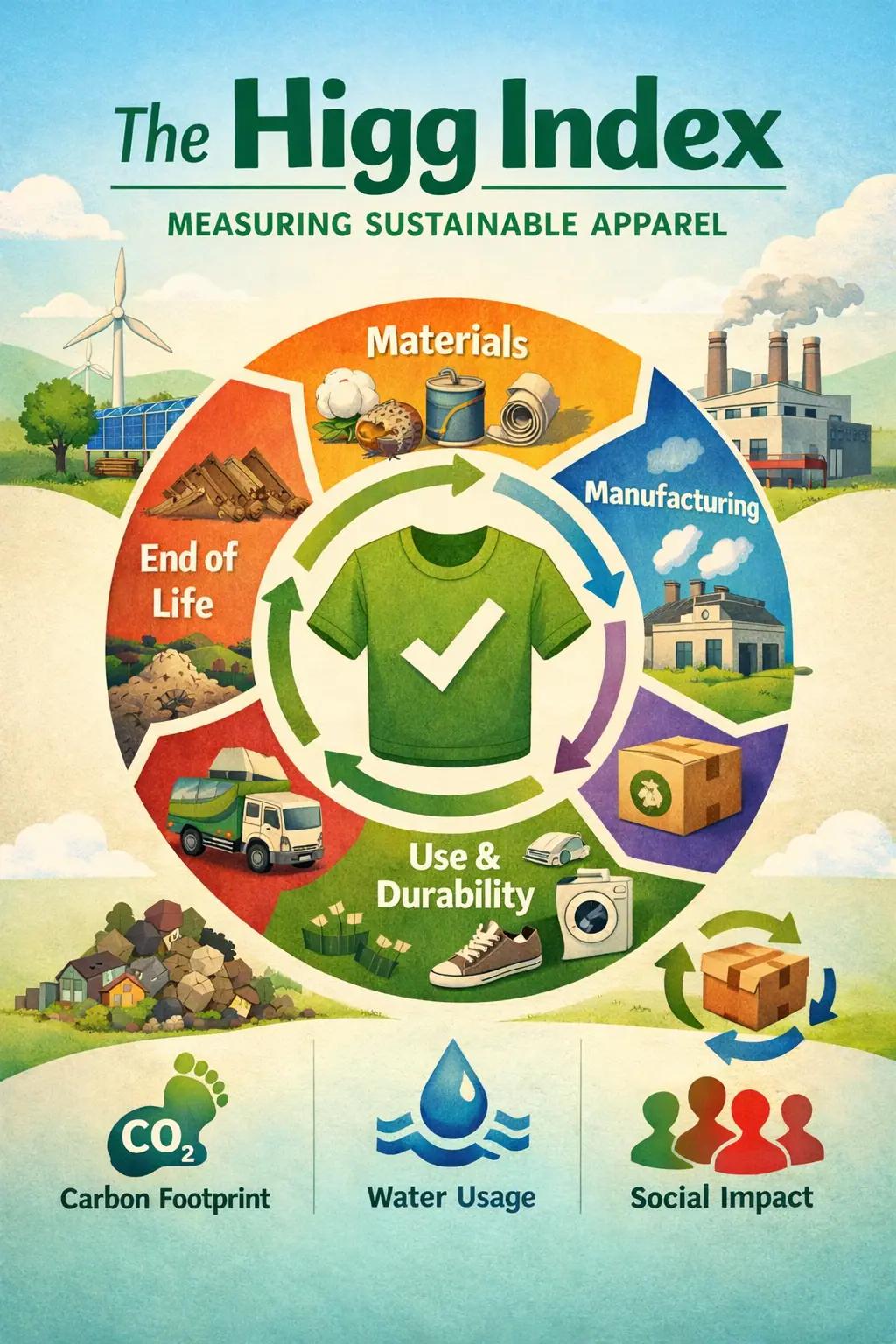
The Higg Index is a suite of five standardized assessment tools developed by Cascale (formerly the Sustainable Apparel Coalition, or SAC) — a nonprofit alliance of more than 300 apparel brands, retailers, manufacturers, NGOs, and academic institutions. It was launched in 2012, co-founded by Patagonia and Walmart, with the goal of creating a common language for measuring sustainability across the entire apparel value chain.
The tools cover everything from the environmental performance of individual factories to the materials used in a product, the social conditions at manufacturing facilities, and the overall ESG strategy of a brand or retailer.
The Higg Index does not replace GHG Protocol carbon accounting, CDP reporting, or EcoVadis ratings. It sits alongside them as the apparel industry's own sector-specific standard — and it increasingly feeds into the Scope 3 emissions data that brands need for regulatory compliance under frameworks like California's SB 253.
The most widely used tool in the suite. The Higg FEM measures the environmental performance of manufacturing facilities — factories, mills, dye houses, cut-and-sew operations — across six impact areas: energy use and greenhouse gas emissions, water use and quality, waste management, chemical management, and air emissions.
If you are a manufacturer or supplier, your brand customers will likely ask you to complete a Higg FEM assessment annually. If you are a brand or retailer, you will increasingly require your Tier 1 and Tier 2 suppliers to complete and verify their Higg FEM as part of your supplier due diligence.
The Higg FEM 2025 update introduced sharper GHG emissions metrics and updated emission factors — directly connecting factory-level data to the Scope 3 reporting that brands must complete under SB 253 from 2027 onward.
Assesses labor conditions, worker safety, fair wages, and human rights practices at manufacturing facilities. Required by many retail buyers alongside the FEM. Less directly connected to carbon accounting, but part of a comprehensive supplier audit program.
Designed for brands and retailers — not individual factories. The BRM assesses your organization's overall ESG strategy and performance across 11 impact areas organized into three pillars: environmental impacts, social impacts, and governance. It produces a single score out of 100, with breakdowns by pillar, enabling benchmarking against peers.
For COOs and VP Sustainability leaders at mid-market apparel brands, the BRM is the tool most relevant to your corporate sustainability program. It asks about your emissions measurement approach (including Scope 1, 2, and 3), your supplier engagement program, your science-based targets, your chemical management policies, and your progress toward publicly stated sustainability goals.
Measures the environmental impact of specific textile materials — cotton, polyester, wool, nylon, recycled fibers — from raw material extraction through manufacturing and finishing. Used primarily by product designers and sourcing teams to make more sustainable material choices.
Note: The Higg MSI has faced scrutiny regarding its use on consumer-facing product labels following a 2022 ruling by Norway's Consumer Authority. It remains a useful tool for internal design and sourcing decisions, but should not be used to make public marketing claims about product sustainability without additional verification.
Measures the full cradle-to-grave environmental impact of a finished product — from raw material sourcing through consumer use and end-of-life disposal. Used by brands seeking product-level LCA data. More complex to complete than the other modules and more relevant to enterprise brands with dedicated sustainability staff.
The most important intersection between the Higg Index and your carbon accounting program is the Higg FEM — specifically its GHG emissions section.
When your suppliers complete a Higg FEM assessment, they report their facility-level energy use and greenhouse gas emissions. This data becomes the primary data source for your Scope 3 Category 1 (Purchased Goods and Services) emissions — the single largest and most important category for most fashion brands.
This matters for two reasons.
First, the GHG Protocol — the standard required by California's SB 253 — recommends using primary supplier data wherever possible for Scope 3 calculations. Verified Higg FEM data from your factories is primary data. It produces more accurate, more defensible Scope 3 numbers than spend-based estimates.
Second, as third-party assurance requirements for SB 253 phase in through 2027–2030, the quality and traceability of your Scope 3 data will matter more. Brands that have verified Higg FEM data from their supply chain will be in a significantly stronger position for third-party review than those relying on generic industry averages.
In short: a well-run Higg supplier engagement program is not separate from your carbon accounting program — it is the foundation of your Scope 3 data strategy.
The Higg Index is not just an industry best practice. It is increasingly a condition of retail partnerships. Here is what major retailers are already requiring from their apparel suppliers:
REI requires all apparel brand partners to submit Higg FEM data for their key manufacturing facilities as part of its responsible sourcing program. REI is a founding member of the Sustainable Apparel Coalition.
Patagonia requires Tier 1 manufacturers to complete verified Higg FEM assessments and maintains public disclosure of supplier performance data.
H&M Group uses Higg FEM scores to measure and report on its supplier base's environmental performance, publishing annual supplier sustainability data.
Walmart and Target both reference Higg tools in their supplier sustainability guidelines, particularly for apparel and home textile categories.
For brands supplying these retailers — or aspiring to — having a Higg program in place is increasingly a requirement for maintaining shelf space and preferred supplier status.
It is not mandated by law in the US — yet. However, it is increasingly required by retail buyers as a condition of supplier relationships. For brands selling to major retailers, it functions as a de facto requirement.
They measure different things. EcoVadis assesses a company's overall ESG management system across four themes. The Higg Index uses apparel-specific tools to measure actual performance and impacts at the facility and brand level. Many brands use both — EcoVadis for corporate-level certification and the Higg tools for supply chain performance measurement.
The Higg FEM is completed annually. Assessment data is posted to the Worldly platform (which exclusively hosts the Higg Index tools), where it can be shared with brand partners and verified by third-party assessors.
Higg FEM assessments can be self-assessed or verified by an approved third-party verification body. Verified assessments carry more weight with retail buyers and are increasingly required. Verification involves a site visit or desktop review to confirm the accuracy of self-reported data.
Yes. As a brand or retailer, the Higg BRM applies to your corporate sustainability program. You will also need to engage your manufacturers to complete Higg FEM assessments as part of your Scope 3 data collection and supplier due diligence programs.
Getting your Higg Index program in order — whether as a brand completing the BRM or as a manufacturer working through the FEM — requires the same foundational work as your carbon accounting program: collecting energy and emissions data, engaging suppliers, and building a documented, repeatable reporting process.
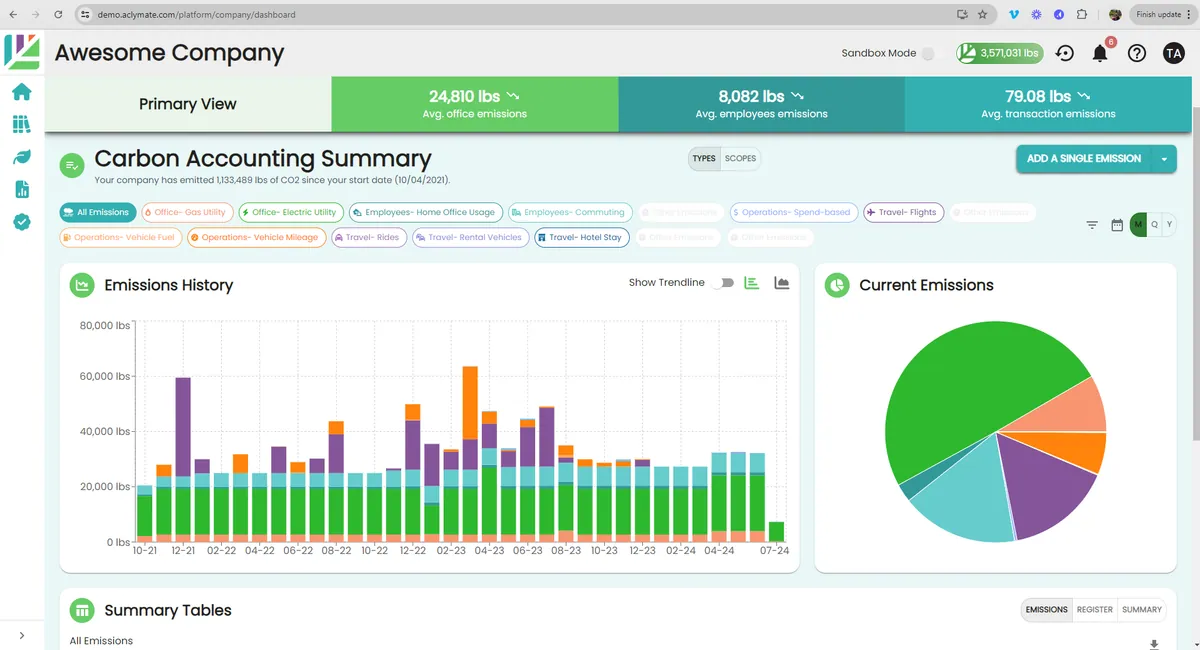
Aclymate's carbon accounting and sustainability platform is designed to support exactly this work. When you establish a GHG Protocol-compliant Scope 1, 2, and 3 emissions baseline with Aclymate, you are simultaneously building the data infrastructure that feeds into your Higg BRM and enables you to engage your suppliers on Higg FEM completion.
The result is not two separate sustainability programs — it is one integrated data foundation that serves your carbon reporting, your Higg Index compliance, your EcoVadis rating, and your retailer sustainability requirements simultaneously.
Ready to build a sustainability program that covers all of it?
Book a free sustainability assessment with Aclymate
Get Aclymate's practical sustainability content delivered weekly.

AI is creating new opportunities for businesses, but it also comes with an environmental cost. Carbon offsets can help address some of those emissions, but businesses need to understand what they are offsetting, how offsets work, and why measuring and reducing emissions should come first.
Read Article
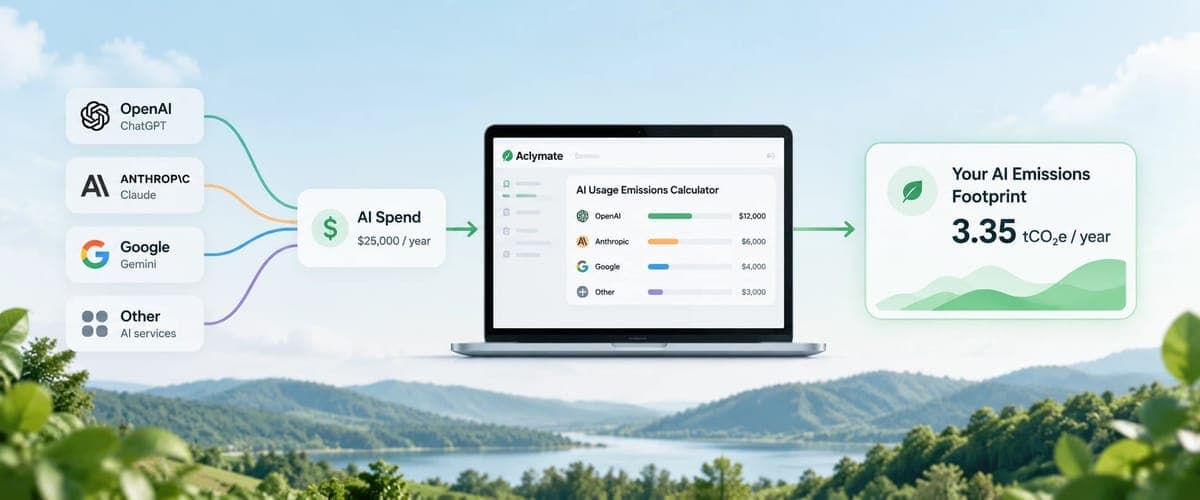
AI carbon emissions are becoming a new consideration for companies adopting ChatGPT, Claude, Gemini, Copilot and other artificial intelligence tools. Here’s how Aclymate estimates the carbon emissions from a company’s AI usage today—and how we expect the methodology to improve as AI providers release better usage and emissions data.
Read Article
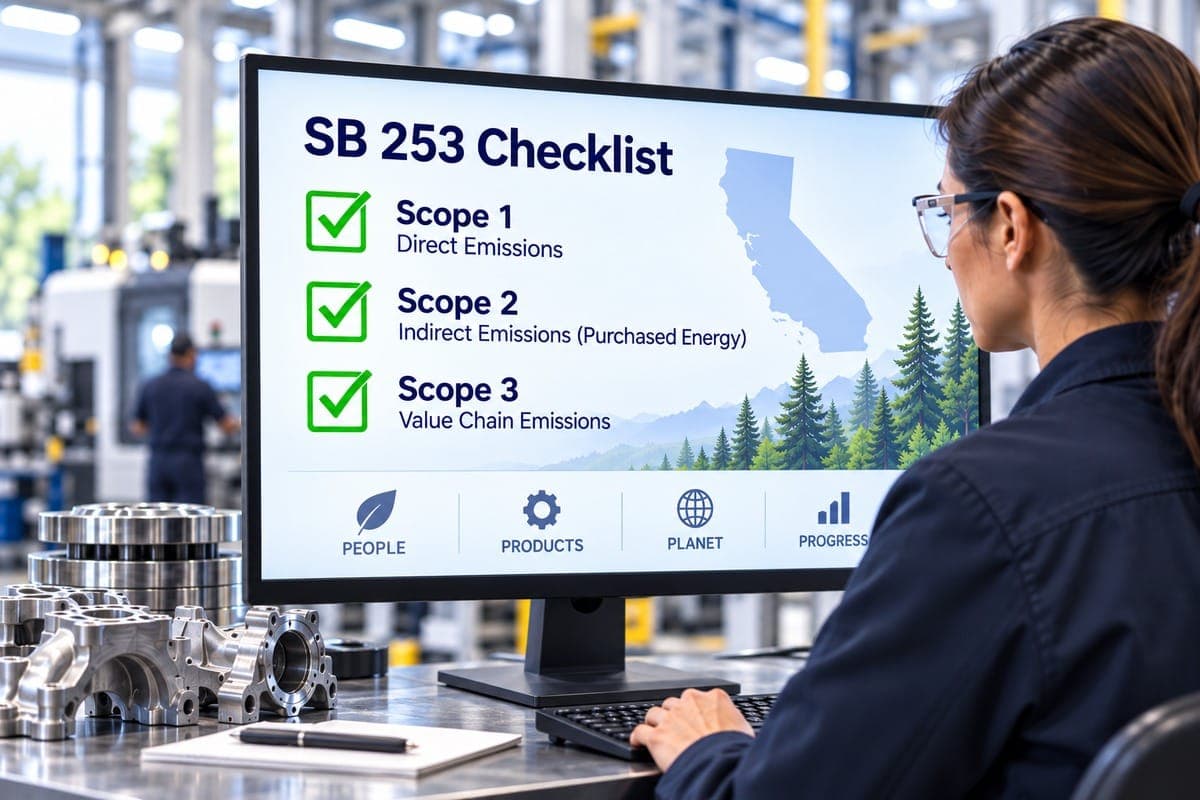
California SB 253 applies to companies over $1B in revenue — but its Scope 3 requirement reaches the automotive suppliers underneath them. What to expect and how to prepare.
Read Article
Talk with a Sustainability Expert, see a demo, or start free to put the Aclymate platform and experts to work for your team.