← Back to Insights
Aclymate Team
April 13, 2026

Carbon accounting is no longer just a sustainability initiative. It’s quickly becoming a core business function. As regulations tighten and stakeholders expect transparency, companies need reliable systems to track, manage, and report their emissions.
That’s where carbon accounting platforms come in. But with so many options available, choosing the right one can feel overwhelming. The best platform isn’t the one with the most features. It’s the one that fits your business, your data, and your goals.
This guide breaks down how to evaluate carbon accounting platforms and find the right match for your organization.
Carbon accounting platforms are software tools that help businesses measure, track, and report greenhouse gas (GHG) emissions. These platforms typically align with frameworks like the Greenhouse Gas Protocol, which standardizes how emissions are calculated across Scope 1, 2, and 3.
Most platforms bring together data from different sources, such as energy usage, travel, supply chains, and operations, then convert that data into carbon emissions. Many also include reporting tools to support compliance, ESG disclosures, and sustainability goals.
Picking the wrong platform can slow down your sustainability efforts instead of accelerating them.
A good carbon accounting platform should:
If the platform doesn’t align with your operations, it can lead to incomplete data, reporting gaps, and wasted time.
Not all platforms are built the same. Some are designed for startups and small teams, while others are built for large enterprises with complex global operations.
Choosing a platform that matches your scale helps avoid overpaying for features you don’t need or struggling with tools that can’t keep up.
A strong platform should support all three emissions scopes:
Scope 3 is often the hardest to track, but it’s also where most emissions occur. If your business has complex suppliers or logistics, this should be a top priority.
Manual data entry is one of the biggest pain points in carbon accounting.
Look for platforms that can integrate with:
Automation reduces errors and saves time. It also ensures your data stays up to date without constant manual input.
Different businesses face different reporting requirements. A good platform should support:
This becomes especially important if your company operates in regions with stricter climate regulations.
Even the most powerful platform won’t help if your team doesn’t use it.
Look for:
A platform should feel intuitive, not like another system your team struggles to learn.
Your sustainability efforts will evolve. Your platform should grow with you.
Consider whether the platform can:
Switching platforms later can be costly, so it’s worth thinking ahead.
Not all platforms serve the same purpose. Here are the main categories:
These tools combine carbon accounting with broader ESG management, including reporting, goal tracking, and analytics.
Focused specifically on emissions measurement and reporting, often with deeper carbon-specific features.
Designed for sectors like manufacturing, retail, or logistics, with tailored emissions factors and workflows.
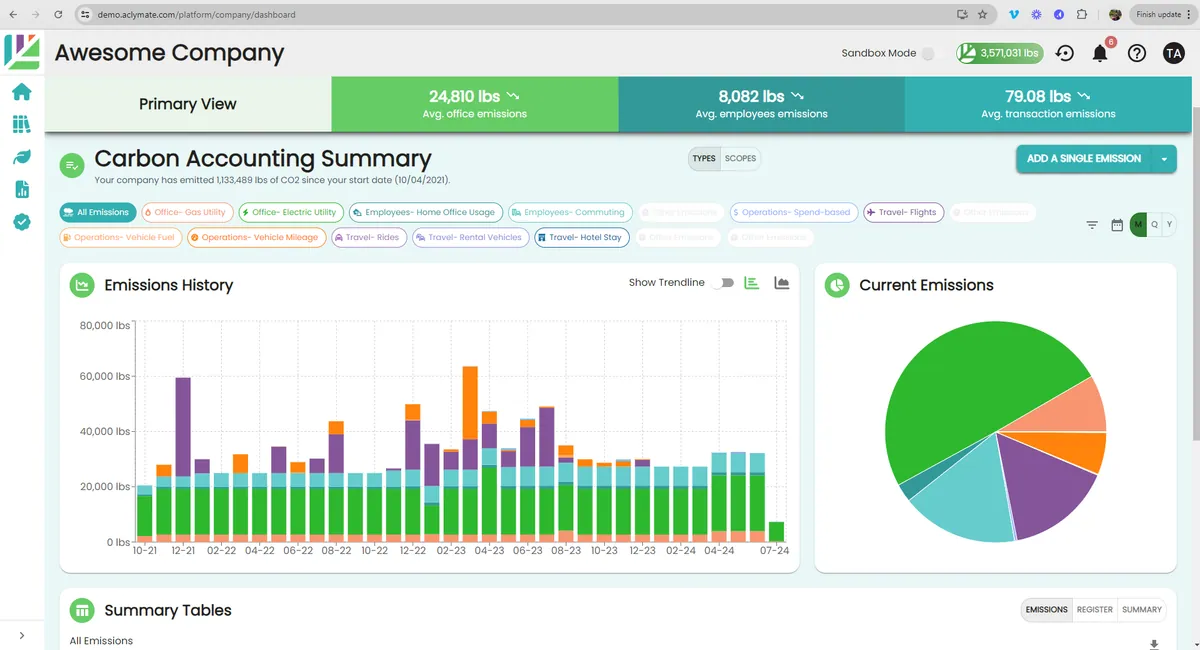
Aclymate is built to simplify carbon accounting for businesses that want accuracy without complexity.
Instead of relying on manual spreadsheets, Aclymate centralizes emissions tracking, automates calculations, and helps companies stay aligned with reporting standards. It’s especially useful for teams that are just getting started with carbon accounting but still need reliable, audit-ready data.
With a focus on usability and streamlined workflows, Aclymate helps businesses move from data collection to real climate action faster.
When choosing a carbon accounting platform, watch out for these pitfalls:
A quick decision upfront can lead to long-term inefficiencies.
Carbon accounting platforms are essential tools for any business serious about sustainability. The right platform doesn’t just track emissions. It helps you understand them, manage them, and reduce them over time.
Take the time to evaluate your business needs, data complexity, and long-term goals. When the platform fits your operations, everything else becomes easier.
Ready to simplify your carbon accounting process?
Get started with Aclymate and bring your emissions tracking, reporting, and insights into one easy-to-use platform. Whether you're just beginning or scaling your sustainability efforts, Aclymate helps you move faster with less manual work and more confidence in your data.
Start building a smarter, more efficient approach to carbon accounting today.
1. What is the main purpose of a carbon accounting platform?
It helps businesses measure, track, and report their greenhouse gas emissions accurately.
2. Do small businesses need carbon accounting platforms?
Yes. Even small companies benefit from tracking emissions, especially as sustainability expectations grow.
3. What is Scope 3 and why is it important?
Scope 3 includes indirect emissions from supply chains and operations, often the largest share of total emissions.
4. How long does it take to implement a carbon accounting platform?
It depends on the platform and data complexity, but it can range from a few days to several months.
5. Can carbon accounting platforms help reduce emissions?
Yes. They provide insights that help businesses identify reduction opportunities and track progress.
Get Aclymate's practical sustainability content delivered weekly.

AI is transforming carbon credit verification through satellite monitoring, automated analysis, and anomaly detection. But can technology solve the voluntary carbon market’s credibility problem? Discover the limitations of AI verification and how businesses can evaluate carbon credits while keeping emissions reductions ahead of offsetting.
Read Article

AI is creating new opportunities for businesses, but it also comes with an environmental cost. Carbon offsets can help address some of those emissions, but businesses need to understand what they are offsetting, how offsets work, and why measuring and reducing emissions should come first.
Read Article
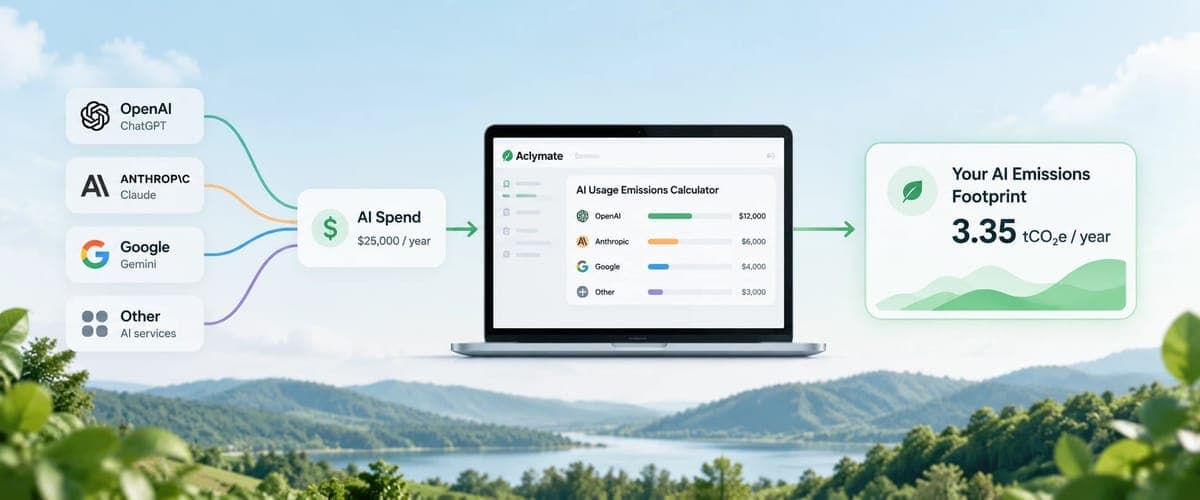
AI carbon emissions are becoming a new consideration for companies adopting ChatGPT, Claude, Gemini, Copilot and other artificial intelligence tools. Here’s how Aclymate estimates the carbon emissions from a company’s AI usage today—and how we expect the methodology to improve as AI providers release better usage and emissions data.
Read Article
Talk with a Sustainability Expert, see a demo, or start free to put the Aclymate platform and experts to work for your team.