← Back to Insights
Aclymate Team
April 15, 2026
Carbon accounting is becoming a core part of how modern businesses operate. What used to be a niche sustainability effort is now a business priority, driven by growing pressure from regulators, investors, and customers who want clear, measurable proof of environmental responsibility.
Today, companies are expected to understand not just their financial performance, but also their environmental impact. That means knowing exactly how much greenhouse gas they produce, where those emissions come from, and how they can be reduced over time. Without a structured way to measure this, it’s almost impossible to set credible sustainability goals or report progress accurately.
This is where carbon accounting comes in. It gives businesses a standardized way to measure emissions across their operations, making sustainability efforts more than just good intentions. It turns them into data-driven strategies that can be tracked, improved, and communicated with confidence.
If you're new to the concept, the terminology and frameworks can feel overwhelming at first. But at its core, carbon accounting is straightforward. This guide breaks down the carbon accounting definition in simple terms, explains how it works in practice, and shows how businesses actually use it to drive real-world impact.
Carbon accounting is the process of measuring, tracking, and reporting greenhouse gas (GHG) emissions produced directly or indirectly by an organization.
It works similarly to financial accounting, but instead of tracking money, it tracks emissions. The goal is to understand how much carbon dioxide and other greenhouse gases a business is responsible for, so it can manage and reduce its impact over time.
Most companies follow standardized frameworks like the Greenhouse Gas Protocol, which provides clear rules on how emissions should be calculated, categorized, and reported.
In simple terms, carbon accounting answers three key questions:
Carbon accounting plays a much bigger role than just reporting numbers. It directly influences how businesses operate and make decisions.
Here’s why it matters:
Without carbon accounting, companies lack the visibility needed to manage these risks and opportunities effectively.
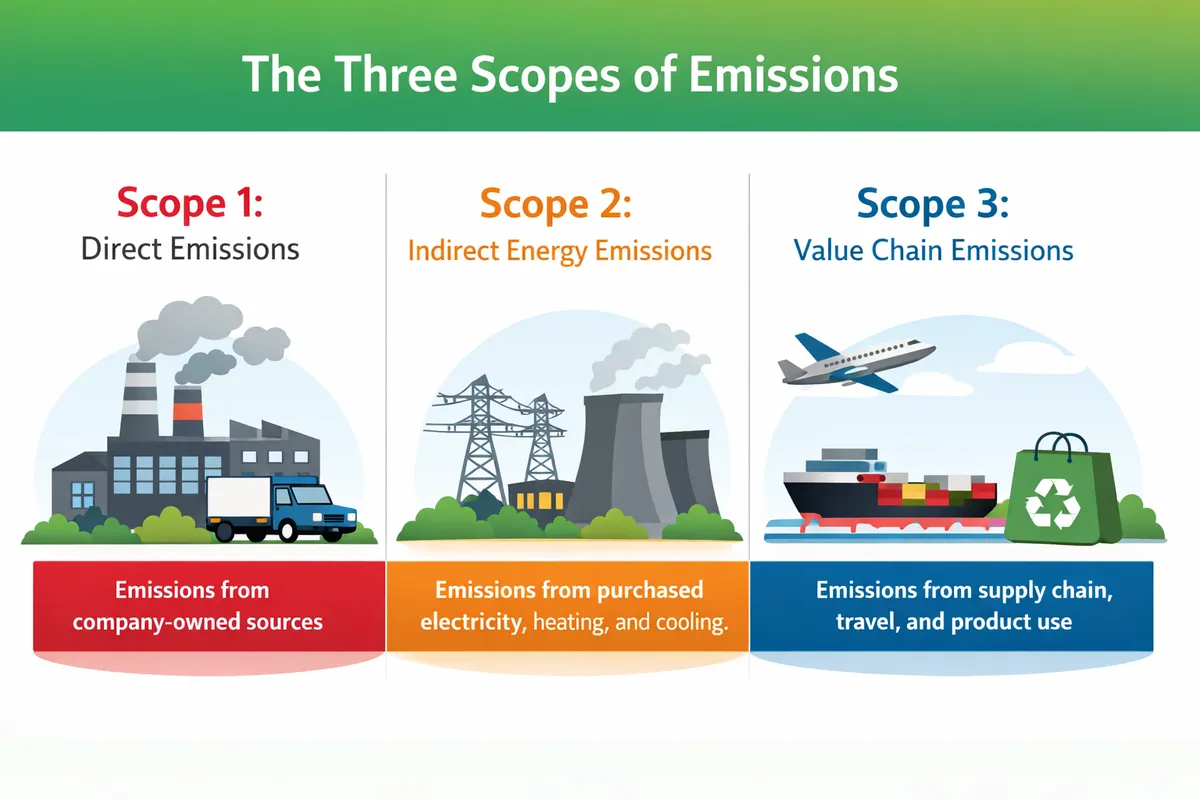
A key part of understanding carbon accounting is knowing how emissions are categorized. The Greenhouse Gas Protocol defines three main scopes:
These come from sources a company owns or controls, such as fuel used in company vehicles, manufacturing equipment, or on-site operations.
These are emissions from purchased electricity, heating, or cooling. Even though the emissions happen off-site, they are still tied to your energy consumption.
These include all other indirect emissions across your value chain, such as:
Scope 3 is usually the largest share of total emissions and the hardest to measure, but it provides the most complete picture of a company’s environmental impact.
To fully understand the carbon accounting definition, it helps to break it down into its core components:
Businesses gather activity data from across their operations. This includes utility bills, fuel usage, procurement data, logistics records, and more.
The collected data is converted into emissions using emission factors. These factors represent the average emissions produced per unit of activity (for example, kilograms of CO₂ per kWh of electricity).
Data is structured and categorized into the correct scopes and emissions categories, ensuring consistency and accuracy across reporting periods.
Companies compile emissions data into reports for internal tracking, sustainability disclosures, or regulatory compliance.
Third-party verification ensures that emissions data is accurate, credible, and aligned with recognized standards.
Several frameworks guide how carbon accounting is done. The most widely used include:
Using established frameworks ensures that your data is consistent, comparable, and trusted by stakeholders.
To make this more concrete, imagine a mid-sized company calculating its emissions:
Each data point is converted into carbon emissions using standardized factors. The result is a complete emissions inventory that shows where the company’s impact is highest.
From there, the company can take action, such as switching to renewable energy, optimizing logistics, or working with lower-emission suppliers.
If you're exploring tools that help with this process, you can also read our guide on carbon accounting platforms.
While the concept is straightforward, execution can be complex. Common challenges include:
These challenges are exactly why many businesses adopt dedicated carbon accounting platforms.
Modern carbon accounting platforms streamline the entire process by automating key steps.
With the right platform, businesses can:
This not only saves time but also improves the accuracy and reliability of your data.
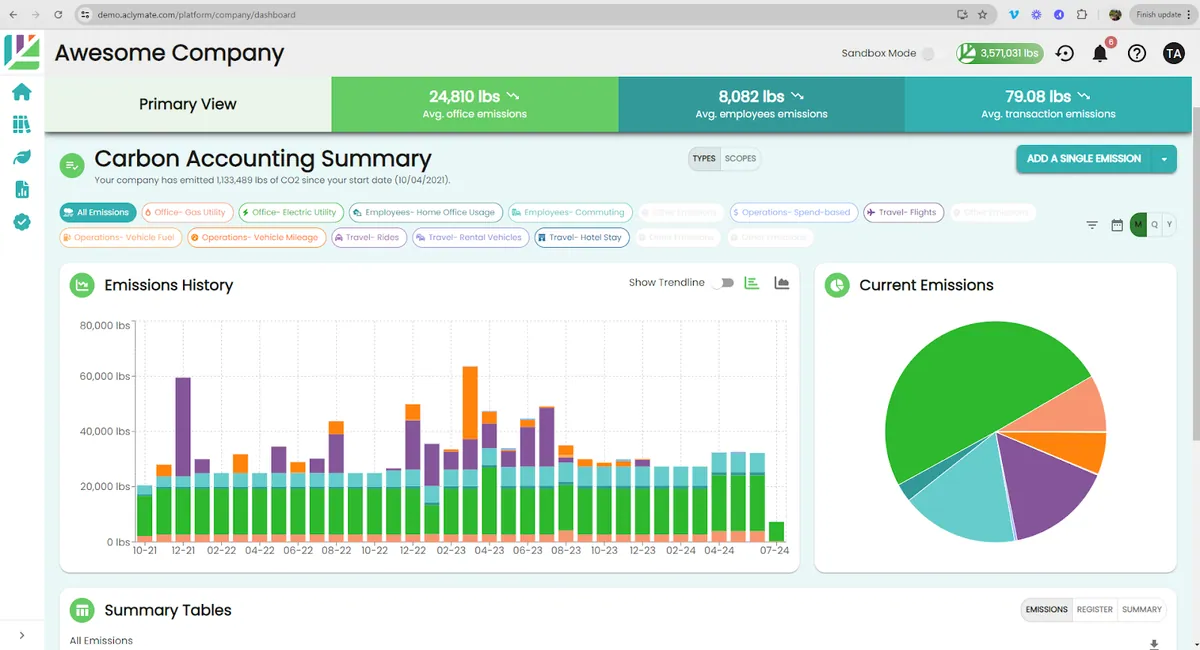
Aclymate turns carbon accounting from a manual, time-consuming task into a clear and structured process your team can actually use.
Instead of piecing together data from spreadsheets and multiple systems, Aclymate centralizes everything in one place. It automatically converts your business activity data into emissions, keeps calculations aligned with recognized standards, and organizes your results into clean, audit-ready reports.
What makes it stand out is how approachable it is. You don’t need a dedicated sustainability team to get started. The platform is designed to guide you step by step, so you can go from zero data to a complete emissions picture without getting stuck in complexity.
As your business grows, Aclymate grows with you. From basic tracking to more advanced reporting needs, it gives you the structure and visibility to make smarter, data-backed decisions about your environmental impact.
Understanding the carbon accounting definition is the first step toward managing your company’s environmental impact.
Once you know what to measure and how it’s calculated, you can start making smarter decisions, reducing emissions, improving operational efficiency, and building a more sustainable business.
Ready to move beyond definitions and start tracking your emissions?
Get started with Aclymate and simplify your carbon accounting from day one. With automated tracking, clear reporting, and an easy-to-use platform, you can turn complex emissions data into real insights and action.
Start building a more sustainable business today.
WATCH DEMO
1. What is carbon accounting in simple terms?
It’s the process of measuring and tracking the greenhouse gas emissions a business produces.
2. What are greenhouse gases (GHGs)?
They are gases like carbon dioxide and methane that trap heat in the atmosphere and contribute to climate change.
3. Is carbon accounting required for all businesses?
Not all, but many companies are increasingly required to report emissions due to regulations and investor expectations.
4. What is the difference between Scope 1, 2, and 3 emissions?
Scope 1 is direct emissions, Scope 2 is energy-related, and Scope 3 covers indirect emissions across the value chain.
5. How do companies calculate carbon emissions?
They use activity data (like energy use) and apply standardized emission factors to convert it into carbon equivalents.
6. What tools are used for carbon accounting?
Businesses use carbon accounting platforms to automate data collection, calculations, and reporting.
7. Can small businesses benefit from carbon accounting?
Yes. It helps them track impact, improve efficiency, and meet growing sustainability expectations.
Get Aclymate's practical sustainability content delivered weekly.

An event carbon footprint is the total emissions from travel, lodging, venue energy, food, and waste. See which sources matter most and why.
Read Article

AI is transforming carbon credit verification through satellite monitoring, automated analysis, and anomaly detection. But can technology solve the voluntary carbon market’s credibility problem? Discover the limitations of AI verification and how businesses can evaluate carbon credits while keeping emissions reductions ahead of offsetting.
Read Article

AI is creating new opportunities for businesses, but it also comes with an environmental cost. Carbon offsets can help address some of those emissions, but businesses need to understand what they are offsetting, how offsets work, and why measuring and reducing emissions should come first.
Read Article
Talk with a Sustainability Expert, see a demo, or start free to put the Aclymate platform and experts to work for your team.