← Back to Insights
Aclymate Team
March 27, 2026
As climate reporting becomes more complex, many organizations struggle to measure and manage their greenhouse gas emissions accurately.
It’s not just about calculating emissions anymore. Companies must collect data from multiple sources, apply standardized methodologies, and align reporting with global frameworks.
This is where carbon accounting solutions come in.
Carbon accounting solutions combine tools, expertise, and processes to help businesses measure emissions, ensure compliance, and build credible sustainability strategies.
Carbon accounting solutions refer to the combination of software, services, and systems used to measure and manage greenhouse gas emissions.
These solutions typically help businesses:
Most solutions follow standards established by the Greenhouse Gas Protocol, which defines Scope 1, Scope 2, and Scope 3 emissions.
If you want to understand how emissions are calculated, see our guide on how carbon accounting works.
Businesses typically choose from three main types of carbon accounting solutions depending on their needs and internal capabilities.
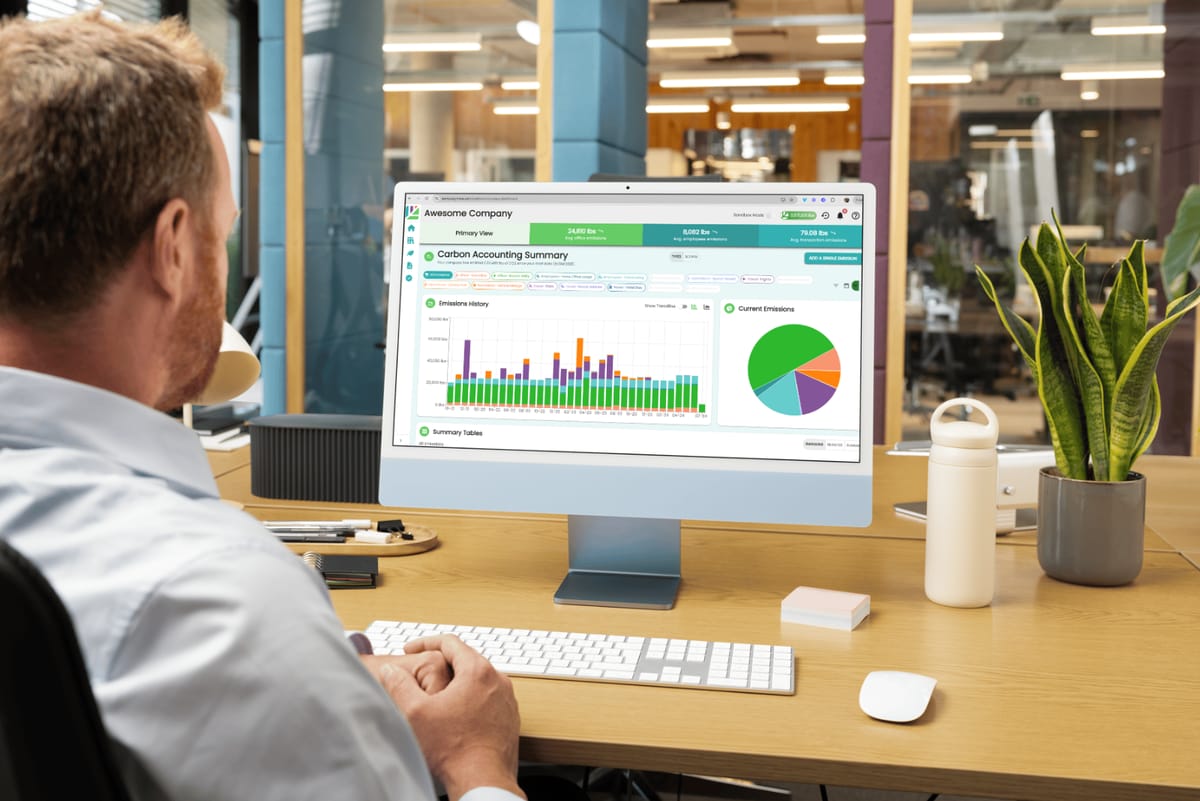
Software platforms are the most common type of carbon accounting solution today.
These tools automate emissions calculations by collecting operational data and applying emission factors from databases such as those maintained by the U.S. Environmental Protection Agency.
Key benefits:
Software solutions are ideal for organizations that want continuous emissions monitoring and reporting.
Examples include platforms like Aclymate, Persefoni, and Watershed Technology, Inc..
Some organizations rely on sustainability consultants or advisory firms to manage carbon accounting.
These service-based solutions typically include:
Consulting solutions are often used by companies that lack internal sustainability expertise or need support for regulatory compliance.
They are especially valuable for complex Scope 3 emissions assessments.
Hybrid solutions combine software platforms with expert support.
In this model, businesses use technology to automate data collection and calculations while also working with consultants to guide strategy and ensure accuracy.
Benefits of hybrid solutions include:
Hybrid approaches are becoming increasingly popular as businesses scale their sustainability efforts.
Regardless of the approach, strong carbon accounting solutions share several core components.
Carbon accounting solutions must gather data from across the organization.
Common sources include:
Centralizing this data is essential for accurate emissions measurement.
Reliable solutions apply standardized emission factors to convert activity data into emissions.
These methodologies align with global standards such as:
Using recognized methodologies ensures emissions data is credible and comparable.
The best carbon accounting solutions measure emissions across all three scopes.
Scope 3 emissions, which include supply chain and product lifecycle impacts, are often the most complex. According to the International Energy Agency, these emissions frequently represent the largest portion of a company’s footprint.
Solutions that effectively capture Scope 3 data provide a more complete view of environmental impact.
Carbon accounting solutions must support sustainability reporting and regulatory compliance.
Many organizations align reporting with frameworks such as:
These frameworks guide how emissions data is disclosed to stakeholders.
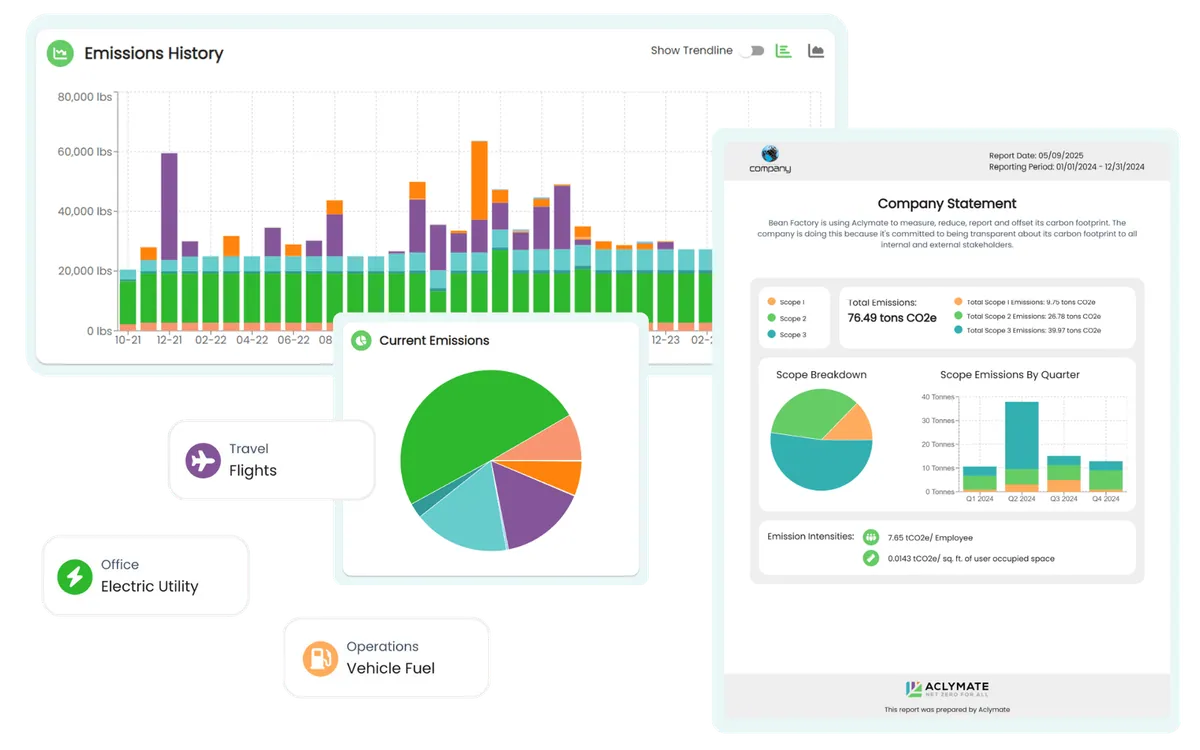
Modern carbon accounting often requires a balance between automation and usability.
Platforms like Aclymate are designed to simplify carbon accounting by combining key elements of effective solutions into a single system.
Aclymate helps businesses:
By combining automation with structured workflows, Aclymate provides a practical solution for businesses looking to move beyond manual carbon accounting.
For businesses comparing tools, you may also want to explore our guide on best carbon accounting software.
The right solution depends on your organization’s size, resources, and sustainability goals.
Consider the following when evaluating options:
Choosing the right approach ensures your carbon accounting process is both accurate and sustainable over time.
Carbon accounting solutions are evolving as sustainability becomes more data-driven and regulated.
Future solutions will likely include:
As expectations increase, businesses will need solutions that not only measure emissions but also support long-term climate strategy.
Measuring emissions is only the first step. The real value comes from using that data to make better decisions and reduce environmental impact.
Looking for a simpler carbon accounting solution?
Explore how Aclymate helps businesses measure emissions, streamline reporting, and build effective sustainability strategies—all in one platform.
WATCH DEMO
Carbon accounting solutions are tools, services, or combined approaches used by businesses to measure, track, and report greenhouse gas emissions.
They can include software platforms, consulting services, or hybrid systems that combine both.
Software solutions automate emissions tracking and reporting, while consulting solutions provide expert guidance and manual support. Hybrid solutions combine both approaches for greater flexibility and accuracy.
Hybrid solutions combine software platforms with expert consulting support. Businesses use software for data collection and calculations while relying on experts for strategy and compliance.
Carbon accounting solutions help businesses understand their environmental impact, comply with regulations, and identify opportunities to reduce emissions.
They are essential for building credible sustainability strategies.
Many organizations use digital platforms to manage emissions. Tools such as Aclymate help businesses automate emissions calculations, track sustainability performance, and simplify reporting across Scope 1, Scope 2, and Scope 3 emissions.
Get Aclymate's practical sustainability content delivered weekly.

AI is creating new opportunities for businesses, but it also comes with an environmental cost. Carbon offsets can help address some of those emissions, but businesses need to understand what they are offsetting, how offsets work, and why measuring and reducing emissions should come first.
Read Article
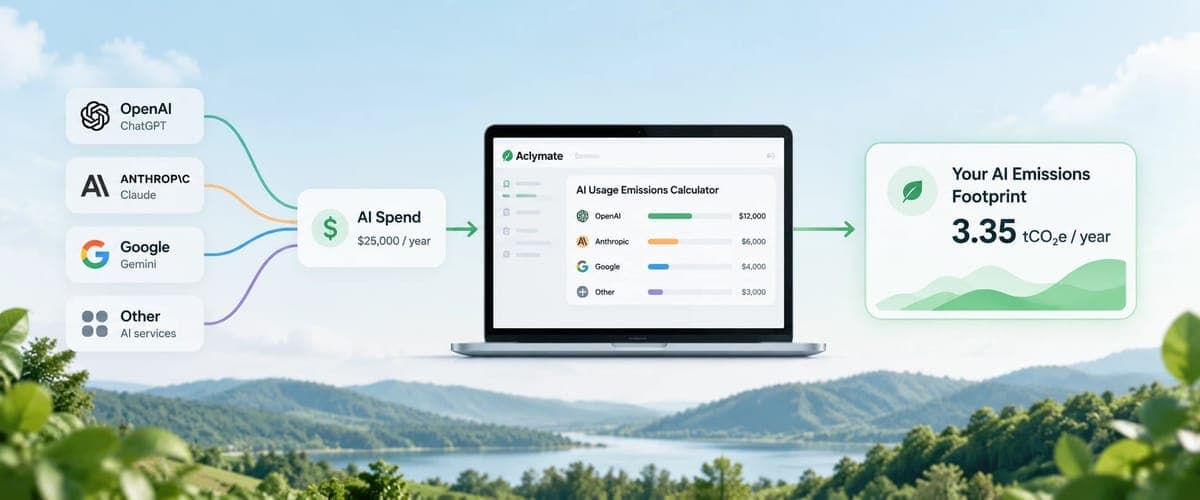
AI carbon emissions are becoming a new consideration for companies adopting ChatGPT, Claude, Gemini, Copilot and other artificial intelligence tools. Here’s how Aclymate estimates the carbon emissions from a company’s AI usage today—and how we expect the methodology to improve as AI providers release better usage and emissions data.
Read Article
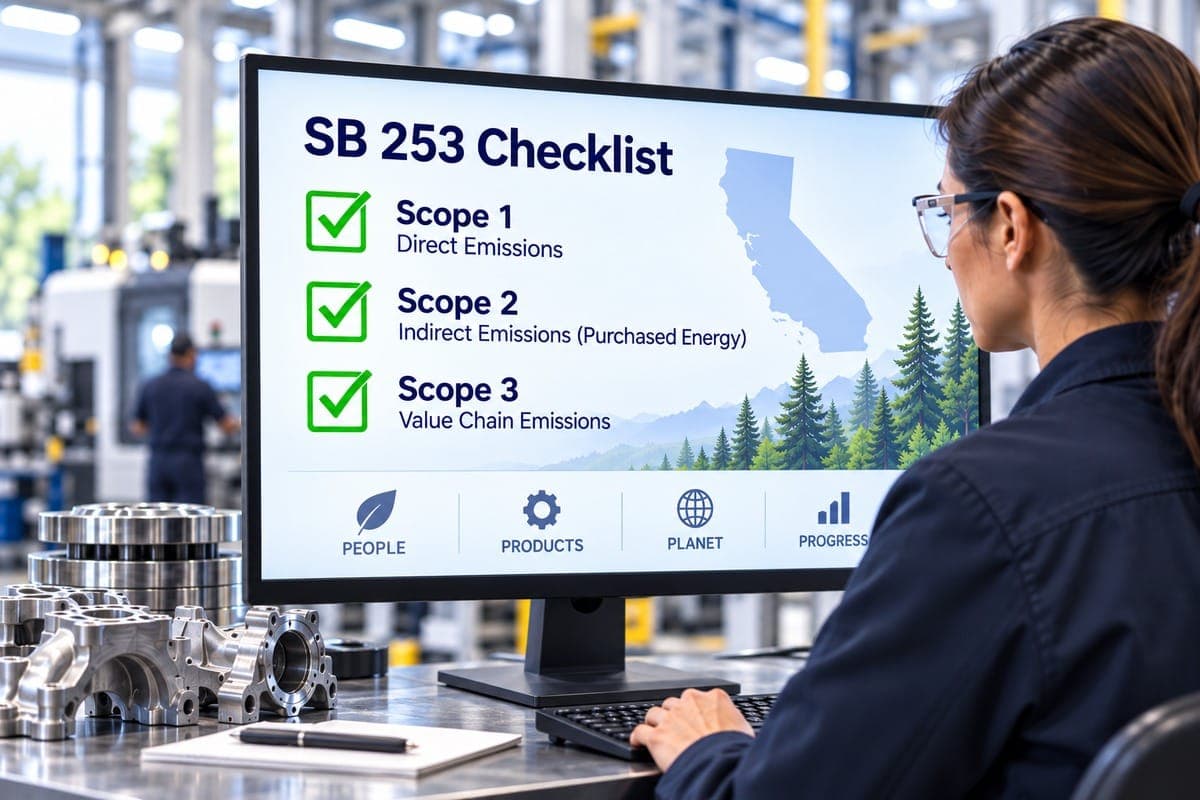
California SB 253 applies to companies over $1B in revenue — but its Scope 3 requirement reaches the automotive suppliers underneath them. What to expect and how to prepare.
Read Article
Talk with a Sustainability Expert, see a demo, or start free to put the Aclymate platform and experts to work for your team.