← Back to Insights
Aclymate Team
March 23, 2026
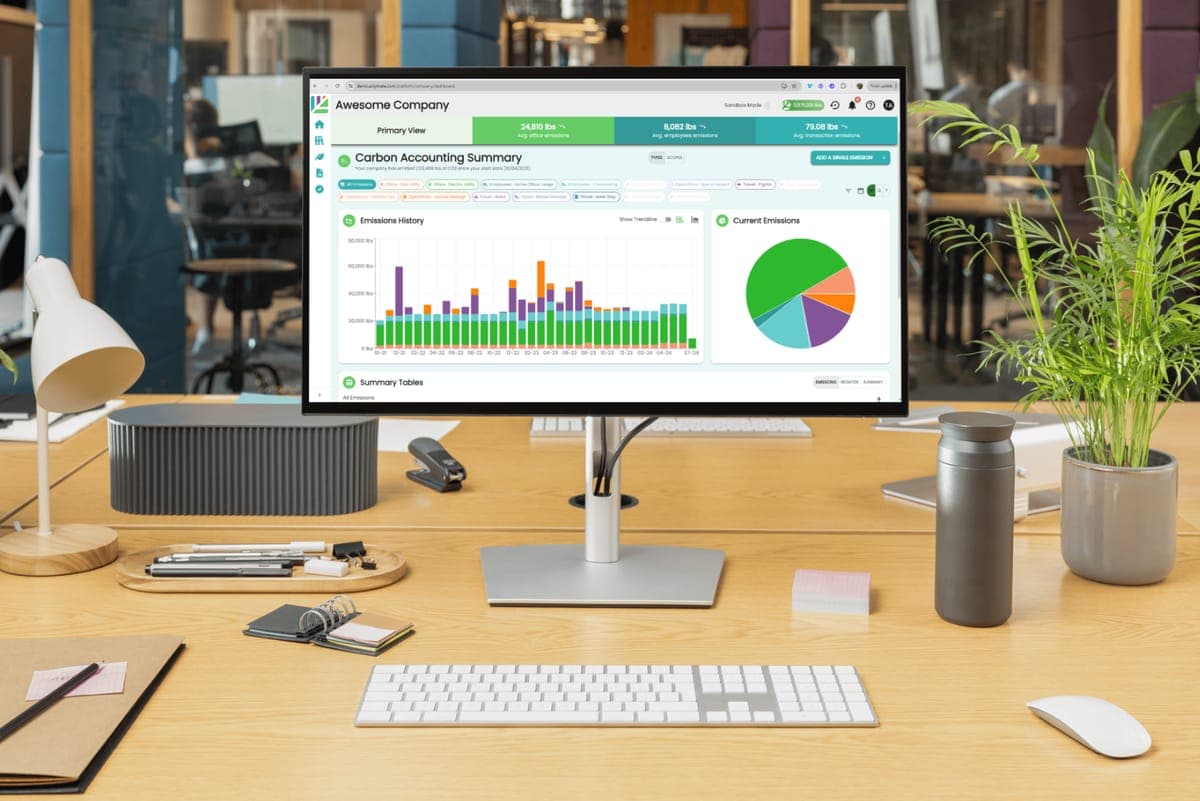
Sustainability reporting is quickly becoming a standard part of doing business. Investors expect climate transparency, regulators are introducing disclosure requirements, and customers increasingly support environmentally responsible companies.
To meet these expectations, organizations need reliable ways to measure and manage their greenhouse gas emissions. This is why many companies are adopting carbon accounting software.
Carbon accounting platforms help businesses collect emissions data, calculate their carbon footprint, and track sustainability progress over time. These tools replace manual spreadsheets with automated systems that simplify emissions measurement and reporting.
Companies evaluating sustainability technology often begin by comparing the best carbon accounting software available today.
Carbon accounting software helps organizations measure greenhouse gas emissions produced by their operations and value chains.
Most platforms follow the framework developed by the Greenhouse Gas Protocol, which divides emissions into three categories:
Tracking these categories allows businesses to build a complete carbon footprint and identify areas for improvement.
If you want to understand the methodology behind emissions calculations, see our guide on how carbon accounting works.
Before comparing platforms, it helps to understand the capabilities businesses should look for.
Carbon accounting software converts operational data into greenhouse gas emissions using verified emission factors.
This allows businesses to transform inputs such as energy consumption, fuel use, and travel activity into emissions measured in carbon dioxide equivalents (CO₂e).
Emission factors are commonly sourced from environmental databases such as those maintained by the U.S. Environmental Protection Agency.
The best carbon accounting software allows businesses to measure emissions across all three scopes.
Scope 3 emissions, which originate from suppliers and product use, often represent the largest share of a company’s carbon footprint. Research from the International Energy Agency shows that supply chain emissions often dominate corporate climate impact.
Strong software platforms help companies capture this complex data.
Most carbon accounting platforms also support sustainability reporting and regulatory disclosures.
Companies often need to align reporting with frameworks such as:
Carbon accounting software helps businesses generate reports aligned with these standards.
Several platforms help organizations measure and manage emissions. Below are some of the leading carbon accounting software solutions used by sustainability teams.
Aclymate focuses on simplifying carbon accounting for businesses that want an accessible, streamlined way to measure emissions and manage sustainability reporting.
Key capabilities include:
Aclymate is designed to help organizations move from measuring emissions to actively managing their carbon footprint.
Persefoni provides enterprise carbon accounting software designed for organizations managing complex sustainability disclosures.
Key capabilities include:
The platform is commonly used by large organizations managing regulatory climate reporting.
Watershed offers a carbon management platform built for large companies with complex global supply chains.
Key capabilities include:
The platform helps companies measure emissions across operations and suppliers.
Normative focuses on detailed carbon accounting and lifecycle analysis.
Key features include:
The platform is often used by companies with large manufacturing and supply chain operations.
EcoVadis is an enterprise sustainability platform widely used by large organizations to assess and monitor supplier sustainability performance.
Key capabilities include:
EcoVadis is particularly valuable for companies focused on managing Scope 3 emissions across complex supplier networks.
Salesforce offers sustainability solutions through its platform, helping large enterprises integrate carbon accounting into broader business operations.
Key capabilities include:
Salesforce is best suited for enterprises that want to embed sustainability into their existing digital ecosystem.
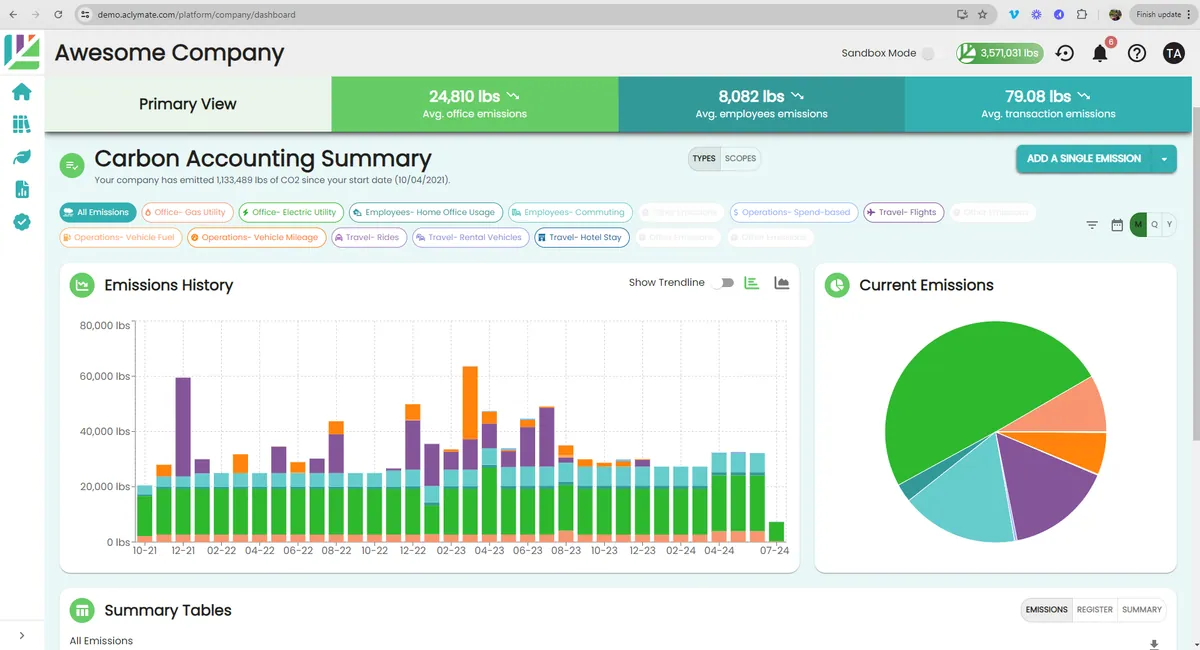
Many businesses struggle with scattered sustainability data, complex emissions calculations, and evolving reporting requirements.
Platforms like Aclymate help simplify carbon accounting by bringing emissions measurement, tracking, and reporting into a single platform.
Aclymate enables organizations to:
By automating calculations and organizing sustainability data, Aclymate helps companies focus less on spreadsheets and more on reducing emissions.
If you're exploring tools to measure emissions, you may also want to read our guide on carbon accounting tools for businesses.
Selecting the best carbon accounting software depends on a company’s operations, reporting requirements, and sustainability goals.
Businesses should evaluate platforms based on:
Organizations that adopt the right platform can significantly improve the accuracy and efficiency of emissions reporting.
Carbon accounting software is evolving rapidly as sustainability reporting becomes more standardized.
Advances in automation, supply chain data collection, and regulatory reporting tools are helping companies move beyond simple reporting toward continuous climate performance management.
As climate disclosure regulations expand worldwide, carbon accounting platforms will become essential infrastructure for companies managing environmental impact.
Understanding your carbon footprint is the first step toward reducing it.
Modern carbon accounting software helps businesses measure emissions, track sustainability progress, and align reporting with global climate standards.
Looking for a simpler way to measure and manage your company’s emissions?
Explore how Aclymate helps businesses track Scope 1, Scope 2, and Scope 3 emissions while simplifying sustainability reporting.
Carbon accounting software helps businesses measure and track greenhouse gas emissions produced by their operations and supply chains. These platforms convert operational data into standardized emissions metrics such as carbon dioxide equivalents (CO₂e).
Businesses use carbon accounting software to automate emissions calculations, track sustainability performance, and prepare climate disclosures required by investors and regulators.
The best carbon accounting software typically includes:
Yes. Many platforms are designed to support small and medium-sized businesses that want to measure their carbon footprint and begin sustainability reporting.
Companies typically evaluate software based on emissions tracking capabilities, reporting features, integration options, scalability, and ease of use for sustainability teams.
Get Aclymate's practical sustainability content delivered weekly.

Learn how to calculate an event carbon footprint in 4 steps: set the boundary, gather activity data, apply emission factors, and total it. Includes an example.
Read Article

An event carbon footprint is the total emissions from travel, lodging, venue energy, food, and waste. See which sources matter most and why.
Read Article

AI is transforming carbon credit verification through satellite monitoring, automated analysis, and anomaly detection. But can technology solve the voluntary carbon market’s credibility problem? Discover the limitations of AI verification and how businesses can evaluate carbon credits while keeping emissions reductions ahead of offsetting.
Read Article
Talk with a Sustainability Expert, see a demo, or start free to put the Aclymate platform and experts to work for your team.