← Back to Insights
Aclymate Team
October 20, 2025
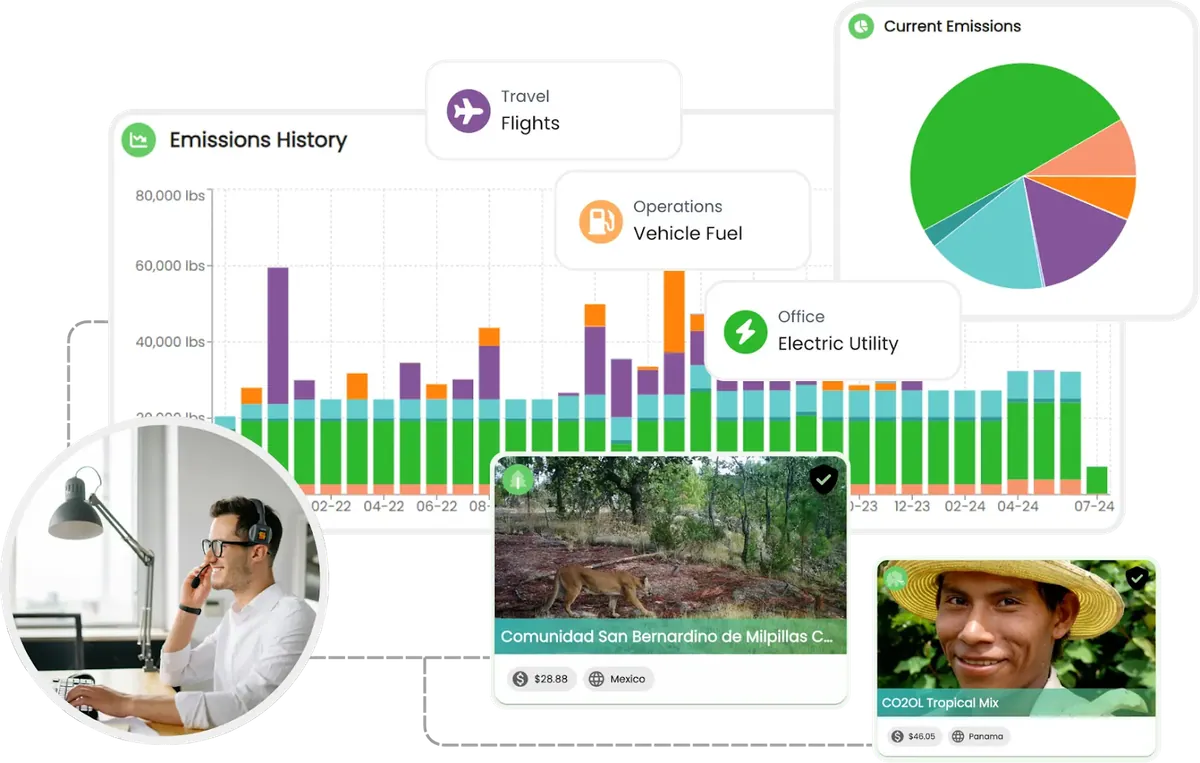
Many mid-sized businesses want to become more sustainable but don't know where to start. You might be facing pressure from customers, retailers, or investors to report your carbon footprint. However, without an internal department for corporate sustainability, this task can feel overwhelming.
Hiring new staff or consultants adds overhead, while manual reporting takes time away from daily operations.
That’s why more companies are turning to sustainability management software.
These platforms help you measure carbon emissions, track progress toward net zero goals, and report verified results, all without hiring large internal teams.
In this article, we'll review the five best sustainability management software tools that reduce environmental impacts. We'll also share some tips for choosing the right platform.
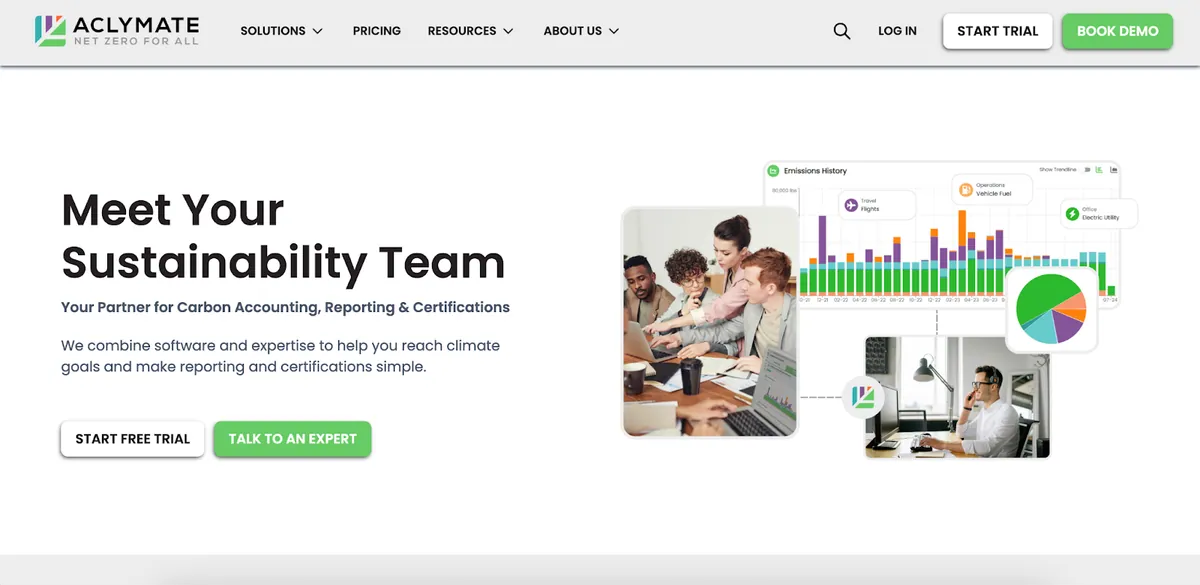
Best for: Small to medium-sized businesses (SMBs) that want to manage, reduce, and offset their carbon emissions without hiring in-house sustainability experts.
Aclymate offers a comprehensive solution for businesses without a dedicated sustainability team. It combines carbon accounting software, expert consulting services, and a verified offset marketplace in a single platform.
This all-in-one sustainability software helps you measure, report, and reduce carbon emissions. It also offers a certification program that can strengthen customer trust and win larger contracts.
However, Aclymate is more than just another software vendor. It acts as a true business partner that stands out for its hybrid model.
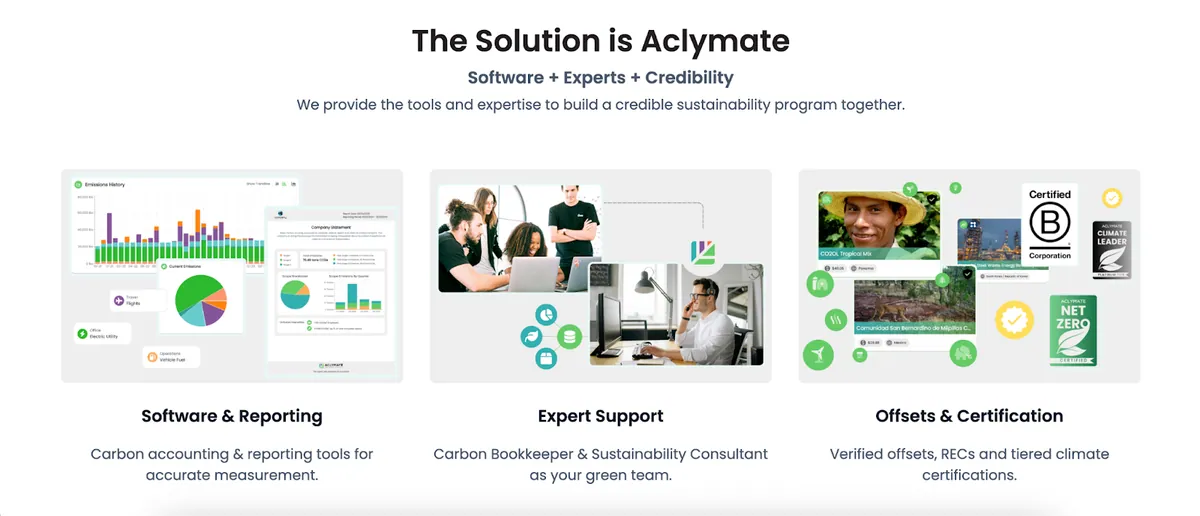
A climate consultant and bookkeeper will work directly with your team to simplify data collection, carbon reduction planning, and reporting processes.
Meanwhile, Aclymate offsets marketplace has a variety of solutions designed for the SMB buyer. Up front, it has a partnership with CNaught, where you can purchase a portfolio of offsets that have been extensively reviewed at a reliable price each month.
Alternatively, there is a marketplace of individual projects where you can select the specific project to tell the story that is most meaningful to you. Keep in mind that 72% of B2B buyers are more likely to purchase from socially responsible companies.
Plus, custom reporting and emissions data breakdown help you obtain third-party certifications, like SBTi, B Corp, and Ecovadis.
For food and beverage manufacturers, merchandise providers, and other mid-market firms, Aclymate helps you run a full sustainability program without adding employees or overhead.
Sign up for a free trial of Aclymate to start your net-zero journey today!
Curious to learn more about Aclymate and how it can empower your sustainability journey? Schedule a demo with our friendly team today!
Best for: Large or enterprise-level companies that need to manage sustainability data, reporting requirements, and decarbonization.
When it might not be the best fit: Lower-market firms without dedicated sustainability teams and those that seek affordable, hands-on support.
Limitations and considerations: Watershed can be expensive, difficult to use, and require significant implementation effort.
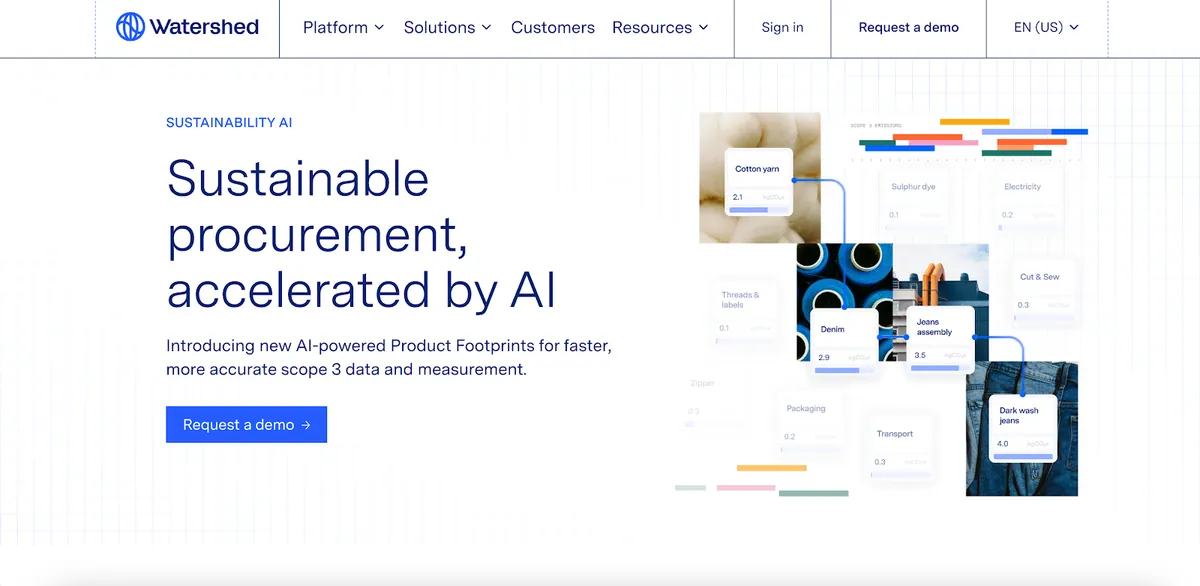
Watershed is an AI-powered sustainability platform designed for global enterprises with dedicated ESG (environmental, social, and governance) teams. It supports hassle-free data collection from your business systems.
After capturing the necessary information, the platform applies industry-leading methodologies to deliver an audit-ready carbon footprint.
Watershed can also develop disclosures that meet regulatory requirements for CCDAA, CDP, CSRD, and other standards. It even provides access to publicly available peer responses and high-quality disclosure examples, so you can make better-informed decisions.
For action, Watershed helps you develop a carbon reduction plan, set targets, and support climate projects through the integrated decarbonization marketplace.
Plus, its ESG reporting software can accurately measure impact and identify emission hotspots for successful reduction.
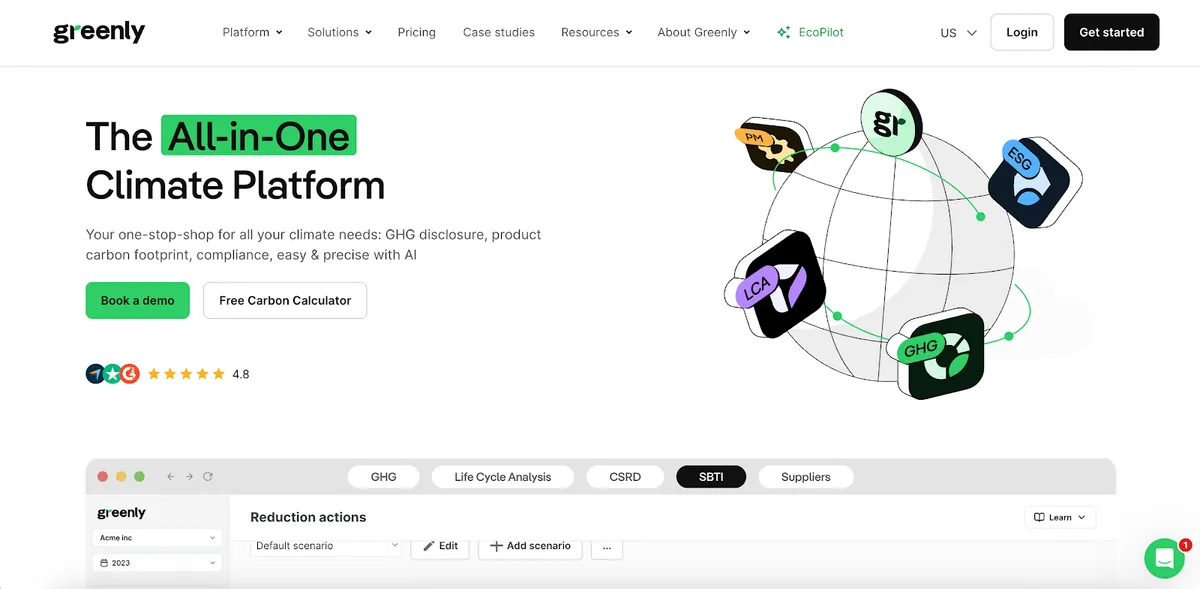
Best for: Mid-market companies in Europe looking to report for CSRD compliance.
When it might not be the best fit: Large global enterprises or U.S.-based corporations needing enterprise-level sustainability management.
Limitations and considerations: Greenly's pricing can be high for smaller companies. Advanced features like custom dashboards, monthly analysis, and professional services incur additional costs.
Greenly combines carbon accounting and ESG compliance reporting to improve stakeholder trust and minimize non-compliance risks.
The built-in AI tool instantly detects statistical anomalies, which saves time and effort while maintaining strict quality control.
Meanwhile, Greenly's supplier commitment solution offers stronger scope 3 accuracy. It uses activity-based and spend-based data, and matches them based on a database of over 350,000 emission factors.
Greenly also provides access to an action library and expert-led workshops. These help you identify emission-reducing actions in key areas of your operations.
On top of these capabilities, Greenly supports your SBTi journey, from initial development to final disclosure. It handles sustainability performance data and emissions analysis for an easier validation process.
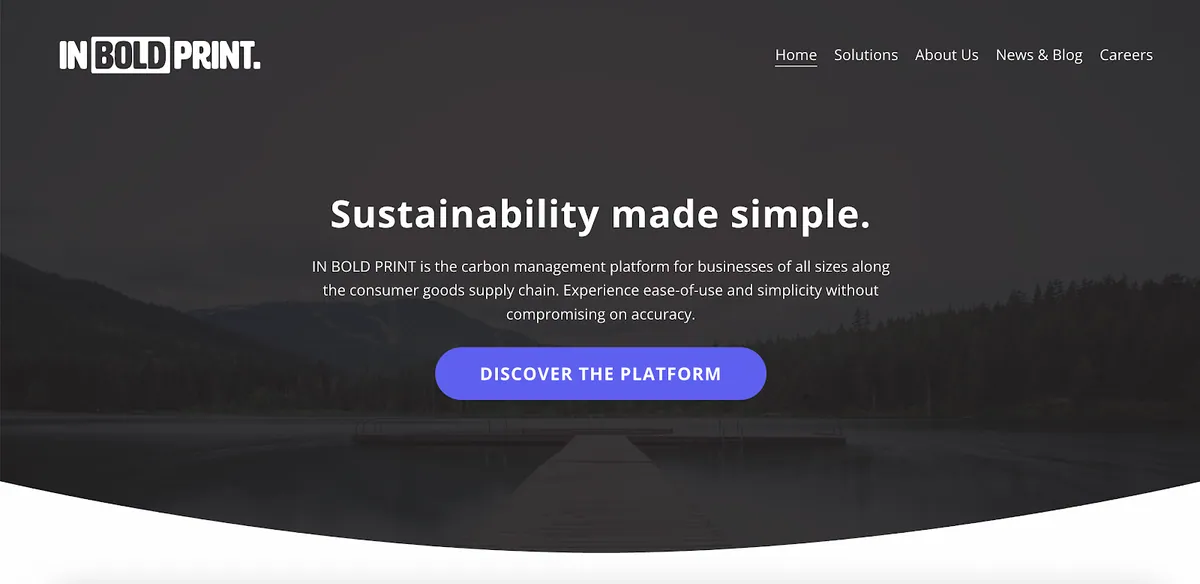
Best for: CPG companies looking to track emissions and make emissions reductions a central part of their marketing and branding.
When it might not be the best fit: Businesses outside the consumer goods space or those that do not require complex ESG disclosures.
Limitations and considerations: In Bold Print relies on user data input, which may affect report accuracy. It also lacks an offset marketplace and customization options beyond consumer goods supply chains.
In Bold Print simplifies carbon accounting for businesses of all sizes in the consumer goods supply chain.
You simply answer basic questions about your daily operations and import data (energy usage, facilities, vendor information). Then, the software automatically calculates scope 1, 2, and 3 emissions using a library of over 8,000 emission factors.
It also suggests emissions reduction strategies, including vendor comparisons, cost vs. impact actions, and ROI metrics.
Plus, the platform can export climate reports with just a single click. This enhances investor confidence while ensuring other stakeholders (regulators and consumers) are updated on your progress.
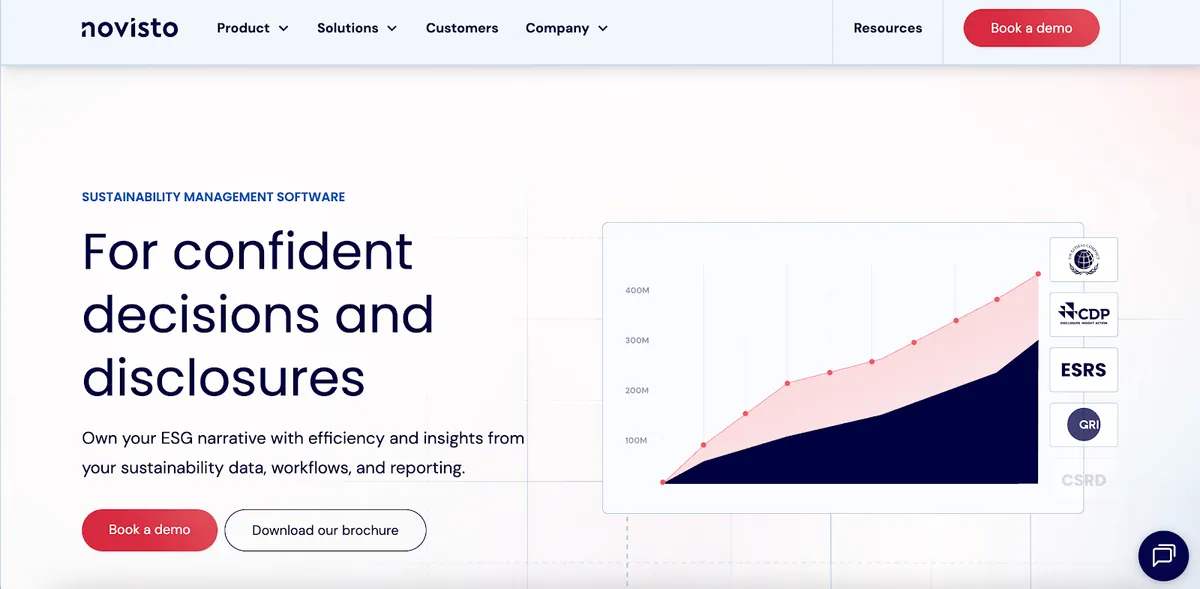
Best for: Corporations seeking finance-grade ESG data management, disclosure workflows, and sustainability reporting software.
When it might not be the best fit: Smaller or mid-sized firms seeking plug-and-play sustainability tools and those without significant ESG data requirements.
Limitations and considerations: The initial setup of Novisto can be complex and time-consuming. Some features also feel clunky to use, such as the market benchmarking tools and data integration.
Novisto is a next-generation ESG platform that helps you collect, manage, and report sustainability data. It builds a centralized system of record for both quantitative and qualitative ESG information through intake workflows or APIs.
The platform also automates disclosure across frameworks like CSRD, SASB, and GRI. This lets you own your reporting narrative and reduce time spent on questionnaires.
Novisto even allows you to benchmark against peers, set targets, and monitor sustainability success against curated and custom metrics.
Sustainability software matters for several reasons:
Corporate sustainability management software automates your carbon accounting. It works by capturing emissions data across operations and your entire value chain.
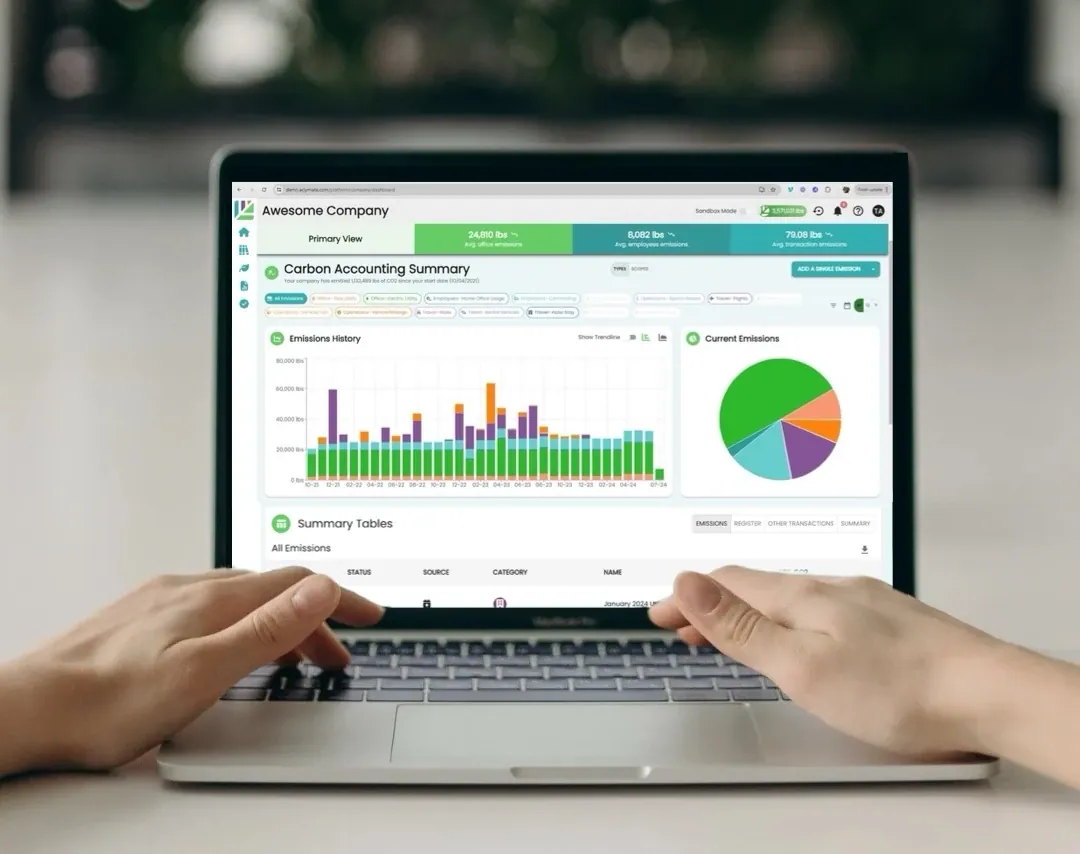
This saves you time, simplifies scope 1, 2, and 3 calculations, and keeps your data organized for better-informed decision-making.
It also helps you identify emission hotspots quickly, so you can take measurable action that reduces costs and supports long-term climate goals.
Manual ESG reporting can’t keep up with increasing regulatory pressure and customer expectations.
Fortunately, sustainability management software standardizes your metrics and creates audit trails for every data point.
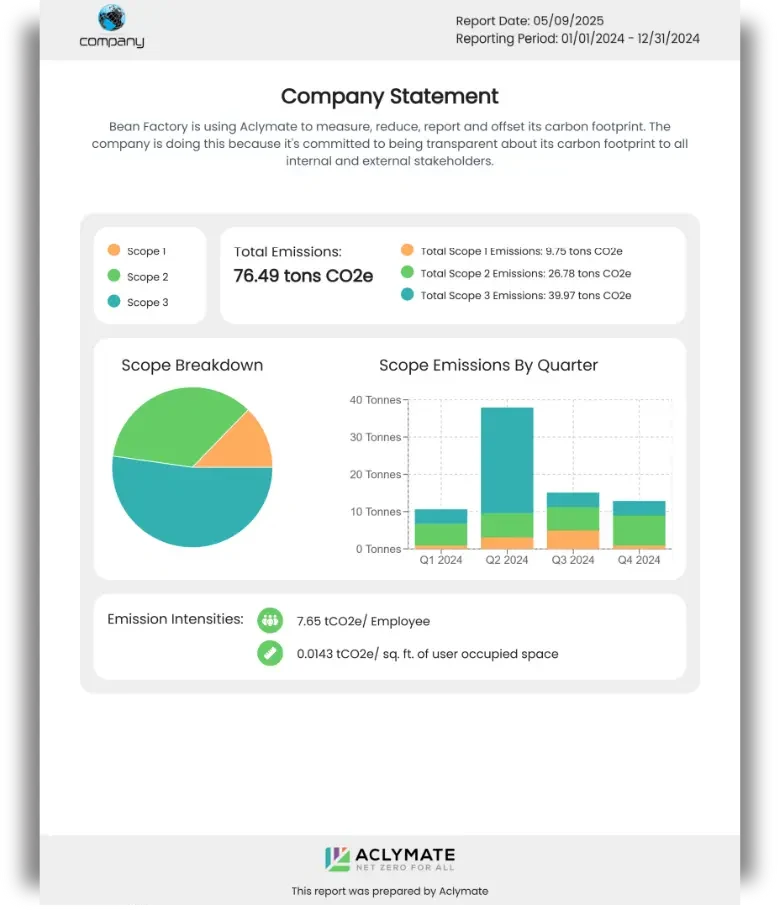
You'll find it easier to prepare disclosures for frameworks, like CSRD, CDP, or SEC reports. You also gain the accuracy, transparency, and speed needed to meet compliance deadlines with confidence.
Manual data management drains resources and leads to inefficiencies. Sustainability software helps you lower reporting costs and uncover operational savings, such as reduced energy and transport expenses.
By using a centralized platform, your business can track performance, cut waste, and identify profitable efficiency improvements. Over time, this leads to better resource allocation and measurable ROI on sustainability initiatives.
Corporate sustainability software generates verifiable data that proves progress, not just promises. Whether it’s through verified emissions reports or supplier disclosures, you demonstrate accountability that customers and investors value.
For mid-market manufacturers and CPG companies, this credibility supports long-term partnerships and makes you a preferred supplier for major brands prioritizing sustainability.
Companies that measure and report their social impacts gain recognition as responsible, forward-thinking partners.
Sustainability software solutions simplify communication by providing clear dashboards and reports that showcase progress toward net-zero goals.
These platforms strengthen your brand narrative and give you a competitive advantage in bids, retailer partnerships, and customer loyalty.
If you want to maximize the benefits listed above, you need the right sustainability software. Here's how to choose one that suits your needs:
First, identify what your company wants to achieve. Do you want to reduce emissions, achieve CSRD compliance, or improve transparency?
Defining clear goals helps you determine which software features align with your specific needs and team size.
For example, if you're a small firm that wants to measure emissions and pursue certifications, consider an all-in-one climate solution like Aclymate. It can generate GHG reports, suggest reduction opportunities, and offer an offset marketplace where you can invest in meaningful projects.
However, global corporations that face SEC reporting deadlines and seek to unify multiple systems can benefit from AI-powered platforms like Watershed.
The best sustainability management software should simplify environmental management, data collection, and performance tracking.
Review whether the platform includes scope 1, 2, and 3 emissions coverage, offset integration, and automated reporting.
You should also consider ease of use. Your ESG team should be able to operate the system without extensive training.
Prioritize software that provides visual dashboards, predictive analytics, and integration with existing ERP or accounting tools to save time.
Choose sustainability software that uses recognized standards, provides transparent methodologies, and maintains detailed audit logs.
You should also assess whether the platform supports third-party verification to validate your data.
Accurate data improves your sustainability reporting and reduces exposure to ESG risks. At the same time, it helps you maintain accountability across your entire organization.
The right sustainability software should not only measure emissions but also act on them.
Look for platforms that connect to verified carbon offset and renewable energy certificate (REC) marketplaces. This gives you access to credible projects that meet global verification standards.
Meanwhile, certification capabilities (such as net-zero or climate leader programs) add legitimacy to your sustainability claims.
The best software simplifies complex data into clear, actionable insights. Check if you can generate custom dashboards, automated summaries, and visual reports for leadership teams, regulators, and customers.
Great reporting tools turn raw numbers into meaningful stories that help you communicate performance, uncover trends, and show measurable improvement over time.
Not every company has a dedicated sustainability department, so hands-on support matters.
Look for software vendors that provide in-house experts, onboarding assistance, or ongoing consulting to help you interpret data and stay aligned with evolving regulations.
Dedicated customer support can also troubleshoot integration challenges and data inconsistencies. This helps you run an efficient, reliable sustainability program.
Aclymate gives small and mid-sized businesses the power to manage sustainability with confidence. Through its hybrid model of software and expert consulting services, Aclymate acts as your full sustainability department.
You can easily track emissions and generate audit-ready reports without adding employees or overhead. You can also access verified offsets and RECs from trusted projects through Aclymate's integrated offset marketplace.
Plus, dedicated climate bookkeepers and consultants guide you every step of the way. They handle carbon accounting and generate reports that meet sustainability regulations like B Corp, CDP, and GRI.
Aclymate even helps you earn Climate Wise, Climate Leader, or Net Zero certifications, which can showcase your commitment to environmental stewardship.
Start your 17-day free trial today! You can also book a demo with our friendly team to see Aclymate's platform in action.
The best ESG software depends on your company’s size and goals. For small and mid-sized businesses, Aclymate offers the most complete solution by combining software, expert guidance, and verified offsets.
Larger corporations often choose platforms like Watershed or Novisto for advanced ESG reporting and compliance management.
Sustainability management software helps companies track, measure, and reduce their environmental impact. It automates carbon accounting, ESG reporting, and compliance tasks.
Businesses use it to understand emissions across operations, create reduction strategies, and share credible sustainability progress with stakeholders, all from a single platform.
ESG management software focuses on environmental, social, and governance data. It gathers metrics like emissions, employee well-being, and corporate ethics. Then, it produces reports for frameworks such as GRI or CDP.
The software helps companies identify risks, improve accountability, and show transparency in how they operate and report sustainability results.
No, CSRD and ESG are related but not the same. ESG refers to the environmental, social, and governance principles companies track and report on. CSRD (Corporate Sustainability Reporting Directive) is a European Union regulation that requires detailed ESG reporting.
Get Aclymate's practical sustainability content delivered weekly.

An event carbon footprint is the total emissions from travel, lodging, venue energy, food, and waste. See which sources matter most and why.
Read Article

AI is transforming carbon credit verification through satellite monitoring, automated analysis, and anomaly detection. But can technology solve the voluntary carbon market’s credibility problem? Discover the limitations of AI verification and how businesses can evaluate carbon credits while keeping emissions reductions ahead of offsetting.
Read Article

AI is creating new opportunities for businesses, but it also comes with an environmental cost. Carbon offsets can help address some of those emissions, but businesses need to understand what they are offsetting, how offsets work, and why measuring and reducing emissions should come first.
Read Article
Talk with a Sustainability Expert, see a demo, or start free to put the Aclymate platform and experts to work for your team.