← Back to Insights
Aclymate Team
April 27, 2026
For most apparel brands, Scope 3 emissions — the indirect emissions that occur across the value chain — represent 80 to 90 percent of their total carbon footprint. Unlike Scope 1 and Scope 2 emissions, which come from sources your brand owns or controls, Scope 3 emissions live inside your suppliers' factories, in the fibers you source, in the trucks that move your goods, and in the homes of your customers.
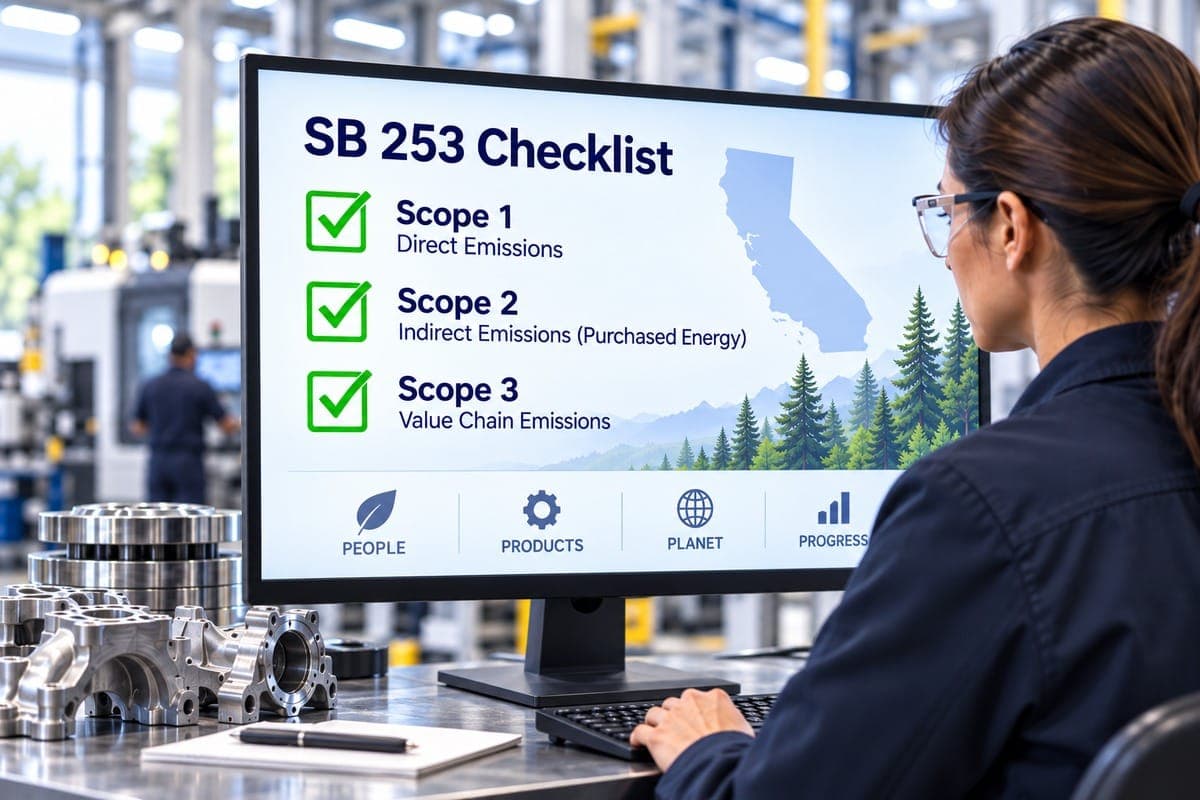
California's SB 253 requires covered fashion brands to begin disclosing Scope 3 emissions starting in 2027. When third-party assurance phases in through 2030, the quality and defensibility of that Scope 3 data will be scrutinized. Brands that built their Scope 3 estimates on generic industry averages will have a much harder time than those who built them on verified primary data from their actual supply chain.
The Higg Facility Environmental Module — known as the Higg FEM — is currently the most practical tool available for fashion brands to collect that primary supplier data at scale. This article explains how it works, what it measures, and how to integrate it into your Scope 3 carbon accounting program.
Before exploring the solution, it helps to understand why Scope 3 data collection is particularly difficult in the fashion industry.
A typical mid-market fashion brand may source from 20 to 100 factories across multiple countries. Each factory uses electricity from a different national grid, buys yarn and fabric from different mills, runs different machinery, and manages energy in different ways. The emissions embedded in a single SKU can touch a dozen countries and six tiers of the supply chain before the product reaches your warehouse.
Most brands start their Scope 3 journey using a spend-based accounting method — multiplying what they spend with each supplier by an industry-average emissions factor. This is acceptable for a first baseline and is recognized by the GHG Protocol. But it has real limitations: it does not reflect what your specific factories are actually doing, it cannot capture the benefit of a supplier switching to renewable energy, and it will not satisfy third-party assurance reviewers who want to see primary data underpinning your disclosures.
The GHG Protocol recommends using primary supplier data wherever possible. The Higg FEM is the mechanism that makes collecting that primary data achievable at scale across an apparel supply chain.
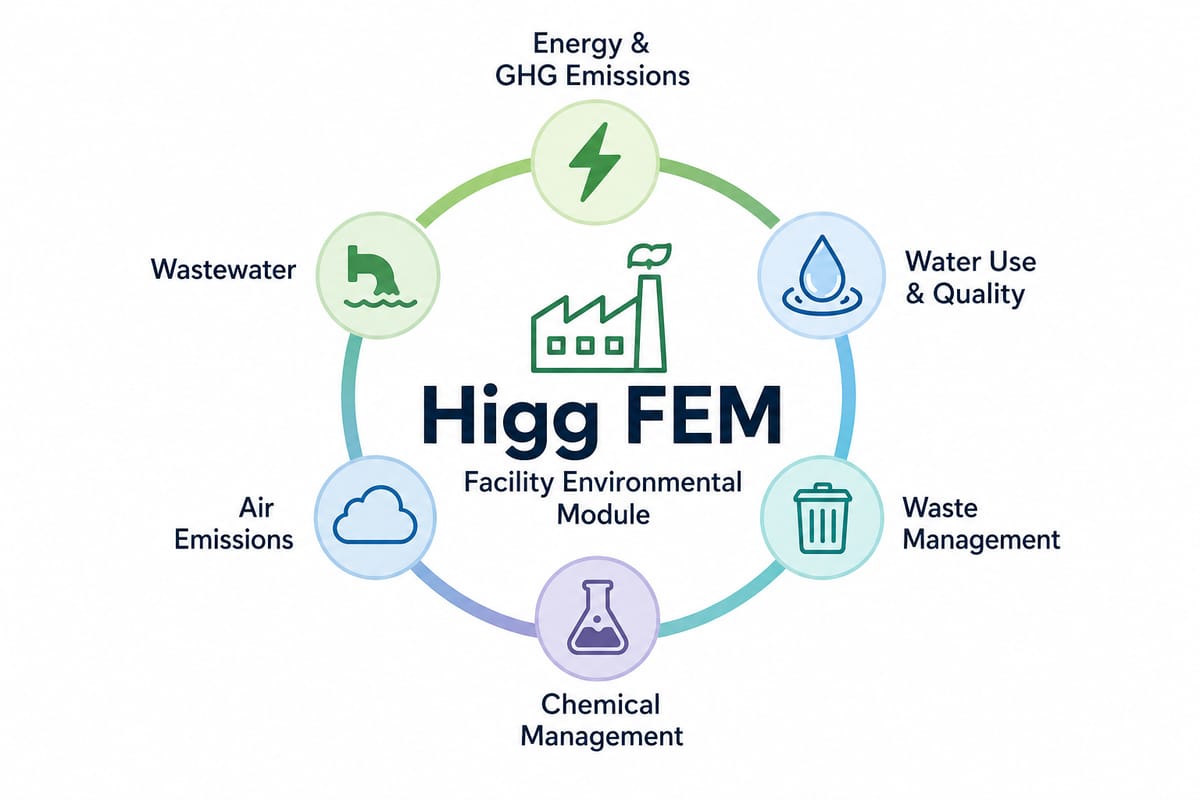
The Higg Facility Environmental Module is an annual self-assessment completed by manufacturing facilities. It covers six environmental impact areas: energy use and GHG emissions, water use and quality, waste management, chemical management, air emissions, and wastewater.
The section directly relevant to your Scope 3 carbon accounting is the energy and GHG module. When a factory completes the Higg FEM, it reports:
This facility-level emissions data is exactly what you need to calculate the Scope 3 Category 1 (Purchased Goods and Services) emissions embedded in the products you buy from that factory — the largest and most important Scope 3 category for most apparel brands.
The Higg FEM 2025 update introduced sharper GHG emission metrics and updated emission factors, specifically to improve the accuracy of the data available for brands' Scope 3 calculations and regulatory disclosures.
Here is how the data flow works in practice.
Step 1: Supplier completes the Higg FEM. Your factory partner logs into the Worldly platform (which exclusively hosts the Higg Index tools), enters their annual energy and emissions data, and submits their assessment. This takes roughly a few hours to complete for a well-organized facility.
Step 2: Assessment is verified (recommended). While self-assessment data can be used, verified Higg FEM data carries significantly more weight for Scope 3 purposes. A third-party verification body reviews the submission through a desktop review or site visit, confirming the accuracy of reported figures. Verified data meets the "primary data" standard that the GHG Protocol and SB 253 assurance reviewers prefer.
Step 3: Supplier shares data with your brand. Through the Worldly platform, your supplier grants your brand access to their verified Higg FEM data. You can pull this into your carbon accounting system — including Aclymate — to calculate the GHG emissions associated with the products you purchased from that facility.
Step 4: You build your Scope 3 Category 1 calculation. Using your purchase volume data (how many units you bought, what they weighed) combined with the factory's verified energy and emissions intensity data from the Higg FEM, you calculate the embedded carbon in your purchased goods. This approach is more accurate and more auditable than a spend-based estimate.
Step 5: This feeds your SB 253 Scope 3 disclosure. Your Scope 3 Category 1 calculation, built on verified Higg FEM primary data, becomes a key component of your annual GHG inventory — and your SB 253 submission starting in 2027.
Scope 3 Category 1 (Purchased Goods and Services) is the most important for most fashion brands, but verified Higg FEM data also supports calculations for:
Category 4 — Upstream Transportation and Distribution. Some Higg FEM submissions include logistics and transport data that helps quantify the emissions from moving goods between manufacturing tiers.
Category 11 — Use of Sold Products. Understanding the energy embedded in the production process supports lifecycle analysis of how your products perform across their entire life.
Category 12 — End-of-Life Treatment. While not directly addressed in the FEM, the waste management section provides data points relevant to end-of-life modeling.
For fashion brands focused on SB 253 compliance, Category 1 is the priority. But as your Scope 3 program matures — and as the GHG Protocol's guidance on fashion-specific FLAG emissions (land-use emissions from cotton, wool, and leather) develops — the Higg FEM becomes the anchor data source for an increasingly sophisticated emissions inventory.
Getting useful Higg FEM data from your supply chain requires a systematic approach. Here is a practical starting framework for mid-market brands.
Start with your Tier 1 factories. Tier 1 manufacturers — the factories that directly produce your finished goods — are the starting point. They are easiest to engage, have the clearest relationship with your brand, and represent the majority of your Category 1 emissions. Aim to have Higg FEM data from the factories representing at least 80 percent of your production volume.
Set a clear expectation in your supplier code of conduct. Include Higg FEM completion as a requirement in your supplier agreements or vendor onboarding. Make it clear that annual Higg FEM submission is expected — not optional — for factories that want to maintain your business.
Provide onboarding support. Many mid-tier factories in Asia and Latin America are familiar with the Higg FEM, but smaller factories may need help getting started. Consider sharing Cascale's free onboarding materials or asking your sustainability partner (like Aclymate) to help facilitate supplier training.
Prioritize verification. Unverified self-assessment data is useful for internal tracking. For external reporting under SB 253 and for assurance purposes, push for verified Higg FEM data from your highest-volume suppliers first, then expand verification coverage over time.
Build annual supplier engagement into your calendar. The Higg FEM reporting year runs on an annual cycle. Set up a supplier outreach cadence aligned with the FEM submission window to ensure your factories have enough time to complete, submit, and verify before your own reporting deadlines.
Many mid-market fashion brands are in the early stages of supplier sustainability engagement. If your suppliers are not yet completing Higg FEM assessments, here is a pragmatic approach:
For your 2026 SB 253 Scope 1 and Scope 2 filing, Higg FEM data is not needed — you are only reporting your own operations.
For your 2027 Scope 3 filing, you have two options while you build your Higg program. First, use spend-based estimates as your starting point, which the GHG Protocol permits. Second, begin supplier engagement now so that by the time your 2026 emissions data (reported in 2027) is collected, you have at least primary data from your top suppliers.
The brands that start their Higg FEM supplier engagement program in 2025 or 2026 will be significantly better positioned for their 2027 Scope 3 disclosure than those who wait until the deadline is imminent.
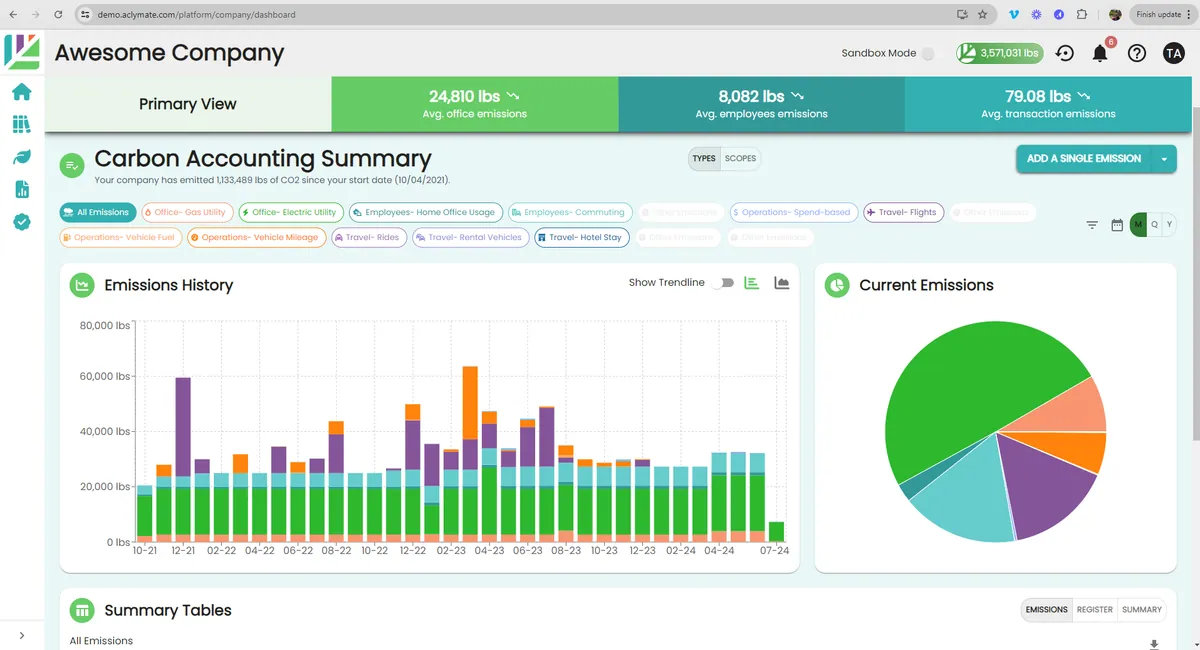
Aclymate's carbon accounting platform is built for fashion and apparel brands without large internal sustainability teams. Here is how Aclymate supports the Higg-to-Scope 3 workflow:
Aclymate's expert sustainability team helps you design and launch a supplier engagement program — including guidance on how to request and collect Higg FEM data from your manufacturers. Your dedicated Climate Bookkeeper handles the data collection, methodology decisions, and calculation work, translating raw supplier data into GHG Protocol-compliant Scope 3 numbers.
When your Higg FEM data is collected, Aclymate builds it into your full Scope 1, 2, and 3 emissions inventory — producing an audit-ready baseline that meets SB 253, CDP, and EcoVadis requirements simultaneously.
As your supplier engagement program matures and more verified Higg FEM data becomes available, Aclymate upgrades your Scope 3 estimates from spend-based to primary-data-based — improving accuracy and strengthening your position for third-party assurance.
The result: a Scope 3 program that starts where you are today and gets progressively stronger — without requiring an internal team to manage it.
Start building your Scope 3 data foundation today.
Book a free sustainability assessment with Aclymate →
Get Aclymate's practical sustainability content delivered weekly.

AI is creating new opportunities for businesses, but it also comes with an environmental cost. Carbon offsets can help address some of those emissions, but businesses need to understand what they are offsetting, how offsets work, and why measuring and reducing emissions should come first.
Read Article
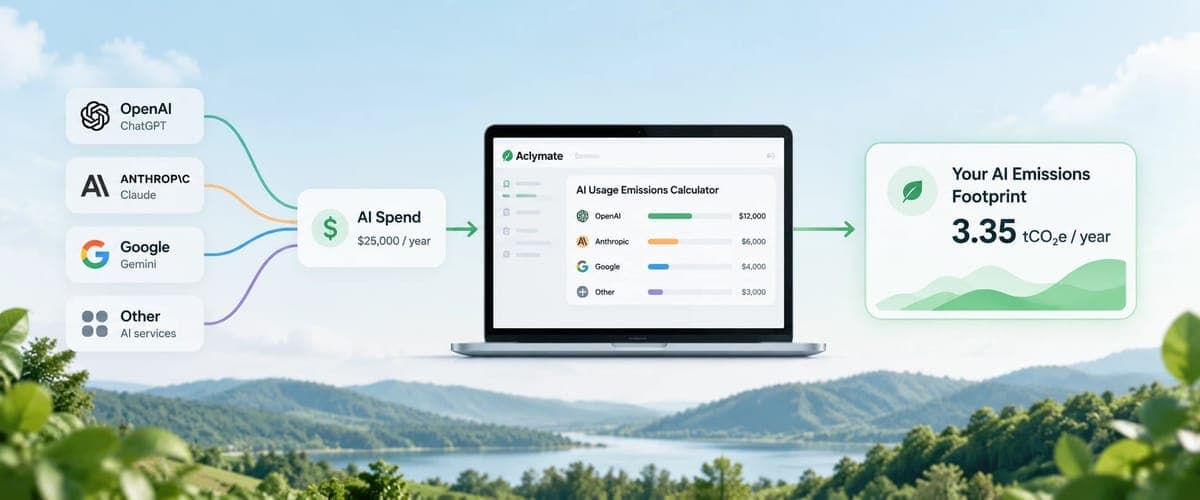
AI carbon emissions are becoming a new consideration for companies adopting ChatGPT, Claude, Gemini, Copilot and other artificial intelligence tools. Here’s how Aclymate estimates the carbon emissions from a company’s AI usage today—and how we expect the methodology to improve as AI providers release better usage and emissions data.
Read Article
California SB 253 applies to companies over $1B in revenue — but its Scope 3 requirement reaches the automotive suppliers underneath them. What to expect and how to prepare.
Read Article
Talk with a Sustainability Expert, see a demo, or start free to put the Aclymate platform and experts to work for your team.