← Back to Insights
Aclymate Team
May 15, 2026
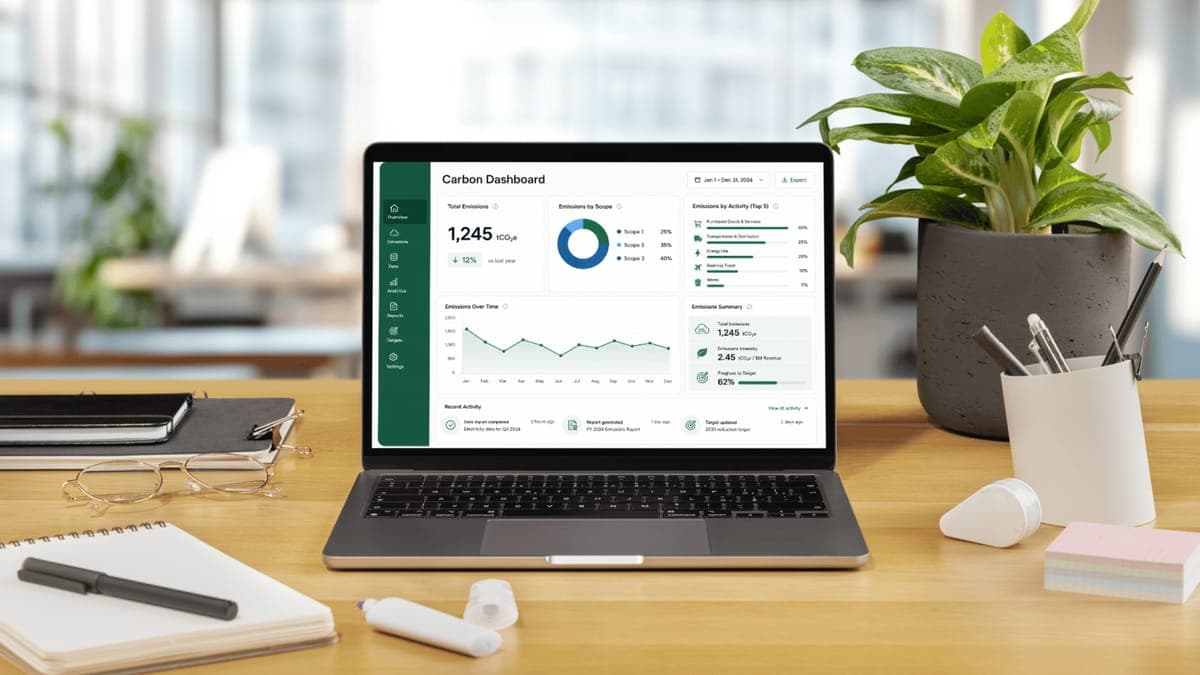
The carbon accounting software market has exploded — Grand View Research valued it at $13.4 billion in 2025, growing at a projected 23.4% CAGR through 2030. But most of that investment has gone toward enterprise grade platforms built for Fortune 500 companies with large sustainability departments, complex multi-entity structures, and $50,000+ annual software budgets.
For the vast majority of small and mid-sized businesses — companies with 20 to 1,000 employees, no dedicated sustainability staff, and a genuine need to measure and report emissions credibly — the market offers an uncomfortable choice: overpay for a platform you can’t fully use, or struggle with a lightweight tool that produces outputs nobody trusts.
This guide cuts through the noise. We’ve organized the landscape into three honest categories, reviewed the leading options in each, and identified where mid-market companies consistently get burned.
“The 45,000+ suppliers who received climate disclosure requests in 2025 are being asked to act now — often without affordable tools designed for companies of their size.”
Before comparing specific platforms, five questions separate a useful platform from an expensive one for companies without a sustainability team:
Enterprise tools assume GHG Protocol fluency. Mid-market tools should guide you through what data you need and why.
Manual data entry is the number one reason sustainability programs stall. Native accounting integrations automate the heavy lift for most SMBs.
Most platforms charge consulting fees on top of software. For companies without in house expertise, this cost compounds quickly.
CDP, B Corp, EcoVadis, GRI, and GHG Protocol. You need outputs your customers and auditors will accept, not just a footprint number.
A number without a plan is not a sustainability program. Look for reduction roadmaps, offset access, and certification pathways built in.
These platforms are genuinely excellent — for the customers they were built for. That customer is not a 50–500 person company with no sustainability team and a 6-week deadline to respond to a customer’s CDP request.
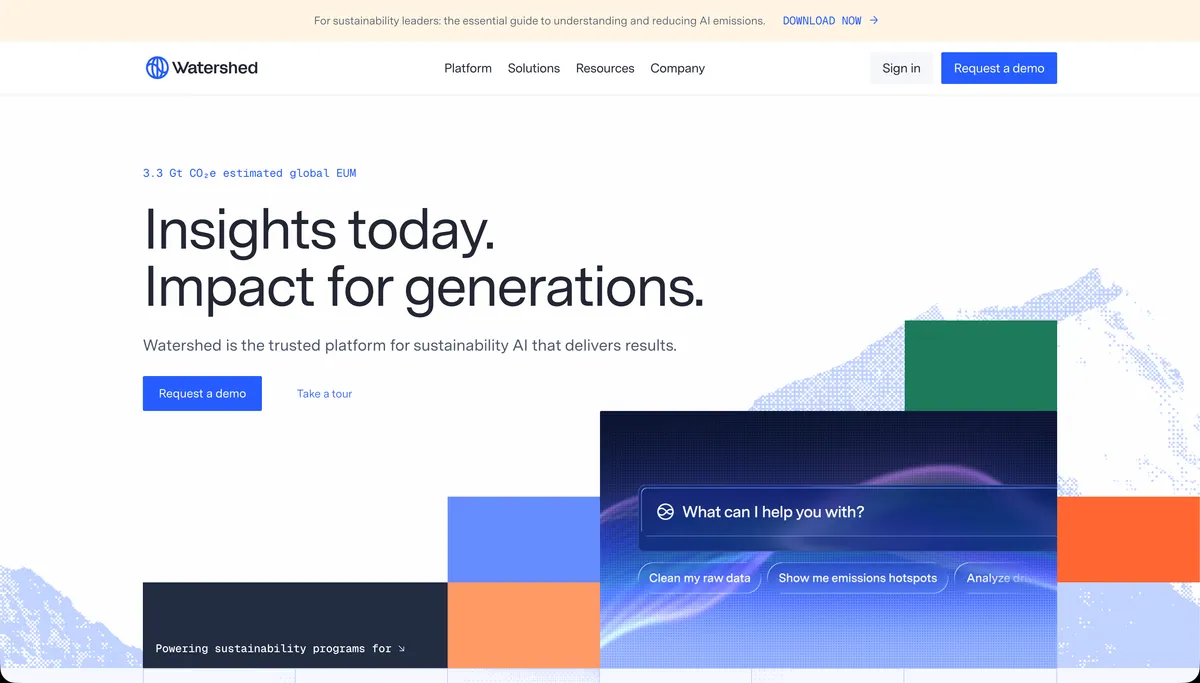
Watershed is the dominant enterprise carbon management platform in the US market and has earned that position. It offers 500,000+ emissions factors, full data lineage for auditors, AI powered scenario modeling, and deep integrations across enterprise data systems. Watershed has raised over $170 million and was named a leader in Verdantix's 2026 Green Quadrant for enterprise carbon management.
For mid-sized companies, Watershed presents a fundamental mismatch. The platform assumes dedicated sustainability staff who can manage data workflows, interpret complex GHG calculations, and navigate an implementation that enterprise sources describe as taking months. Pricing is enterprise grade and fully custom. There is no standard SMB tier, no transparent pricing, and no self-serve option that does not require a full onboarding engagement.
What it does well
Why SMBs should skip it
Bottom line: If you are a 100 person company that just received a CDP request from a major customer, Watershed is not your answer. The implementation timeline alone will cause you to miss your deadline.
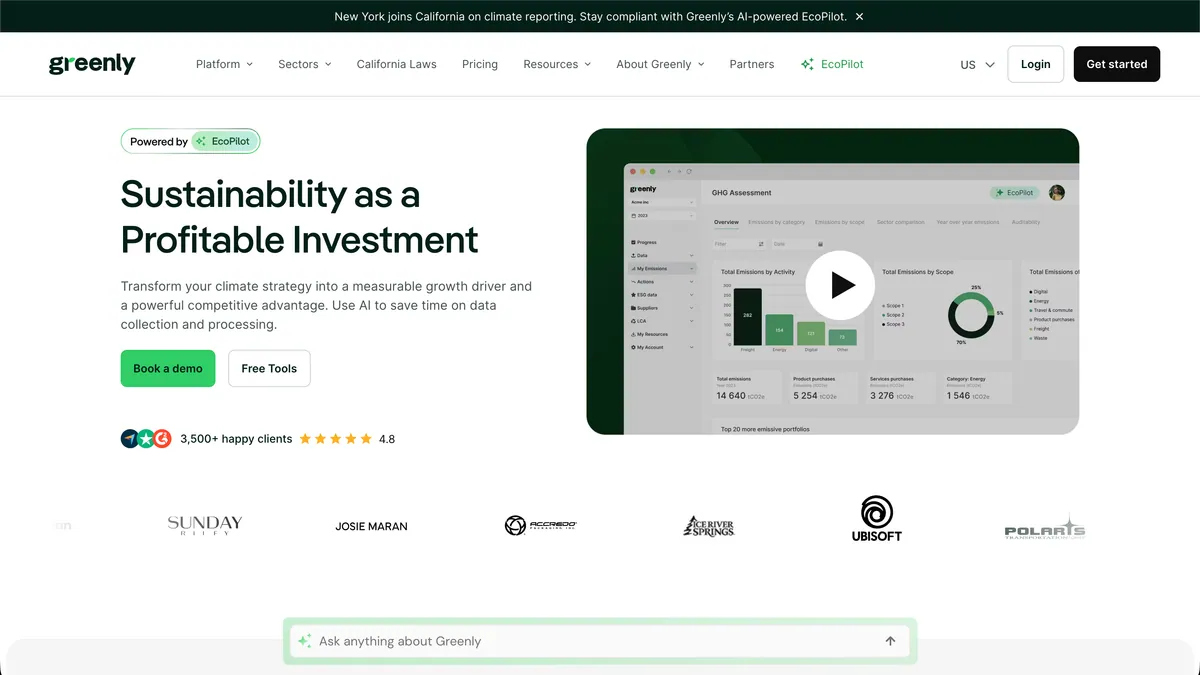
Greenly markets itself as the accessible alternative for SMBs. The platform has an intuitive interface, automated data collection through accounting and banking integrations, and a team of climate experts. It has raised $52 million and serves a large European customer base.
The catch for US mid-market companies: plans that include meaningful 1:1 expert support typically start above $10,000/year, with advanced features incurring additional costs. The platform is primarily European in its design and regulatory emphasis. Greenly also doesn’t include an offset marketplace or certification support.
Strengths
Limitations for SMB
Bottom line: Greenly is a better choice than Watershed for mid-market companies, but US businesses often find they pay more than expected for less expert support than they need.
These platforms do something well — but “something” isn’t a complete sustainability program. They’re worth knowing if their specific strength maps to your most urgent need, but shouldn’t be mistaken for full solution platforms for SMBs.
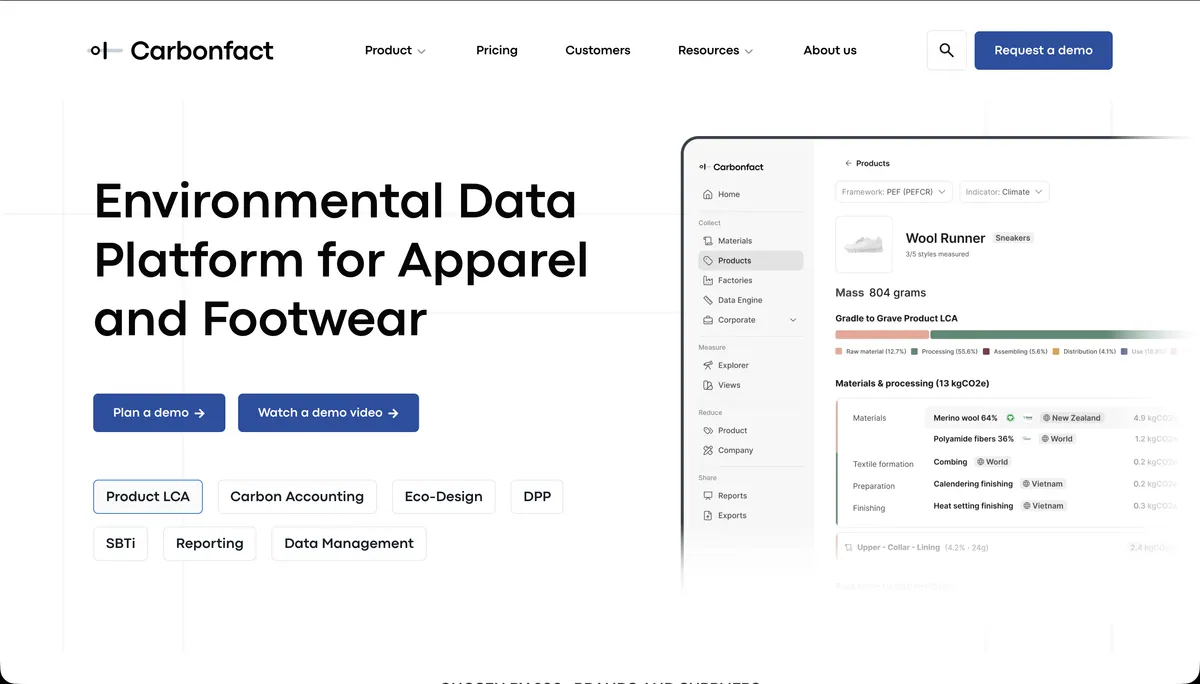
Carbonfact is purpose built for the fashion and apparel industry. It offers product level carbon accounting with lifecycle assessment (LCA) capabilities, tracking emissions at the SKU level across materials sourcing, manufacturing, and transportation. For a fashion brand managing a complex product supply chain, it is a genuinely strong tool.
But it is precisely that: a fashion tool. It is not a general purpose carbon accounting platform, does not cover the full range of business emission sources a mid-sized professional services, manufacturing, or technology company would need, and has no integration with reporting frameworks like B Corp or CDP in the way general platforms do. It also does not include expert consulting support, certification pathways, or an offset marketplace.
Good for
Missing for most SMBs
Bottom line: Excellent if you are in fashion. Not relevant if you are not. A fashion brand might use Carbonfact alongside a general platform, but not instead of one.
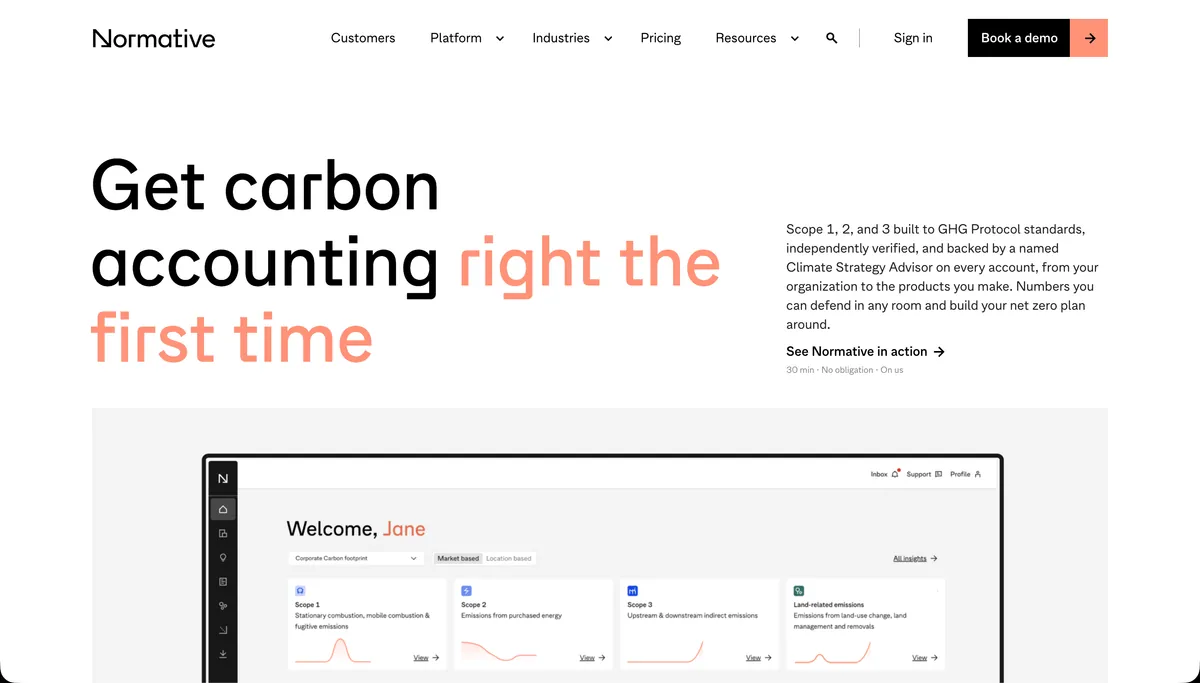
Normative is the original carbon accounting platform, founded in Stockholm and backed by Google. Its scientific rigor is genuinely impressive: 349,000 verified emission factors from 21 scientific databases, a 100% audit success rate, and a 100% SBTi approval record. Every account includes a named, GHG Protocol certified Climate Strategy Advisor. This is not a help desk. It is a dedicated expert who knows your data.
The problem for most SMBs is that Normative's depth is designed for organizations with complex global supply chains that need granular Scope 3 analysis across hundreds of vendors and procurement systems. The platform acquired Eivee in late 2024 to expand its supply chain capabilities further. Setup requires significant coordination with procurement and data teams. Pricing is custom and contact based, not the transparent, accessible structure an SMB needs to evaluate quickly.
What it does well
Why SMBs should look elsewhere
Bottom line: Normative is the right answer for a mid-market manufacturer with 200+ active vendors and a dedicated sustainability manager. It is the wrong answer for a 75 person professional services firm that just received a B Corp questionnaire.
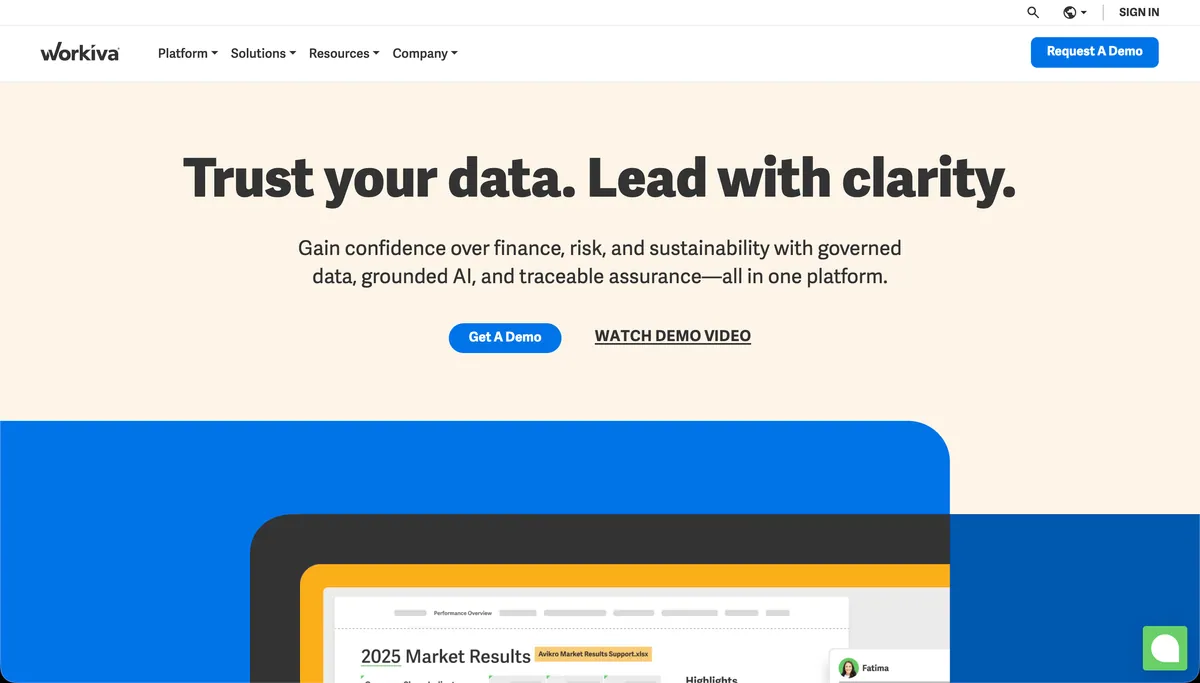
Sustain.Life was founded in New York as an SMB friendly carbon accounting platform. In 2024, it was acquired by Workiva, an enterprise financial reporting company typically serving Fortune 500 clients with pricing that analysts have described as prohibitively expensive for smaller organizations. The product is now being integrated into Workiva Carbon, with the company's strategy clearly oriented toward large enterprises with complex ESG reporting requirements and financial reporting integrations.
For SMBs, this creates real uncertainty. The product direction, pricing, and customer support model are all in flux as the integration proceeds. Choosing a platform mid-acquisition carries real continuity risk for a company trying to build a multi-year sustainability program.
Historical strengths
Current concerns for SMBs
Bottom line: There may have been a time when Sustain.Life was right for mid-sized companies. Post-acquisition, the platform is heading toward Fortune 500 ESG reporting infrastructure, not the SMB market.
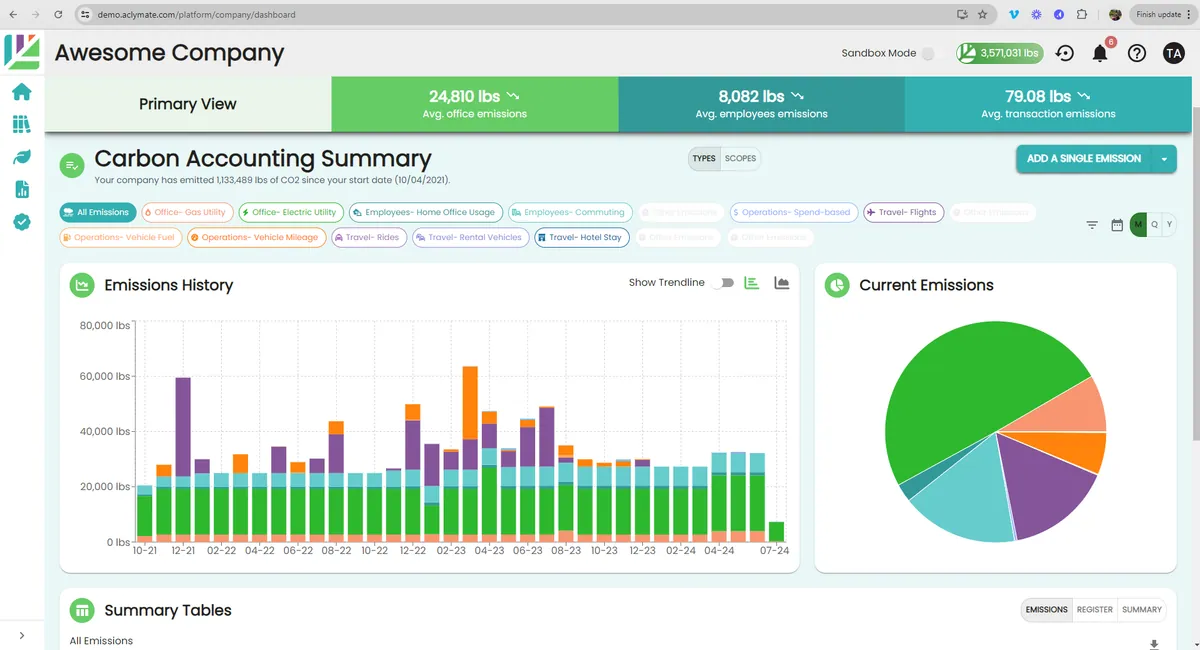
Every platform reviewed above was built for a specific customer, and that customer is generally not a 50 to 500 person US company that needs to measure emissions, respond to a customer sustainability request, pursue a certification, and do it all without hiring anyone new. Aclymate was built for exactly that company.
What makes Aclymate different is not just a feature list. It is the philosophy behind the product. Aclymate was designed from the ground up around a simple premise: a mid-sized company should be able to build and maintain a credible sustainability program without creating a new department to run it. Every part of the platform, from the onboarding flow to the expert support model to the pricing structure, reflects that goal.
Aclymate connects natively to QuickBooks, Xero, and other accounting platforms — automatically pulling transaction-level spend data to calculate emissions without manual data entry. Combined with utility provider integrations, most mid-sized companies can populate the majority of their Scope 1 and 2 emissions data automatically.
Aclymate offers both in one subscription. The Starter and Pro plans give you the tools, integrations, and guided workflows to build your own program. The Turn Key plan includes a designated Climate Bookkeeper who handles data entry, categorization, and reporting mechanics. The Climate 360 plan adds a dedicated sustainability consultant for certification navigation and long-term strategy.
Aclymate’s reporting outputs are aligned with GHG Protocol, CDP, CSRD, GRI, SBTi, B Corp, and EcoVadis simultaneously. You produce one baseline and generate framework specific reports without rebuilding.
The vendor emissions survey invites suppliers to provide their own data directly into the platform. For suppliers who don’t respond, spend-based accounting fills the gap using GHG Protocol recognized methodology. You get a complete, defensible Scope 3 inventory — not a partial one.
Strengths
Bottom line: Aclymate is the answer to “we need carbon accounting but have no sustainability staff.” It’s the only platform that gives mid-sized companies the full infrastructure of a sustainability program — measurement, reporting, certifications, and offsets — without the headcount that typically comes with it.
Use this table to see how each platform stacks up across the criteria that matter most for companies without dedicated sustainability teams.
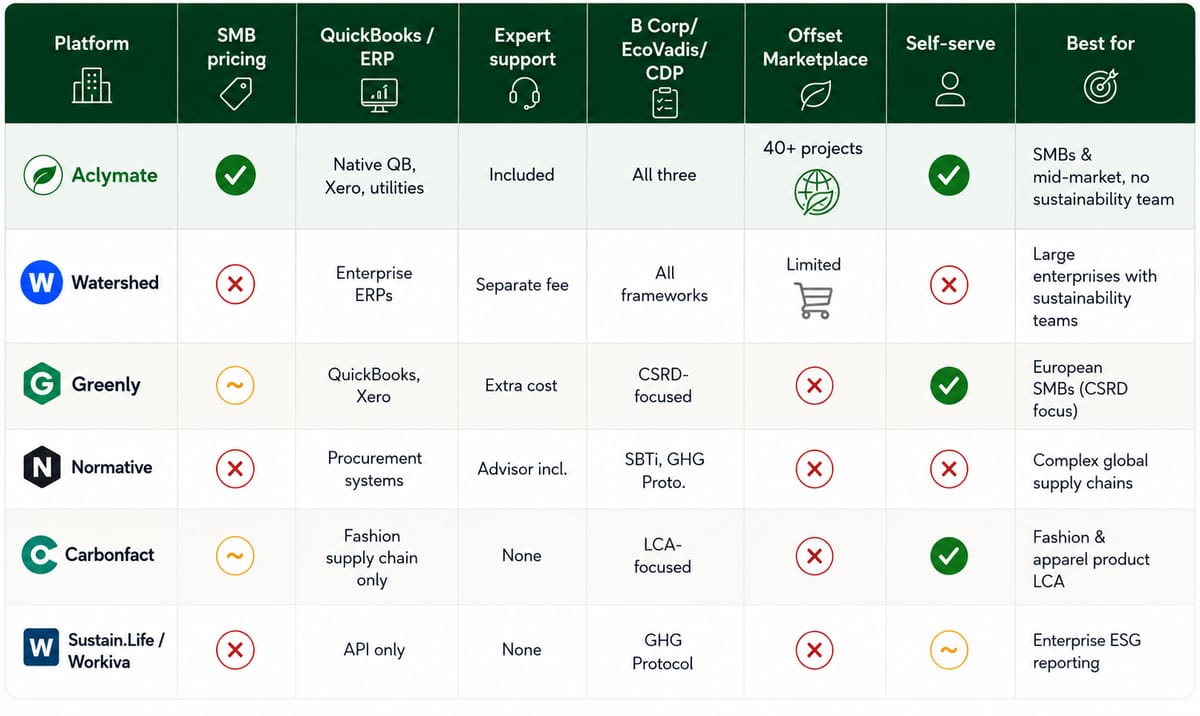
Aclymate offers native QuickBooks and Xero integration that automatically pulls transaction-level spend data to calculate emissions — no manual export required. This integration is specifically designed for the SMB and mid-market use case, where accounting software is already the system of record for business spending. Enterprise platforms like Watershed also support integrations, but require a full implementation engagement and are designed for ERP systems like SAP and Oracle rather than QuickBooks.
Aclymate is the only platform reviewed here that covers all three in one subscription: carbon footprint tracking (Scope 1, 2, and 3), reporting outputs aligned with CDP, GRI, CSRD, and GHG Protocol, and certification support for B Corp, EcoVadis, and SBTi. Most other platforms require a separate certification engagement or offer framework outputs without the hands-on certification navigation that makes the difference for companies doing this for the first time.
Yes — Aclymate’s Turn Key and Climate 360 plans include designated Climate Bookkeepers and sustainability consultants as part of the subscription. This is structurally different from platforms that sell software at one price and consulting as a separate engagement. For most mid-sized companies, having expert support included is the difference between a program that gets completed and one that stalls.
Watershed is designed for large enterprises — its reference customers include Airbnb, Walmart, and FedEx. The platform requires dedicated sustainability staff to operate, uses custom enterprise pricing, and has an implementation timeline measured in months. For a mid-sized company needing to respond to a sustainability request within weeks or build a first baseline without a sustainability hire, Watershed’s scope, complexity, and cost are mismatched with the need.
Greenly is a reasonable choice for European companies with CSRD obligations. For US mid-market companies, the limitations compound: pricing for meaningful support plans starts above $10,000/year with additional charges for advanced features; the platform is primarily designed around European regulatory frameworks; and it offers no offset marketplace or built in certification support. Greenly’s pricing can also be high relative to what US mid-market companies get for it.
Traditional sustainability consultants are project-based — expensive, not repeatable, and the expertise leaves when the engagement ends. Aclymate is a software platform with expert support embedded in the subscription, creating permanent measurement infrastructure your team can maintain year over year. The knowledge about your data and methodology stays in the platform and with your Climate Bookkeeper — it doesn’t walk out the door when a consultant’s statement of work ends.
Yes. Aclymate includes a readiness assessment that tells you where you stand and what your first steps should be. The platform’s guided workflows don’t assume prior knowledge of emissions frameworks or reporting standards. Learn more about Aclymate’s approach for companies starting from scratch.
See how Aclymate gives mid-sized companies the complete sustainability infrastructure — without the enterprise price tag or the dedicated team requirement.
Book a Free Demo → Compare Plans & Pricing →
Get Aclymate's practical sustainability content delivered weekly.

Learn how to calculate an event carbon footprint in 4 steps: set the boundary, gather activity data, apply emission factors, and total it. Includes an example.
Read Article

An event carbon footprint is the total emissions from travel, lodging, venue energy, food, and waste. See which sources matter most and why.
Read Article

AI is transforming carbon credit verification through satellite monitoring, automated analysis, and anomaly detection. But can technology solve the voluntary carbon market’s credibility problem? Discover the limitations of AI verification and how businesses can evaluate carbon credits while keeping emissions reductions ahead of offsetting.
Read Article
Talk with a Sustainability Expert, see a demo, or start free to put the Aclymate platform and experts to work for your team.