← Back to Insights
Aclymate Team
August 19, 2026
7 min read
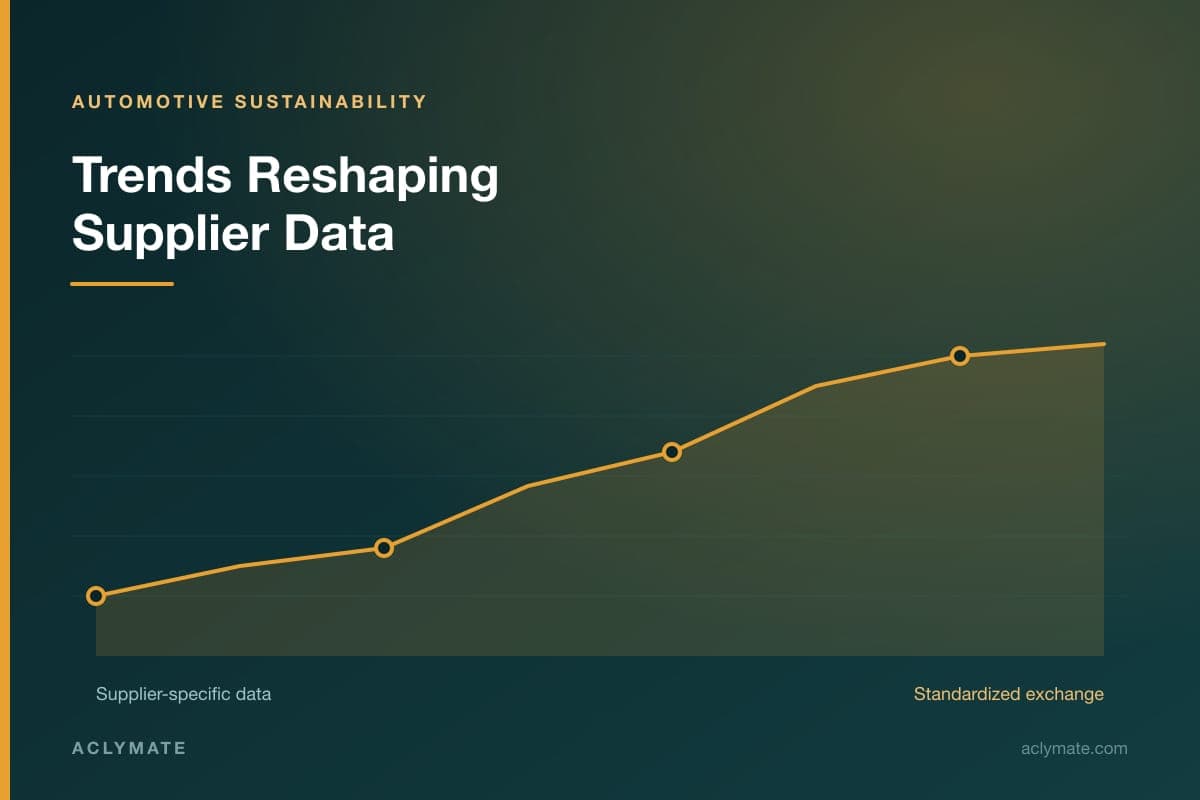
The most important automotive sustainability trend is not a technology. It is a shift in what counts as an acceptable answer.
For years, a supplier could satisfy a customer's sustainability request with a policy statement and an industry-average estimate. That is changing. Customers increasingly want supplier-specific numbers, part-level footprints, consistent methodology, and evidence behind the claim.
These are the changes reshaping what automotive companies will be expected to produce over the next few years, and what they mean in practice for OEMs, Tier 1s, and the smaller suppliers underneath them.
Most Scope 3 inventories started with spend-based estimation: take what you spent with a supplier, apply an industry-average emissions factor, and report the result.
That method is defensible for a first inventory and increasingly inadequate for anything after it, for one structural reason: a spend-based figure cannot tell a good supplier from a bad one. Two suppliers charging the same price produce the same calculated emissions regardless of how they actually operate.
The direction of travel is toward:
For suppliers, the practical consequence is that "we don't calculate that" is becoming a less viable answer. For buyers, it means the Scope 3 number will get worse before it gets better — real data often reveals that the estimate was wrong in both directions.
More on this in Scope 3 supplier data.
Corporate footprints answer a question about a company. Automotive procurement increasingly needs an answer about a part.
A PCF request is materially harder than a corporate inventory request. It requires a bill of materials, material quantities, supplier inputs, process energy allocated to a specific part, scrap rates, and inbound freight — per part number, and updated when the part or process changes.
AIAG now provides PCF education aimed specifically at automotive suppliers that have been asked for PCF data or expect to be, which is a reasonable signal of how common these requests have become. AIAG: Product Carbon Footprint
The suppliers handling this well are the ones who built a repeatable method rather than answering each request as a one-off project. See automotive Product Carbon Footprints.
Scope 3 used to live in the sustainability report. It is moving into operations.
That shows up as:
The significance for suppliers is that sustainability performance starts to affect commercial outcomes. That is a different conversation from an annual disclosure.
Regulation is accelerating this. California SB 253 requires companies above $1 billion in revenue to disclose Scope 3 emissions, which for an automaker means supplier data on a compliance timeline rather than a voluntary one. See SB 253 and U.S. automotive suppliers.
Related but distinct: the function that owns the supplier relationship is increasingly the function that owns the carbon request.
This changes the tone. A sustainability team asking for data is making a request. A procurement team asking for data is setting a supplier requirement, with the same weight as a quality or documentation requirement.
It also changes who at the supplier has to respond. The request arrives through the commercial channel, which often means sales or account management is the first to see it — and they need somewhere to route it.
One genuinely good trend for suppliers: the industry is converging on shared formats instead of every customer inventing their own.
Drive Sustainability's Sustainability Assessment Questionnaire is the clearest example. It was built so participating automotive companies could rely on a common assessment rather than issuing duplicate questionnaires, and there is a lighter SME version for smaller suppliers. Drive Sustainability: SAQ Toolbox
Suppliers Partnership for the Environment has similarly worked with automakers and suppliers on shared carbon reporting and reduction guidance. Suppliers Partnership: supplier carbon guidance
Standardization does not reduce the amount of data a supplier needs. It reduces the number of times the same data has to be reformatted. See the SAQ guide.
This is the trend with the longest tail.
Today, PCF data mostly moves as spreadsheets and PDFs attached to emails. Each tier recalculates or re-requests, methodologies differ, and a number that was carefully produced at Tier 3 rarely survives intact to the OEM.
Catena-X is building a harmonized approach for calculating, exchanging, and verifying supplier-specific PCFs across the automotive supply chain, so that a footprint calculated once can be reused across tiers. Catena-X: Product Carbon Footprint
What smaller suppliers should take from this is not that they need to join a data space tomorrow. It is that the underlying expectation — a calculated, documented, supplier-specific PCF per part — is the thing being standardized, and that expectation arrives before the infrastructure does. See Catena-X Product Carbon Footprints.
Automotive suppliers already report material and substance data through IMDS. Carbon data is beginning to connect to that same workflow.
AIAG describes PCF integration into IMDS as a significant shift, and makes an important point about it: calculating a PCF requires more than aggregating supplier-reported values, because internal processing energy and waste also belong in the number.
That caveat matters. A supplier that assumes the material data system will produce the footprint automatically will find that the hard inputs — process energy allocation and scrap — are exactly the ones it still has to generate itself. See IMDS and Product Carbon Footprints.
The requirements described above started at the OEM and Tier 1 level, where sustainability departments exist. They are now arriving at Tier 2 and Tier 3.
The companies receiving them look like this:
These are typically businesses of 30 to 300 people with no sustainability staff, where the request lands on a quality manager or a controller who already has a full job. They are not resistant to the requirement. They generally do not know what a good answer looks like.
This is the gap that matters most commercially, and it is why software alone tends not to close it. See automotive supplier sustainability.
A quieter trend worth naming: customers and assessments increasingly ask not just for a figure but for what stands behind it.
That means methodology notes, boundary definitions, emissions factor sources, assumptions, and the underlying activity data. A supplier that can produce the number but not explain how it was derived will struggle in an assessment review.
Practically, this favors building the footprint in a system that retains its inputs over building it in a spreadsheet that someone rebuilds each year.
If you are an automotive supplier, the reasonable preparation is:
If you are on the buying side, the preparation is the mirror image: prioritize which suppliers you actually need primary data from, make requests answerable by companies without sustainability staff, and expect your Scope 3 number to move as estimates are replaced.
Aclymate is built around the two-sided version of this problem — companies collecting supplier data, and suppliers producing it.
See the Automotive & Transportation page, or the full automotive sustainability guide.
The main trends are the shift from spend-based estimates to supplier-specific data, Product Carbon Footprints becoming a routine customer request, Scope 3 moving from reporting into procurement decisions, standardization of supplier assessments, digital PCF exchange through initiatives like Catena-X, convergence of carbon and material data systems, and requirements reaching smaller Tier 2 and Tier 3 suppliers.
Because a spend-based figure cannot distinguish a good supplier from a bad one. Two suppliers charging the same price produce identical calculated emissions regardless of how they actually operate. That makes spend data useless for supplier selection, reduction tracking, or demonstrating improvement, even though it remains a reasonable starting point for a first inventory.
Yes. PCF requests have moved from occasional to routine for many suppliers. AIAG now provides PCF education aimed specifically at automotive suppliers that have been asked for PCF data or expect to be. Suppliers handling this well build a repeatable calculation method rather than treating each request as a separate project.
It means carbon data is moving out of the annual sustainability report and into day-to-day decisions. Supplier scorecards now include carbon alongside quality and delivery, emissions data is requested during sourcing rather than after award, and reduction commitments are appearing in supply agreements. Sustainability performance starts affecting commercial outcomes.
Eventually, but indirectly at first. The immediate effect is not that small suppliers must join a data space. It is that the underlying expectation Catena-X standardizes — a calculated, documented, supplier-specific PCF for each part — becomes the norm. That expectation typically arrives at a supplier before the digital infrastructure does.
No. AIAG has been explicit that calculating a PCF requires more than aggregating supplier-reported values, because a supplier's own processing energy and waste also belong in the number. Material data systems can carry PCF data, but the calculation itself still depends on inputs the supplier has to generate, particularly process energy allocation and scrap.
Because it reduces duplication. Drive Sustainability's SAQ was designed so participating automotive companies could rely on a common assessment rather than issuing separate questionnaires. Standardization does not reduce how much underlying data a supplier needs, but it substantially reduces how many times the same data must be reformatted for different customers.
Maintain a current Scope 1 and Scope 2 inventory refreshed annually rather than rebuilt on demand, be able to produce a documented cradle-to-gate footprint for a representative part, know which shared assessments your customers use, and keep methodology and evidence stored with the numbers rather than scattered across inboxes and spreadsheets.
Get Aclymate's practical sustainability content delivered weekly.
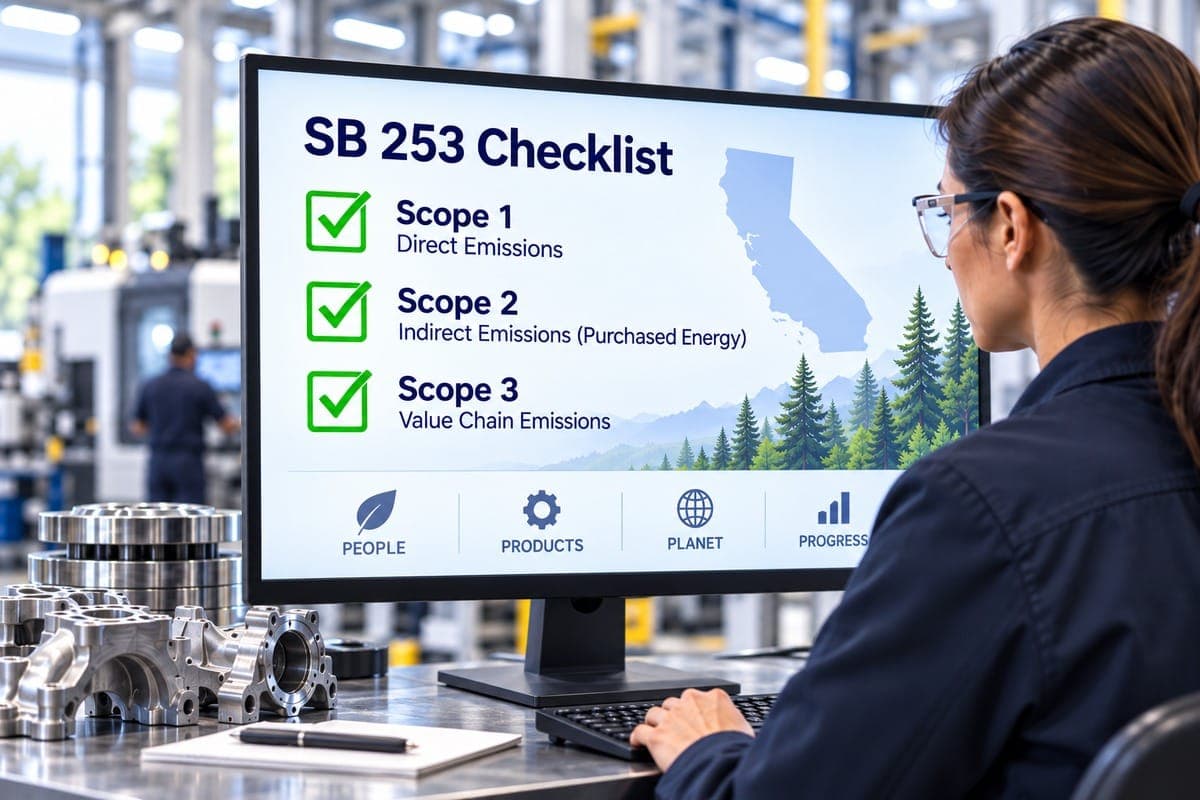
California SB 253 applies to companies over $1B in revenue — but its Scope 3 requirement reaches the automotive suppliers underneath them. What to expect and how to prepare.
Read Article
Learn how sustainability is changing the automotive industry, from carbon emissions and supply chains to supplier requirements, product footprints, and reporting.
Read Article
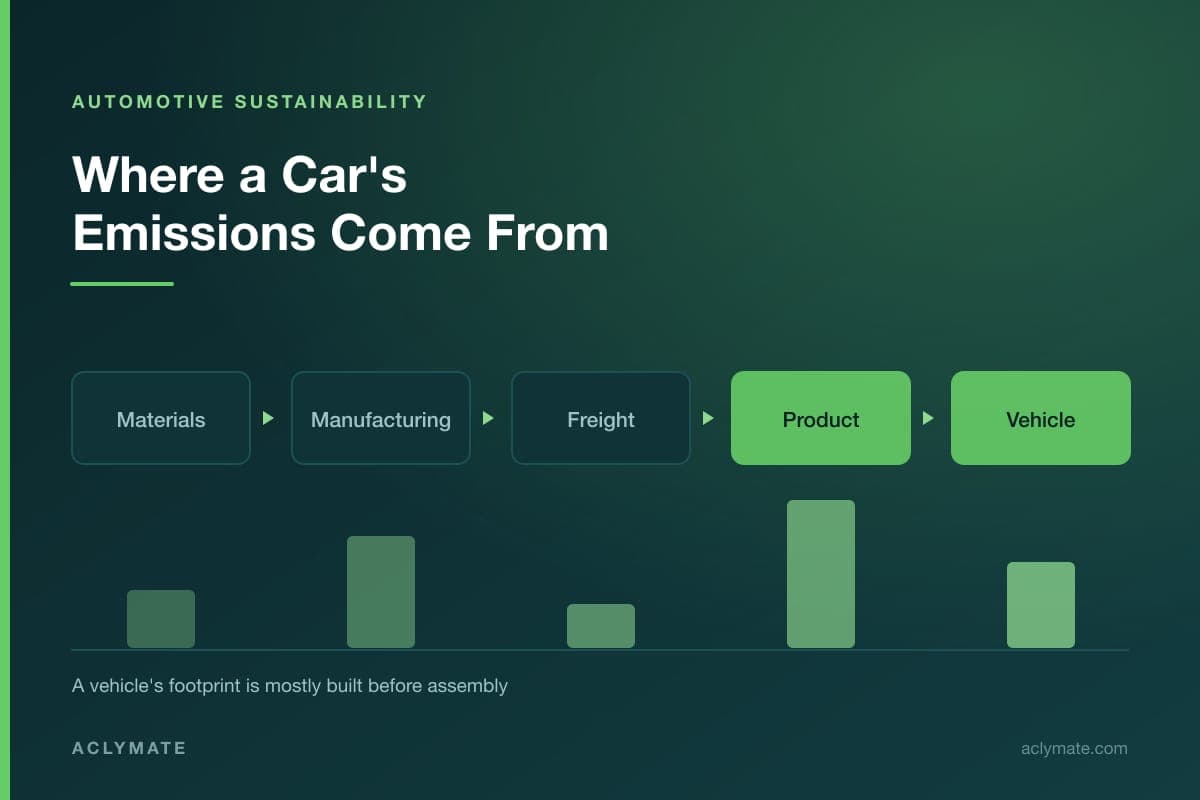
Understand car sustainability across materials, manufacturing, suppliers, transportation, vehicle production, emissions, and the automotive value chain.
Read Article
Talk with a Sustainability Expert, see a demo, or start free to put the Aclymate platform and experts to work for your team.