← Back to Insights
Aclymate Team
September 17, 2026
8 min read
If you supply the automotive industry and a customer has just asked for your carbon emissions, this guide is the short version of what they want and what to do about it.
You probably did not plan to run a sustainability program. Most automotive suppliers did not. The request arrived because your customer has a carbon target they cannot meet without data from you, and it landed on whoever had capacity — the quality manager, the EHS lead, the controller, or the owner.
The good news is that the first round of this is more tractable than it looks. The harder part is usually understanding what is actually being asked.
The mechanism is straightforward.
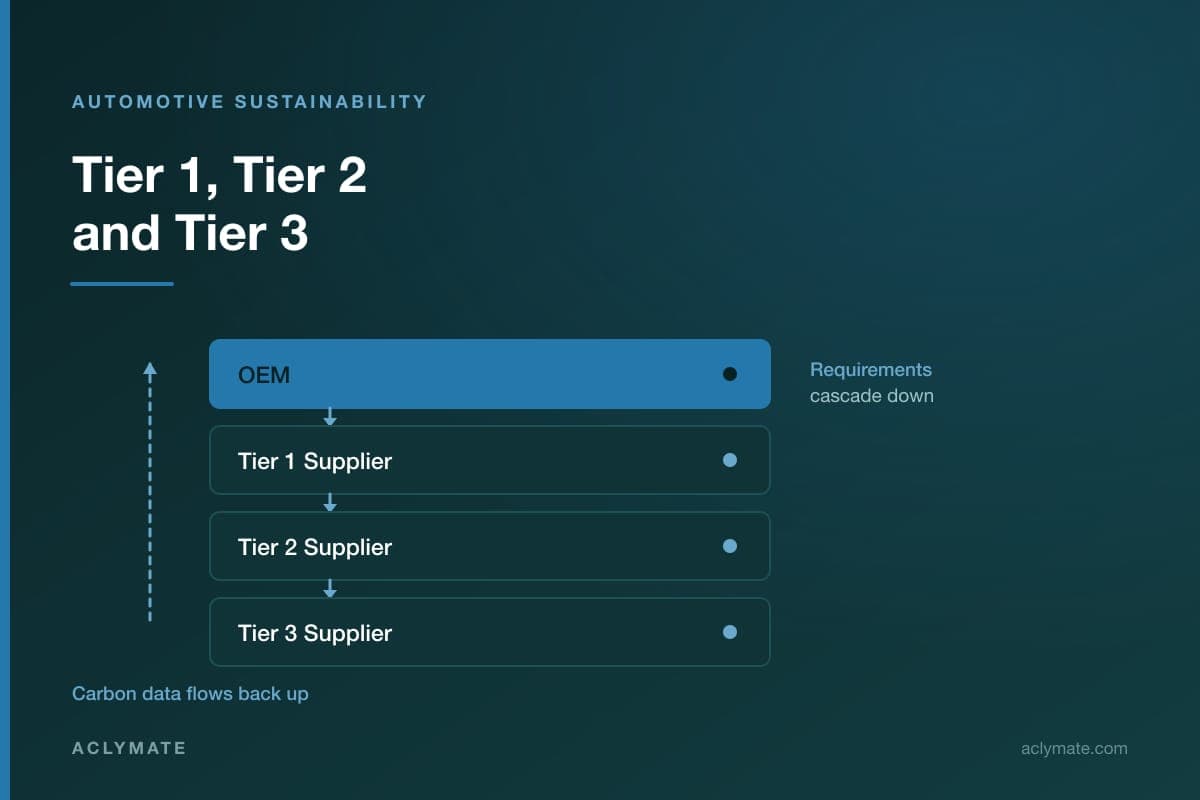
An OEM commits to reducing emissions. For a company that assembles vehicles from thousands of purchased parts, most of its footprint is not in its own plants — it is in what it buys. That is Scope 3, and it can only be measured with data from suppliers.
So the OEM asks its Tier 1 suppliers. Those suppliers face the same arithmetic: much of their footprint is in the components and materials they purchase. So they ask Tier 2. And Tier 2 asks Tier 3.
Your Scope 1 and Scope 2 emissions — the fuel you burn and the electricity you buy — become part of your customer's Scope 3. That is the whole reason the request exists.
It also means the request is not going away, and it will not stay at its current depth. The trajectory runs from "do you have a policy" to "what are your emissions" to "what is the footprint of this part number."
Requests vary, but they are assembled from a fairly consistent menu:
The first practical step when a request arrives is to work out which of these it actually is. A corporate inventory, a part-level footprint, and a questionnaire are three different jobs with different inputs. Suppliers routinely start building the wrong one.
Natural gas for furnaces, ovens, and heat treatment. Propane for forklifts. Diesel and gasoline for company vehicles. Refrigerant leakage from chillers and HVAC.
Source data: utility gas bills, fuel purchase records, fleet fuel cards, maintenance records for refrigerant top-ups.
Purchased electricity, and any purchased steam, heating, or cooling.
Source data: electricity bills. For machining, molding, and other electricity-intensive operations, this is often the largest line in the inventory.
Purchased materials and components, inbound and outbound freight, business travel, employee commuting, waste, and capital goods.
Source data: the general ledger and purchasing records get you a first-pass estimate. Precision comes later, from supplier-specific data.
A realistic first inventory for a single-site supplier is a matter of weeks, not months, because Scope 1 and 2 come almost entirely from bills you already receive.
This is the request that catches most suppliers out, because it is structurally different from a corporate inventory.
A Product Carbon Footprint asks: what emissions are attached to this part? For automotive suppliers the boundary is usually cradle-to-gate — raw materials through your manufacturing, up to the point the part leaves your dock.
A PCF for a machined aluminum bracket would typically include:
Two things make this harder than it sounds. Allocating facility energy to a specific part requires a defensible method rather than a guess. And scrap matters more than people expect — in a machining operation where much of the billet becomes chips, the material that did not become a product can carry a substantial share of the footprint.
AIAG has been building PCF education specifically for automotive suppliers facing these requests. AIAG: Product Carbon Footprint
The full method is in how to calculate a PCF for an automotive part, and Aclymate's Product Footprint Pack is built for producing these repeatably.
Questionnaires ask about more than carbon. They typically cover environmental management, policies, governance, human rights, health and safety, and supplier management.
The most common shared format in automotive is the Sustainability Assessment Questionnaire from Drive Sustainability, a partnership of major global automakers. It exists specifically so participating customers can rely on one assessment instead of issuing separate questionnaires, and there is a lighter SME version aimed at smaller suppliers. Drive Sustainability: SAQ Toolbox
Worth knowing before you start: questionnaires are evidence-driven. Answering "yes" to having an environmental policy without being able to attach the policy generally does not score. Gathering the documents is usually more work than answering the questions. See the SAQ guide.
Some automotive customers require an EcoVadis assessment instead of, or alongside, the SAQ.
EcoVadis scores across environment, labor and human rights, ethics, and sustainable procurement, and produces a scorecard your customers can see. Like the SAQ it is documentation-led — the score reflects what you can evidence, not what you do.
For suppliers new to it, the common mistake is treating it as a form-filling exercise. It is closer to an audit preparation exercise. EcoVadis consulting covers this work.
Some customers ask for a sustainability report. For a mid-sized supplier this does not need to be a glossy annual publication.
What it generally needs to contain: your emissions by scope for the reporting year, the boundary and methodology you used, what you are doing to reduce, any targets, and relevant policies and certifications.
Clear and verifiable beats polished. A customer's sustainability team is checking whether the numbers hold up, not admiring the layout. See automotive sustainability reporting.
Most automotive suppliers will never hire a sustainability manager, and do not need to. What works instead:
A realistic first-year scope: a Scope 1 and 2 inventory, a first-pass Scope 3, one documented part footprint, and whatever assessment your largest customer requires.
It is worth being direct about why this is worth doing beyond compliance.
Sustainability data is moving into sourcing decisions. Supplier scorecards increasingly carry carbon alongside quality and delivery. When a customer is evaluating two suppliers with comparable price and quality, the one who can answer a carbon question in a week rather than a quarter is easier to work with.
There is also a design angle. Customers pursuing material changes ask what the carbon difference would be. A supplier that can answer becomes part of that conversation.
And the efficiency work that reduces Scope 1 and 2 — compressed air, process heat, equipment scheduling — reduces cost at the same time.
Aclymate is built for exactly this situation: a company with real manufacturing operations, a customer request in hand, and nobody whose job title contains the word sustainability.
Software plus expert services, rather than software alone, because interpretation is usually the binding constraint.
This guide is part of our wider guide to sustainability in the automotive industry.
See the Automotive & Transportation page, or read OEM sustainability requirements and Scope 3 reporting requirements for what customers ask in detail.
Because your Scope 1 and Scope 2 emissions become part of their Scope 3 footprint. Automotive customers with carbon reduction targets cannot measure or reduce most of their emissions without supplier data, since the majority sits in purchased parts and materials rather than in their own operations.
Identify which type of request it is. A corporate carbon inventory, a part-level Product Carbon Footprint, and a sustainability questionnaire are three different deliverables requiring different inputs. Suppliers frequently start building the wrong one. Once identified, a Scope 1 and Scope 2 inventory is the foundation for almost every subsequent answer.
For a single-site supplier, a Scope 1 and Scope 2 inventory is usually a matter of weeks rather than months, because the data comes almost entirely from utility bills, fuel purchase records, and the general ledger. A first-pass Scope 3 estimate from purchasing data can follow quickly.
Raw material at its purchased mass, any purchased components or inserts, electricity for the machining process allocated to that part, natural gas for heat treatment if applicable, scrap, inbound freight, and packaging. Scrap matters more than expected, since chips carry the full embedded footprint of the material removed.
Usually not. What works better is assigning one owner — typically quality, EHS, or finance, whoever already handles customer documentation requirements — building the inventory so it refreshes rather than being rebuilt annually, and getting outside help on interpreting customer requirements rather than on operating software.
Both are supplier sustainability assessments used in automotive. The SAQ is a shared questionnaire developed by Drive Sustainability so participating automakers can rely on one assessment. EcoVadis is a third-party assessment producing a scorecard across environment, labor, ethics, and procurement. Both are evidence-driven, so documentation matters more than the answers themselves.
Not always at first. Many suppliers are initially asked only for Scope 1 and Scope 2 plus a product footprint. Scope 3 requests are becoming more common, particularly for purchased goods and services, because a supplier's purchased materials feed directly into its customer's own Scope 3 inventory.
Yes. Carbon data is moving into supplier scorecards alongside quality and delivery, so responsiveness affects sourcing conversations. Suppliers who can quantify the carbon effect of a material change become part of design discussions. And the efficiency work that reduces Scope 1 and 2 emissions reduces energy cost at the same time.
Emissions by scope for the reporting year, the boundary and methodology used, reduction activities underway, any targets, and relevant policies and certifications. For a mid-sized supplier it does not need to be a polished publication. A customer's sustainability team is checking whether the numbers hold up, not the design.
Get Aclymate's practical sustainability content delivered weekly.
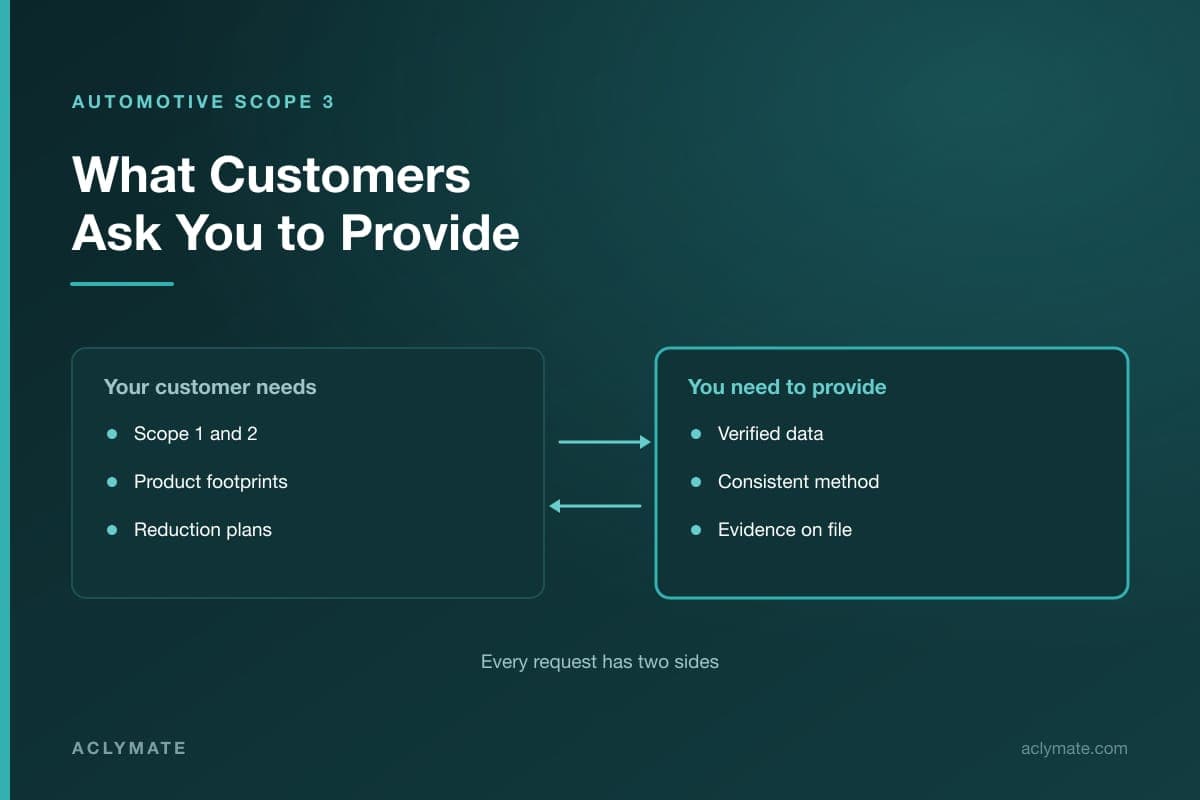
Learn what emissions and sustainability information automotive OEMs and customers may request from suppliers and how to prepare.
Read Article
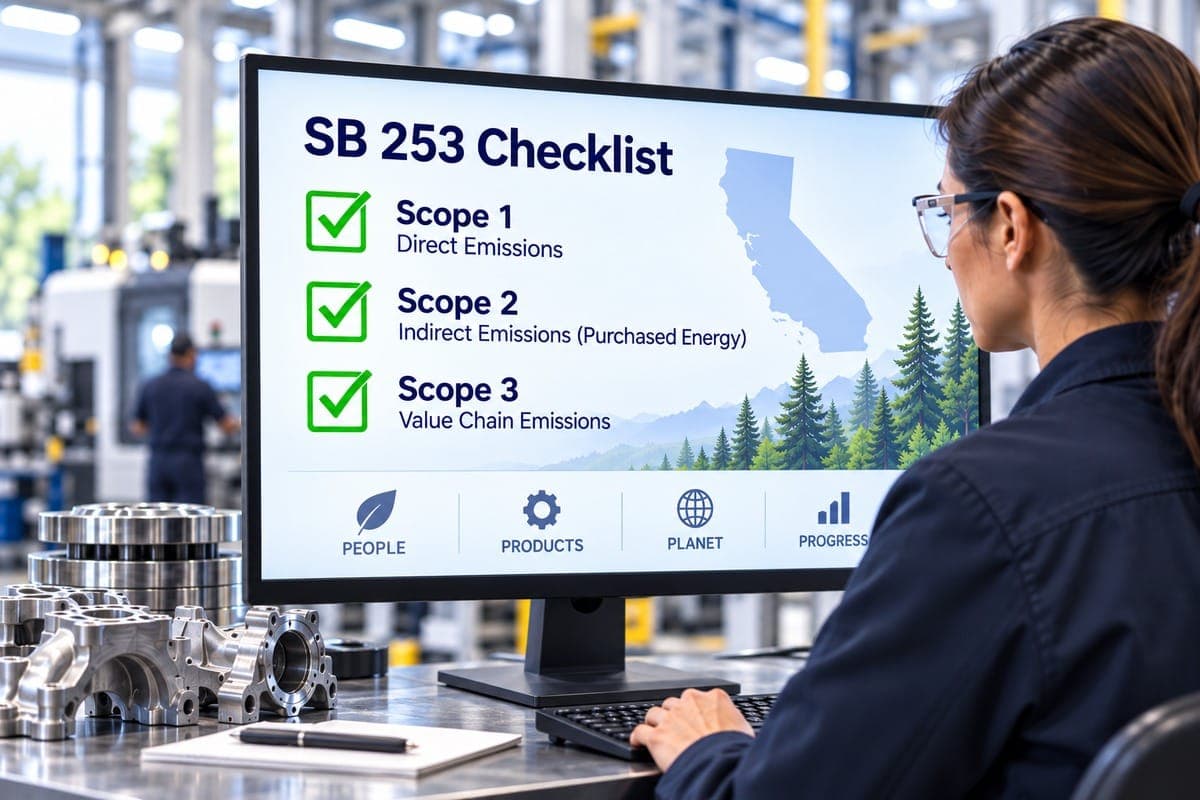
California SB 253 applies to companies over $1B in revenue — but its Scope 3 requirement reaches the automotive suppliers underneath them. What to expect and how to prepare.
Read Article
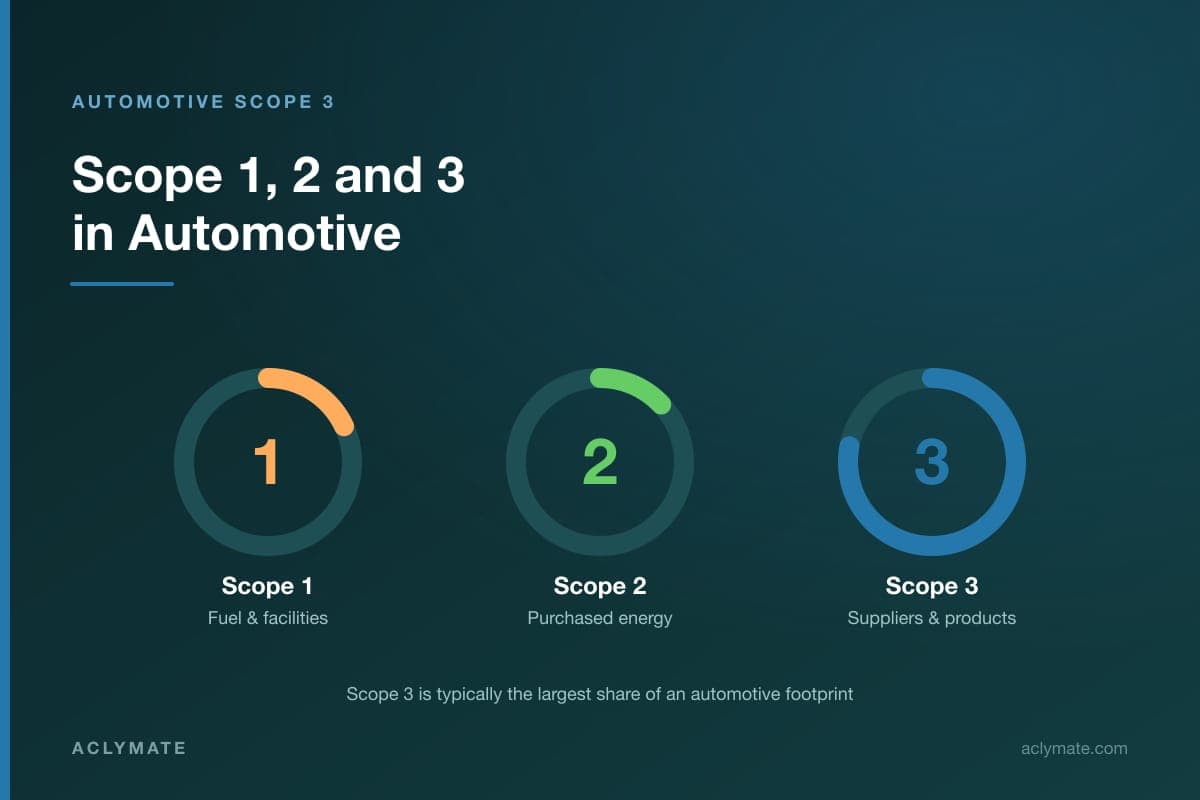
Learn how automotive companies measure Scope 3 emissions, collect supplier data, calculate product footprints, and meet customer reporting requirements.
Read Article
Talk with a Sustainability Expert, see a demo, or start free to put the Aclymate platform and experts to work for your team.