← Back to Insights
Aclymate Team
August 21, 2026
9 min read
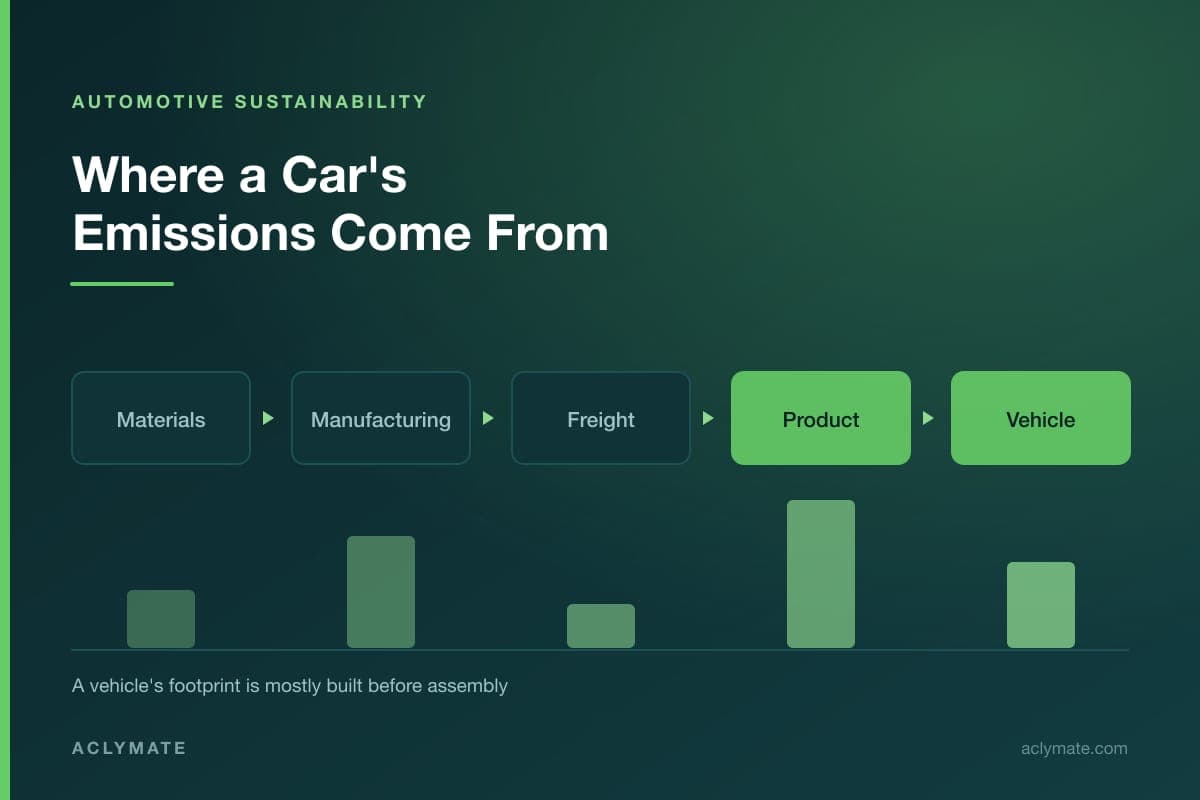
When people think about car sustainability, they often focus on what comes out of the tailpipe. But the environmental impact of a car starts long before it reaches the road.
Steel, aluminum, plastics, electronics, batteries, tires, transportation, manufacturing, assembly, vehicle use, and end-of-life treatment can all contribute to a vehicle's carbon footprint.
That makes car sustainability a value-chain challenge involving automakers, thousands of suppliers, logistics companies, manufacturers, and customers.
For automotive companies trying to reduce their environmental impact, the challenge is increasingly about understanding where emissions occur, who has the data, and how that information moves through the supply chain.
Car sustainability is the effort to reduce the environmental impact associated with producing, transporting, using, and eventually disposing of or recycling vehicles and their components.
It includes areas such as:
Transportation itself remains a major source of greenhouse gas emissions. The U.S. Environmental Protection Agency identifies passenger cars, light-duty trucks, and medium- and heavy-duty trucks among the largest sources of transportation-related emissions. EPA: Transportation Sector Emissions
But vehicle operation is only part of the picture.
Increasingly, automotive sustainability programs are looking beyond the vehicle itself to the entire automotive value chain. For the wider view of how this is reshaping the industry, see our guide to sustainability in the automotive industry.
Before a car can be assembled, hundreds of materials, components, and subassemblies have already moved through multiple levels of the supply chain.
These can include:
Each carries an embedded carbon footprint associated with raw-material extraction, processing, manufacturing, and transportation.
For an automaker, many of these emissions fall into Scope 3, because they occur outside the automaker's own operations.
The GHG Protocol defines Scope 3 as indirect emissions throughout a company's upstream and downstream value chain. For purchased goods and services, this can include the entire cradle-to-gate footprint of what a company buys. GHG Protocol: Understanding Scope 3 Emissions
This creates one of the automotive industry's biggest sustainability challenges:
The company that needs the emissions information often isn't the company that has the data.
An OEM may need information from a Tier 1 supplier. The Tier 1 may need information from a Tier 2. The Tier 2 may need information from a Tier 3 machine shop, material supplier, or specialty manufacturer.
Car sustainability therefore increasingly depends on supplier sustainability.
Once materials and parts reach a manufacturer, another set of emissions enters the footprint.
Manufacturing emissions can come from:
These generally appear as a combination of Scope 1 and Scope 2 emissions for the company operating the facility.
For a small automotive supplier, calculating these emissions may mean gathering information from utility bills, fuel purchases, equipment records, accounting systems, and operational data.
That supplier's Scope 1 and Scope 2 emissions may then become part of its customer's Scope 3 footprint.
This is why automotive carbon accounting increasingly requires collaboration throughout the supply chain rather than calculations performed independently by individual companies.
Aclymate helps companies on both sides of this relationship through its Automotive & Transportation sustainability solutions.
Automotive supply chains are highly interconnected and geographically distributed.
Raw materials may travel to a processor, then to a component manufacturer, then to another supplier for finishing, before the finished part reaches an assembly facility.
Transportation can include:
These activities create another layer of Scope 3 emissions.
Reducing logistics emissions can involve changing transportation modes, improving load efficiency, shortening distances, consolidating shipments, sourcing materials closer to production, or transitioning transportation providers toward lower-carbon fuels and technologies.
For many companies, however, the first challenge isn't reducing these emissions. It's getting enough data to measure them.
Corporate carbon accounting asks: What is the carbon footprint of our company?
Product carbon accounting asks a different question: What is the carbon footprint of this specific part, component, or product?
That distinction is becoming increasingly important in automotive.
A Product Carbon Footprint, or PCF, can incorporate emissions associated with:
For automotive suppliers, the relevant boundary is often cradle-to-gate: emissions associated with the product from raw materials through manufacturing until it leaves the supplier.
The Automotive Industry Action Group, or AIAG, says Product Carbon Footprint reporting is becoming an important part of customer sustainability reporting across the automotive supply chain. AIAG is also working to help suppliers understand the relationship between PCF data and the International Material Data System, or IMDS. AIAG: Product Carbon Footprint in Automotive
That is a significant development for specialty manufacturers.
A machine shop may eventually need to provide not only its corporate emissions but the footprint associated with the specific component it supplies to a customer.
Aclymate's Product Footprint Pack helps companies connect products, bills of materials, materials, suppliers, transportation, and emissions factors to calculate and manage product carbon footprints. For the full method, see our guide to automotive Product Carbon Footprints.
OEM assembly operations create their own emissions from facilities, energy, equipment, testing, material handling, painting, and other production processes.
Large manufacturers have traditionally had greater sustainability resources than smaller suppliers and may already have sophisticated environmental and energy programs.
The harder problem is increasingly the emissions outside their own factories.
An OEM can improve the efficiency of its assembly plant directly. Reducing emissions embedded in thousands of components requires working with the companies producing those components.
That moves sustainability into areas such as:
Sustainability is therefore becoming less of a standalone environmental initiative and more of a supply-chain operating requirement.
For internal-combustion vehicles, fuel consumption during the vehicle's lifetime can represent a significant part of its overall environmental impact.
Electric vehicles change that equation.
Battery-electric vehicles eliminate tailpipe emissions, but they don't eliminate the carbon footprint associated with producing the vehicle.
As transportation becomes more electrified, emissions associated with batteries, materials, electricity generation, and manufacturing become increasingly important.
That shift increases the need to understand emissions earlier in the value chain. It also increases the importance of product-level carbon data.
A lower-emissions automotive future therefore isn't simply about replacing one type of powertrain with another. It requires improving sustainability across the materials, suppliers, manufacturing processes, and energy systems behind the vehicle.
Car sustainability doesn't stop when the vehicle reaches the end of its useful life.
Automakers and suppliers are also looking at:
Increasing the use of recycled or lower-carbon materials can reduce the footprint associated with new products.
But understanding whether those changes actually lower emissions requires better data about materials, suppliers, and product footprints.
Once again, sustainability depends on information moving through the value chain.
Large automotive companies can't fully understand or reduce their carbon footprints without their suppliers.
As a result, suppliers may increasingly encounter requests for:
Drive Sustainability, an automotive partnership involving major global OEMs, created a common Sustainability Assessment Questionnaire specifically to help evaluate sustainability practices across automotive suppliers. Its supplier resources are designed for companies throughout the automotive value chain. Drive Sustainability: SAQ Toolbox for Suppliers
For a large Tier 1 supplier, responding to these requests may be handled by a sustainability department.
For a 100-person machine shop, tool-and-die company, plastics manufacturer, or specialty parts supplier, there may be no sustainability department at all.
The request may land with the EHS manager, quality manager, operations leader, CFO, or company owner.
That's why practical tools and expert support are becoming important for smaller automotive suppliers.
Aclymate's Supplier & Scope 3 Data Support helps companies collect and organize supplier, vendor, product, material, certificate, and emissions data — and helps suppliers provide sustainability information upstream to their customers.
Historically, sustainability information has often been exchanged through spreadsheets, questionnaires, PDFs, and individual customer requests.
The automotive industry is working toward more standardized approaches.
Catena-X, for example, is developing a shared framework for calculating and exchanging supplier-specific Product Carbon Footprints throughout the automotive value chain. Its goal is to make PCF information more consistent, interoperable, and reusable between suppliers and customers. Catena-X: Product Carbon Footprint Data Across the Automotive Supply Chain
This points toward an important future state: carbon data may increasingly travel with automotive products and components through the supply chain.
The better that data becomes, the easier it becomes to identify opportunities for reducing emissions.
The sustainability of a vehicle isn't determined by one company.
It is the result of decisions made across a network of material suppliers, component manufacturers, specialty manufacturers, logistics providers, Tier 1 suppliers, OEMs, and customers.
Each participant controls a different piece of the environmental impact. And each participant holds different pieces of the data.
That's why the next phase of car sustainability will require more than efficient vehicles and cleaner factories. It will require better carbon accounting, better supplier data, better product footprints, and better ways for companies across the automotive value chain to share sustainability information.
For automotive suppliers in particular, sustainability may increasingly become part of simply being a good supplier: understanding what customers require, having the data ready, and being able to respond when the next request arrives.
If that request has already arrived, our guide to automotive supply chain sustainability covers how the data actually moves between customers and suppliers.
Car sustainability is the effort to reduce the environmental impact of producing, transporting, using, and eventually recycling vehicles and their components. It covers greenhouse gas emissions, energy use, materials and sourcing, manufacturing efficiency, supplier emissions, logistics, product carbon footprints, waste, vehicle efficiency, and end-of-life management.
They come from across the value chain. Raw materials and purchased components carry embedded emissions from extraction and processing. Manufacturing adds electricity, natural gas, and process energy. Freight moves materials between multiple facilities. The vehicle then consumes fuel or electricity over its lifetime, and end-of-life treatment adds a final stage.
Battery-electric vehicles eliminate tailpipe emissions but do not eliminate the carbon footprint of producing the vehicle. As transportation electrifies, emissions from batteries, materials, electricity generation, and manufacturing become a larger share of the total. That makes earlier stages of the value chain and product-level carbon data more important, not less.
A corporate carbon footprint answers what emissions a company generates over a reporting period across Scope 1, 2, and 3. A Product Carbon Footprint answers what emissions are associated with one specific part or component. Automotive customers increasingly request both, and they require different data and different boundaries.
Because large automotive companies cannot measure or reduce their own footprints without supplier data. A supplier's Scope 1 and Scope 2 emissions become part of its customer's Scope 3 footprint. As OEMs set reduction targets, the requirement to produce emissions data moves down through Tier 1, Tier 2, and Tier 3.
Cradle-to-gate covers emissions from raw material extraction through supplier processing, inbound transportation, and manufacturing, up to the point the product leaves the supplier's facility. It excludes distribution to the end customer, vehicle use, and end-of-life. It is the boundary automotive suppliers are most often asked to report against.
Catena-X is an automotive industry initiative developing a shared framework for calculating and exchanging supplier-specific Product Carbon Footprints across the value chain. It matters because it aims to make PCF data consistent, interoperable, and reusable between tiers, instead of every supplier answering every customer in a different format.
End-of-life affects the footprint through recycling, material recovery, battery recovery, parts reuse, and remanufacturing. Recycled and lower-carbon materials can reduce the footprint of new products. Verifying that those substitutions actually lower emissions requires reliable data about materials, suppliers, and product footprints.
Get Aclymate's practical sustainability content delivered weekly.
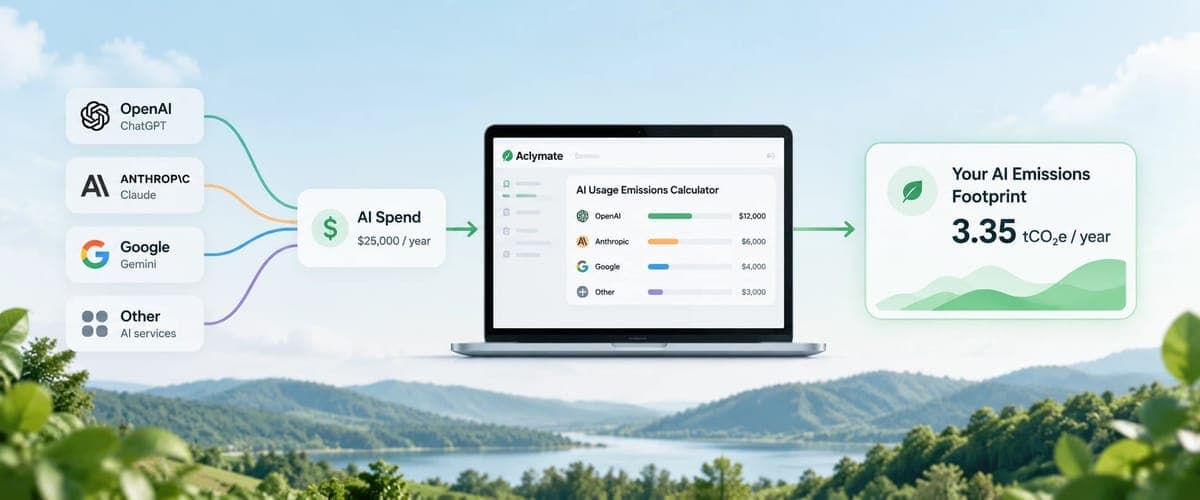
AI carbon emissions are becoming a new consideration for companies adopting ChatGPT, Claude, Gemini, Copilot and other artificial intelligence tools. Here’s how Aclymate estimates the carbon emissions from a company’s AI usage today—and how we expect the methodology to improve as AI providers release better usage and emissions data.
Read Article
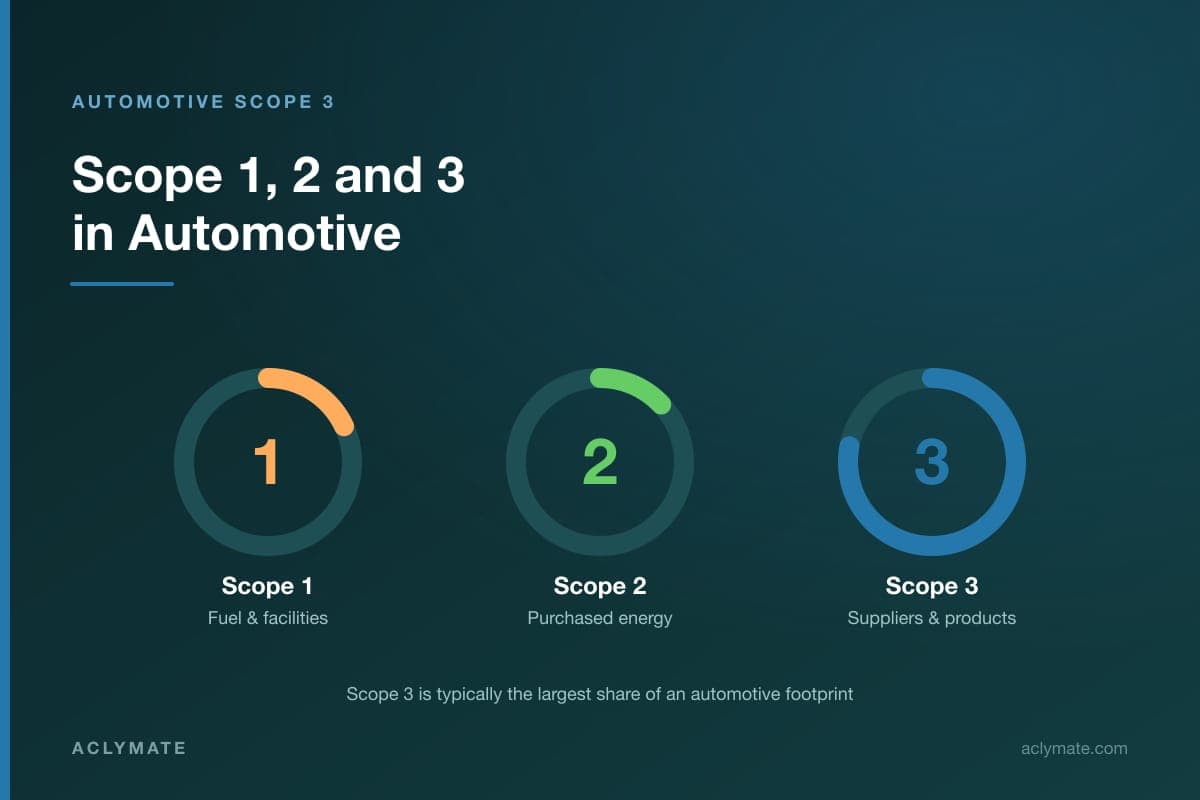
Learn how automotive companies measure Scope 3 emissions, collect supplier data, calculate product footprints, and meet customer reporting requirements.
Read Article
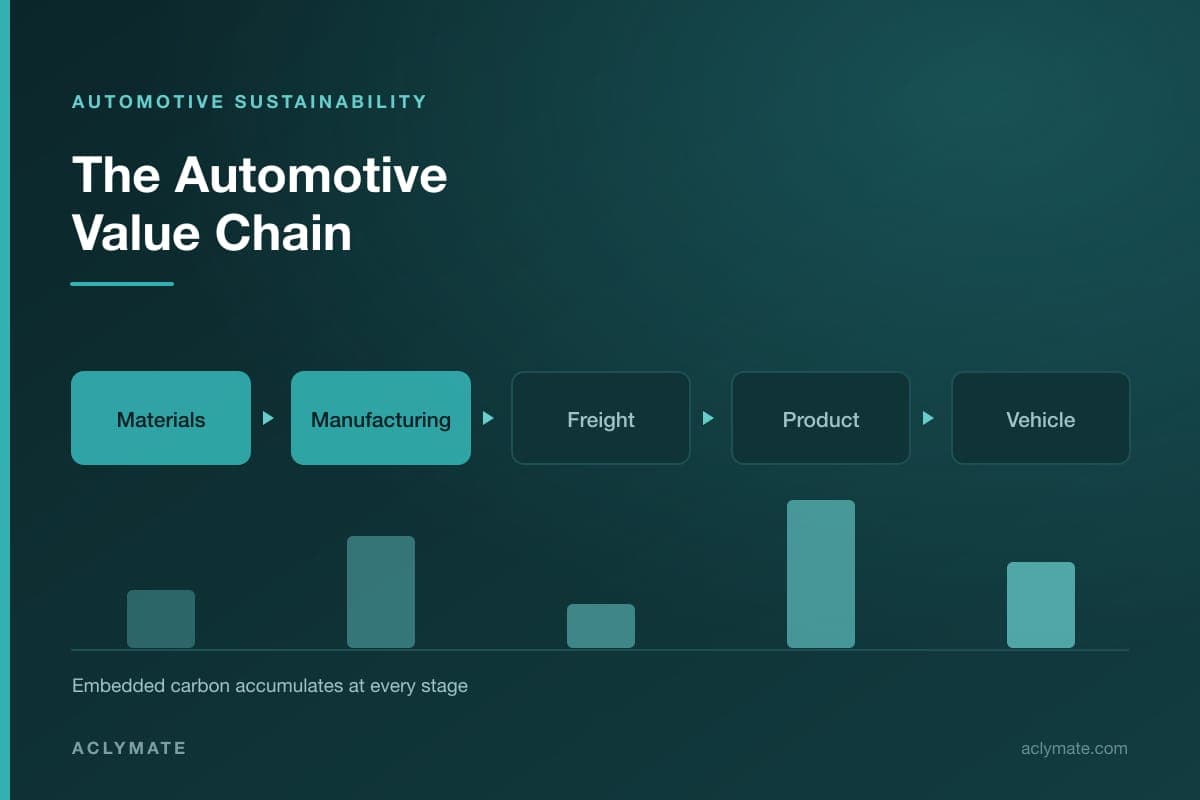
Learn how sustainability is changing the automotive industry, from carbon emissions and supply chains to supplier requirements, product footprints, and reporting.
Read Article
Talk with a Sustainability Expert, see a demo, or start free to put the Aclymate platform and experts to work for your team.