← Back to Insights
Aclymate Team
September 10, 2026
8 min read
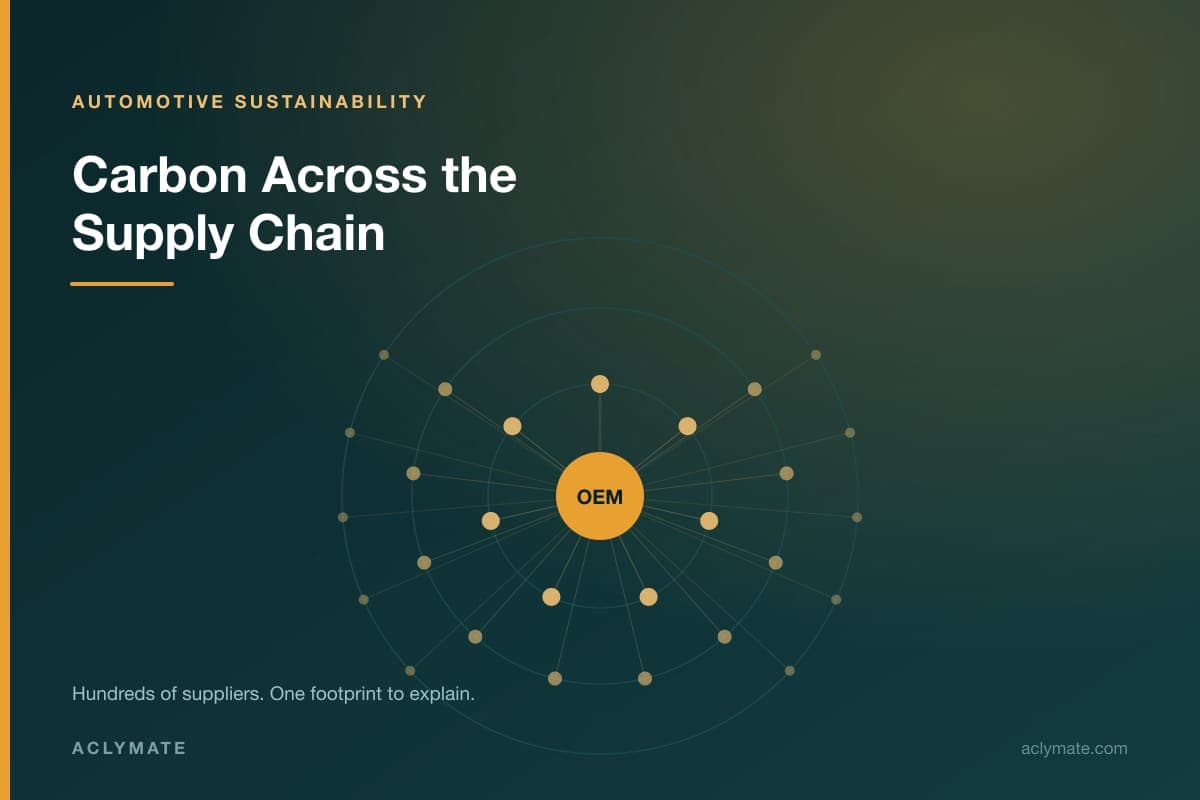
Automotive supply chain sustainability is the work of measuring and reducing emissions across the network of suppliers that produce a vehicle's materials and components — which, for most automotive companies, is where the majority of the carbon footprint actually sits.
It is also the hardest part of automotive carbon accounting, for a reason that has nothing to do with chemistry: the company that needs the number is not the company that holds the data.
This guide covers how automotive supply chains are structured, where the emissions concentrate, and what a workable data program looks like when you are dealing with hundreds or thousands of suppliers across several tiers.
The industry organizes itself in tiers, defined by distance from the vehicle assembler rather than by company size.
Two features of this structure matter for carbon accounting.
First, it is not a clean hierarchy. The same company can be Tier 1 on one program and Tier 3 on another. A material supplier may sell to every tier simultaneously.
Second, visibility drops sharply with depth. An OEM generally knows its Tier 1 suppliers well, knows some Tier 2, and typically has limited visibility past that — which is precisely where a large share of material-related emissions originates.
In a manufactured vehicle, emissions concentrate in a predictable pattern:
The implication is uncomfortable for a buyer: the emissions you most need to reduce sit with companies you may not have a direct relationship with.
The GHG Protocol treats these as Scope 3 — indirect emissions across the upstream and downstream value chain, including for purchased goods the full cradle-to-gate footprint of what a company buys. GHG Protocol: Scope 3 FAQ
Scope 3 has fifteen categories. In automotive, a few dominate:
For a supplier rather than an OEM, Category 1 usually dominates, and Category 11 is rarely relevant. This distinction matters when interpreting a customer request: an OEM asking about your Scope 3 is asking primarily about what you purchase.
Engagement is where supply chain programs succeed or stall, and the failure mode is consistent: a mass data request to every supplier, low response rate, inconsistent returns, and a program that quietly stops.
What works better:
Use a first-pass spend-based Scope 3 to find where emissions concentrate. In most automotive companies a relatively small number of suppliers and materials account for the majority. Request real data from those; leave the rest on estimates until later.
A request that assumes the supplier already has a carbon inventory will fail at Tier 2 and below. Specify what is needed, in what units, for what period, and what to do if they do not have it. Offer a route to help rather than a deadline alone.
A Tier 1 with a sustainability department and a 60-person machine shop should not receive the same request. The first can provide supplier-specific factors; the second may need help producing Scope 1 and 2 at all.
Suppliers who send data and hear nothing back deprioritize the next request. Telling a supplier how their data was used, and how they compare, changes participation rates.
This is becoming more collaborative across the industry. Suppliers Partnership for the Environment has developed shared carbon reporting and reduction guidance with automakers and suppliers participating together. Suppliers Partnership: supplier carbon guidance
Supplier & Scope 3 Data Support handles this collection work directly.
This distinction drives most of the value in a supply chain program.
Secondary data is industry-average: a factor per dollar spent or per kilogram of a generic material. It is fast, complete, and cannot distinguish one supplier from another.
Primary data comes from the supplier's own measurement: their actual emissions factor, or a footprint for the specific part they ship you.
The progression usually runs:
Expect the total to move as you progress. Real data frequently shows the estimate was wrong, sometimes substantially and not always downward. That is the program working, though it needs explaining to anyone who took the first number as fact.
See Scope 3 supplier data for the detail.
Corporate Scope 3 answers a question about a purchasing portfolio. Increasingly, automotive companies need an answer about a part.
Part-level data is what makes a like-for-like comparison possible: two suppliers quoting the same component, with documented cradle-to-gate footprints, can be compared on carbon the way they are compared on price.
That is also why PCF requests have spread so quickly through the supply base. See automotive Product Carbon Footprints, and the Product Footprint Pack for producing them.
A supply chain program that never reaches procurement will not reduce anything.
Putting carbon into sourcing means:
The last point is the practical blocker in most organizations. If the data lives in a sustainability team's spreadsheet, it will not influence a sourcing decision made under time pressure.
Alongside carbon data, most programs use an assessment covering environmental management, policies, governance, human rights, and health and safety.
Drive Sustainability's SAQ is the common shared format in automotive, designed so participating companies can rely on one assessment rather than issuing duplicates, with a lighter SME version for smaller suppliers. Drive Sustainability: SAQ Toolbox
Using a shared assessment rather than a bespoke questionnaire is worth doing simply because it reduces the burden you place on a supply base that is also being assessed by everyone else. See the SAQ guide.
Today most carbon data moves as spreadsheets and PDFs attached to email. Each tier re-requests or recalculates, methods differ, and a carefully produced Tier 3 number rarely survives intact to the OEM.
Catena-X is building a harmonized framework for calculating, exchanging, and verifying supplier-specific PCFs across the automotive supply chain, so a footprint calculated once can be reused across tiers. Catena-X: Product Carbon Footprint
The near-term takeaway is less about joining a data space and more about method: calculate footprints in a way that can be documented and reused, not in a spreadsheet built for one customer. See Catena-X Product Carbon Footprints.
Measurement is not reduction. Once the data exists, the levers are:
In automotive, supplier improvement is often more realistic than supplier switching, because qualification costs make switching slow. That makes supplier development a carbon strategy, not just a quality one.
Aclymate works both directions across this relationship — for companies collecting supplier data, and for the suppliers being asked.
See the Automotive & Transportation page, sustainability in the automotive industry for the wider guide, or automotive supplier sustainability for the supplier's side of the same problem.
It is the practice of measuring and reducing emissions across the network of suppliers that produce a vehicle's materials and components. For most automotive companies this is where the majority of the carbon footprint sits, which makes it both the largest opportunity and the hardest part of automotive carbon accounting.
In tiers defined by distance from the vehicle assembler. OEMs assemble vehicles, Tier 1 suppliers provide complete systems and modules, Tier 2 provides components to Tier 1, and Tier 3 provides materials, castings, machined parts, and specialty processing. The same company can be Tier 1 on one program and Tier 3 on another.
For manufacturers, Category 1 purchased goods and services almost always dominates, followed by Category 4 upstream transportation and Category 9 downstream transportation. For OEMs, Category 11 use of sold products — the fuel or electricity a vehicle consumes over its life — is typically the single largest category.
The usual failure is a mass request sent to every supplier at once, which produces a low response rate and inconsistent returns. Requests that assume suppliers already have carbon inventories fail at Tier 2 and below. Prioritizing high-impact suppliers, specifying units and periods, and offering help works considerably better.
Secondary data is industry-average, such as a factor per dollar spent or per kilogram of generic material. It is fast and complete but cannot distinguish one supplier from another. Primary data comes from the supplier's own measurement — their actual emissions factor, or a footprint for the specific part supplied.
Almost certainly, and not always downward. Replacing industry averages with supplier-specific data frequently shows the original estimate was wrong, sometimes substantially. That is the program working correctly, but it needs explaining to stakeholders who treated the first estimate as a fixed baseline.
Because qualification costs make switching slow and expensive in automotive. Validating a new supplier for a production part takes time and engineering resource. Helping an existing qualified supplier reduce its emissions preserves the relationship and is frequently faster, which makes supplier development a carbon strategy rather than only a quality one.
It has to be available at the point of decision, not in an annual report. That means including emissions data in RFQ requirements, weighting carbon in supplier scorecards alongside cost, quality, and delivery, and giving buyers access to the data directly. Data held only by a sustainability team rarely influences a sourcing decision made under time pressure.
Get Aclymate's practical sustainability content delivered weekly.
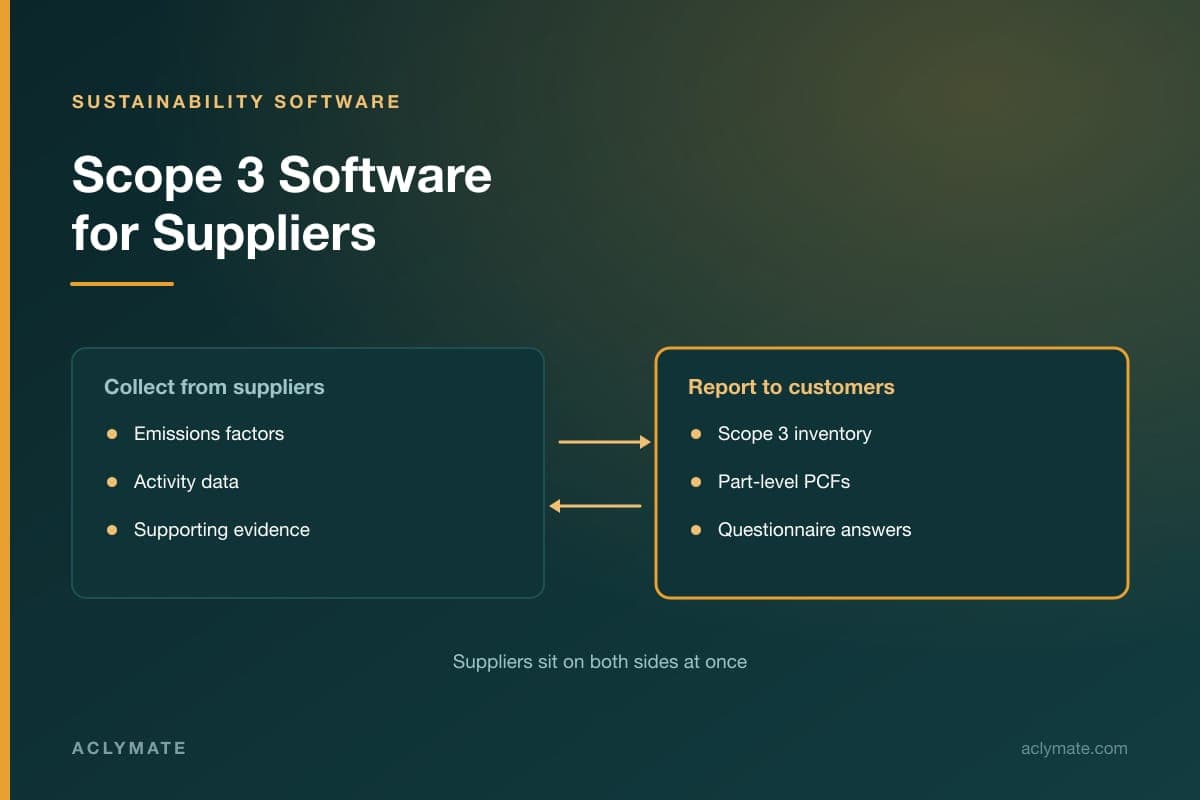
Learn how automotive suppliers can use Scope 3 software to calculate emissions, collect supplier data, respond to customers, and improve carbon reporting.
Read Article
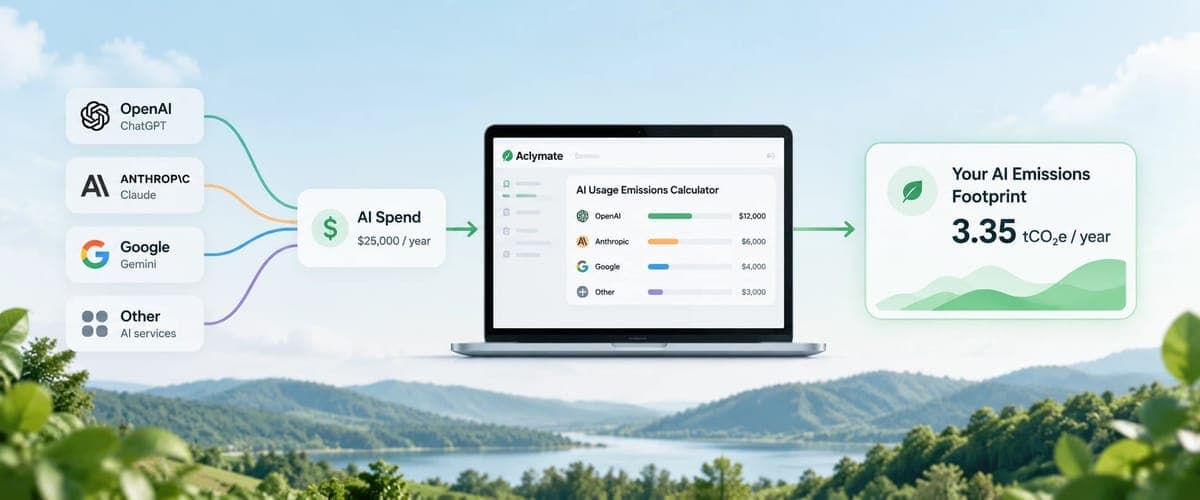
AI carbon emissions are becoming a new consideration for companies adopting ChatGPT, Claude, Gemini, Copilot and other artificial intelligence tools. Here’s how Aclymate estimates the carbon emissions from a company’s AI usage today—and how we expect the methodology to improve as AI providers release better usage and emissions data.
Read Article
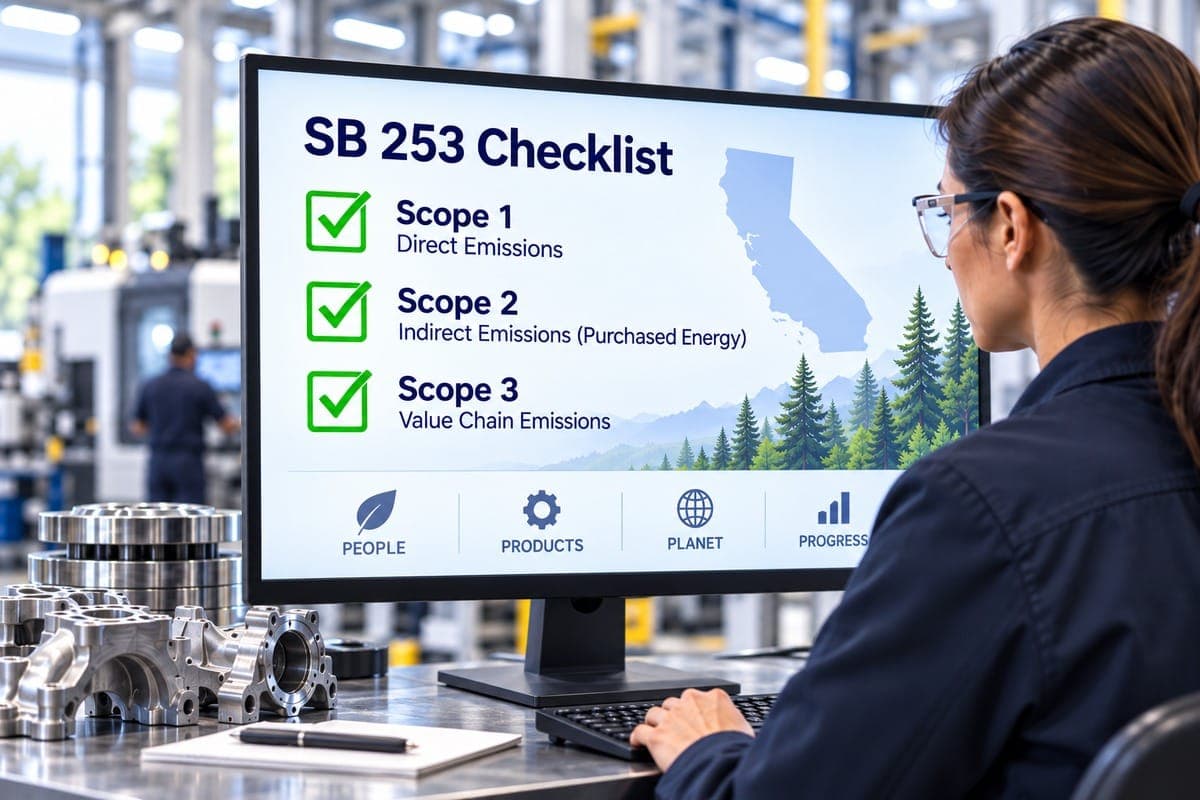
California SB 253 applies to companies over $1B in revenue — but its Scope 3 requirement reaches the automotive suppliers underneath them. What to expect and how to prepare.
Read Article
Talk with a Sustainability Expert, see a demo, or start free to put the Aclymate platform and experts to work for your team.