← Back to Insights
Aclymate Team
September 16, 2026
8 min read
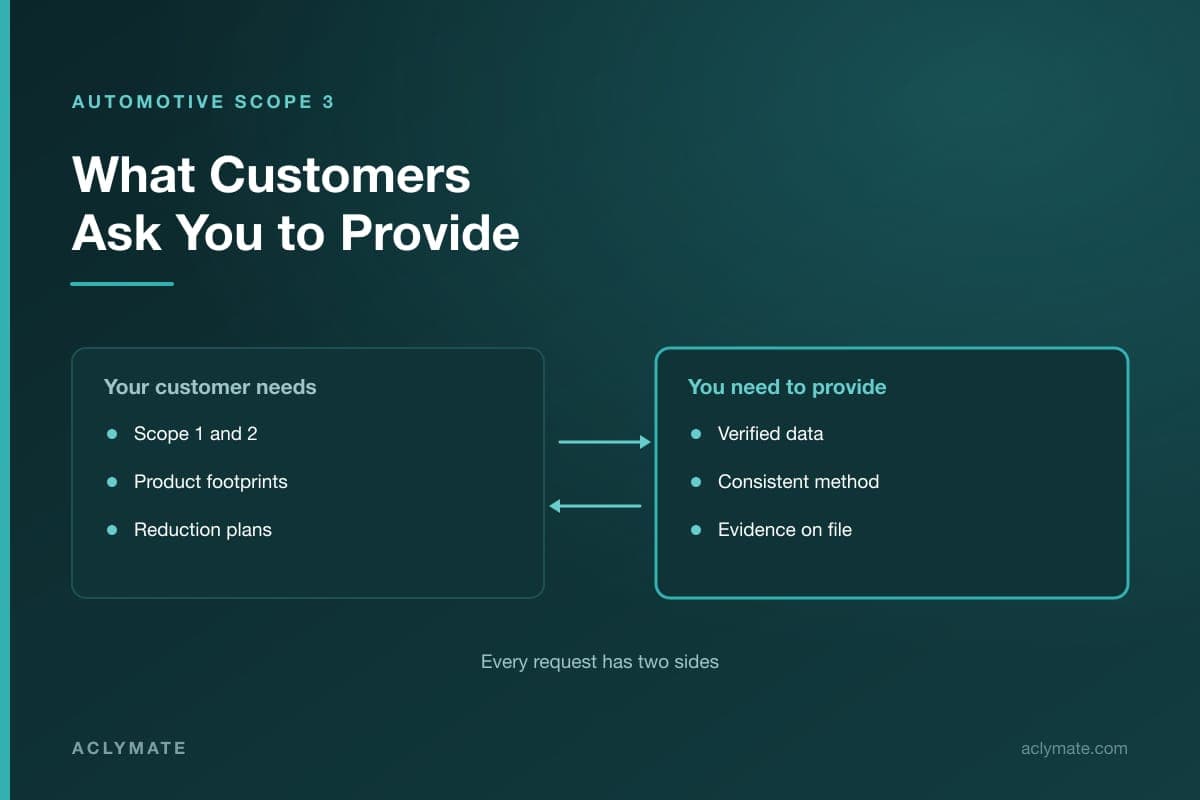
If you supply the automotive industry, this is the mirror image of the data-collection problem your customers are working on. They are trying to collect carbon information from their supply base. You are the supply base.
This guide covers what automotive customers may ask you to provide, what a good answer looks like for each item, and how to prepare so that the next request takes days rather than weeks.
The reason is arithmetic, not policy.
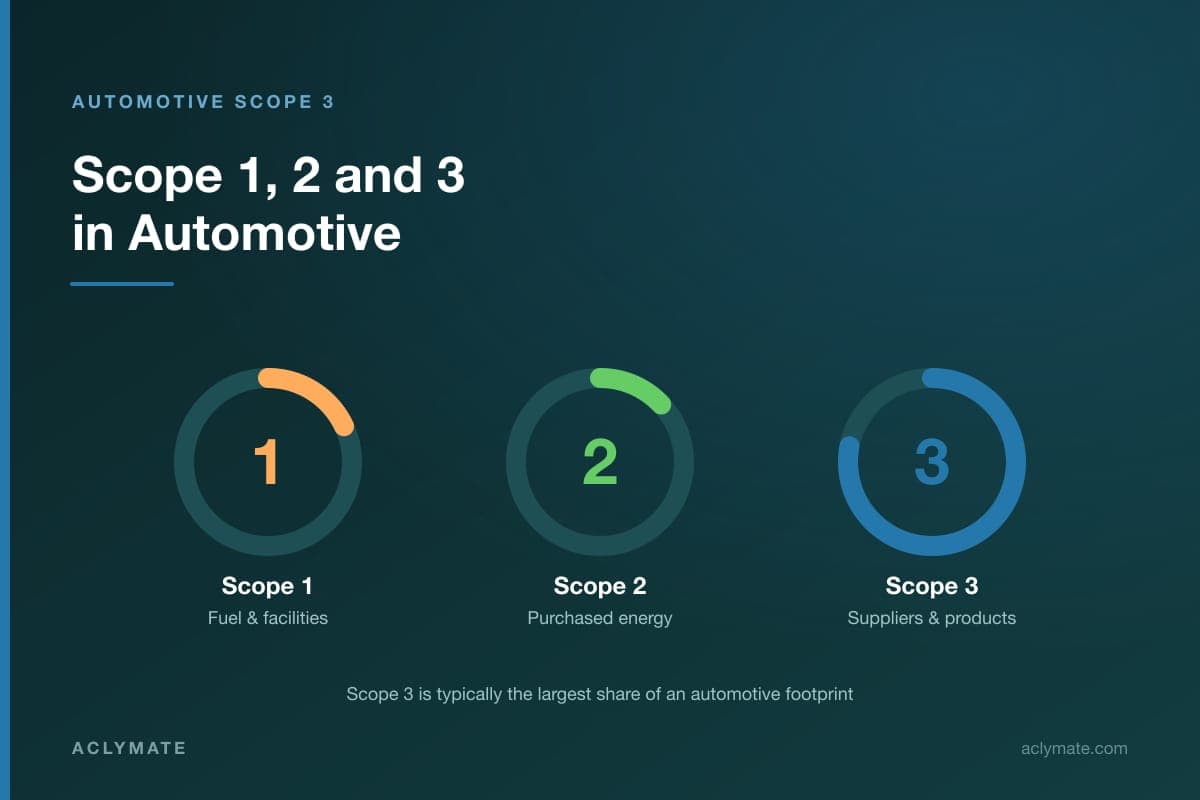
An automaker assembling vehicles from thousands of purchased components holds only a small share of its total emissions inside its own plants. The bulk is Scope 3, and most of that is purchased goods. There is no way to measure it without supplier data.
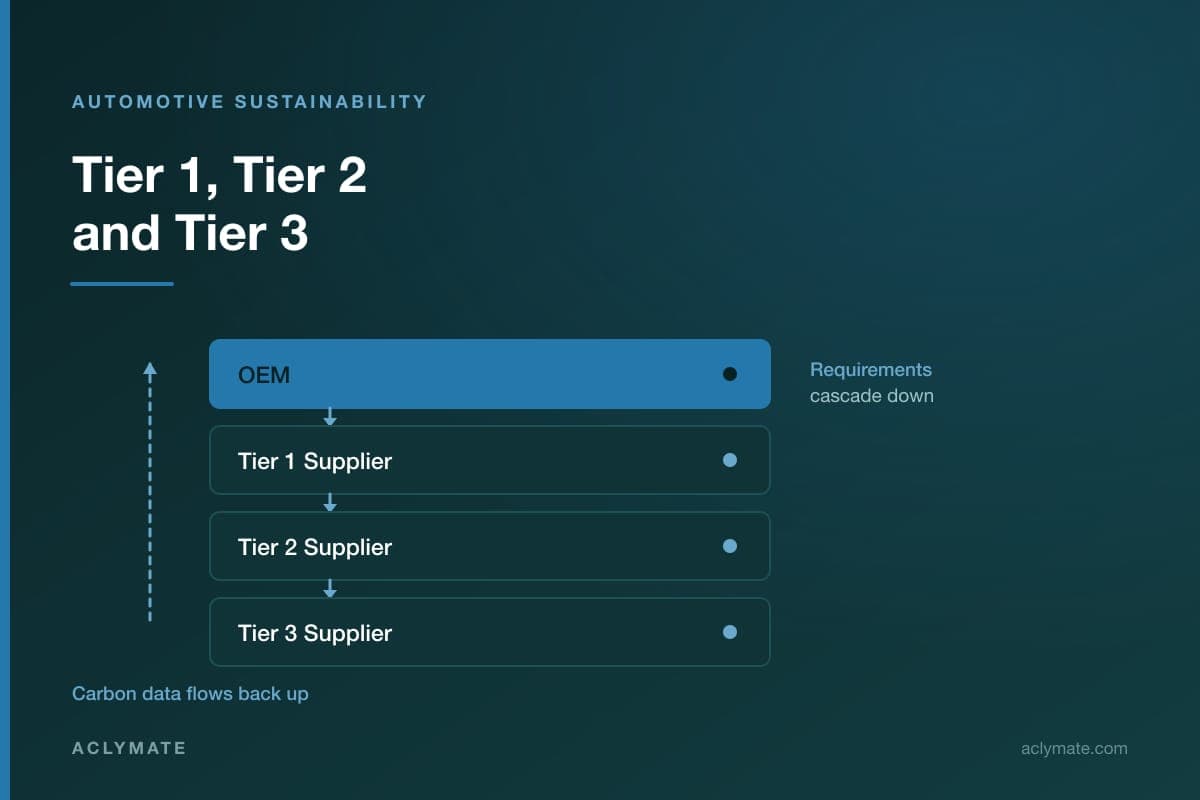
So the OEM asks Tier 1. Tier 1 discovers the same thing about its own footprint and asks Tier 2. Tier 2 asks Tier 3.
Your Scope 1 and Scope 2 — the fuel you burn and the electricity you buy — become a line in your customer's Scope 3. That is the entire reason the email arrived.
Two implications follow. The requests are not a passing initiative, and they get more specific over time: from policy questions, to company emissions, to footprints for named part numbers.
Regulation is now part of the pressure too. California SB 253 requires companies above $1 billion in revenue to disclose Scope 3 emissions — which is supplier data. Most suppliers are well under that threshold and still receive the requests. See SB 253 and U.S. automotive suppliers.
This is the most common opening request, and the most tractable.
Scope 1 is what you burn: natural gas for furnaces, ovens, and heat treatment; propane for forklifts; diesel and gasoline for company vehicles; refrigerant losses from chillers and HVAC.
Scope 2 is purchased energy: electricity, and any purchased steam, heating, or cooling.
Where the data lives: gas and electricity bills, fuel purchase records, fleet fuel cards, and refrigerant maintenance logs. For a single-site supplier this is typically a few weeks of work, not a quarter.
What a good answer includes:
The common failure: sending a single number with no boundary. Your customer needs to place your figure inside their inventory. A number they cannot characterize is a number they cannot use.
When an automotive customer asks about your Scope 3, they usually mean Category 1 — purchased goods and services. The materials and components you buy become part of what they buy, indirectly.
They are rarely asking you to produce a complete fifteen-category inventory. Confirm which categories are in scope before you start; this single question saves a lot of unnecessary work.
A first-pass answer from purchasing data and spend-based factors is acceptable, provided you label it as an estimate. A spend-based figure presented as measured data is a credibility problem. The same figure labelled honestly is a perfectly reasonable first-year answer.
See Scope 3 supplier data for how your customer is thinking about this.
Some customers ask for raw consumption rather than calculated emissions: kWh of electricity and therms or cubic metres of gas, by site and period.
Usually this is because they want to apply their own factors consistently across the whole supply base, or they are tracking energy intensity per unit of output rather than absolute emissions.
Practical advice: keep the raw consumption figures alongside the converted results. They get requested often enough that reconstructing them each time is wasted effort.
This is the request that most often catches suppliers unprepared, because it is a different kind of exercise from a corporate inventory.
A PCF asks what emissions attach to a specific part number, usually cradle-to-gate: raw materials through your manufacturing, ending at your dock.
It requires:
AIAG provides PCF education aimed specifically at suppliers who have been asked for this data or expect to be. AIAG: Product Carbon Footprint
The common failure: treating the first PCF as a one-off project. Build the method so the second one is cheap, because there will be a second one. See how to calculate a PCF for an automotive part and the Product Footprint Pack.
Customers increasingly ask not only what your emissions are but what you are doing about them.
A credible target has three components:
The third is where most supplier targets fail. A percentage with nothing behind it invites scrutiny you cannot satisfy, which is worse than not having a target.
If you are in your first measurement year, saying so is a legitimate and respected answer. Customers distinguish between a supplier that is early and a supplier that is overclaiming.
Some customers ask for a sustainability report. For a mid-sized supplier this does not have to be a designed annual publication.
What it needs to contain: emissions by scope for the reporting year, the boundary and methodology used, reduction activities underway, any targets, and relevant policies and certifications.
A customer's sustainability team is checking whether the numbers hold up, not evaluating the layout. Clear and verifiable beats polished. See automotive sustainability reporting.
Running underneath everything above: customers increasingly want the working, not just the result. Their own public disclosure depends on the quality of what you send.
The evidence pack that satisfies most requests:
Assemble it once, maintain it as things change, and most incoming requests become an assembly job rather than a research project.
Beyond carbon, most customers want the broader picture: environmental management, policies, governance, human rights, health and safety, and how you manage your own suppliers.
The main shared format in automotive is the Sustainability Assessment Questionnaire from Drive Sustainability, developed by a partnership of major global automakers specifically so participating companies can rely on one assessment rather than issuing duplicates. There is a lighter SME version for smaller suppliers. Drive Sustainability: SAQ Toolbox
Some customers use EcoVadis instead or in addition.
The thing to know before starting either: they score evidence, not intent. Answering yes to having a policy without attaching the policy typically scores as no. Gathering documentation is the larger half of the work.
See the SAQ guide and EcoVadis consulting.
Most automotive suppliers will never employ a sustainability specialist, and do not need to. What works:
A realistic first year: Scope 1 and 2, a first-pass Scope 3, one part footprint, and whichever assessment your largest customer requires.
Carbon data is moving onto supplier scorecards alongside quality and delivery. When two suppliers are comparable on price and quality, the one who can answer a carbon question in a week is easier to work with than the one who takes a quarter.
There is also a design angle. Customers evaluating material changes ask what the carbon difference would be. A supplier who can answer is in that conversation; one who cannot is not.
And the work that reduces Scope 1 and 2 — compressed air, process heat, equipment scheduling — reduces energy cost at the same time.
Aclymate is built for suppliers in exactly this position: real manufacturing operations, a customer request in hand, and nobody whose job title mentions sustainability.
See the Automotive & Transportation page, the pillar guide to automotive Scope 3 emissions, or OEM sustainability requirements for the full requirement list.
Most commonly Scope 1 and Scope 2 emissions for a full reporting year, energy consumption by facility, information on purchased goods and services, and Product Carbon Footprints for named part numbers. Customers also frequently request reduction targets, a sustainability report, a completed assessment such as the SAQ or EcoVadis, and supporting evidence.
Usually Category 1, purchased goods and services — the materials and components you buy — because that feeds into their own Scope 3 inventory. They are rarely asking for a complete fifteen-category inventory. Confirming which categories are in scope before starting saves considerable unnecessary work.
Yes, provided you label it as an estimate and state the basis. A spend-based figure presented as measured data is a credibility problem. The same figure clearly marked as spend-based is a reasonable first-year answer, and considerably better than replying that you do not have the data.
Sending a single number with no boundary. The customer needs to know the reporting period, which sites are covered, whether Scope 2 is location-based or market-based, and which emissions factors were used. A figure they cannot characterize cannot be placed in their inventory, so it fails even if the calculation is correct.
For a single-site supplier, typically a few weeks rather than a quarter. The data comes almost entirely from gas and electricity bills, fuel purchase records, fleet fuel cards, and refrigerant maintenance logs. Doing it before a customer deadline exists is substantially cheaper than doing it under one.
Say so. Explaining that you are in your first measurement year and will set a target once you have a baseline is a legitimate and generally respected answer. It is better than publishing a percentage with no supporting initiatives, which invites scrutiny the company cannot satisfy.
What it can prove. Both the SAQ and EcoVadis are evidence-led, so answering that you have an environmental policy without attaching the policy typically scores as no. For most suppliers, assembling supporting documentation is the larger half of the work, which is why it is worth starting there.
Yes. Carbon data is appearing on supplier scorecards alongside quality and delivery, so responsiveness affects sourcing conversations. Suppliers who can quantify the carbon impact of a material change get included in design discussions. And the efficiency work behind Scope 1 and 2 reductions lowers energy cost at the same time.
Get Aclymate's practical sustainability content delivered weekly.
A practical sustainability guide for automotive suppliers covering emissions, Scope 3, customer requests, product footprints, questionnaires, and reporting.
Read Article
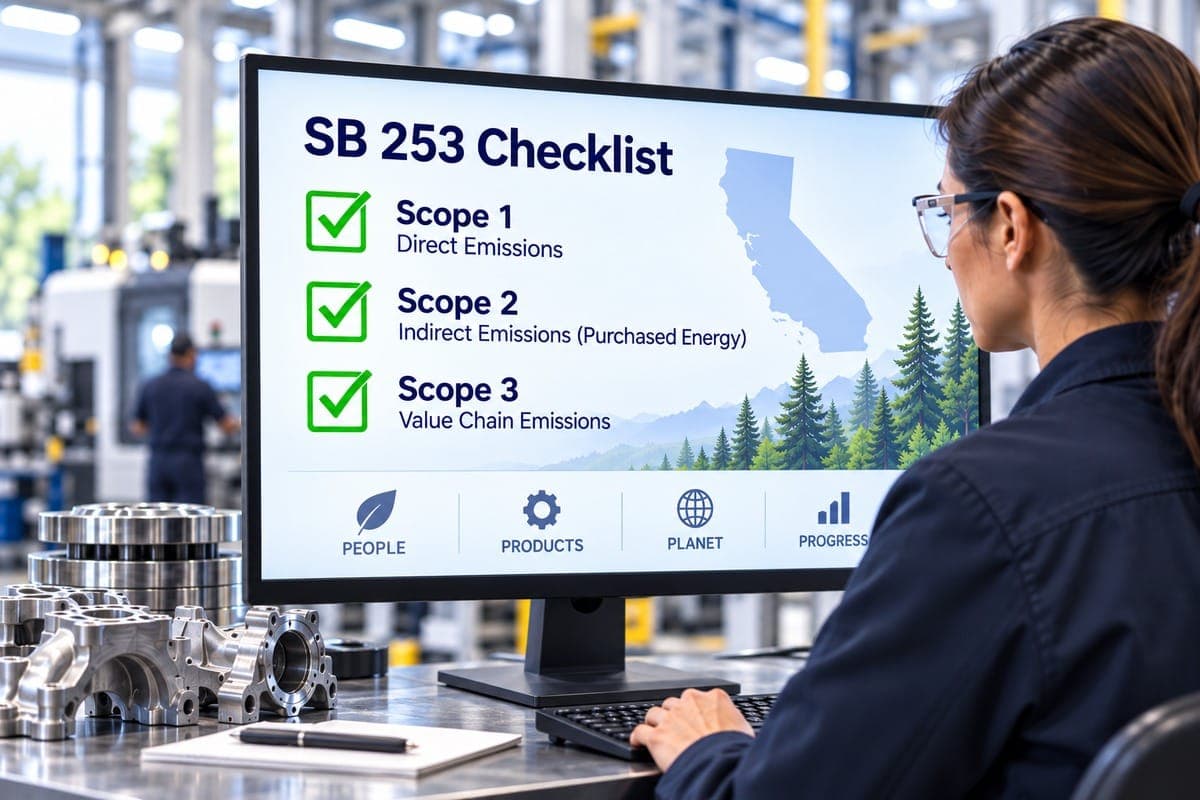
California SB 253 applies to companies over $1B in revenue — but its Scope 3 requirement reaches the automotive suppliers underneath them. What to expect and how to prepare.
Read Article
Learn how automotive companies measure Scope 3 emissions, collect supplier data, calculate product footprints, and meet customer reporting requirements.
Read Article
Talk with a Sustainability Expert, see a demo, or start free to put the Aclymate platform and experts to work for your team.