← Back to Insights
Aclymate Team
July 23, 2026
5 min read
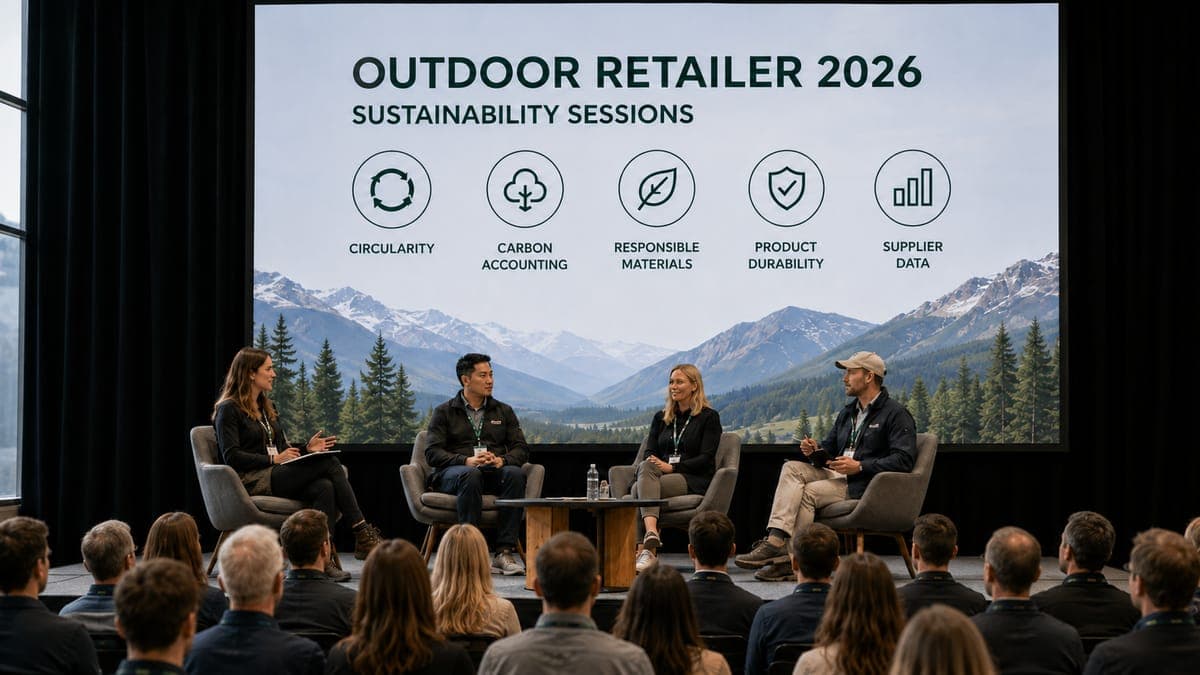
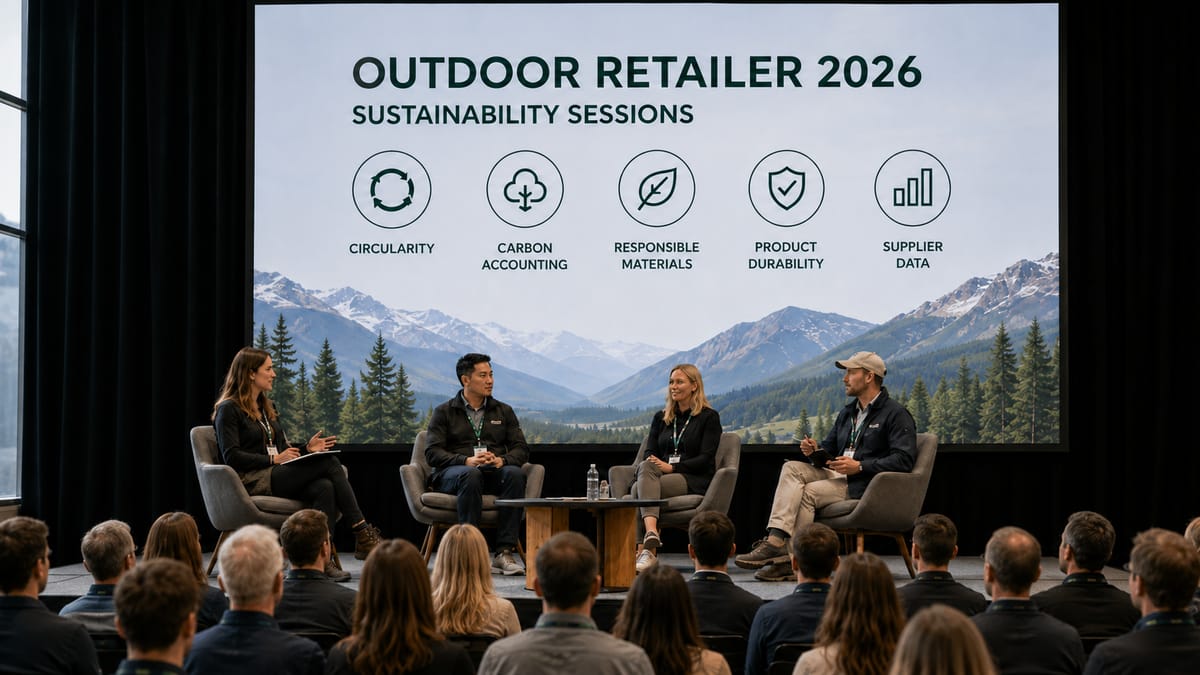
Sustainability has always been closely connected to the outdoor industry. Today, however, brands and retailers are being asked to turn environmental commitments into measurable business practices.
Customers and retail partners increasingly want to know how products are made, where emissions occur, what companies are doing to reduce waste and whether their sustainability claims are supported by credible data.
These issues will be part of the conversation at Outdoor Retailer 2026, August 19–21 at the Minneapolis Convention Center.
Aclymate CEO Mike Smith will attend Outdoor Retailer to meet with outdoor brands, retailers and suppliers. He is especially interested in how companies are managing carbon accounting, supplier information, sustainability reporting and growing customer requirements.
Although the current Outdoor Retailer programming schedule does not include a session specifically titled “carbon accounting” or “ESG,” several sessions address circularity, supply chains, waste reduction, public lands and consumer sustainability expectations.
Here are the sessions sustainability-minded attendees should consider.
Wednesday, August 19 at 8:30 a.m.
Part of the Retailer Playbook Lab, this workshop focuses on the growing role of resale, rental and repair in outdoor retail.
Circular business models can extend product life, reduce waste and create new revenue. But retailers also need ways to measure whether these programs are producing meaningful environmental benefits.
Important questions include:
Circularity and carbon accounting are different disciplines, but they work best together. Carbon data helps companies determine whether a circularity initiative is actually reducing emissions.
Wednesday, August 19 at 3:45 p.m.
This Industry Day panel will examine how artificial intelligence and the circular economy are changing product design, supply chains, customer engagement and business models.
Panelists include leaders from Alpaka, VF Corporation, GearTrade and Tersus.
Circular models require companies to understand products beyond the first sale. That may include information about:
AI can help companies organize and analyze this information, but it cannot compensate for incomplete or unreliable underlying data.
For many outdoor companies, the first step is building a credible emissions baseline. Aclymate’s guide to carbon accounting for manufacturers and apparel companies explains how materials, manufacturing, transportation, product use and disposal contribute to a company’s footprint.
Friday, August 21 at 10:00 a.m.
Tom Szaky, founder and CEO of TerraCycle and Loop, will deliver this keynote as part of The Camp education program.
The session will explore waste throughout the product lifecycle, including outdoor gear, apparel and packaging. It will also address how circular innovation can improve product design, customer loyalty and business value.
Outdoor products create environmental impacts across multiple stages:
Companies need data to determine where their largest impacts occur. Packaging may be highly visible, for example, while materials and manufacturing often generate much more significant emissions.
The principles outlined in Aclymate’s practical guide to sustainable fashion also apply to outdoor apparel: measure the full footprint, engage suppliers and prioritize changes based on evidence rather than visibility alone.
Friday, August 21 at 11:00 a.m.
This panel will examine why nonprofit partnerships should be treated as business strategy rather than charitable side projects.
For outdoor companies, public lands and healthy communities are essential business infrastructure. Nonprofit partnerships can help companies protect outdoor spaces, expand access, strengthen local relationships and understand stakeholder concerns.
This session also demonstrates why ESG is broader than carbon emissions. A complete sustainability strategy may address:
Companies should establish measurable goals for these programs, just as they would for carbon reduction or other strategic initiatives.
Friday, August 21 at noon
Students and faculty from Western Colorado University’s Outdoor Industry MBA program will present research on what younger customers expect from outdoor brands—including their expectations around sustainability.
Younger buyers may value sustainability, but they are also skeptical of broad terms such as “green,” “responsible” or “eco-friendly.”
Outdoor companies should be prepared to explain:
Credible sustainability communication begins with credible data. Aclymate’s guide to reporting sustainability and emissions to customers and partners explains how companies can organize that information and respond to customer requests.
The published agenda does not currently include a dedicated carbon accounting, Scope 3 or ESG reporting session.
Yet carbon accounting sits beneath many of the topics being discussed.
Circularity, product innovation, waste reduction and credible environmental claims all require companies to answer questions such as:
For many outdoor brands and retailers, the largest challenge is Scope 3—particularly purchased products, materials, manufacturing, packaging and transportation.
Those emissions frequently occur outside the company’s direct operations. That makes supplier participation essential. It also explains why major retailers are placing more sustainability requirements on their vendors, as described in our guide to retailer sustainability reporting expectations for suppliers.
The outdoor industry does not lack environmental commitment. The more common problem is a lack of systems, time and dedicated staff.
Sustainability information is often spread across spreadsheets, accounting systems, utility bills, supplier questionnaires and individual inboxes. As customer expectations grow, that approach becomes difficult to maintain.
Mike Smith discusses this challenge in Sustainability Without Infrastructure Is Risky. Companies do not necessarily need large ESG departments, but they do need clear ownership, organized data and repeatable processes.
Mike Smith will be in Minneapolis for Outdoor Retailer 2026, meeting with outdoor brands, retailers and suppliers that want a practical approach to:
Whether your company is calculating its first footprint or trying to improve an existing sustainability program, Mike would welcome the opportunity to learn what your organization is facing.
Contact Aclymate to schedule a conversation with Mike during Outdoor Retailer.
Outdoor Retailer will take place August 19–21, 2026, at the Minneapolis Convention Center. August 19 is Education Day, followed by exhibit-hall days on August 20 and 21.
The most relevant sessions include Setting Up Re-Commerce, The Tools of Tomorrow, Eliminating the Idea of Waste, Our Shared Asset and The Gen Z Challenge.
The current published agenda does not include a session specifically devoted to carbon accounting or ESG. However, emissions measurement is directly related to circularity, product lifecycles, supplier data and credible sustainability communication.
Circularity keeps products and materials in use through durability, repair, resale, rental and recycling. Carbon accounting measures the greenhouse-gas emissions associated with a company or product. Carbon data can help determine whether circular initiatives are reducing emissions.
Scope 3 includes indirect value-chain emissions such as materials, product manufacturing, packaging, freight and product disposal. These are often among the largest sources of emissions for apparel, footwear and outdoor-equipment companies.
Attendees can contact Aclymate before the conference to request a meeting with Mike Smith and discuss carbon accounting, supplier requirements, sustainability reporting or certifications.
Get Aclymate's practical sustainability content delivered weekly.
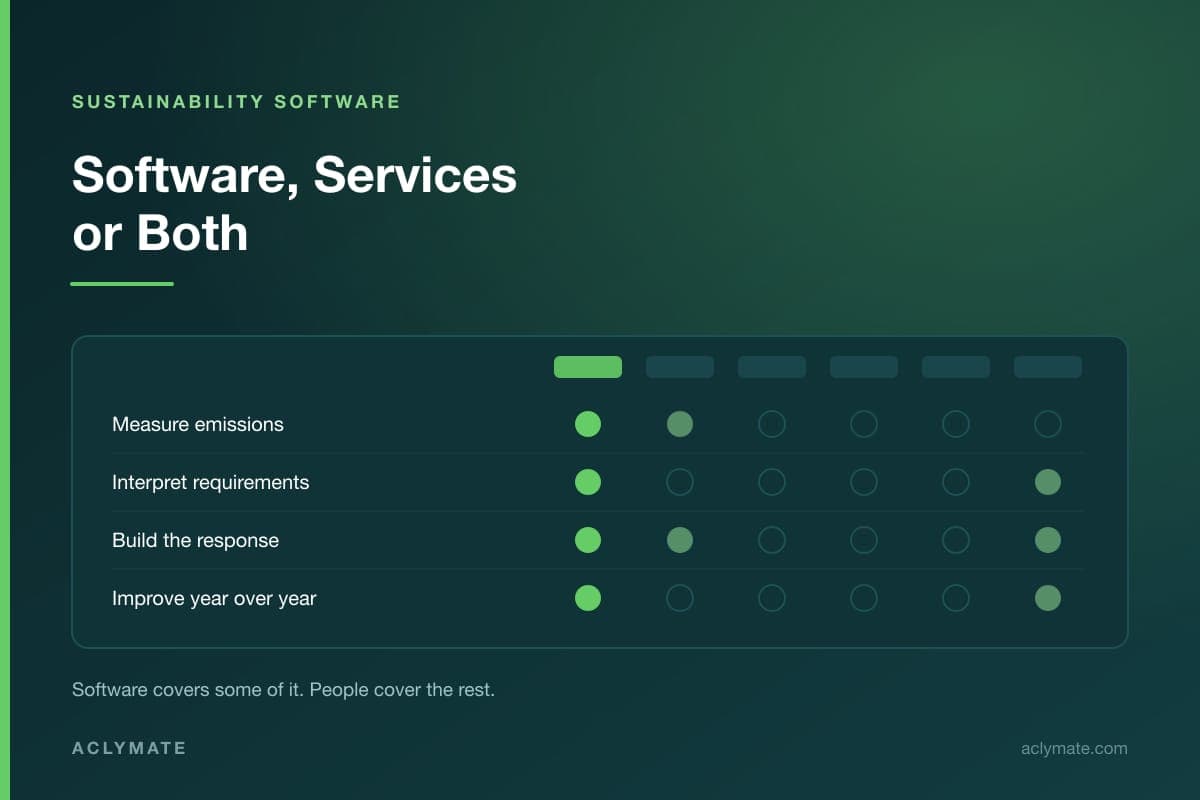
Compare sustainability software and consulting for automotive suppliers and learn when combining technology, AI, and expert support delivers the best results.
Read Article
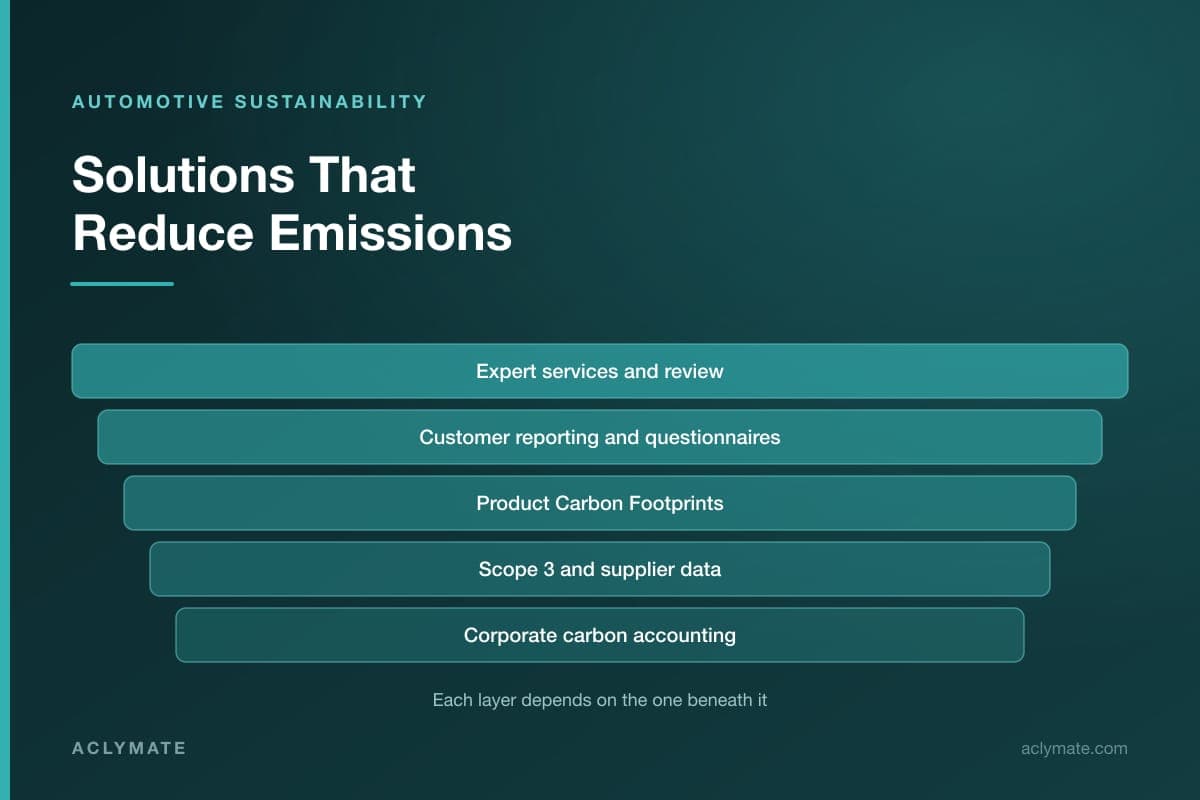
Explore practical automotive sustainability solutions for carbon accounting, Scope 3, supplier data, product footprints, reporting, and emissions reduction.
Read Article
Explore automotive sustainability initiatives for reducing emissions, improving supplier performance, measuring product footprints, and meeting environmental goals.
Read Article
Talk with a Sustainability Expert, see a demo, or start free to put the Aclymate platform and experts to work for your team.