← Back to Insights
Aclymate Team
August 20, 2026
7 min read
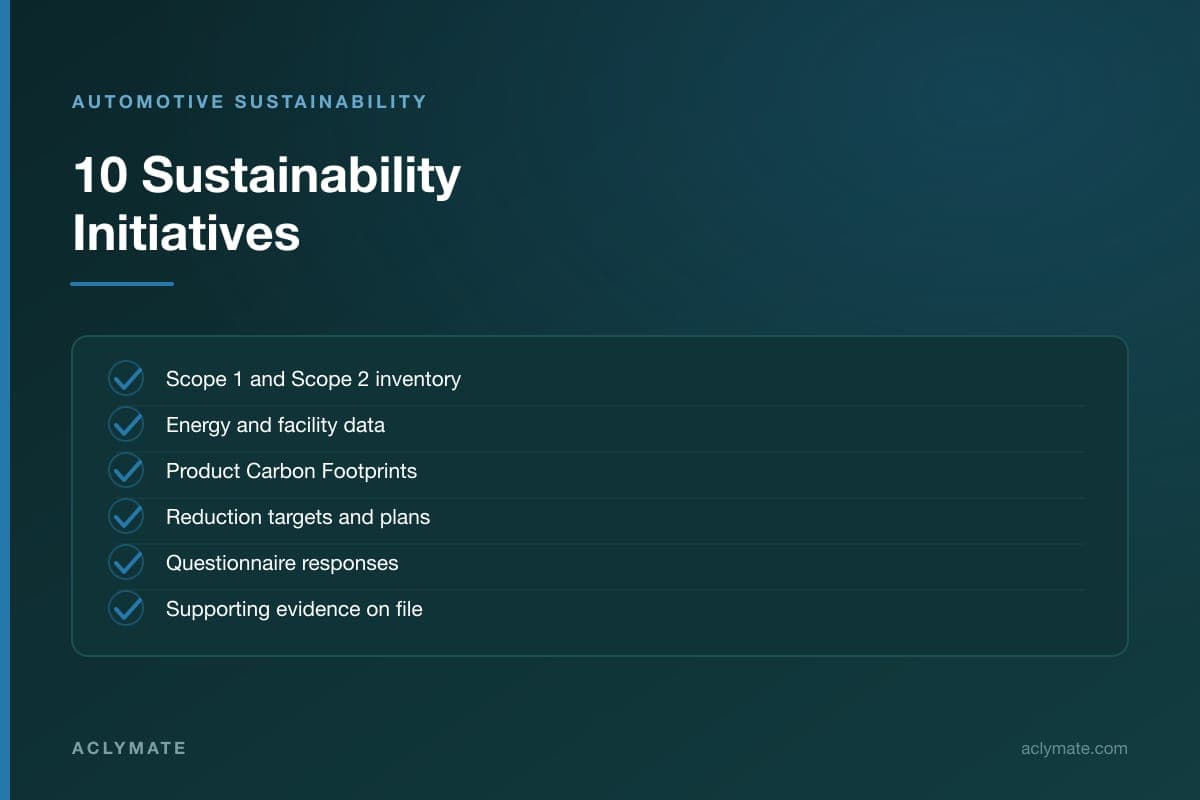
Automotive sustainability initiatives are the specific programs companies run to reduce emissions and environmental impact — carbon accounting, renewable energy, efficiency, supplier engagement, product footprints, materials, logistics, waste, and reduction targets.
The list below is not a menu to work through in order. Most automotive companies find that two or three of these carry the majority of the available reduction, and the rest are secondary. Which two or three depends entirely on what the business actually does.
A stamping plant's answer is different from a machine shop's answer, which is different from a Tier 1 systems integrator's answer. The only way to know is to measure first.
Everything else on this list depends on this one.
A corporate carbon inventory covers Scope 1 (fuel burned on site, company vehicles, refrigerants), Scope 2 (purchased electricity and energy), and Scope 3 (purchased materials, freight, travel, waste, and the rest of the value chain).
For most automotive suppliers, the first inventory is more accessible than expected. Utility bills, fuel purchases, and the general ledger carry most of what Scope 1 and Scope 2 require.
The reason to do this first is not reporting. It is that without it, every other initiative is a guess about where the emissions are. Companies routinely discover that the thing they assumed was their biggest impact is third on the list.
Aclymate's Navigator builds this inventory from data a business already has.
Purchased electricity is frequently the largest single line in a manufacturer's Scope 1 and 2 footprint, particularly for machining, injection molding, and other electricity-intensive processes.
The options generally run in this order of difficulty:
Two cautions worth stating plainly. First, renewable procurement changes Scope 2 but does nothing for Scope 1 or Scope 3 — and for a supplier whose customers are asking about purchased materials, Scope 3 may be the number under scrutiny. Second, how a renewable claim is documented matters as much as making it; customers and assessments increasingly ask for the evidence.
Efficiency is often the initiative with the best return, because it reduces emissions and cost simultaneously.
Common opportunities in automotive facilities:
None of this is new to a good operations team. What is new is that the resulting reduction now has reporting value alongside its cost value.
For companies that purchase significant materials or components, Scope 3 usually dwarfs Scope 1 and 2 combined.
Reducing it means working on:
This is slow work, because it touches engineering, procurement, and qualification rather than facilities. It is also where the largest reductions usually sit. See automotive supply chain sustainability for how this plays out across tiers.
Before you can decarbonize a supply chain, you need to know what is in it.
Supplier engagement covers the practical mechanics: requesting emissions data, following up when it does not arrive, assessing whether what came back is usable, and helping suppliers who genuinely do not know how to produce it.
Two principles make this work:
Supplier & Scope 3 Data Support handles the collection and chasing work directly.
A Product Carbon Footprint answers a different question from the corporate inventory: what emissions are attached to this specific part?
This is now a routine automotive customer request. The Automotive Industry Action Group has been building supplier education specifically for companies that have been asked for PCF data or expect to be. AIAG: Product Carbon Footprint
For a supplier, PCFs are both a reporting obligation and a design tool — once you can calculate a part's footprint, you can test whether a material substitution or process change actually improves it.
The Product Footprint Pack connects BOMs, materials, suppliers, and transportation into part-level numbers. For the method itself, see how to calculate a PCF for an automotive part.
Material choice is one of the few levers that changes a product's footprint structurally rather than incrementally.
Typical directions:
The constraint is qualification. In automotive, a material change is an engineering change, with all the validation that implies. This is why material initiatives are usually tied to new programs rather than retrofitted into running production.
Automotive materials often travel a long way before becoming a finished part — mill to processor, processor to component manufacturer, component manufacturer to finisher, finisher to assembly.
Reduction options include:
Expedited freight deserves specific attention. It is usually driven by a quality or scheduling failure upstream, which means the carbon reduction and the operational fix are the same project.
Scrap is material that carried a full embedded footprint and then did not become a product.
That reframing is useful: in a machining operation where a large share of the billet becomes chips, the emissions associated with scrap can rival the emissions of the process itself.
Initiatives here include:
A target turns a set of activities into a program.
In automotive, targets increasingly arrive from customers rather than being set purely internally. An OEM with its own reduction commitment may ask suppliers to set one, report progress, or demonstrate a plan.
Suppliers Partnership for the Environment has developed shared carbon reporting and reduction guidance with automakers and suppliers, which is one indication of how much this is converging on common expectations rather than one-off requests. Suppliers Partnership: supplier carbon guidance
A credible target needs three things: a measured baseline, a stated boundary (which scopes are included), and named initiatives that add up to the number. A target without the third element does not survive a customer conversation.
A practical sequence for most automotive suppliers:
For the broader context on where these initiatives fit, see our guide to sustainability in the automotive industry, and sustainable automotive solutions for the tooling side.
Aclymate combines software with sustainability experts, which suits automotive suppliers that need real capability without building a sustainability department.
See the Automotive & Transportation page for how this applies across the value chain.
Automotive sustainability initiatives are the specific programs companies use to reduce environmental impact: corporate carbon accounting, renewable energy, energy efficiency, supply chain decarbonization, supplier engagement, Product Carbon Footprints, sustainable materials, freight and logistics reduction, waste and circularity, and formal carbon reduction targets.
Start with corporate carbon accounting. Until a company has measured Scope 1, 2, and 3, every other initiative is a guess about where emissions actually sit. Companies frequently find their assumed largest impact ranks third. After measurement, energy efficiency is usually the best return because it cuts emissions and cost together.
No. Renewable electricity procurement reduces Scope 2 emissions only. It does not affect Scope 1 emissions from natural gas and on-site fuel, and it does not affect Scope 3 emissions from purchased materials and components. For suppliers whose customers ask about purchased materials, Scope 3 may be the figure under the most scrutiny.
Scrap is material that carried a full embedded carbon footprint through extraction, processing, and transportation, and then did not become a product. In machining operations where a large share of the billet becomes chips, emissions associated with scrap can rival emissions from the manufacturing process itself, making yield improvement a carbon initiative.
Three things: a measured baseline rather than an estimate, a clearly stated boundary saying which scopes are included, and named initiatives that add up to the committed reduction. A target with a number but no supporting initiatives generally does not survive a detailed customer conversation or an assessment review.
Common approaches include shifting longer domestic lanes from truck to rail, consolidating loads and improving trailer utilization, sourcing materials regionally to shorten distances, reducing expedited and air freight, and selecting carriers on fleet efficiency. Expedited freight is often worth targeting first because it usually signals an upstream quality or scheduling problem.
Because a material change is an engineering change, requiring validation, testing, and customer approval. That is why material substitutions such as recycled content or lower-carbon steel are usually introduced with new vehicle programs rather than retrofitted into running production, even when the carbon benefit is clear.
Usually two or three. Most automotive companies find that a small number of initiatives carry the majority of available reduction, and the rest are secondary. Which ones depends on what the business actually does, which is why measurement comes before initiative selection rather than after it.
Get Aclymate's practical sustainability content delivered weekly.
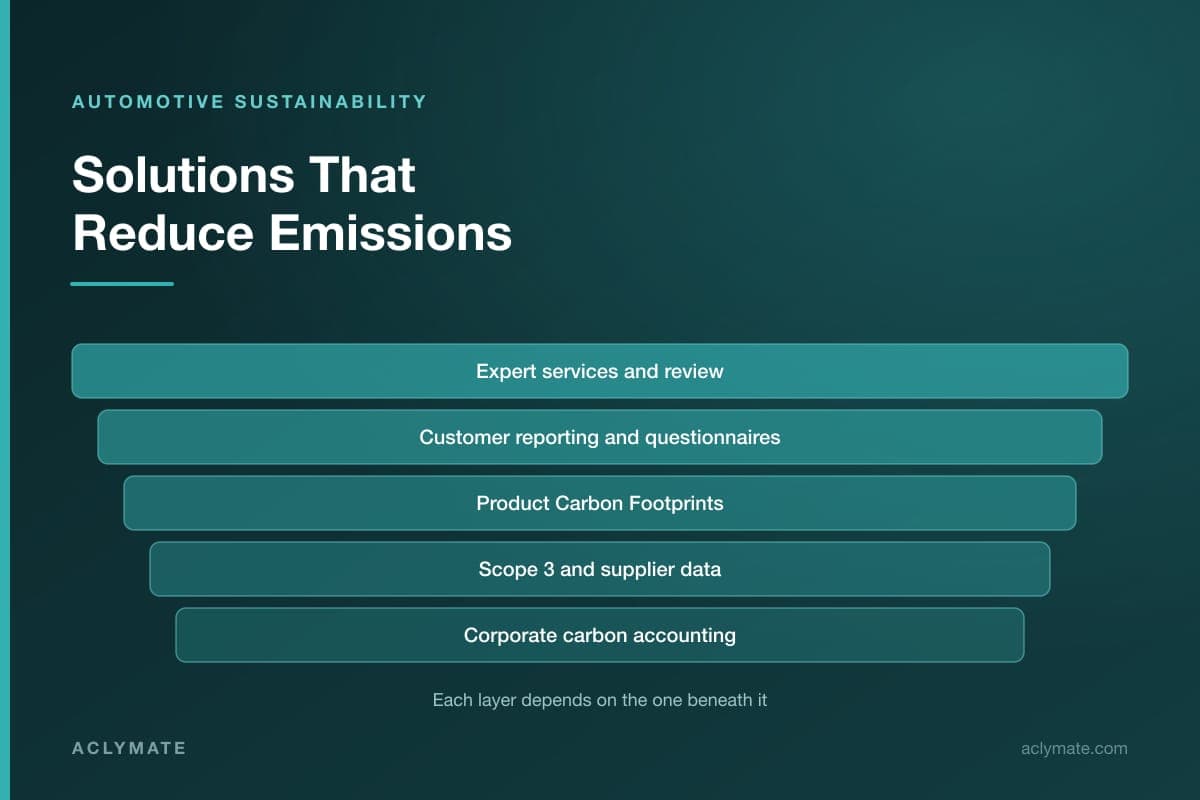
Explore practical automotive sustainability solutions for carbon accounting, Scope 3, supplier data, product footprints, reporting, and emissions reduction.
Read Article
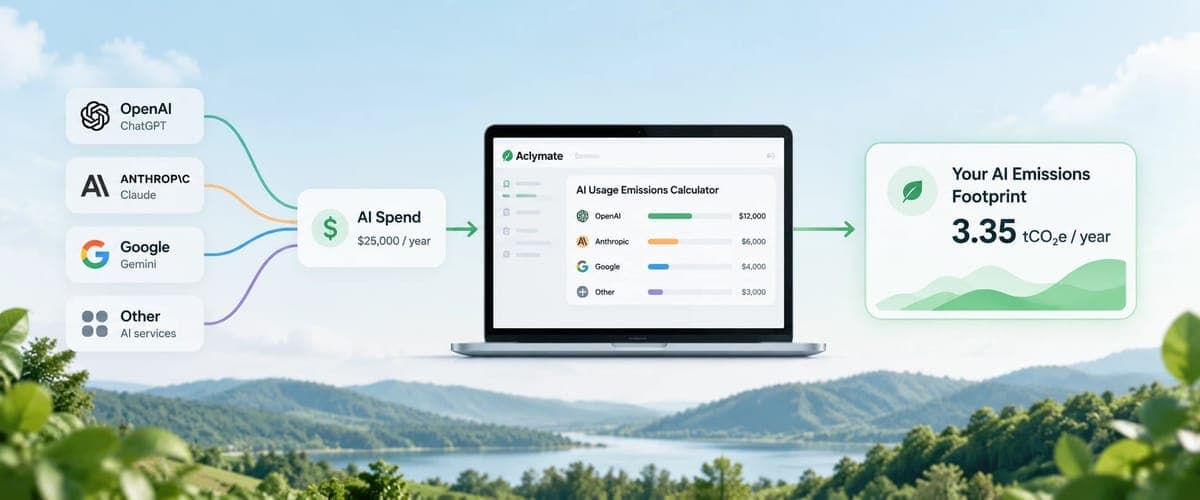
AI carbon emissions are becoming a new consideration for companies adopting ChatGPT, Claude, Gemini, Copilot and other artificial intelligence tools. Here’s how Aclymate estimates the carbon emissions from a company’s AI usage today—and how we expect the methodology to improve as AI providers release better usage and emissions data.
Read Article
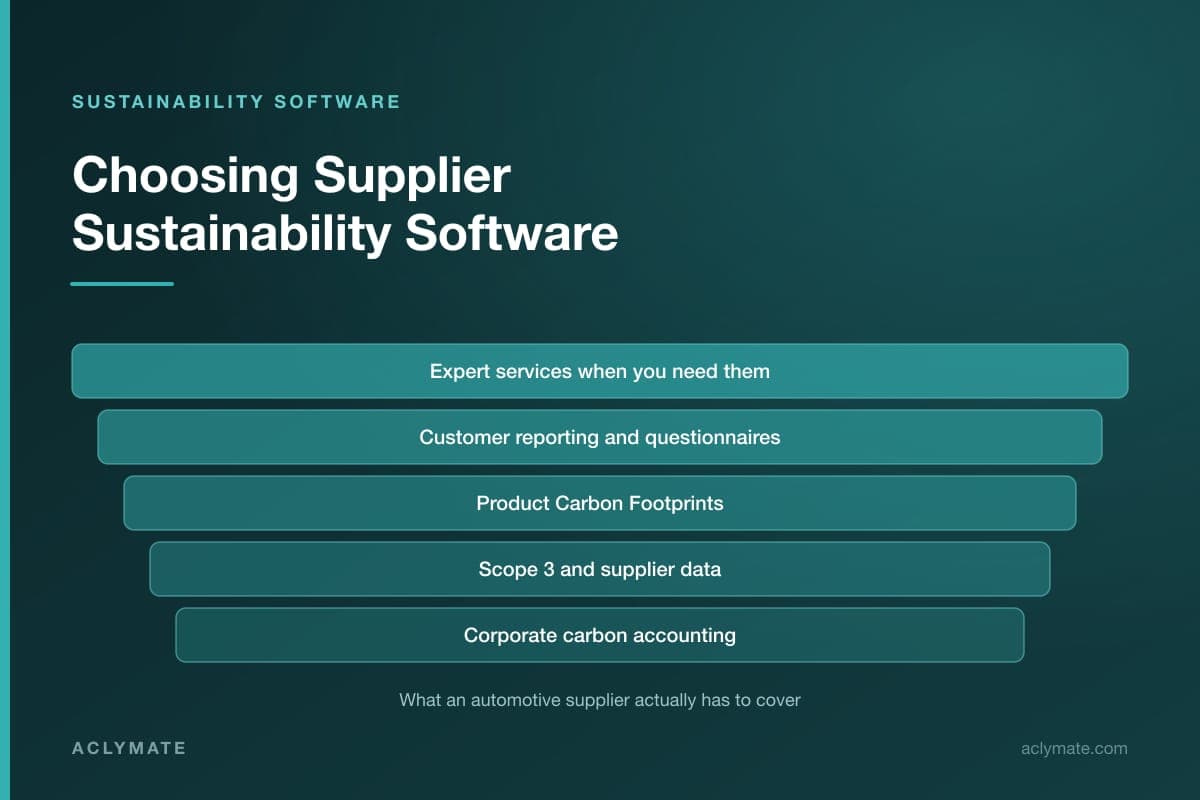
Learn how to choose automotive sustainability software for carbon accounting, Scope 3 supplier data, product footprints, customer reporting, and sustainability management.
Read Article
Talk with a Sustainability Expert, see a demo, or start free to put the Aclymate platform and experts to work for your team.