.jpg)
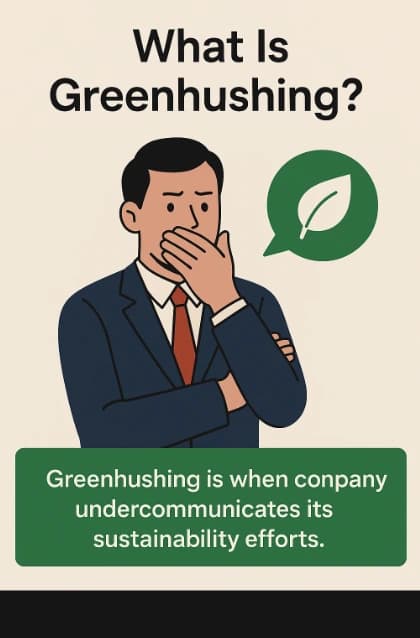
Greenhushing represents the practice of companies deliberately staying silent about their environmental initiatives and sustainability achievements. Unlike greenwashing, which involves making exaggerated or misleading environmental claims, greenhushing involves avoiding environmental communication altogether, even when companies have legitimate sustainability efforts to share. Legal action can be initiated against companies by consumer groups, activist organizations, and even their own directors over false or insufficient climate strategies, further influencing their communication choices.
This concept emerged as organizations began recognizing the risks associated with environmental transparency. While greenwashing focuses on over communication of environmental benefits, greenhushing reflects a strategic decision to undercommunicate genuine environmental performance. The phenomenon gained particular prominence following high-profile greenwashing lawsuits and increased regulatory scrutiny of company claims about environmental responsibility.
According to the 2025 State of Supply Chain Sustainability report by MIT and CSCMP, 80 % of companies say sustainability is “important or extremely important” for their long-term success. Yet, for all this professed commitment, many companies remain surprisingly quiet about their efforts — a phenomenon known as greenhushing.
Greenhushing occurs when organizations engage in genuine environmental action but choose not to publicize their initiatives. Unlike greenwashing, which exaggerates or fabricates sustainability claims, greenhushing represents the opposite: real progress that goes unrecognized, uncelebrated, and often unshared.
The MIT/CSCMP report highlights a difference between companies with public sustainability goals and those without:
This gap illustrates a central driver of greenhushing: when companies don’t commit publicly, even robust internal action often remains invisible. Without public accountability, sustainability work can quietly exist behind closed doors.
A major reason companies hesitate to communicate their efforts lies in the complexity of Scope 3 emissions — the indirect emissions from suppliers, transportation, and product use. According to the report:
Even when companies are taking meaningful steps to reduce emissions, these data challenges make them reluctant to share publicly. Greenhushing thrives in this space; progress is happening, but uncertainty keeps it quiet.
Beyond data challenges, firms face additional reasons for silent sustainability:
Together, these internal and external challenges create a perfect environment for companies to act without broadcasting their actions.
The primary motivation behind greenhushing is the fear of being accused of greenwashing, which can severely damage a company’s brand reputation and erode stakeholder trust. The infamous Volkswagen emissions scandal serves as a cautionary example, illustrating how misleading environmental claims can lead to costly legal and reputational consequences. As a result, even companies with legitimate environmental progress hesitate to publicize their efforts.
Regulatory uncertainty further complicates matters. The Securities and Exchange Commission’s (SEC) evolving climate disclosure rules, alongside the EU’s Corporate Sustainability Reporting Directive (CSRD), impose complex and demanding reporting requirements. Many companies feel unprepared to meet these standards confidently, fearing that premature or incomplete disclosures might trigger penalties or lawsuits.
The ongoing development of global standards by bodies like the International Sustainability Standards Board (ISSB) adds another layer of uncertainty. Without clear, universally accepted guidelines, companies often prefer to wait for regulatory clarity rather than risk non-compliance.
Investor activism and climate litigation also play significant roles. Since 2021, climate-related lawsuits have resulted in over $2 billion in settlements, creating a cautious atmosphere where companies minimize their environmental claims to avoid future legal exposure.
Additionally, some organizations suffer from "perfectionism paralysis," believing their sustainability efforts are insufficiently comprehensive to share publicly. This all-or-nothing mindset prevents them from communicating incremental environmental progress that could demonstrate meaningful environmental stewardship.
Competitive concerns are another factor. Firms worry that revealing detailed sustainability strategies or innovative sustainable business practices might erode their competitive advantage by exposing proprietary information to rivals.
Greenhushing may seem harmless, but silence comes at a cost. When companies fail to communicate real sustainability efforts:
The MIT/CSCMP report underscores a crucial insight: public goals drive transparency and operational integration. Greenhushing limits both visibility and impact, turning meaningful sustainability action into missed opportunity.
Key Takeaway:
Greenhushing isn’t about lying; it’s about staying quiet while doing the work. For businesses aiming to make real environmental progress, the challenge isn’t only implementing sustainable practices; it’s finding the courage to communicate them authentically.
Companies should focus on communicating material environmental initiatives backed by verifiable environmental data, use science-based targets, and acknowledge both progress and limitations honestly. Working with third-party verification providers and following established frameworks like TCFD can help ensure credible environmental communication. The key is building trust with various stakeholders through consistent, accurate environmental reporting that reflects actual environmental performance rather than aspirational goals or marketing messages.
Greenhushing itself isn’t illegal, but it can become problematic when companies are required to disclose material environmental information under regulations like the SEC climate rules or Corporate Sustainability Reporting Directive. In these cases, staying silent may constitute non-compliance with mandatory disclosure requirements. Additionally, greenhushing can create risks for investment decisions and stakeholder trust that may have legal implications under fiduciary duty or securities law requirements.
Greenwashing involves making exaggerated or false environmental claims to appear more sustainable than reality, while greenhushing involves deliberately staying silent about legitimate environmental efforts. Both practices can mislead stakeholders, but in opposite directions - one through overcommunication and one through under-communication. Greenwashing typically involves marketing-focused environmental claims that don’t reflect actual environmental performance, while greenhushing reflects genuine sustainability efforts that companies choose not to communicate due to risk concerns.
Greenhushing can limit investors’ ability to accurately assess companies’ environmental performance and risks, potentially leading to undervaluation of companies with strong but un-communicated sustainability practices. This is particularly problematic for ESG-focused investors who rely on environmental data for investment decisions. The lack of environmental transparency also makes it difficult for investors to identify companies with competitive advantage in sustainable business practices or assess long-term environmental risks that could affect financial performance.
Mandatory ESG reporting will likely reduce greenhushing by requiring disclosure of material environmental information, but companies may still engage in selective communication or technical compliance that meets regulatory requirements without fully transparent stakeholder communication. The effectiveness depends on enforcement and reporting quality standards. Companies might fulfill disclosure requirements while still avoiding proactive environmental communication, suggesting that mandatory reporting alone may not completely address the transparency challenges created by greenhushing.