← Back to Insights
Aclymate Team
March 14, 2025

Eating sustainably is one of the best ways to reduce our carbon footprint. By tweaking classic recipes with sustainable ingredients, such as locally sourced produce, plant-based alternatives, and ethical meat choices, we can enjoy delicious meals while being kind to the planet. Small changes in our diets, such as choosing whole grains over refined ones, reducing food waste, and selecting eco-friendly protein sources, can make a significant impact on the environment.
By making these simple ingredient swaps, we reduce carbon emissions, conserve water, and promote biodiversity. Whether you're looking for a meatless meal, a way to use up leftovers, or an alternative to resource-intensive foods, these recipes provide inspiration while staying delicious and nutritious. Here are five climate-friendly recipes that put a sustainable spin on everyday favorites.

Stuffed peppers are a classic comfort food, and swapping ground beef for protein-packed chickpeas and fiber-rich brown rice makes them a more sustainable choice without sacrificing flavor. Chickpeas require significantly less water to produce than beef, and brown rice provides more nutrients than white rice.

Instead of traditional beef tacos, this version uses hearty sweet potatoes and black beans, reducing carbon emissions while maintaining bold flavors. Sweet potatoes are a more sustainable crop, requiring less water than many other staple foods.

For those who enjoy meat in their meals, choosing pasture-raised, organic, or local chicken ensures a lower environmental impact while still enjoying a protein-rich dish. Supporting ethical poultry farms reduces reliance on factory farming, which contributes significantly to greenhouse gas emissions.

Fritters are a great way to use up extra vegetables, and incorporating breadcrumbs made from stale bread helps reduce food waste. This recipe minimizes food waste while offering a crispy, savory snack.

Using barley instead of traditional risotto rice reduces environmental impact while adding extra fiber and nutrients. Arborio rice, typically used in risotto, has a high water footprint, while barley is more drought-resistant and requires fewer resources to grow.
Who would have thought that a plate of food might contribute to a better world? Choosing whole grains, consuming less meat, or utilizing leftovers are just a few small, thoughtful changes that can have a large impact. Eating sustainably benefits local communities and your health in addition to the environment.
One delicious meal at a time, you're making significant progress toward a more sustainable future by helping farmers, cutting down on food waste, and making better decisions in the kitchen.
Get Aclymate's practical sustainability content delivered weekly.

AI is transforming carbon credit verification through satellite monitoring, automated analysis, and anomaly detection. But can technology solve the voluntary carbon market’s credibility problem? Discover the limitations of AI verification and how businesses can evaluate carbon credits while keeping emissions reductions ahead of offsetting.
Read Article

AI is creating new opportunities for businesses, but it also comes with an environmental cost. Carbon offsets can help address some of those emissions, but businesses need to understand what they are offsetting, how offsets work, and why measuring and reducing emissions should come first.
Read Article
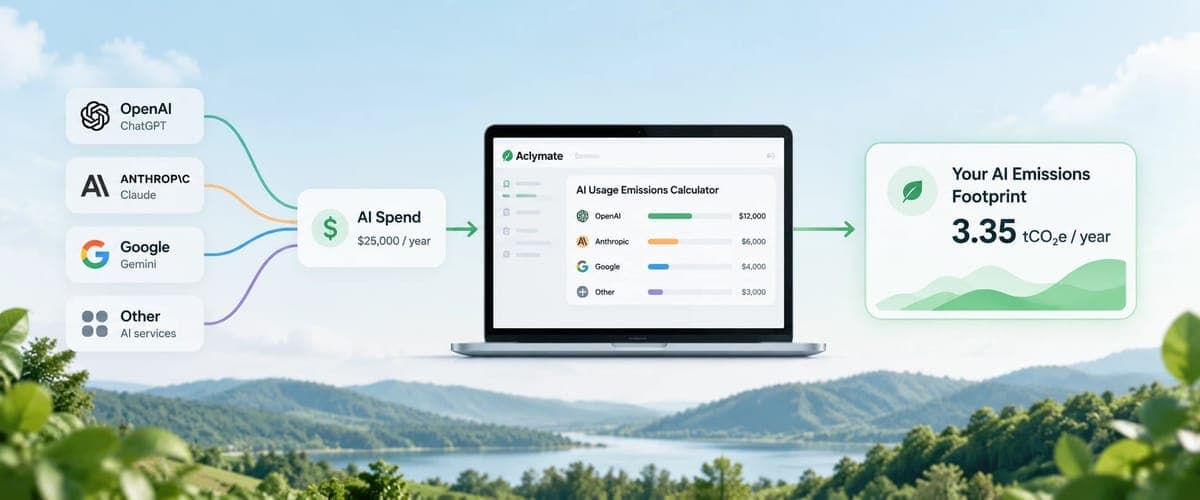
AI carbon emissions are becoming a new consideration for companies adopting ChatGPT, Claude, Gemini, Copilot and other artificial intelligence tools. Here’s how Aclymate estimates the carbon emissions from a company’s AI usage today—and how we expect the methodology to improve as AI providers release better usage and emissions data.
Read Article
Talk with a Sustainability Expert, see a demo, or start free to put the Aclymate platform and experts to work for your team.