Last year when I attended the Circularity Conference last here in Denver, I met a lot of sustainability leaders that worked in apparel. It was interesting and I learned a lot, but I was left a little disappointed with how accepting many of them were of fast fashion. Admittedly, it was a begrudging acceptance, one where they felt a little defeated about human nature and that what now exists will always exist.
To a certain extent - human nature is what it is. But it kind of blew me away how the elegantly dressed people I spoke with, exhibiting more timeless fashion tastes, were telling me about how that isn’t how people shop.
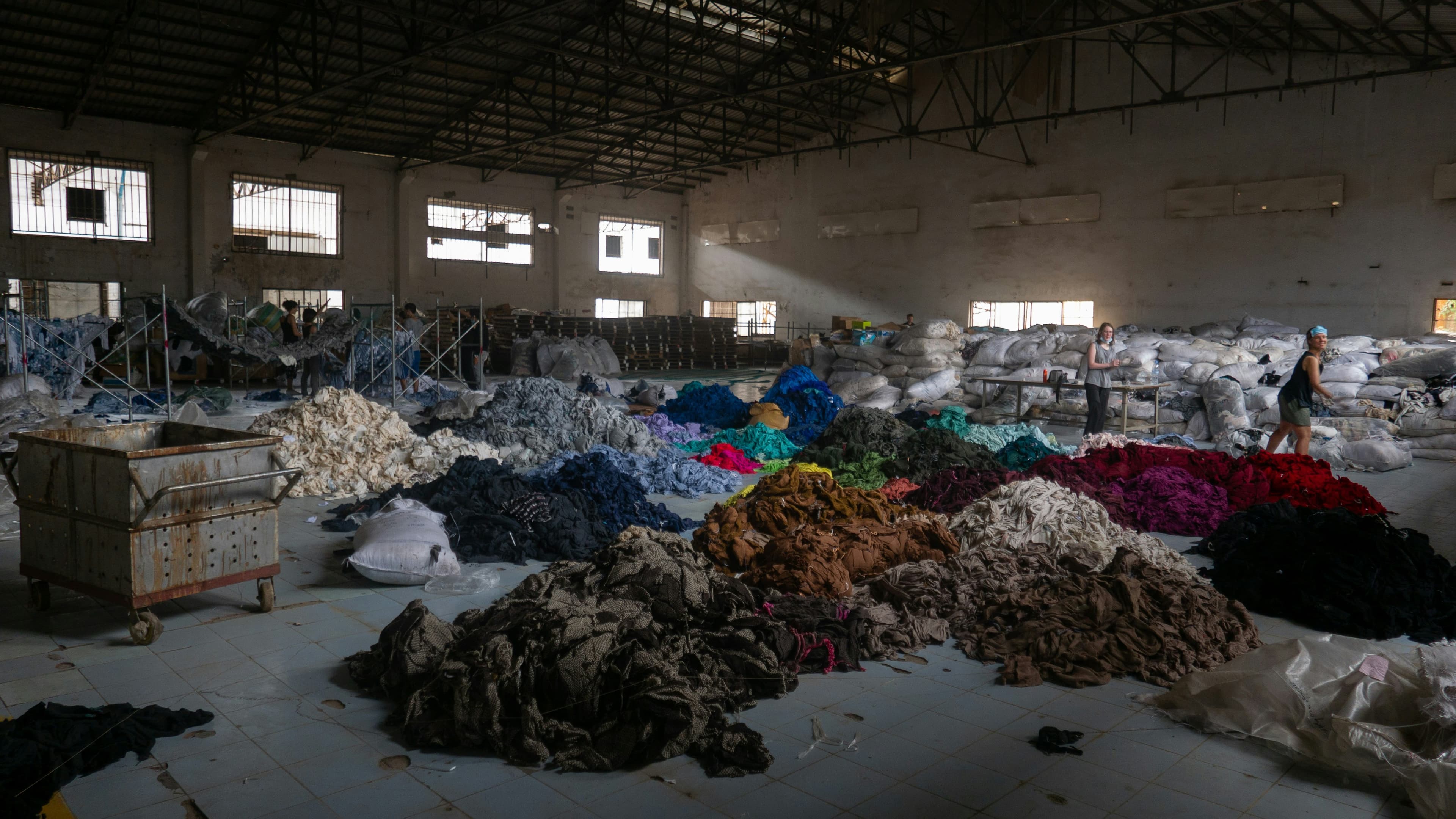
It also was a little bewildering, because fast fashion has been facing growing headwinds for the last decade. ASOS has seen its value collapse. So has Boohoo. Even some giants in the space - like Shein & H&M - have seen their valuations suffer pretty heavily. It’s not all bad news for fast fashion - the space appears to still be growing and Zara/Inditex seems to be doing well - but acting like the three things we can count on are death, taxes, and destructive fast fashion is pretty defeatist.
So what caused people in apparel to accept fast fashion as inevitable?
I don’t think that they fully appreciated that fast fashion was born from a fading, never-again gap in international trade and supply chain regulations that created financial opportunities at the expense of human and environmental well-being.
The opening of the gap was the introduction of hyper-globalization. Beginning in 1991 with the collapse of the Soviet Union and accelerating in 2001 with China joining the World Trade Organization, world trade exploded. As a student at the U.S. Naval Academy around 2000, I was first introduced to the effect of global trade with a map illustrating all of the ships at sea in the absence of any map. I could clearly see the boundaries of the world’s continents and it highlighted how important global trade was to the economy and to our future.

Globalization has had a lot of consequences. It brought one billion people out of extreme poverty, including 800 million in China alone. In a time of stagnating wages and expanding wealth inequality, it gave Americans and other western citizens low-cost goods. It intertwined the fate of nations that would have been traditional rivals and expanded the Pax Americana for at least a decade.
But it also coincided with huge environmental and humanitarian issues. 50% of all climate emissions for all of human history were emitted during the peak of globalization. American factories were shuttered with neck-snapping speed and polluted our political future. Countries with low-cost labor saw a rapid expansion of economic opportunities, but with poor governance structures, they also correspondingly saw serious increases in human rights abuses. Whether these abuses were intentional like China’s abuse of the Uyghur people, conveniently ignored like the child labor in cocoa and cobalt in Africa, or even the tragic but somehow comedic sweatshops of Bangladesh.

The reason that abusing people can even have a chance at a laugh is that we all understand and have internalized how much globalization is a part of our lives. And it is the reason that those Circularity folks seemed so defeated to me.
But what they’re missing is that the circumstances that brought us globalization are on the wane. And with it, the fortunes of fast fashion.
At the core, the opportunity that globalization brought about was that with poor governance, cheap fossil fuels, and huge gaps in the cost of labor could be exploited for profit. That an increase in supply chain logistics was made economical by the opportunity for earnings. The world optimized for efficiency and cost, but traded away resiliency, the environment, and human well-being.
Then the pandemic happened. We grew concerned about things as basic as toilet paper.
Suddenly those long, efficient, but non-resilient supply chains were a liability. The first headwind is often the strongest gust.
But the headwinds haven’t stopped. In the developing world, governance is improving, labor costs are increasing, and fossil fuels are increasingly being phased out in our climate-constrained future. It is no longer as cost-advantaged to do work overseas.
Add in a public that is increasingly aware of products that too often make them feel disgusted. People will buy from a place of ignorance or need, but given the knowledge and the choice, and they’ll avoid it. Moreover, in an economy increasingly bifurcated between those with disposable income and those without, it is the people with buying power who most prioritize reduced climate and human impact.
Then layer on a growing set of regulations. This includes Europe’s CSRD on climate, the United States’ Uyghur Forced Labor Prevention Act on Chinese human trafficking, Canada’s Supply Chains Act on forced labor more broadly, and suddenly companies find that avoiding the “externalities” of their decisions are no longer all that external.
Finally, top it all off with the United States electing an avowed anti-globalist, who has enacted unpredictable and unprecedented tariffs and closed the de minimis importing loophole. Though trade agreements between other nations have expanded as a result, making access to the world’s largest and easily most consumptive economy has caused the industry real challenges.
There’s a lesson here.
In the near future, your supply chain - in apparel and elsewhere - is going to be either your competitive advantage or your source of greatest risk.
That might not be totally new, but this iteration is different because it goes well beyond mere delivery schedules and cost-competitiveness. It involves producing things that people will use repeatedly, doing it in a way that your kids are proud of, and producing it whenever possible in the communities and countries that will be consuming it.
It means moving away from disposability and thinking about re-usability. It means examining and minimizing the climate impacts of your products. It means ensuring that your offering isn’t cheap at the expense of a child’s future.
It means you need to know and empower your supply chain.
I have little tolerance for those who say it’s too hard. Large corporations have subdued entire nations to secure their supply chains. Not that I advocate for the illegal overthrowing of national governments for resources, but just to emphasize that when a company really wants to secure their supply chain, they can do massive things. Frankly, to not act is an excuse for why you want your business to lose.
And what’s to gain?

And most of all? You will be able to look at yourself in the mirror and the people around you will know and value your character.
I’ll end with a story.
In the twilight of my naval career, I attended over 200 military funerals in an official capacity. I thanked the family for their loved one’s service and presented a folded flag on behalf of a grateful nation.
Not once did I hear about how someone made a lot of money or could squeeze a margin. But every time, without fail, I would hear about the impact that the deceased had made on the world, for good and occasionally for bad.
I’d like to encourage you to live your life and run your work in a way that people are crying at your funeral, and not so you’re the punchline to a cold joke about cruel indifference.
The choice, of course, is yours.