← Back to Insights
Aclymate Team
June 29, 2026
10 min read
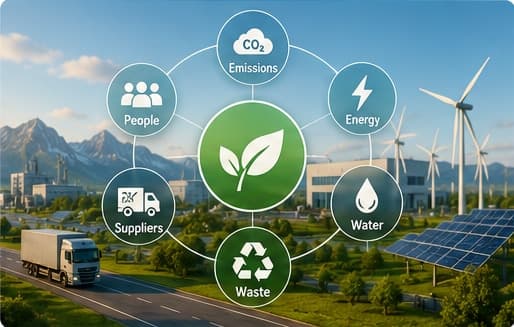
A business may need a climate consultant when sustainability, carbon accounting, or climate reporting becomes important but the company does not have the expertise, data, or internal capacity to manage it alone.
For many companies, the need starts with a customer request.
A buyer asks for emissions data. An RFP includes sustainability questions. A supplier questionnaire asks about Scope 1, 2, and 3 emissions. A leadership team wants to understand the company’s carbon footprint. A customer wants proof of sustainability progress. Someone asks whether the company is ready for CDP, EcoVadis, or another assessment.
Those requests can create urgency.
A climate consultant helps the company understand what is being asked, what data is needed, what gaps exist, and what to do next.
For growing businesses, a climate consultant can be especially useful when sustainability is starting to affect sales, procurement, customer trust, reporting, or leadership priorities.
A climate consultant helps businesses understand, measure, manage, and communicate their climate impact.
In practice, that often includes:
The GHG Protocol Corporate Standard is one of the most widely used standards for corporate greenhouse gas accounting and reporting. A climate consultant can help a company organize emissions measurement around recognized standards like this.
A climate consultant may work with leadership, finance, operations, procurement, facilities, sales, marketing, and sustainability teams to turn scattered sustainability needs into a practical plan.
Not every company needs a full internal sustainability team right away.
But there are clear signs that a business may need expert climate support.
One of the most common triggers is a customer asking:
“What is your carbon footprint?”
That question may sound simple, but answering it credibly requires data, methodology, and documentation.
A company may need to gather:
The EPA explains that an Inventory Management Plan helps organizations institutionalize a process for collecting, calculating, and maintaining greenhouse gas data.
A climate consultant can help create the first carbon footprint, document the approach, and prepare a customer-ready response.
Sustainability questions are increasingly appearing in RFPs, procurement reviews, supplier assessments, and vendor approval processes.
An RFP may ask:
These questions can directly affect sales opportunities.
A climate consultant can help sales, marketing, procurement, and leadership teams prepare stronger answers and avoid vague claims that are not backed by data.
Many companies receive sustainability questionnaires from customers, distributors, retailers, procurement teams, and supply chain partners.
These questionnaires may ask for:
CDP’s supply chain guidance explains that its supply chain module is for companies responding to the CDP climate change questionnaire at the request of one or more customers in CDP’s supply chain program: CDP Supply Chain Guidance.
A climate consultant can help determine which data is available, what still needs to be collected, and how to respond consistently.
A company may need a climate consultant when it needs to report emissions by scope.
Scope 1 emissions are direct emissions from sources the company owns or controls.
Scope 2 emissions come from purchased electricity, steam, heat, or cooling.
Scope 3 emissions are indirect emissions across the value chain, including suppliers, purchased goods and services, transportation, business travel, employee commuting, waste, product use, and other upstream or downstream activities.
The EPA provides guidance for Scope 1 and Scope 2 emissions inventorying, while the GHG Protocol’s Corporate Value Chain Scope 3 Standard helps companies account for emissions across the value chain.
Scope 3 is often the most difficult because it depends on data outside the company’s direct control.
A climate consultant can help identify which scopes and categories apply, collect data, apply emissions factors, and document assumptions.
Scope 3 supplier data often becomes important when customers or reporting frameworks ask companies to understand value chain emissions.
This can be difficult because supplier data may be incomplete, inconsistent, unavailable, or not yet reliable.
A company may need help answering questions such as:
A climate consultant can help prioritize suppliers, create data requests, use reasonable estimates, and build a process for improving data over time.
A company may need a climate consultant when it is preparing for a third-party assessment, disclosure, or sustainability questionnaire.
This may include:
CDP describes its question bank as part of an independent environmental disclosure system for companies and other organizations: CDP Question Bank.
EcoVadis says its rating methodology measures the quality of a company’s sustainability management system through the pillars of policies, actions, and results: EcoVadis methodology.
A climate consultant can help organize data, prepare documentation, identify gaps, and make sure emissions-related answers are credible and supportable.
Sometimes the need for a climate consultant starts internally.
Leadership may ask:
A climate consultant can help translate those questions into a practical climate strategy.
That strategy may include:
For companies setting longer-term climate goals, the SBTi Corporate Net-Zero Standard provides guidance for setting science-based net-zero targets.
A strong climate strategy should not just describe ambition. It should explain what the company will do, who will own it, and how progress will be tracked.
Sustainability can affect sales when customers want proof, not vague claims.
Sales and marketing teams may need:
A climate consultant can help translate sustainability work into credible proof that sales and marketing teams can use responsibly.
This matters because unsupported climate claims can create credibility and reputational risk.
A consultant can help make sure claims are specific, evidence-based, and aligned with the company’s actual progress.
Climate work often crosses many departments.
Finance may own spend data. Operations may own facility information. Procurement may own supplier data. HR may own commuting or travel policies. Sales may own customer requests. Marketing may own sustainability claims. Leadership may own goals.
Without a clear process, the work can become scattered.
A climate consultant can help define:
This helps move sustainability work from ad hoc responses to a repeatable process.
A company may need a climate consultant when sustainability has become everyone’s side job and no one’s primary responsibility.
Common signs include:
A climate consultant can help create structure, clarify ownership, and keep the work moving.
For some companies, this means project-based consulting. For others, it may mean ongoing support or an outsourced sustainability department.
The right type of help depends on the problem you are trying to solve.
Many growing companies need all three types of support at different points.
Many companies wonder whether they need climate consulting or carbon accounting software first.
The answer is often both.
Software helps organize data, calculate emissions, store documentation, track progress, and prepare reports.
A consultant helps answer questions such as:
Software without expert guidance can leave teams unsure what to do.
Consulting without software can leave companies with static reports, spreadsheets, and manual work.
For growing companies, the best approach is often software plus expert support.
Aclymate gives growing businesses a practical way to manage climate and sustainability work without building a full internal sustainability department.
Instead of choosing between climate consulting and carbon accounting software, Aclymate combines both.
With Aclymate, companies can get:
Aclymate is built for lean teams that need to measure emissions, respond to customer requests, create credible proof, and keep moving.
CTA: Talk to a Climate ExpertSecondary CTA: Start Free
Aclymate helps growing businesses measure emissions, respond to customer requests, prepare reports, build climate roadmaps, and create credible sustainability proof.
Start with software, get expert support, and move forward with confidence.
Talk to a Climate ExpertStart Free
A business may need a climate consultant when customers, RFPs, suppliers, reporting frameworks, or leadership teams ask for emissions data, climate strategy, sustainability reports, or credible proof of climate progress.
Common signs include customer requests for a carbon footprint, RFP sustainability questions, supplier emissions questionnaires, Scope 3 data needs, CDP or EcoVadis preparation, sustainability reporting needs, and lack of internal expertise.
Yes, a climate consultant can help you understand what the customer is asking for, collect the right data, calculate emissions, document methodology, and prepare a credible response.
Many companies need help with Scope 3 because the data often comes from suppliers, purchasing, transportation, travel, waste, and other value chain activities outside direct company control.
A climate consultant can help with CDP response preparation, emissions data, climate risks, governance, targets, documentation, and improvement planning.
A climate consultant can support the environmental and emissions-related parts of EcoVadis preparation. Many companies also need broader sustainability consulting for policies, actions, results, and documentation.
Carbon accounting software helps organize and calculate emissions data. A climate consultant helps decide what data to use, how to document assumptions, what the results mean, and what actions to take next.
Yes. Aclymate combines carbon accounting software, climate consulting, sustainability consulting, reporting support, certification support, and ongoing program management for growing businesses.
Get Aclymate's practical sustainability content delivered weekly.
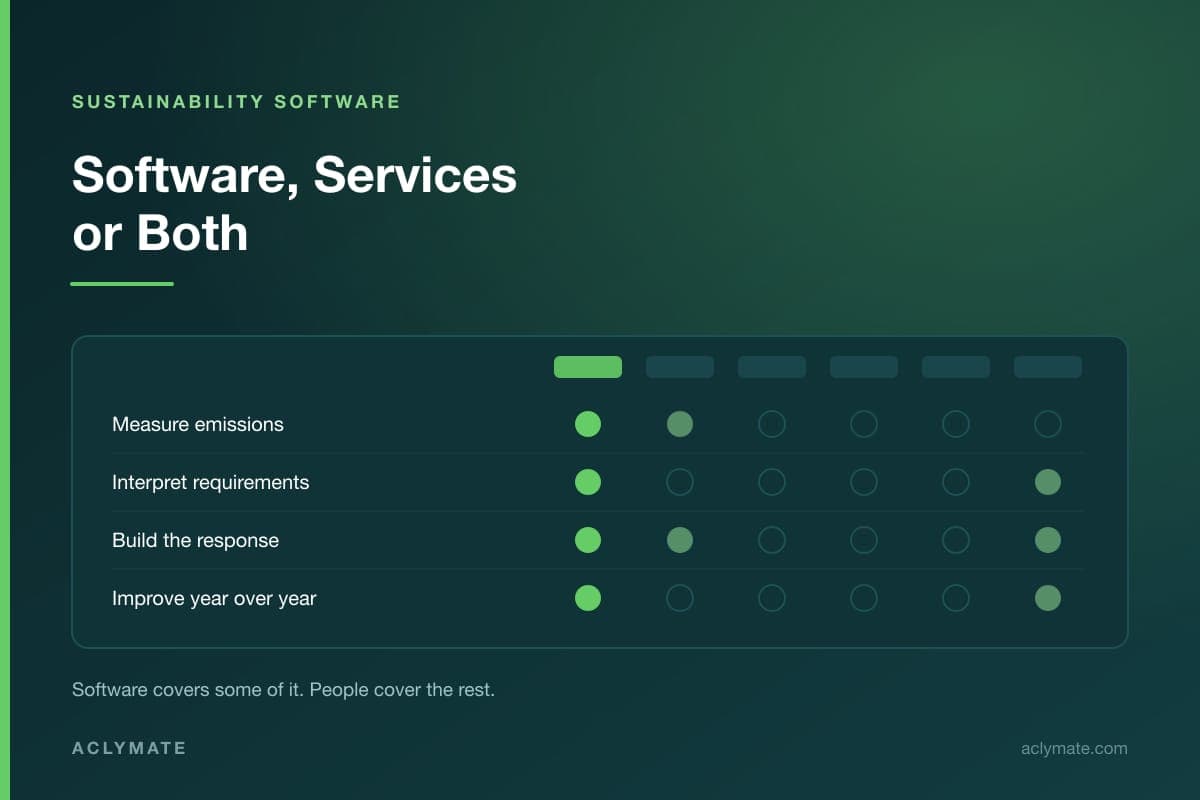
Compare sustainability software and consulting for automotive suppliers and learn when combining technology, AI, and expert support delivers the best results.
Read Article
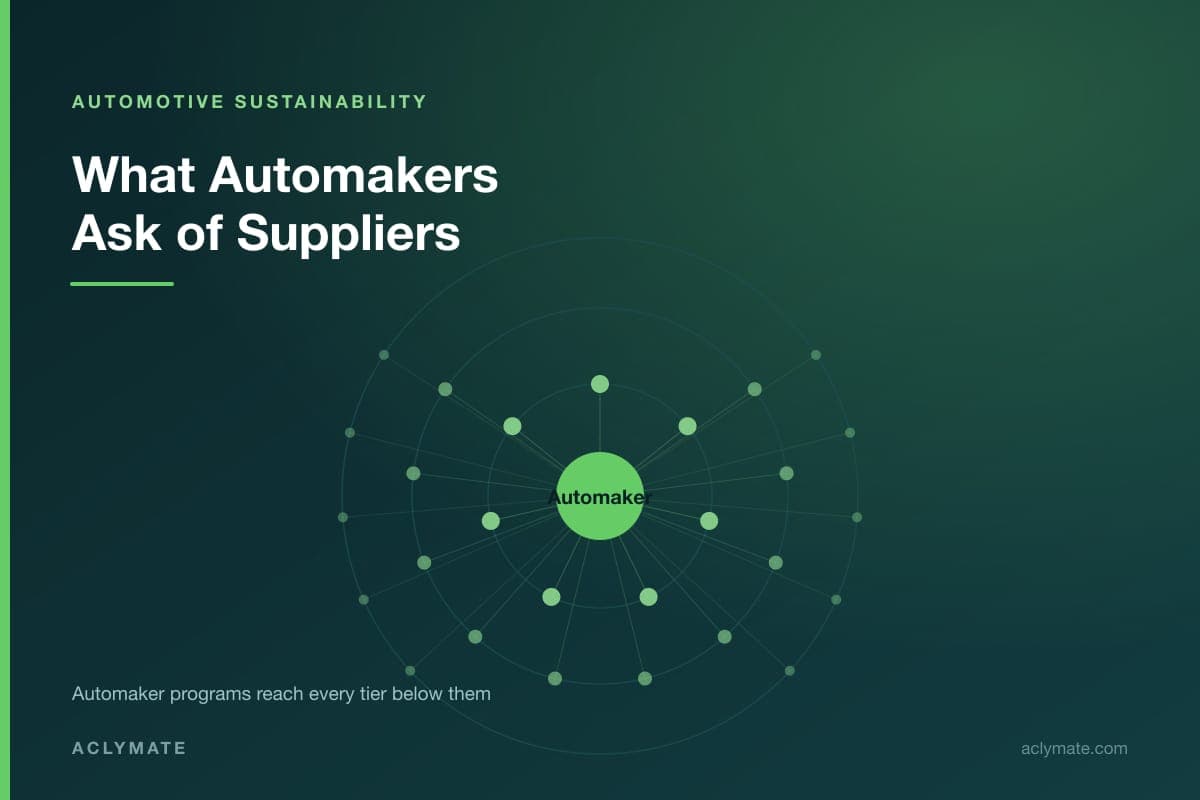
See how leading automakers approach sustainability and what their carbon, supply chain, reporting, and product requirements mean for suppliers.
Read Article
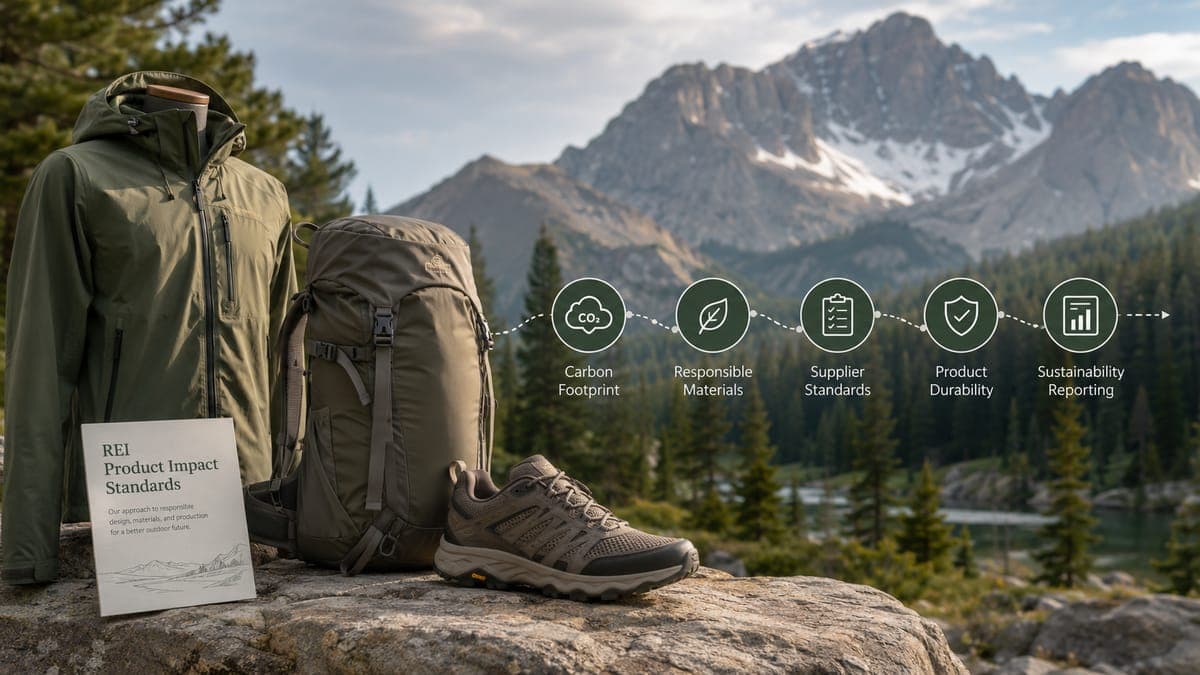
Learn REI sustainability requirements for brands and suppliers, including Product Impact Standards, reporting expectations and partner benefits.
Read Article
Talk with a Sustainability Expert, see a demo, or start free to put the Aclymate platform and experts to work for your team.