← Back to Insights
Aclymate Team
June 29, 2026
10 min read
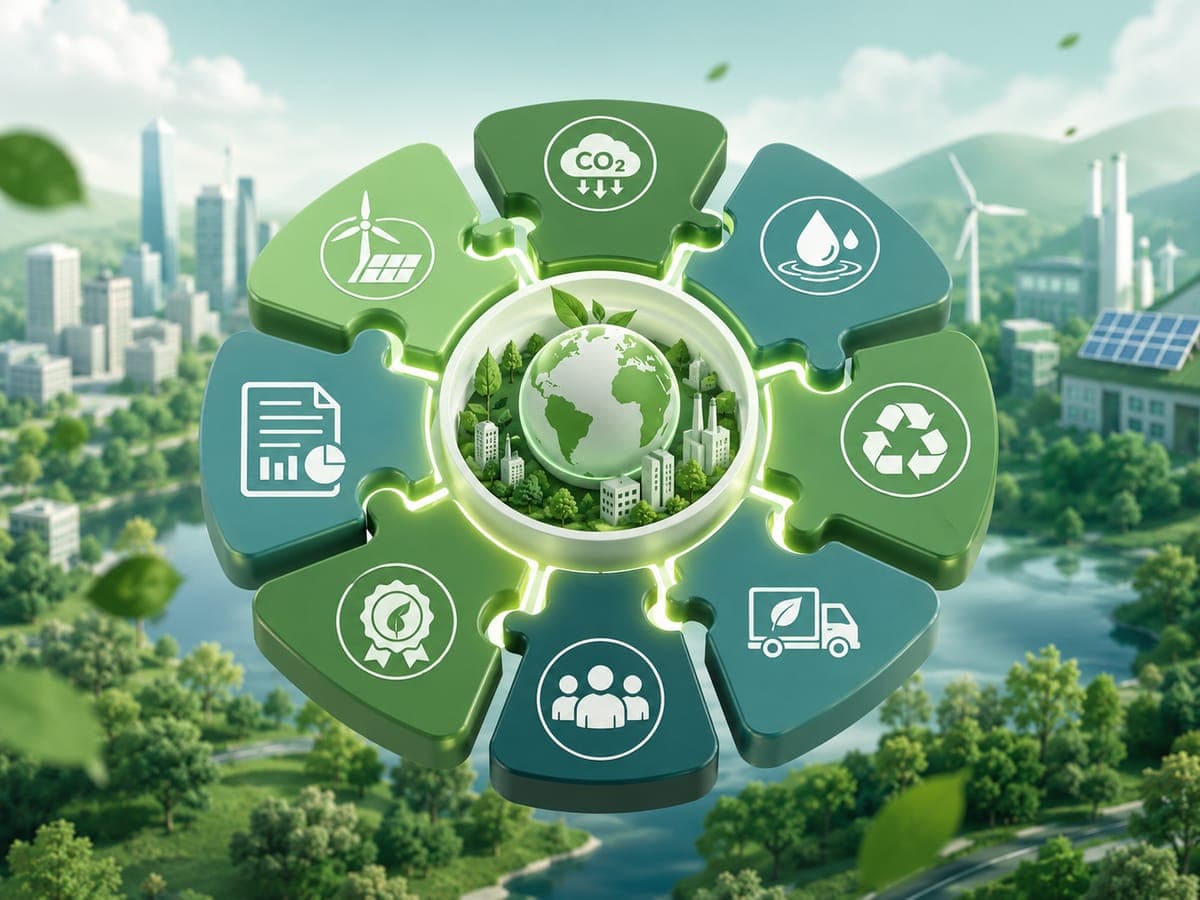
A sustainability consultant helps businesses improve their environmental, social, and governance performance while meeting customer, investor, regulatory, and market expectations.
For many companies, sustainability starts as a broad question: “What should we be doing?”
That question can come from leadership, customers, employees, investors, suppliers, regulators, or sales teams responding to RFPs. A company may need to measure emissions, reduce waste, improve supplier practices, prepare a sustainability report, respond to a customer questionnaire, or support a certification.
A sustainability consultant helps turn those needs into a practical plan.
They help businesses understand where they stand, identify gaps, prioritize actions, organize data, prepare reports, and communicate progress credibly.
For growing businesses, a sustainability consultant can be especially useful when sustainability is becoming important but the company does not yet have a full internal sustainability team.
A sustainability consultant is an expert who helps organizations improve sustainability performance and manage sustainability-related business requirements.
Sustainability consulting can include environmental, social, governance, climate, reporting, supply chain, and operational topics.
In a business setting, sustainability consultants commonly help with:
Sustainability is a broad field. The EPA describes sustainability as based on the idea that everything needed for survival and well-being depends directly or indirectly on the natural environment. That broad definition is one reason sustainability consultants often work across many departments and business functions: EPA sustainability overview.
A sustainability consultant may work with leadership, finance, operations, procurement, HR, facilities, legal, sales, marketing, and sustainability teams. Their job is to help the company understand what matters, what needs to improve, and how to show credible progress.
A sustainability consultant helps a business move from scattered sustainability activity to a more organized program.
Instead of treating sustainability as a vague commitment, they help turn it into specific goals, data, projects, reports, and proof.
One of the first things a sustainability consultant does is assess where the company stands today.
This may include reviewing:
The goal is to understand what the company already has, what is missing, and what needs to be improved.
For smaller companies, this can be similar to building a practical sustainability action plan. EPA’s Smart Steps to Sustainability provides practical guidance and tools that small businesses can use to start organizing sustainability goals and actions.
A consultant helps make that process specific to the company’s business model, customers, industry, and priorities.
A sustainability consultant helps create a strategy that connects sustainability work to business goals.
A sustainability strategy may include:
Some companies also use the United Nations Sustainable Development Goals as a broad reference point for connecting business activities to global sustainability priorities.
The best sustainability strategy is not just a statement about values. It is a practical roadmap for action.
A good consultant helps the company decide what matters most now, what can wait, and how to make progress without overcomplicating the program.
Many sustainability consultants help companies measure and manage greenhouse gas emissions.
This work may include:
For many businesses, carbon accounting becomes the foundation for sustainability reporting, customer proof, certifications, and climate strategy.
A sustainability consultant may help the company gather data, understand emissions sources, identify data gaps, and decide what to improve over time.
The GHG Protocol Corporate Standard is one of the most widely used standards for corporate greenhouse gas accounting and reporting.
Sustainability consultants often help companies prepare reports, summaries, disclosures, and customer-ready proof.
This may include:
Sustainability reporting can be challenging because the information is often spread across many departments. Finance may own spend data. Operations may own facility data. Procurement may own supplier information. HR may own employee-related policies. Sales may own customer requests.
A consultant helps organize the information into a clear, credible format.
For companies that need more formal sustainability reporting, the GRI Standards are a widely used framework for sustainability reporting and stakeholder transparency.
Many businesses first look for a sustainability consultant because a customer asks for sustainability information.
Common requests include:
These requests can affect sales, procurement approval, supplier status, customer retention, and competitive positioning.
A sustainability consultant helps companies respond with better data, clearer documentation, and more credible proof.
A sustainability consultant can help identify practical initiatives that reduce impact and support business goals.
These may include:
For manufacturers, sustainability may also include reducing environmental impacts in production. EPA describes sustainable manufacturing as creating manufactured products through economically sound processes that minimize negative environmental impacts while conserving energy and natural resources.
A consultant helps prioritize initiatives based on impact, cost, feasibility, timeline, and customer relevance.
The goal is not to create a long wish list. The goal is to choose actions the company can actually implement and measure.
Sustainability consultants can help companies prepare for certifications, assessments, disclosures, and claims.
Depending on the company, this may include support for:
For companies building environmental management systems, ISO 14001 provides a recognized environmental management framework that can support broader sustainability commitments.
A sustainability consultant helps organize documentation, identify gaps, prepare evidence, and make sure claims are supportable.
Sustainability is not usually a one-time project.
Once a company starts measuring emissions, responding to customer requests, preparing reports, and making claims, it needs a repeatable process.
A sustainability consultant may help with ongoing program management, including:
This ongoing support is especially important for companies without a full sustainability department.
A business may need a sustainability consultant when sustainability becomes important but the company does not have the expertise, structure, data, or internal capacity to manage it alone.
Common signs include:
If sustainability is starting to affect sales, customer trust, procurement, reporting, or business operations, it may be time to get expert help.
Sustainability consultants and climate consultants often overlap, but they are not exactly the same.
A sustainability consultant usually works across a broader set of environmental, social, governance, operational, and reporting topics.
A climate consultant usually focuses more specifically on climate-related work, such as greenhouse gas emissions, carbon accounting, climate strategy, climate risk, emissions reduction, and climate reporting.
A simple way to think about it:
A climate consultant helps answer: “What is our climate impact, and what should we do about emissions?”
A sustainability consultant helps answer: “How do we manage sustainability across the business?”
Many companies need both.
For example, a company may need climate consulting to measure emissions and create a climate roadmap, while also needing sustainability consulting to support customer requests, reporting, supplier policies, certifications, and sustainability communications.
A carbon accounting consultant focuses on measuring greenhouse gas emissions.
Their work usually centers on:
A sustainability consultant may include carbon accounting, but often works more broadly across strategy, reporting, customer requests, certifications, supplier data, policies, and program management.
A carbon accounting consultant helps answer: “What are our emissions?”
A sustainability consultant helps answer: “How do emissions fit into our broader sustainability program?”
Many companies need both roles or a partner that can provide both capabilities.
Sustainability consultants and ESG consultants are closely related.
An ESG consultant usually focuses on environmental, social, and governance topics, often in the context of investors, ratings, disclosures, risk, and corporate reporting.
A sustainability consultant may focus more on operational sustainability, environmental performance, customer requirements, climate strategy, supply chain practices, and practical program implementation.
In many companies, the terms overlap.
The difference often depends on the audience:
For growing businesses, the practical need is usually the same: organize the work, improve the data, respond credibly, and show progress.
Many companies benefit from both.
Sustainability software can help organize data, track emissions, manage reporting, collect supplier information, and store documentation.
A sustainability consultant provides expertise, interpretation, planning, and guidance.
Software alone may not answer:
A consultant alone may not provide a repeatable system for managing data, reports, requests, and progress over time.
That is why the best approach for many growing companies is software plus expert support.
Aclymate gives growing businesses a practical way to manage sustainability without building a full internal sustainability department.
Instead of choosing between sustainability software and consulting support, Aclymate combines both.
With Aclymate, you can get:
Aclymate is built for lean teams that need to measure emissions, respond to customer requests, create credible proof, and keep sustainability work moving.
CTA: Talk to a Sustainability Expert
Aclymate helps growing businesses measure emissions, respond to customer requests, prepare reports, build sustainability roadmaps, and create credible proof.
Get the expert support, software, and hands-on help you need to move forward with confidence.
Talk to a Sustainability Expert
A sustainability consultant helps businesses improve sustainability performance, manage carbon accounting, prepare reports, respond to customer requests, support certifications, and build practical sustainability strategies.
The main role of a sustainability consultant is to help a company understand its sustainability priorities and turn them into practical actions, reports, policies, data, and proof.
Yes. Many sustainability consultants help companies measure Scope 1, 2, and 3 emissions, calculate a carbon footprint, organize emissions data, and prepare carbon reports.
Yes. Sustainability consultants often help companies respond to customer ESG questionnaires, supplier assessments, RFP sustainability requirements, carbon footprint requests, and certification questions.
A climate consultant usually focuses on greenhouse gas emissions, carbon accounting, climate strategy, and emissions reduction. A sustainability consultant may cover broader environmental, social, governance, operational, reporting, and supply chain topics.
A carbon accounting consultant focuses on measuring and reporting greenhouse gas emissions. A sustainability consultant may use that emissions data as part of a broader program that includes strategy, reporting, certifications, customer requests, and program management.
Your business may need a sustainability consultant if customers are asking for sustainability information, you need a carbon footprint, you are preparing for EcoVadis or CDP, you need sustainability reporting, or you do not have internal expertise to manage the work.
Many businesses need both. Software helps organize data and manage workflows. A consultant helps interpret the data, set priorities, prepare reports, support credible claims, and guide next steps.
Yes. Aclymate combines sustainability software, climate consulting, carbon accounting support, reporting support, certification support, and hands-on program management for growing businesses.
Get Aclymate's practical sustainability content delivered weekly.
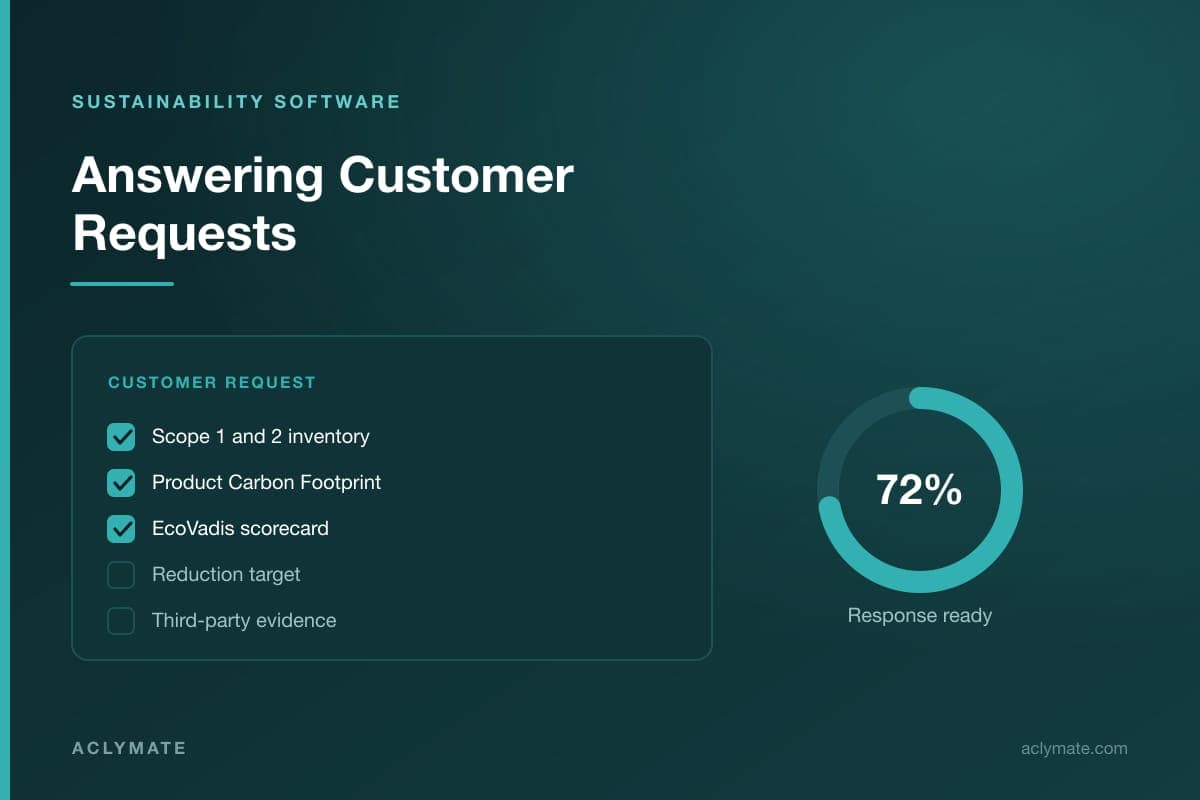
Learn how automotive suppliers can manage emissions data, sustainability questionnaires, PCFs, EcoVadis, and customer reporting requests with the right software.
Read Article

Learn how an outsourced sustainability department helps growing businesses manage carbon accounting, reporting, certifications, customer requests, and climate strategy.
Read Article
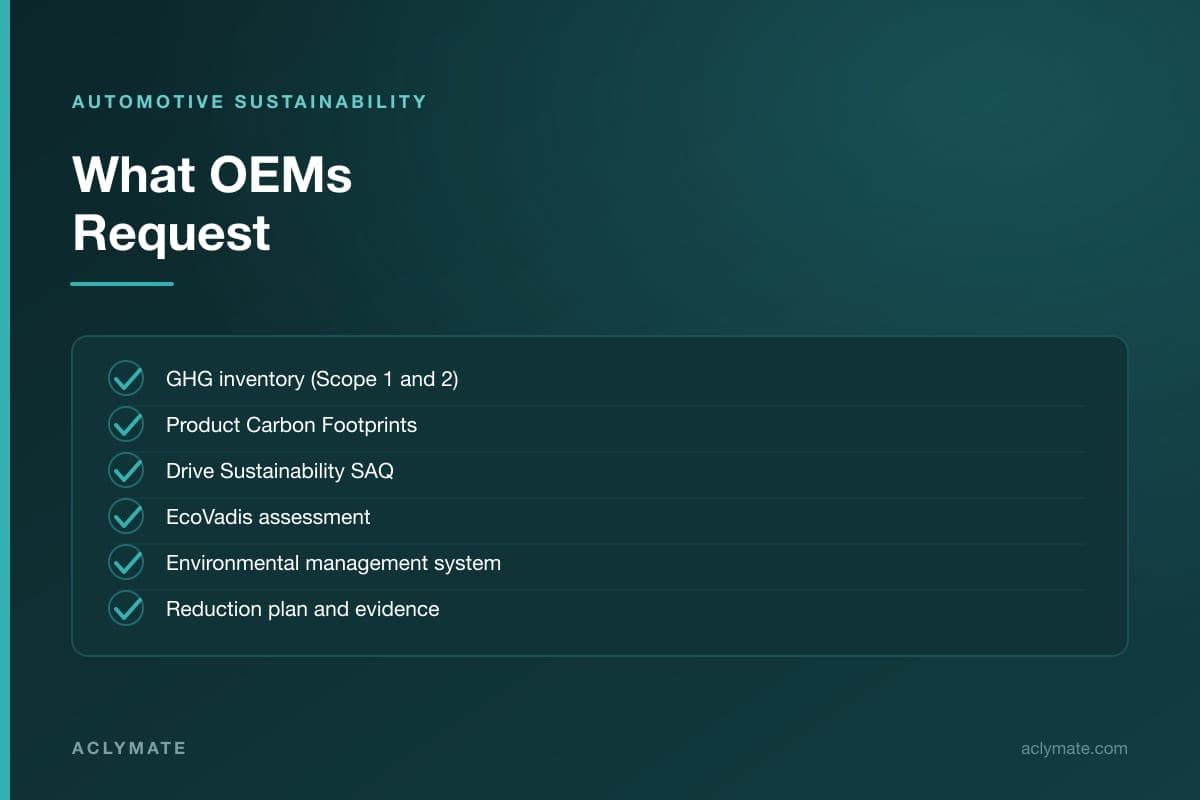
Understand the sustainability information automotive OEMs may request from suppliers, including emissions, PCFs, questionnaires, EcoVadis, and reporting.
Read Article
Talk with a Sustainability Expert, see a demo, or start free to put the Aclymate platform and experts to work for your team.