← Back to Insights
Aclymate Team
June 29, 2026
10 min read
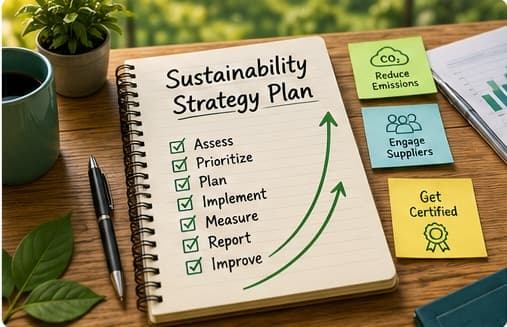
A carbon accounting consultant helps companies measure, organize, report, and improve their greenhouse gas emissions data.
For many businesses, the need starts when a customer, supplier, investor, RFP, or reporting framework asks for emissions information. The company may need to calculate a carbon footprint, report Scope 1, Scope 2, and Scope 3 emissions, document methodology, identify emissions hotspots, or prepare a sustainability report.
That can be difficult if emissions data is spread across finance, operations, procurement, facilities, travel, shipping, suppliers, and utility bills.
A carbon accounting consultant helps bring that data together and turn it into a credible greenhouse gas inventory.
Carbon accounting consultants often support activity data collection, emissions factor selection, Scope 1, 2, and 3 calculations, methodology documentation, reporting, customer requests, and year-over-year emissions tracking.
For growing businesses, a carbon accounting consultant can be especially useful when customers are asking for emissions data but the company does not have a dedicated sustainability or carbon accounting team.
A carbon accounting consultant is an expert who helps organizations measure and report greenhouse gas emissions.
In a business setting, carbon accounting consultants commonly help with:
The GHG Protocol Corporate Standard is one of the most widely used standards for corporate greenhouse gas accounting and reporting. A carbon accounting consultant can help companies organize emissions work around standards like this and prepare more credible reports.
A carbon accounting consultant may work with finance, operations, procurement, facilities, HR, travel, logistics, suppliers, and sustainability teams. Their job is to help the company understand its emissions, document its methodology, and prepare data that can support reporting, customer requests, and climate strategy.
A carbon accounting consultant helps a business move from scattered activity data to a usable carbon footprint.
Instead of treating emissions measurement as a spreadsheet exercise, they help create a repeatable process for collecting, calculating, reviewing, and reporting greenhouse gas emissions.
The first step in carbon accounting is deciding what should be included.
A carbon accounting consultant helps define the organizational and operational boundaries of the greenhouse gas inventory.
This may include deciding:
The EPA explains that organizational boundaries determine which entities and assets are included in a Scope 1 and Scope 2 greenhouse gas emissions inventory: EPA Scope 1 and Scope 2 Inventory Guidance.
This step matters because unclear boundaries can lead to incomplete, inconsistent, or misleading emissions reporting.
A consultant helps create a clear measurement approach that can be repeated and improved over time.
Carbon accounting depends on activity data.
Activity data is the business information used to estimate emissions. This may include utility usage, fuel consumption, spend data, travel records, shipping data, supplier information, waste data, and other operational inputs.
A carbon accounting consultant may help collect data such as:
This data is often spread across many systems and departments.
A consultant helps identify what is needed, where to find it, how to fill gaps, and how to organize it for calculation.
A carbon accounting consultant helps calculate emissions across Scope 1, Scope 2, and Scope 3.
Scope 1 emissions are direct emissions from sources the company owns or controls. This may include fuel combustion, company vehicles, onsite equipment, or refrigerants.
Scope 2 emissions come from purchased electricity, steam, heat, or cooling.
Scope 3 emissions are indirect value chain emissions. These may include purchased goods and services, suppliers, transportation, distribution, waste, business travel, employee commuting, product use, and end-of-life treatment.
The GHG Protocol Corporate Value Chain Scope 3 Standard provides a methodology companies can use to account for and report Scope 3 emissions.
Scope 3 is often the hardest category because it depends on data outside the company’s direct control.
A carbon accounting consultant can help decide which Scope 3 categories apply, what data is available, where estimates are acceptable, and how to improve data quality over time.
A carbon accounting consultant uses emissions factors to convert business activity data into greenhouse gas emissions.
For example:
The EPA’s GHG Emission Factors Hub provides default emission factors for organizational greenhouse gas reporting.
Choosing the right emissions factors matters because different factors may apply depending on geography, activity type, fuel type, electricity grid, supplier data, spend category, or reporting method.
A consultant helps select reasonable emissions factors, document assumptions, and explain the methodology.
Once emissions are calculated, a carbon accounting consultant helps identify the biggest sources of impact.
These are often called emissions hotspots.
Hotspots may include:
For many companies, the largest emissions are not from offices or facilities. They may come from purchased materials, suppliers, transportation, or products.
A carbon accounting consultant helps interpret the data and identify where the company should focus first.
This is important because emissions reduction work should be guided by the biggest opportunities, not just the easiest actions.
A carbon accounting consultant can help prepare a carbon footprint report that explains emissions clearly and credibly.
A carbon footprint report may include:
A strong report is not just a number. It explains what was measured, how it was calculated, what the results mean, and what should happen next.
For companies preparing formal sustainability reports, the GRI Standards are a widely used framework for reporting on impacts on the economy, environment, and people.
A carbon footprint report can support customer requests, RFP responses, sustainability reports, CDP responses, EcoVadis preparation, certifications, and internal decision-making.
Many companies need carbon accounting support because customers ask for emissions information.
Common requests include:
These requests can affect sales, customer retention, supplier approval, and procurement scoring.
A carbon accounting consultant helps companies respond with more accurate, consistent, and credible emissions data.
Carbon accounting is not a one-time project.
After a company creates its first carbon footprint, it usually needs to update it annually, improve data quality, respond to new requests, track reduction progress, and prepare new reports.
A carbon accounting consultant may help create a repeatable process for:
The goal is to move from one-time spreadsheet work to a process the company can maintain over time.
A business may need a carbon accounting consultant when emissions data becomes important but the company does not have the expertise, data, or internal capacity to manage it alone.
Common signs include:
If carbon accounting is starting to affect sales, reporting, customer trust, or business operations, it may be time to get expert help.
A carbon accounting consultant focuses on measuring and reporting greenhouse gas emissions.
A climate consultant may include carbon accounting, but often works more broadly across climate strategy, emissions reduction, climate-related customer requests, disclosures, certifications, and climate roadmap planning.
A simple way to think about it:
A carbon accounting consultant helps answer: “What are our emissions?”
A climate consultant helps answer: “What do our emissions mean, what should we do next, and how do we reduce and communicate progress?”
Many companies need both.
A carbon accounting consultant provides the emissions data. A climate consultant helps turn that data into strategy, action, and credible communication.
A sustainability consultant may help with broader sustainability strategy, reporting, policies, certifications, supply chain practices, customer requests, and program management.
A carbon accounting consultant focuses specifically on emissions measurement and reporting.
A sustainability consultant may use carbon accounting data as one input into a larger sustainability program.
A carbon accounting consultant helps answer:
“What is our carbon footprint?”
A sustainability consultant helps answer:
“How does our carbon footprint fit into our broader sustainability strategy, reporting, customer proof, and program priorities?”
Many growing companies need both carbon accounting expertise and broader sustainability guidance.
Carbon accounting software helps companies organize activity data, calculate emissions, track results, and prepare reports.
A carbon accounting consultant provides expertise, review, methodology, interpretation, and guidance.
Software alone may not answer questions like:
A consultant alone may not give the company a scalable system for managing data and reporting over time.
That is why many companies benefit from carbon accounting software plus expert support.
The data needed depends on the company’s operations, industry, and reporting goals.
Common data sources include:
A carbon accounting consultant helps identify which data is needed now and how to improve data quality over time.
Aclymate helps growing businesses measure emissions, organize carbon accounting data, prepare reports, and respond to customer requests.
Instead of choosing between software and consulting support, Aclymate combines both.
With Aclymate, companies can get:
Aclymate is built for lean teams that need credible carbon accounting without building a full internal sustainability department.
CTA: Get Carbon Accounting SupportSecondary CTA: See Aclymate One
Aclymate helps growing businesses measure emissions, organize data, respond to customer requests, prepare reports, and build credible sustainability proof.
Get carbon accounting software, expert support, and hands-on help in one solution.
Get Carbon Accounting SupportSee Aclymate One
A carbon accounting consultant helps companies measure greenhouse gas emissions, collect activity data, apply emissions factors, calculate Scope 1, 2, and 3 emissions, prepare carbon footprint reports, and support customer or reporting requests.
Carbon accounting is the process of measuring, calculating, and reporting greenhouse gas emissions from a company’s operations, energy use, purchases, suppliers, travel, transportation, products, and other business activities.
Yes. A carbon accounting consultant can help calculate Scope 1 emissions from direct operations, Scope 2 emissions from purchased energy, and Scope 3 emissions from value chain activities.
Scope 3 is hard to calculate because the data often comes from outside the company. It may involve suppliers, purchased goods and services, transportation, travel, waste, product use, and other value chain activities.
A carbon accounting consultant focuses on measuring and reporting emissions. A climate consultant may also support climate strategy, emissions reduction, customer communications, certifications, disclosures, and ongoing sustainability program management.
A carbon accounting consultant focuses on emissions measurement. A sustainability consultant may support broader sustainability strategy, reporting, policies, customer requests, certifications, supplier data, and program management.
Many companies need both. Software helps organize and calculate emissions data. A consultant helps select the right data, review assumptions, document methodology, interpret results, and guide next steps.
Yes. Aclymate combines carbon accounting software, Carbon Bookkeeper support, Scope 1, 2, and 3 emissions measurement, reporting support, customer request support, and sustainability program management for growing businesses.
Get Aclymate's practical sustainability content delivered weekly.
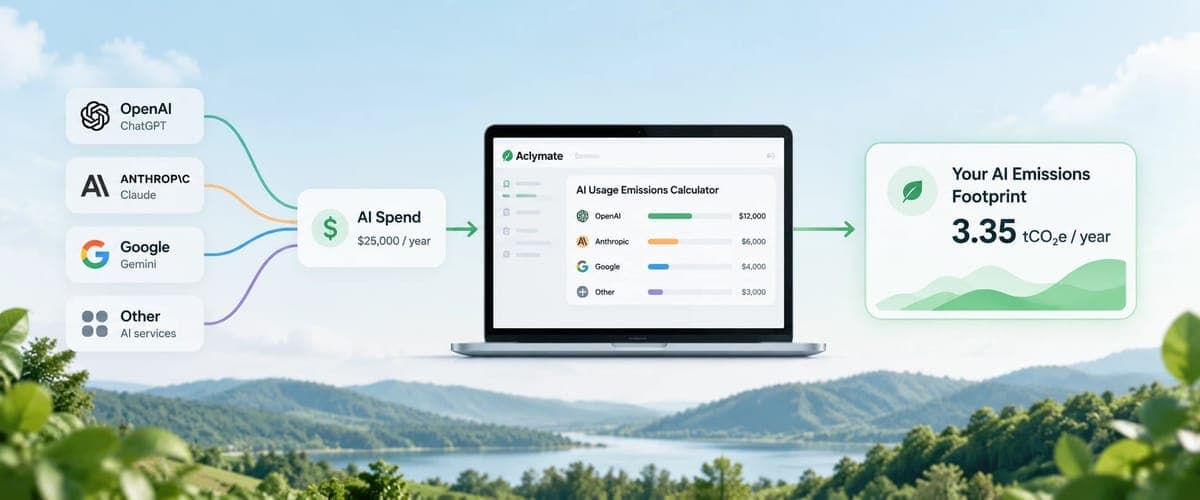
AI carbon emissions are becoming a new consideration for companies adopting ChatGPT, Claude, Gemini, Copilot and other artificial intelligence tools. Here’s how Aclymate estimates the carbon emissions from a company’s AI usage today—and how we expect the methodology to improve as AI providers release better usage and emissions data.
Read Article
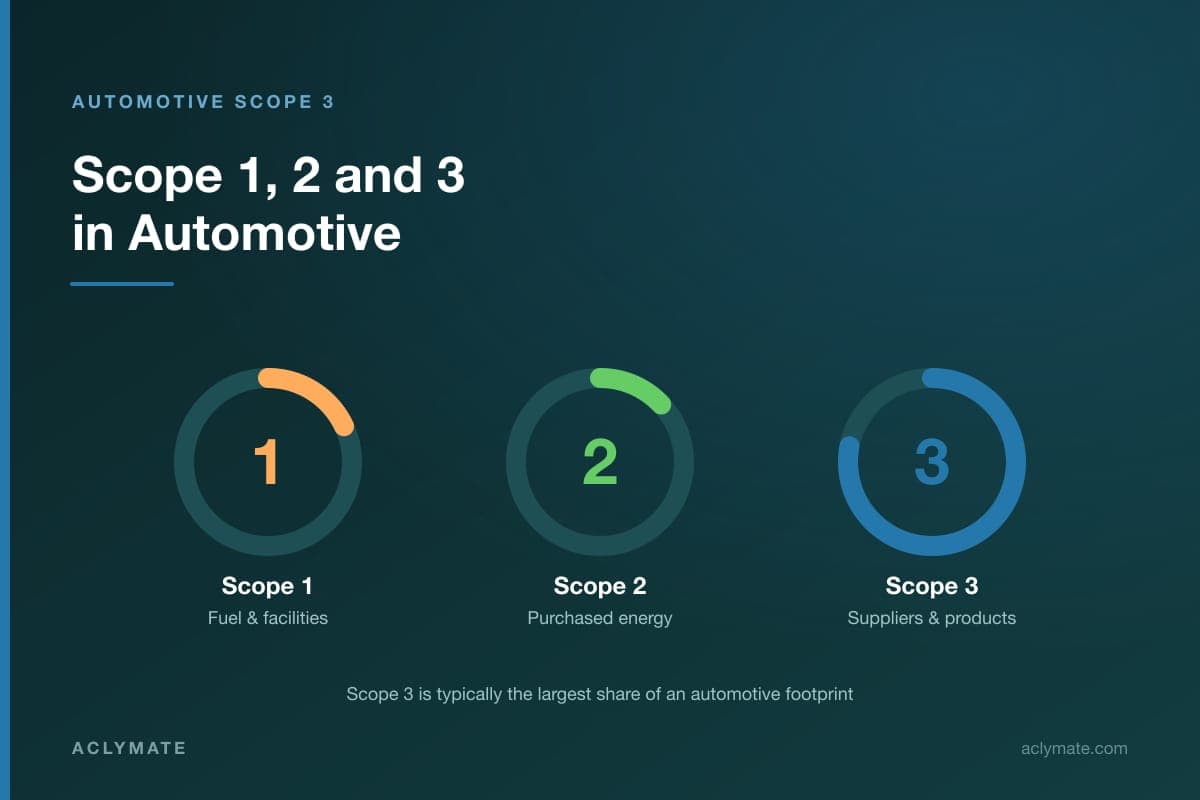
Learn how automotive companies measure Scope 3 emissions, collect supplier data, calculate product footprints, and meet customer reporting requirements.
Read Article
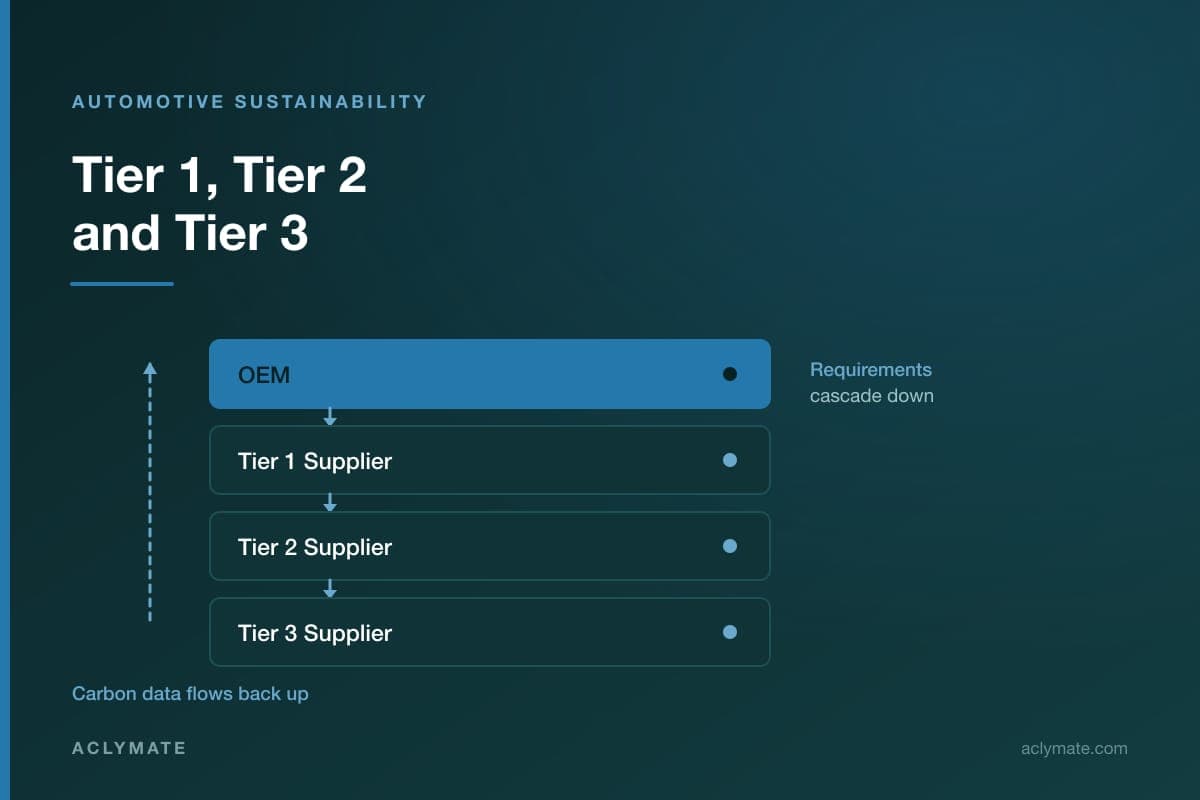
A practical sustainability guide for automotive suppliers covering emissions, Scope 3, customer requests, product footprints, questionnaires, and reporting.
Read Article
Talk with a Sustainability Expert, see a demo, or start free to put the Aclymate platform and experts to work for your team.