← Back to Insights
Aclymate Team
July 23, 2026
6 min read
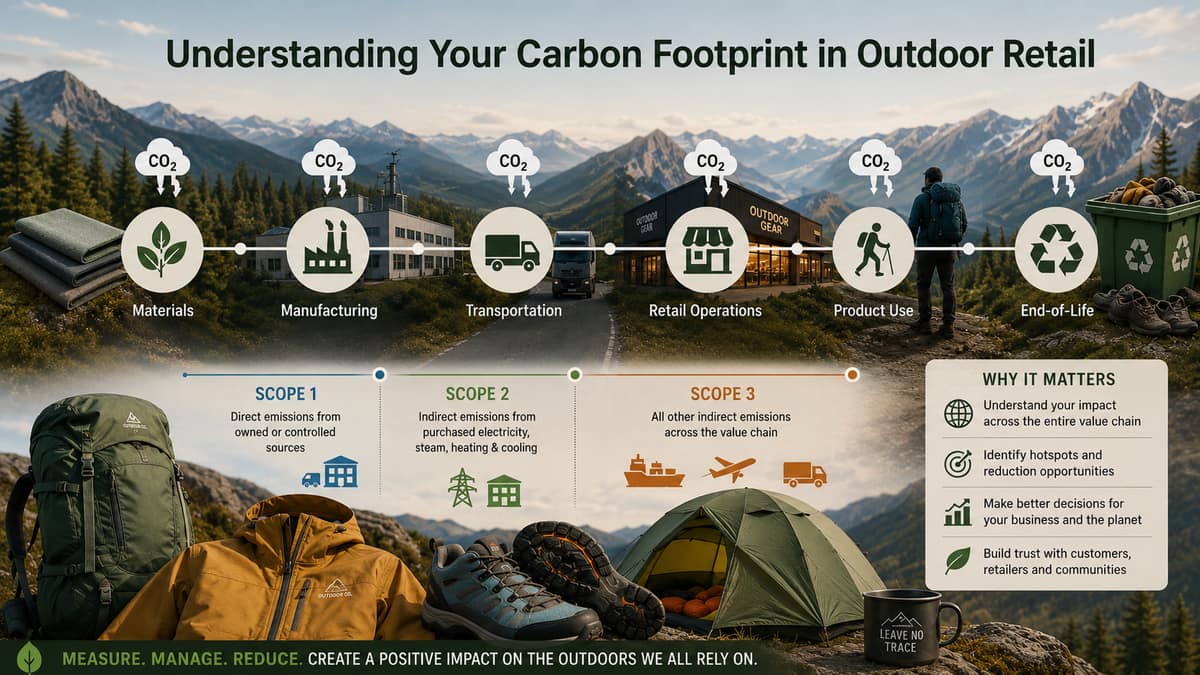
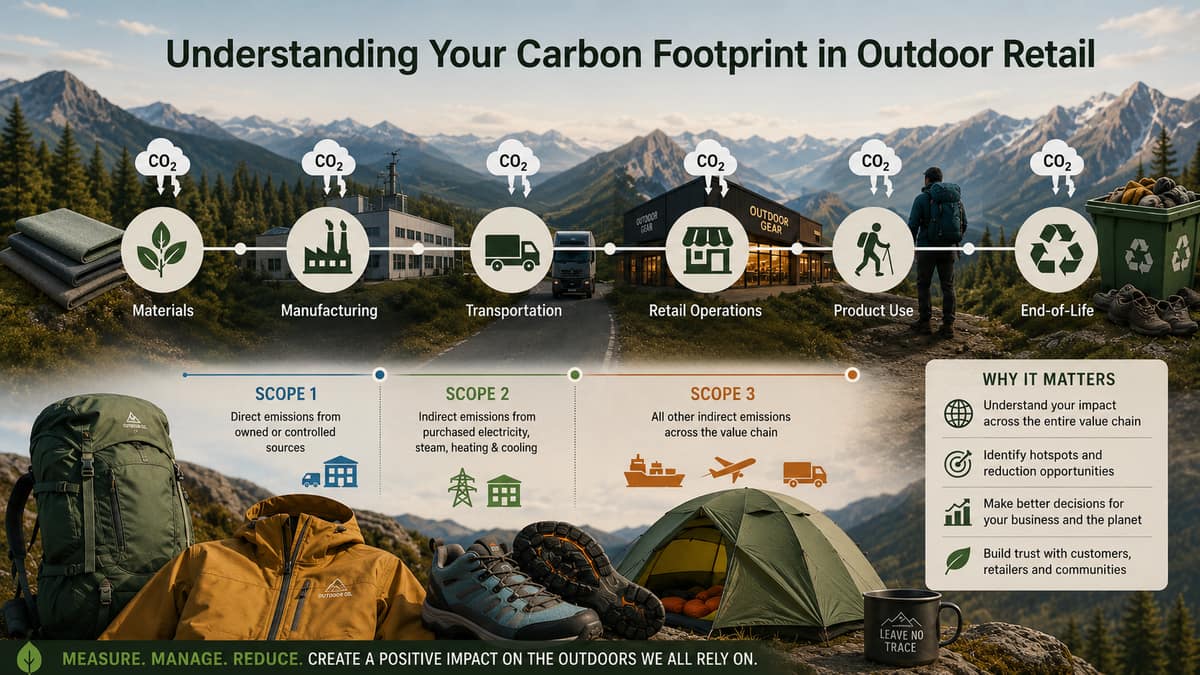
Outdoor retailers and brands face growing expectations to understand and reduce their environmental impact.
Customers want credible sustainability information. Retail partners may request emissions data, supplier policies or product certifications. Executives also need reliable data to evaluate energy, freight, packaging, materials and circularity programs.
Carbon accounting provides that foundation. It measures greenhouse-gas emissions across a company’s operations and value chain and organizes them into Scope 1, Scope 2 and Scope 3.
Aclymate CEO Mike Smith will attend Outdoor Retailer 2026, August 19–21 in Minneapolis, to meet with outdoor retailers, brands and manufacturers interested in carbon accounting, supplier data and sustainability reporting.
Customer reporting requirements are only one reason to become a more sustainable outdoor company.
Sustainability can also strengthen:
Outdoor companies have a visible connection to forests, waterways, public lands and healthy ecosystems. Customers may reasonably expect their business practices to reflect the values associated with their products.
A carbon footprint helps replace vague claims such as “green” or “eco-friendly” with measurable information about emissions, priorities and progress.
Many outdoor-industry employees have a personal connection to the outdoors. A practical sustainability program can create a shared mission across operations, sourcing, finance, logistics, product development and marketing.
Sustainability is most effective when it becomes part of regular business decisions rather than an extra responsibility assigned to one employee.
Many emissions-reduction projects also reduce operating costs, including:
Carbon accounting identifies the activities consuming the most energy, fuel and materials—and often reveals where savings are possible.
Major retailers increasingly want visibility into vendor sustainability practices.
REI’s Product Impact Standards expect brand partners to measure annual greenhouse-gas emissions, establish reduction targets and share sustainability information.
Target’s Target Forward strategy addresses supplier emissions, materials, packaging, waste and renewable energy.
The Walmart Sustainability Hub provides suppliers with programs addressing emissions, packaging, nature, waste and responsible sourcing.
Their programs differ, but the direction is similar: suppliers should be able to explain their commitments and provide credible information about emissions, products and supply chains.
Most companies should begin with an organizational carbon footprint covering one reporting year.
Define:
The GHG Protocol Corporate Standard is the most widely used framework for organizational greenhouse-gas inventories.
A company footprint measures the organization’s annual emissions. A product carbon footprint measures emissions associated with a particular product across defined lifecycle stages.
Most outdoor businesses should establish the company footprint first, then calculate product footprints when required by customers or business priorities.
Scope 1 covers emissions from sources the company owns or controls.
Examples include:
The basic calculation is:
Activity data × emissions factor = emissions
Useful records include fuel invoices, utility bills, vehicle data, facility information and refrigerant service records.
Scope 2 covers emissions from purchased energy, especially electricity used in:
Electricity consumption is generally multiplied by an emissions factor based on the local grid or electricity contract.
The main challenge is completeness. Every included location should provide full-year energy data.
Scope 3 covers indirect value-chain emissions. The GHG Protocol Scope 3 Standard organizes them into 15 categories.
For outdoor retailers and brands, common sources include:
This can include apparel, footwear, equipment, packaging and other goods purchased for resale.
Materials and manufacturing frequently represent a major portion of an outdoor brand’s footprint.
Products may travel through factories, ports, trucks, aircraft, warehouses and stores before reaching customers.
Packaging, damaged products, unsold inventory, returns and operational waste can all contribute.
Business flights, hotels, rental cars and employee commuting may also be relevant.
Some products consume energy during use. Disposal, recycling and incineration may also create emissions.
Aclymate’s Scope 1, Scope 2 and Scope 3 visual guide explains these categories in more detail.
A company does not need perfect supplier data to establish its first footprint.
Start with:
Spend-based calculations estimate emissions using the amount spent in a purchasing category.
Activity-based calculations use physical data such as kilowatt-hours, gallons, miles, weights or product quantities.
Activity data is generally more specific, but spend estimates help establish broad coverage quickly. A practical strategy is to create the first baseline, identify the largest categories and improve those areas first.
Companies can use Aclymate’s carbon-footprint measurement tools to establish an initial Scope 1, 2 and 3 estimate.
Supplier information is essential for improving Scope 3 accuracy.
Useful data may include:
Do not begin with an extensive questionnaire for every vendor. Start with the suppliers and product categories representing the largest estimated emissions.
Aclymate’s guide to carbon accounting for manufacturers and apparel companies explains how supplier, material and manufacturing data improve calculations.
Outdoor Retailer’s education agenda includes discussions about repair, resale, rental, waste reduction and circular business models.
Circularity can keep products in use longer through:
Carbon accounting helps determine whether these programs produce meaningful environmental benefits.
For example:
The Outdoor Industry Association’s Climate Action Corps reporting reflects the industry’s broader effort to measure and reduce operational and supply-chain emissions.
Circularity should not automatically be described as carbon reducing. Companies need evidence showing how the new model compares with the previous one.
Once the baseline is complete, identify the largest emissions sources and the most practical improvements.
Potential priorities include:
A climate target should define:
The Science Based Targets initiative’s apparel and footwear guidance provides sector-specific information for companies developing climate targets.
The first carbon footprint does not need to be perfect. It should be complete enough to guide decisions, documented well enough to explain and designed to improve.
Aclymate helps outdoor retailers and brands turn carbon accounting into a repeatable business process.
Aclymate’s carbon accounting software helps companies:
Aclymate combines software with expert services for companies that do not have large internal sustainability teams.
Its guide to reporting emissions to customers and partners explains how to prepare reusable information for retailer questionnaires and customer requests.
Aclymate CEO Mike Smith will attend Outdoor Retailer in Minneapolis from August 19–21.
Mike will meet with outdoor retailers, brands, manufacturers and suppliers that need practical help with:
Contact Aclymate to schedule a conversation with Mike during Outdoor Retailer.
It is the process of measuring emissions from stores, warehouses, offices, transportation, purchased products, suppliers and other value-chain activities.
Most footprints include direct fuel and refrigerant emissions, purchased electricity and relevant Scope 3 sources such as products, materials, packaging, freight, waste, travel and product disposal.
Yes. Companies can begin with spend estimates and industry-average factors, then improve the inventory with supplier- and product-specific information.
Spend-based calculations use money spent in a category. Activity-based calculations use physical data such as energy, fuel, distance, weight or product quantities.
A company footprint measures annual organizational emissions. A product footprint measures emissions associated with a specific product across defined lifecycle stages.
It helps companies evaluate whether repair, resale, rental, reuse and recycling programs reduce emissions or create new impacts elsewhere.
Most companies should update their organizational carbon footprint annually while collecting data throughout the year.
Aclymate helps companies calculate emissions, improve supplier data, identify hotspots, track reductions and prepare customer-ready sustainability reports.
Get Aclymate's practical sustainability content delivered weekly.
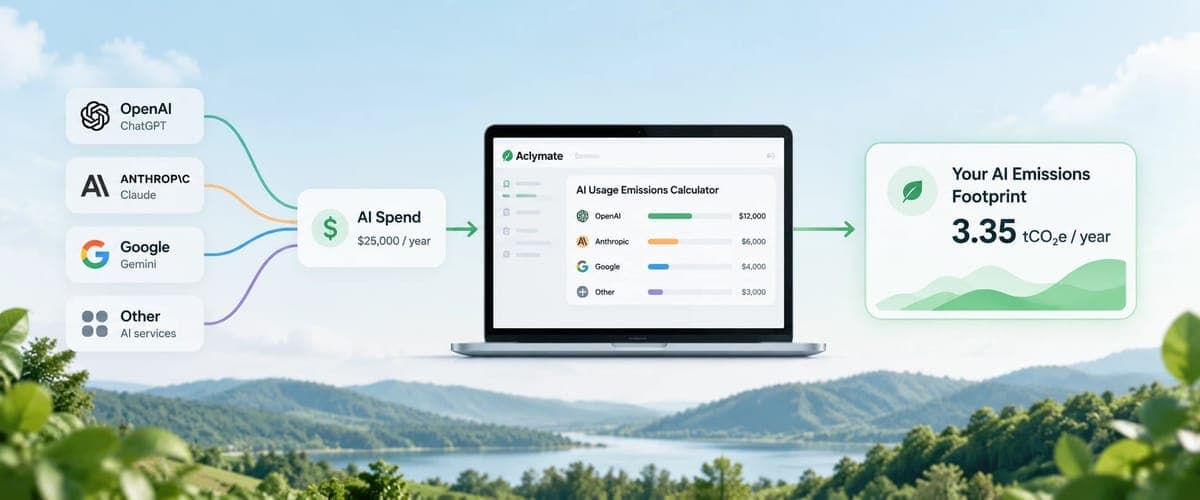
AI carbon emissions are becoming a new consideration for companies adopting ChatGPT, Claude, Gemini, Copilot and other artificial intelligence tools. Here’s how Aclymate estimates the carbon emissions from a company’s AI usage today—and how we expect the methodology to improve as AI providers release better usage and emissions data.
Read Article
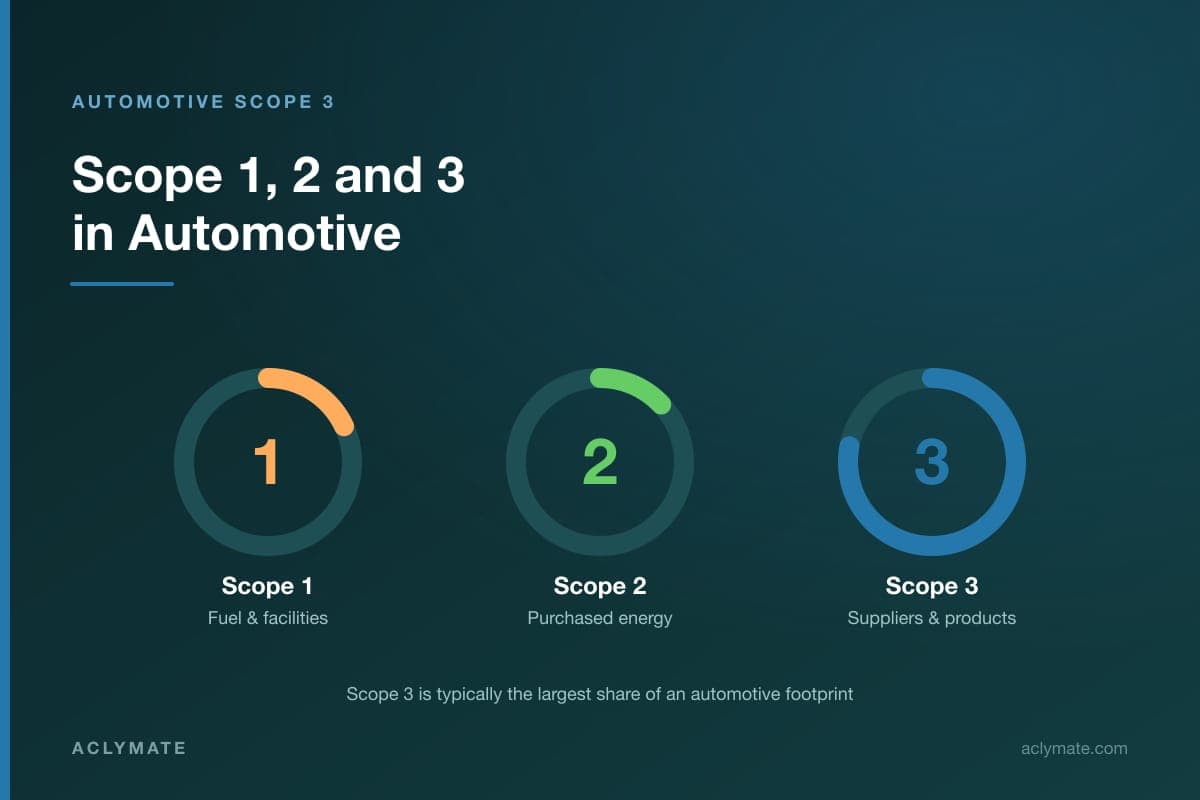
Learn how automotive companies measure Scope 3 emissions, collect supplier data, calculate product footprints, and meet customer reporting requirements.
Read Article
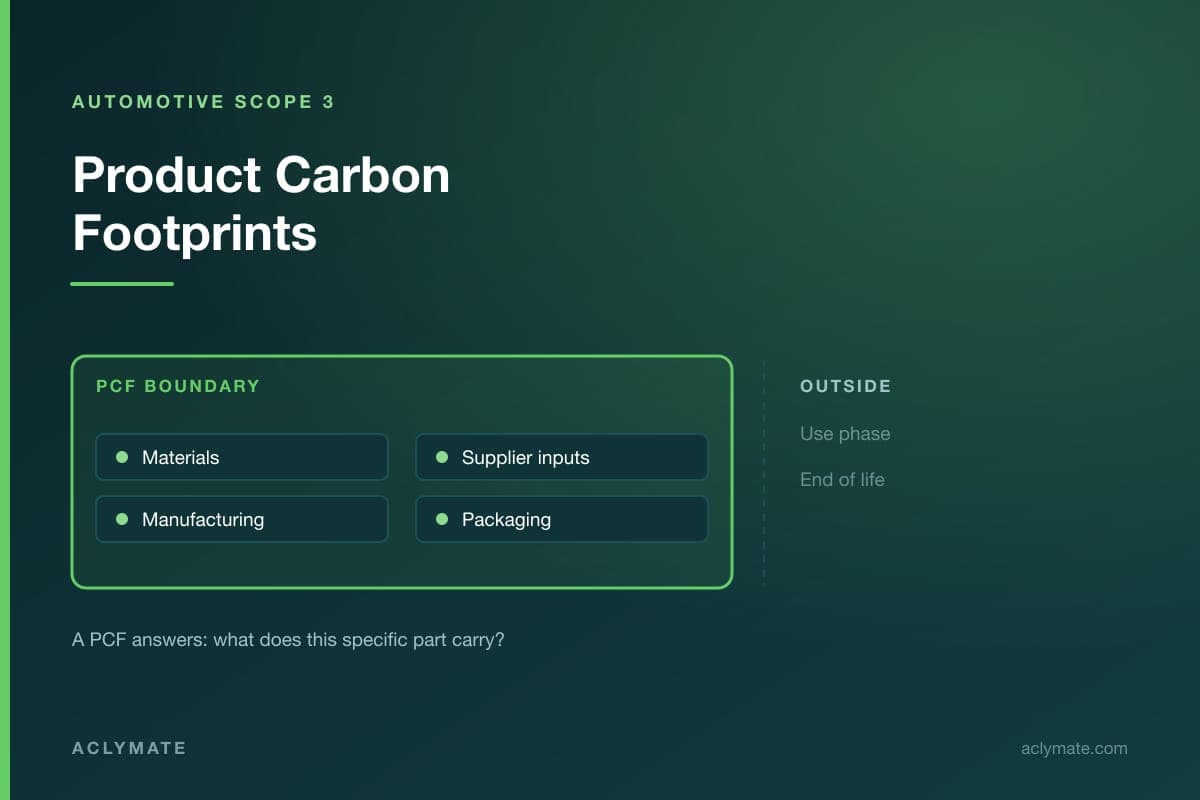
Learn how automotive Product Carbon Footprints measure emissions from materials, suppliers, manufacturing, transportation, and components.
Read Article
Talk with a Sustainability Expert, see a demo, or start free to put the Aclymate platform and experts to work for your team.