← Back to Insights
Aclymate Team
August 18, 2026
6 min read
When people ask which car companies are the most sustainable, they usually mean which ones sell the most electric vehicles. That is a narrow way to answer the question — and for anyone who supplies the automotive industry, it is the wrong one.
A more useful framing: what are leading automakers actually doing about carbon, and what does that mean for the companies that supply them?
Because the practical consequence of an automaker's sustainability commitment is rarely felt by the car buyer. It is felt by the Tier 1 that now has to report emissions, and the Tier 2 machine shop that now has to produce a footprint for a bracket.
Vehicle electrification is the most visible signal and the least complete one. A manufacturer can sell a large number of EVs while doing very little about the emissions embedded in producing them.
A more complete assessment looks at:
That last point is the one suppliers should watch most closely, because it is the one that generates work.
Most major automakers now have public carbon reduction targets, frequently with a net-zero date and interim milestones.
The detail that matters is scope. A target covering only Scope 1 and Scope 2 addresses the manufacturing operations an automaker directly controls — which, for a company that assembles vehicles from thousands of purchased components, is a limited share of the total.
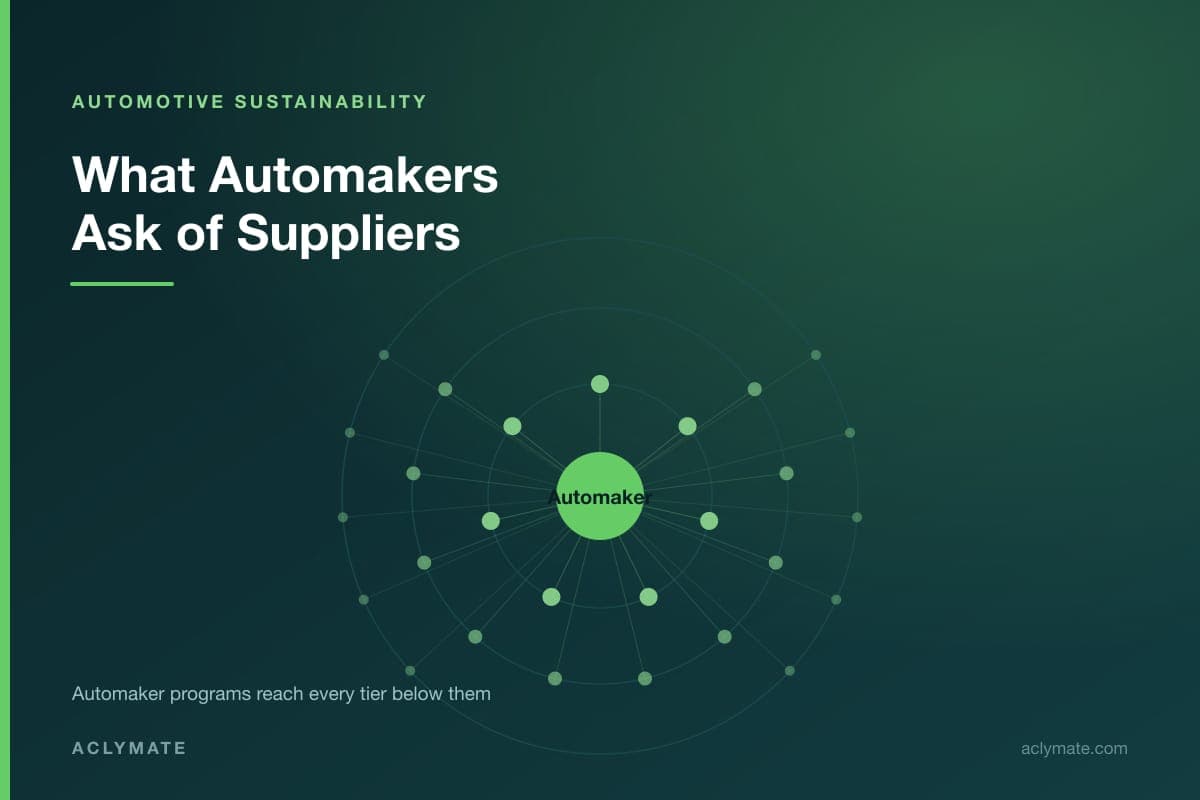
Targets that include Scope 3 are far more consequential, because Scope 3 is where the supply chain lives. An automaker cannot reduce Scope 3 without its suppliers reducing theirs, and it cannot report Scope 3 credibly without supplier data.
This is the mechanism by which an OEM commitment becomes a supplier requirement. It is not goodwill; it is arithmetic.
Automaker operations programs tend to cover renewable electricity procurement for assembly plants, energy efficiency in paint shops and presses (paint is typically the most energy-intensive step in assembly), water management, waste reduction and landfill diversion, and on-site generation.
Large manufacturers have generally had environmental and energy programs for years, with staff and capital behind them. This is the part of automotive sustainability that is most mature.
It is also, for most automakers, the smaller part of the problem.
This is where the industry is currently doing its hardest work.
Automaker supply chain programs typically include some combination of:
Notably, this is becoming collaborative rather than purely top-down. Suppliers Partnership for the Environment has developed shared carbon reporting and reduction guidance with participation from automakers and suppliers across the industry, which reduces the chance of every OEM inventing a different format. Suppliers Partnership: supplier carbon guidance
Here is the practical translation. When an automaker commits to a supply chain carbon target, suppliers typically start receiving requests for:
For a Tier 1 with a sustainability department, this is a workload. For a Tier 2 or Tier 3 without one, it is a genuinely new capability requirement. See OEM sustainability requirements for the detail on each.
The shift toward part-level data is the most significant change for suppliers specifically.
A corporate footprint is a single annual number about a company. A PCF is a number about a part, which means it multiplies with the number of part numbers a supplier ships and updates when materials or processes change.
AIAG has been building supplier education around exactly this, aimed at automotive suppliers that have been asked for PCF data or expect to be. AIAG: Product Carbon Footprint
And the exchange of that data is standardizing. Catena-X is developing a harmonized framework for calculating and exchanging supplier-specific PCFs across the automotive value chain, so a footprint calculated once can move between tiers rather than being recalculated at each. Catena-X: Product Carbon Footprint
Materials are where automakers can change a vehicle's embedded footprint most directly, and where supplier involvement is unavoidable.
Active areas include recycled aluminum and steel, electric-arc-furnace steel, recycled and bio-based polymers, recycled interior textiles, and battery material recovery.
For suppliers this cuts two ways. A material requirement can arrive as a specification change on a new program. It can also arrive as a question: can you tell us the footprint difference if we switch? A supplier that can answer that question is more useful than one that cannot — which is a commercial argument for product footprint capability, not just a compliance one.
Automakers report publicly, and public reporting requires data that holds up.
That flows down as expectations about evidence, not just numbers. Increasingly suppliers are asked for methodology, boundaries, emissions factor sources, and the underlying activity data behind a figure — because the automaker's own disclosure depends on it.
The practical implication for suppliers: keep the working behind the number, not just the number.
Whether a given automaker deserves to be called sustainable is a question for analysts. The question that affects your business is narrower:
Suppliers that can answer these are increasingly at an advantage in sourcing conversations, not merely in compliance ones. See automotive supplier sustainability for how to build that capability.
Aclymate works on both sides of this relationship — automakers and large manufacturers collecting supplier data, and suppliers producing what their customers ask for.
See the Automotive & Transportation page, or the full automotive sustainability guide.
Electric vehicle sales are the most visible measure and the least complete one, since a manufacturer can sell many EVs while doing little about emissions embedded in producing them. A fuller assessment looks at whether targets include Scope 3, whether real supplier data programs exist, whether product-level carbon data is available, and how specific the public reporting is.
Because of arithmetic, not goodwill. For a company that assembles vehicles from thousands of purchased components, Scope 1 and 2 cover only a small share of total emissions. Any target including Scope 3 can only be met and reported with supplier data, so the commitment necessarily becomes a supplier data requirement.
Typically Scope 1 and Scope 2 emissions, energy and facility data, Scope 3 information for purchased goods, Product Carbon Footprints for specific part numbers, reduction targets and plans, completion of an assessment such as the SAQ or EcoVadis, an environmental management system, and supporting documentation including methodology and calculations.
Because Scope 1 and Scope 2 cover only the operations an automaker directly controls, which for a vehicle assembler is a limited share of total emissions. A target excluding Scope 3 leaves out the supply chain, where most of the footprint of a manufactured vehicle actually originates.
Increasingly, yes. Drive Sustainability's SAQ gives participating automakers a shared supplier assessment, and Suppliers Partnership for the Environment has developed common carbon reporting and reduction guidance with both automakers and suppliers involved. That reduces the chance of each customer inventing its own incompatible format.
A corporate footprint is one annual number about a company. A Product Carbon Footprint is a number about a part, so the workload multiplies with the number of part numbers shipped, and each must be updated when materials, suppliers, or processes change. It also requires bill of materials data and process energy allocation.
Because customers pursuing material changes often ask what the carbon difference would be if they switched. A supplier that can answer that question quickly is more useful in a design conversation than one that cannot, which turns footprint capability into a sourcing advantage rather than only a compliance cost.
Know which customers have supply chain carbon targets, maintain a Scope 1 and Scope 2 inventory that does not require a scramble to produce, be able to generate a documented cradle-to-gate footprint for a representative part, and find out which shared assessments your customers accept so you prepare for the right one.
Get Aclymate's practical sustainability content delivered weekly.
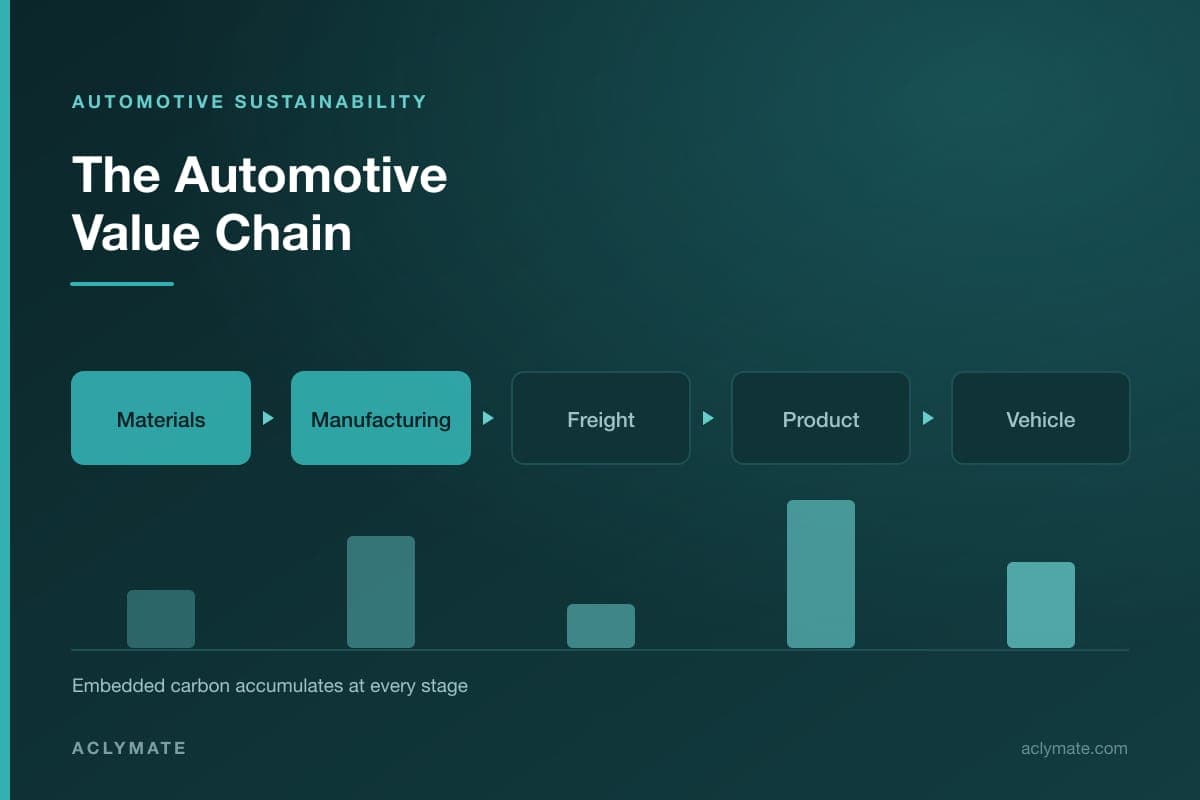
Learn how sustainability is changing the automotive industry, from carbon emissions and supply chains to supplier requirements, product footprints, and reporting.
Read Article
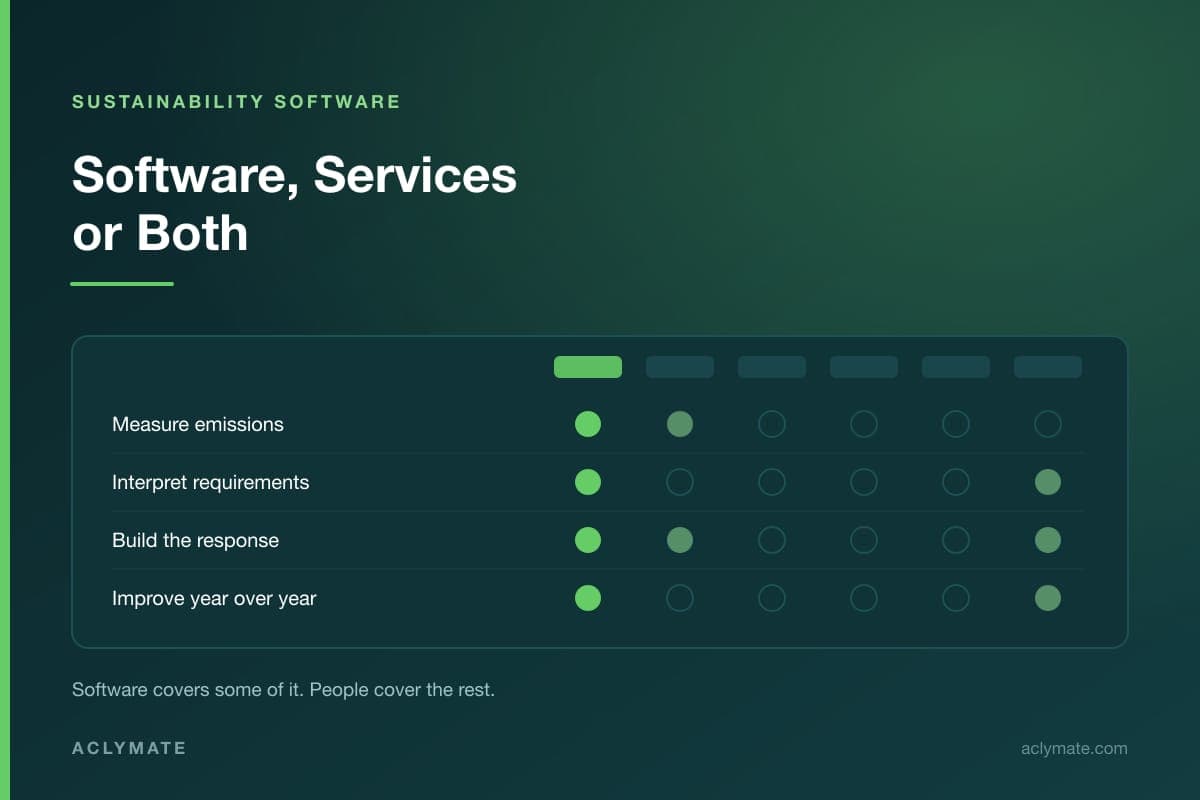
Compare sustainability software and consulting for automotive suppliers and learn when combining technology, AI, and expert support delivers the best results.
Read Article
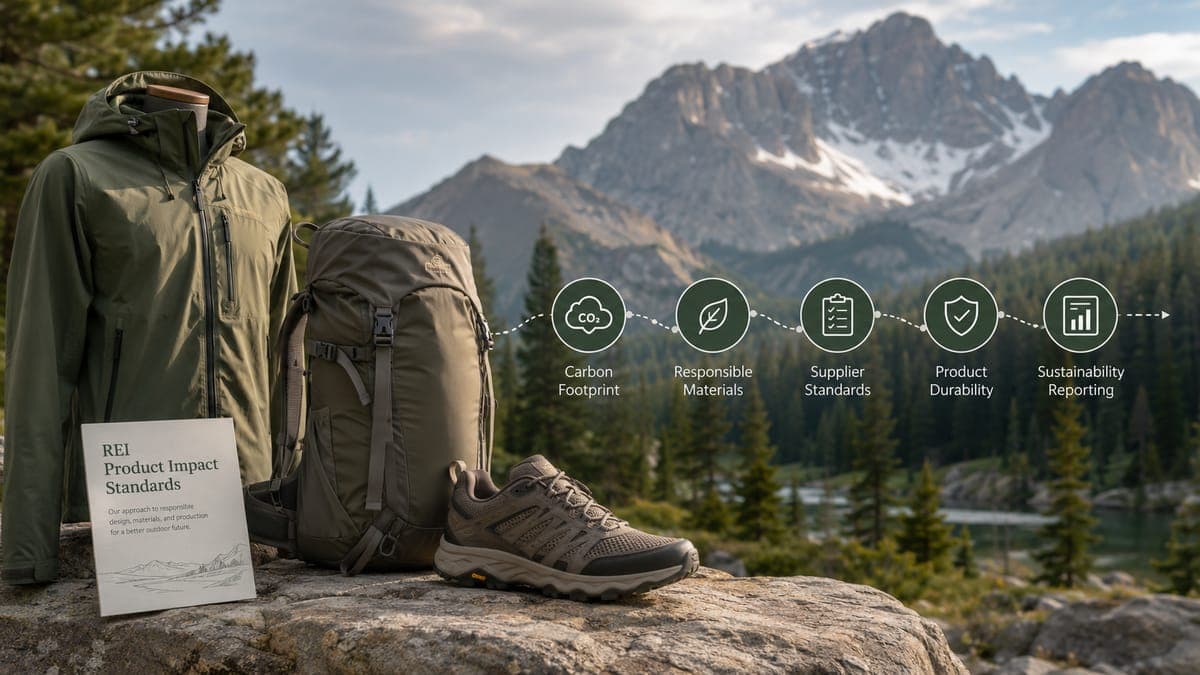
Learn REI sustainability requirements for brands and suppliers, including Product Impact Standards, reporting expectations and partner benefits.
Read Article
Talk with a Sustainability Expert, see a demo, or start free to put the Aclymate platform and experts to work for your team.