← Back to Insights
Aclymate Team
November 3, 2025

As pressure grows from customers, investors, and regulators, companies rely on carbon accounting software to track their emissions with precision. This platform can also automate sustainability reporting and data collection processes to save time and manual effort.
However, with so many platforms claiming to be the best, finding one that fits your needs can feel overwhelming.
Fortunately, we did the hard work for you. This guide breaks down the best carbon accounting software solutions based on extensive research. We'll cover each platform's features, pros, and cons to help you choose confidently.
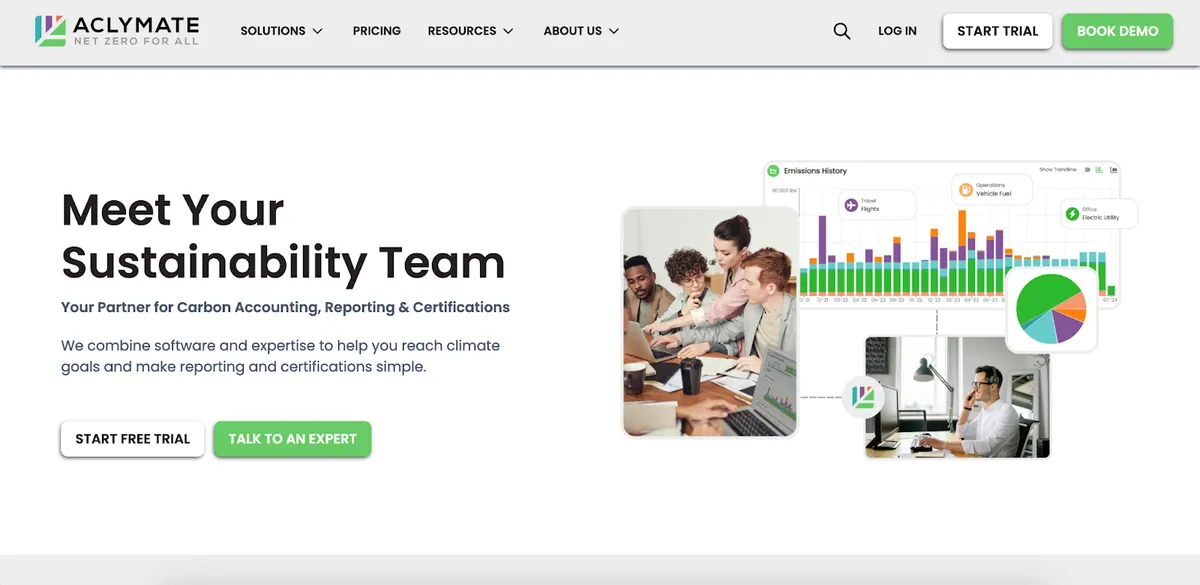
Best for: CPG brands, food and beverage manufacturers, branded merchandise and promotional product providers, pharma, apparel, and other companies seeking software plus expert guidance to run carbon accounting without hiring a large sustainability team.
Aclymate offers a user-friendly carbon accounting platform designed for businesses without sustainability teams.
It helps you measure, offset, reduce, and report carbon emissions from a single dashboard. Within it, you can also track energy consumption, water usage, and waste production.
All you need to do is connect your accounting software and utilities through native integrations. Alternatively, you can upload spreadsheets or partner with Aclymate's climate bookkeepers to handle manual data entry for your business.
The platform will automatically track Scope 1, 2, and 3 emissions using spend-based and activity-based carbon accounting methods. The former considers dollar expenditure to provide a more complete view of your company’s emissions.
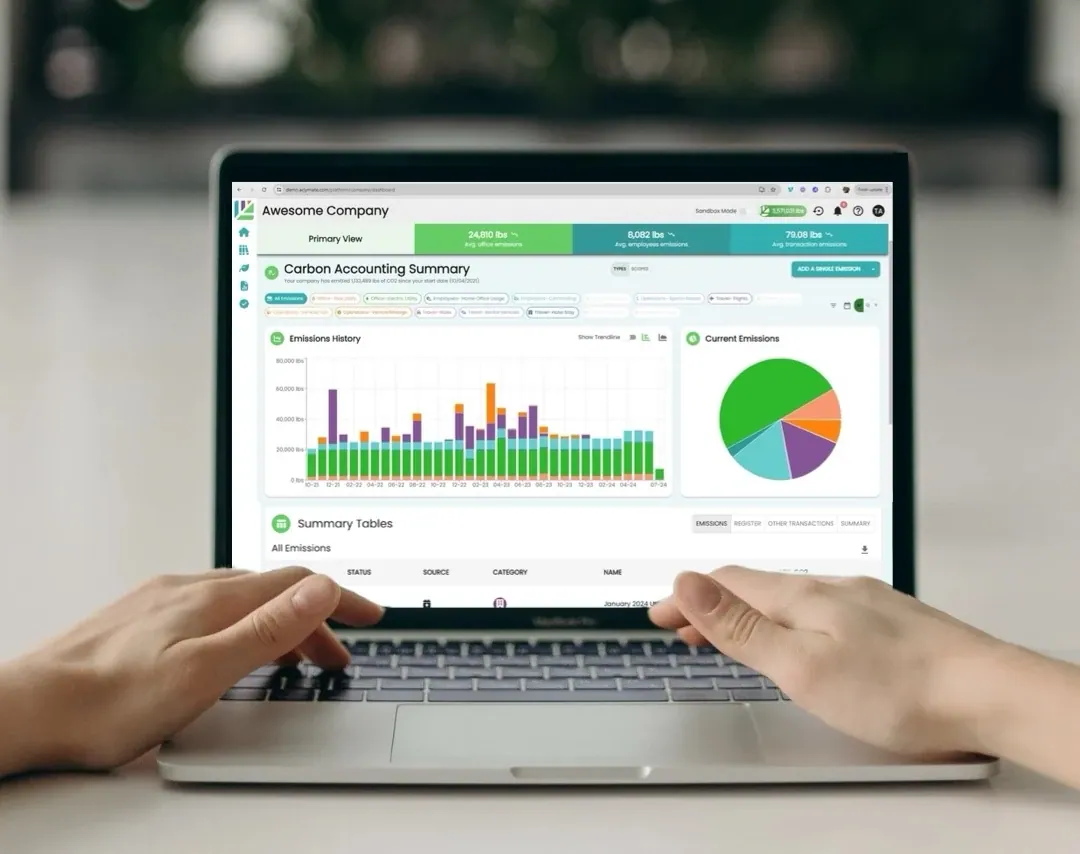
Aclymate also generates high-quality reports that leading reporting standards like EcoVadis, CDP, and B Corps accept. These reveal where all emissions are coming from and suggest areas where you can reduce them.
For supply chain reporting, Aclymate invites vendors to complete a survey to gather more accurate Scope 3 emissions data.
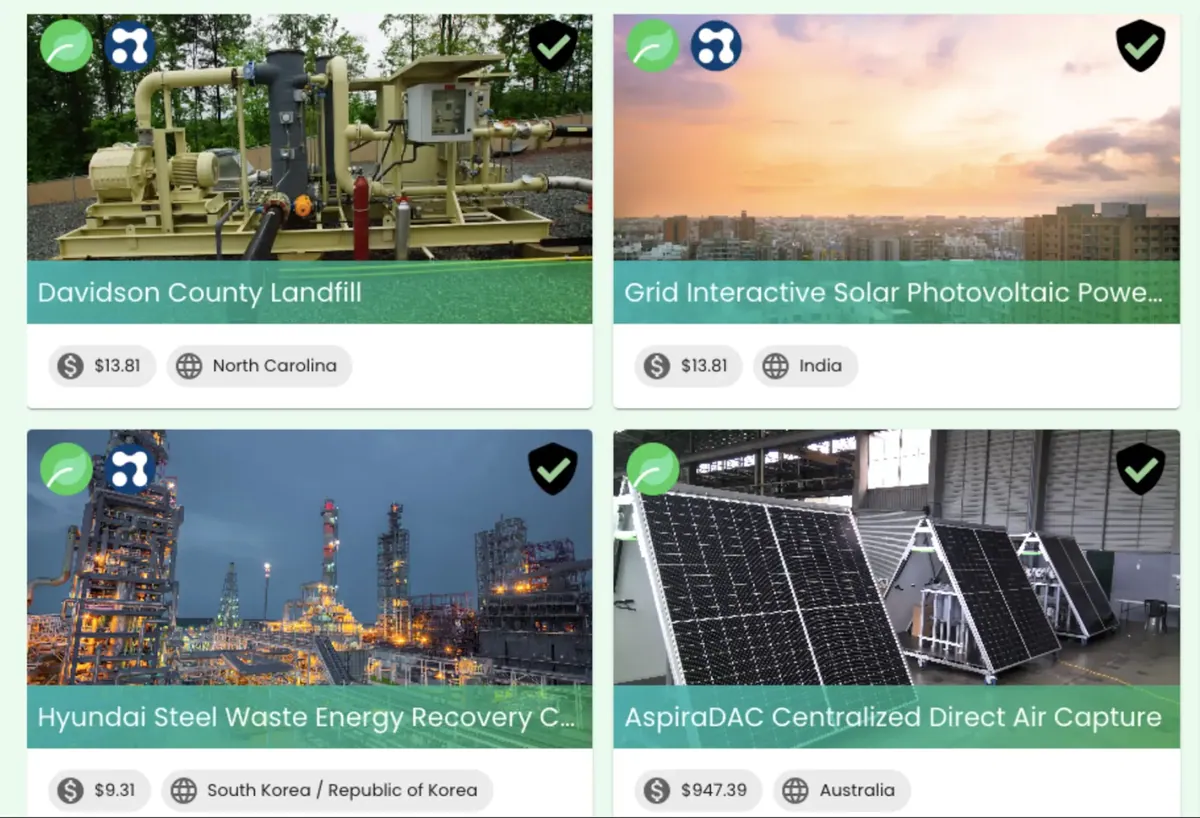
On top of these capabilities, Aclymate offers a built-in marketplace for verified offsets. It has over 42climate projects divided into major categories like agriculture, forestry, or fossil fuel substitution. Each project includes the story, UN SDGs, verification documents, and photos for full transparency.
Try our free carbon emissions calculator today! Or sign up right now to access Aclymate's all-in-one climate solution.
Aclymate is more than just another carbon accounting software. It's an all-in-one climate solution that handles the heavy lifting for your business.
Climate bookkeepers and consultants track Scope 1, 2, and 3 emissions, generate reports, and suggest emission reduction strategies.
The platform also stands out for its user-friendly interface. You can easily collect emissions data, act on them, and report with confidence, all without hiring a full-time consultant.
Aclymate has a partnership with CNaught. This gives you access to a portfolio of offsets that have undergone extensive reviews. Meanwhile, a built-in marketplace lets you choose from verified offset projects, so you can tell the story that is most meaningful to you.
For small to mid-sized firms without sustainability teams, Aclymate becomes your partner for carbon accounting.
Book a demo today to get climate expert-level support without the consultant price tag!
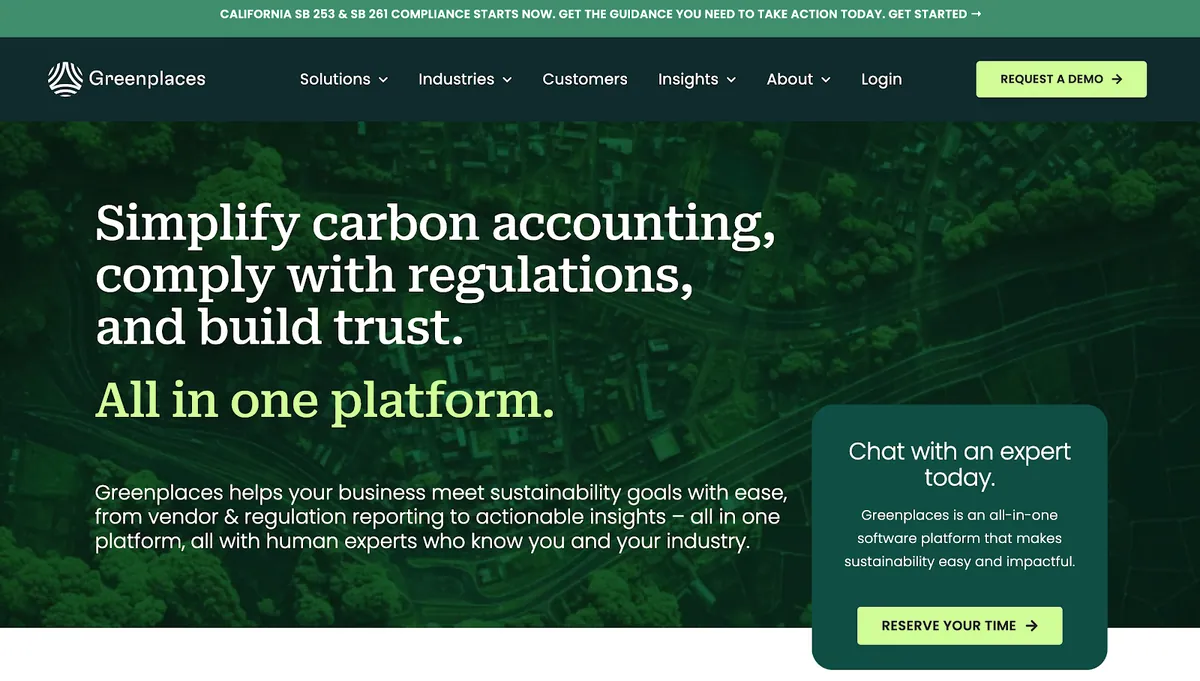
Best for: Corporations that want an all-in-one carbon accounting platform with human expert guidance.
When it might not be the best fit: Businesses seeking user-friendly software and quick setup, since Greenplaces requires complex configuration.
Greenplaces automates data collection and aligns carbon accounting processes with the greenhouse gas protocol.
It uses robust methodology and expert insights to help businesses measure carbon footprint across Scopes 1, 2, and 3.
The platform also sets emission reduction targets and provides audit-ready reports. These help you achieve regulatory compliance and enhance brand reputation.
Greenplaces also supports lifecycle assessments that identify emission hotspots. Through these LCAs, your sustainability team can increase value chain transparency and drive product innovation.
Beyond carbon accounting, Greenplaces systematically reduces greenhouse gas emissions across your operations. It lets you purchase verified offset projects and renewable energy certificates (RECs) from leading registries.
Greenplaces cuts manual work by automating data collection and emissions tracking across Scopes 1, 2, and 3 using GHG protocols.
This all-in-one solution also provides access to regulation reporting, actionable insights, and experts who will help you build a climate-resilient value chain.
Getting started with Greenplaces takes time as you need to gather documents and ramp up usage. This steep learning curve during the first reporting cycle can slow down software adoption and onboarding.
If you want a simpler carbon accounting solution with instant access, Aclymate offers user-friendly software plus climate experts who'll guide you through every step of your sustainability journey.
Best for: CPG companies that want to integrate emissions tracking and reduction into their branding.
When it might not be the best fit: Businesses operating outside the consumer packaged goods industry.
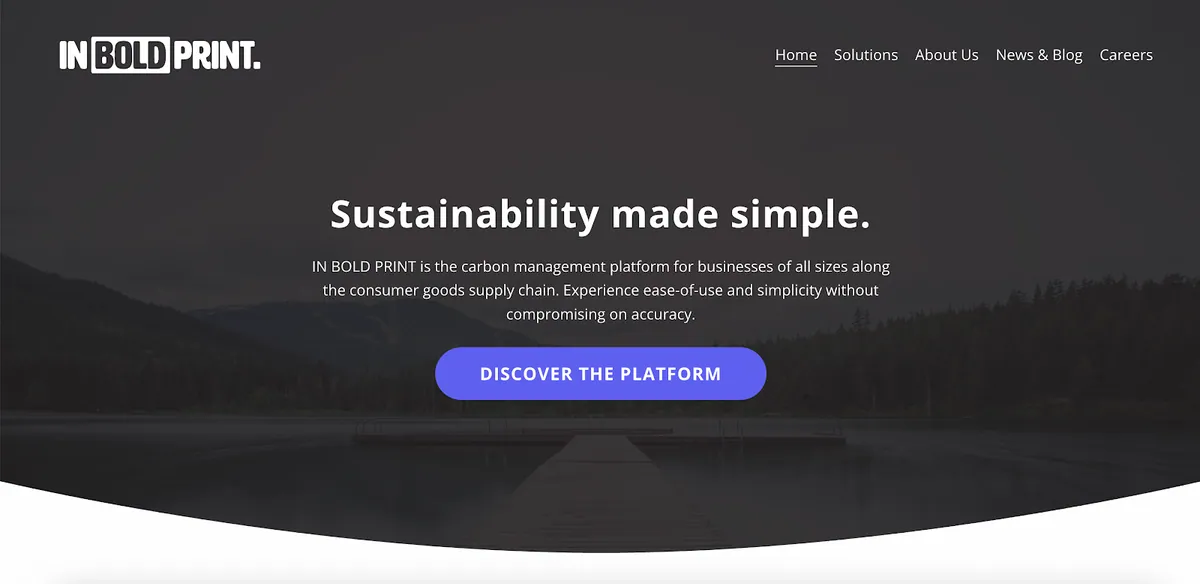
In Bold Print is a carbon management platform that offers a simple, guided workflow.
You simply enter sustainability data and answer questions about your corporate carbon footprint. Then, the platform's calculation engine will handle the rest.
In Bold Print is based on the GHG protocol, which uses both activity- and spend-based data to calculate carbon emissions.
The platform also suggests ways to reduce emissions while considering your bottom line. For example, it can recommend alternative suppliers and show their impact on your sustainability performance. This helps you take action with confidence.
Plus, it turns raw inputs into clear reports for regulators, retailers, and consumers. Save time with one-click sharing and suggested storytelling methods.
In Bold Print considers itself as the “TurboTax of carbon accounting.” It guides you through the process of entering your company data.
The platform offers precise emissions calculations within an hour if you have complete data. It also supports one-click carbon reporting that makes it easy to take action and meet your sustainability goals.
In Bold Print is focused on automation and simplicity, but it doesn’t offer built-in consulting services or a verified offset marketplace. The platform also lacks advanced integrations for in-depth sustainability data, so you will need to spend a lot of time in data collection and input.
On the other hand, Aclymate delivers a more complete carbon management software package that combines software, expert guidance, and verified offsets. This makes it easier to manage your entire sustainability program in one place.
Best for: Mid-market companies in Europe looking for a carbon accounting platform that supports CSRD regulations.
When it might not be the best fit: Large businesses based in the U.S. that need enterprise-level carbon accounting tools and have exposure to European reporting requirements.
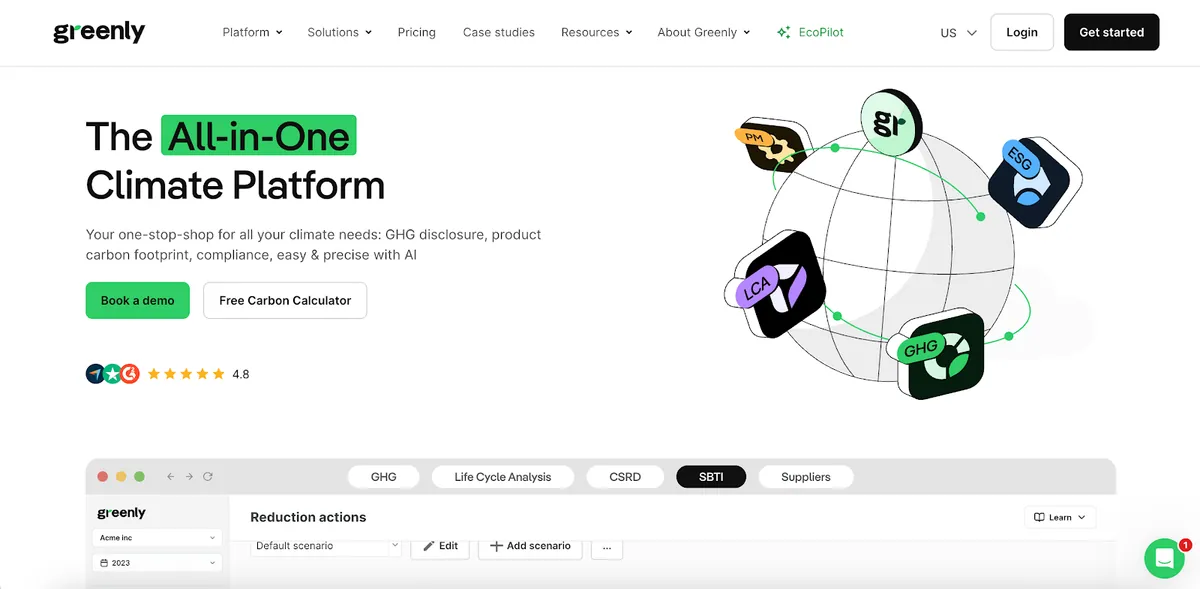
Greenly is an all-in-one climate platform, and like others, is built on the greenhouse gas protocol. It measures Scope 1, 2, and 3 emissions using an algorithm and human-based data analysis.
The platform provides access to the best emission factor sources, which gives you a complete picture of your company's sustainability initiatives.
It also has a built-in supplier engagement module that gathers vendor data. At the same time, it suggests procurement actions that align with SBTi and CBAM to ensure sustainable growth.
For carbon reduction, Greenly includes trajectory builders and decarbonization strategies. These help minimize the environmental impact of emissions.
Greenly even generates investor-grade reports that meet stakeholder requirements and show your commitment to the environment.
Greenly combines automated data collection and greenhouse gas accounting with AI anomaly detection to ensure quality control before you report.
The platform also provides unlimited access to expert support. This helps you move from raw data to audits and climate action faster.
Pricing is not listed upfront on Greenly’s website. This makes it harder to justify costs and advanced features as teams scale.
For businesses with complex supply chains, Greenly's supplier engagement feature also costs extra. It's only available on premium plans, and not entry-level tiers.
If you prefer transparent pricing with unlimited vendor/supplier data collection on every plan, Aclymate is the better choice. Sign up today to enjoy a 17-day free trial of Aclymate!
Best for: Corporations that seek advanced carbon accounting software with AI-driven insights and finance-ready planning.
When it might not be the best fit: Smaller or lean teams that want a simple, quick-start tool may find SINAI too complex.
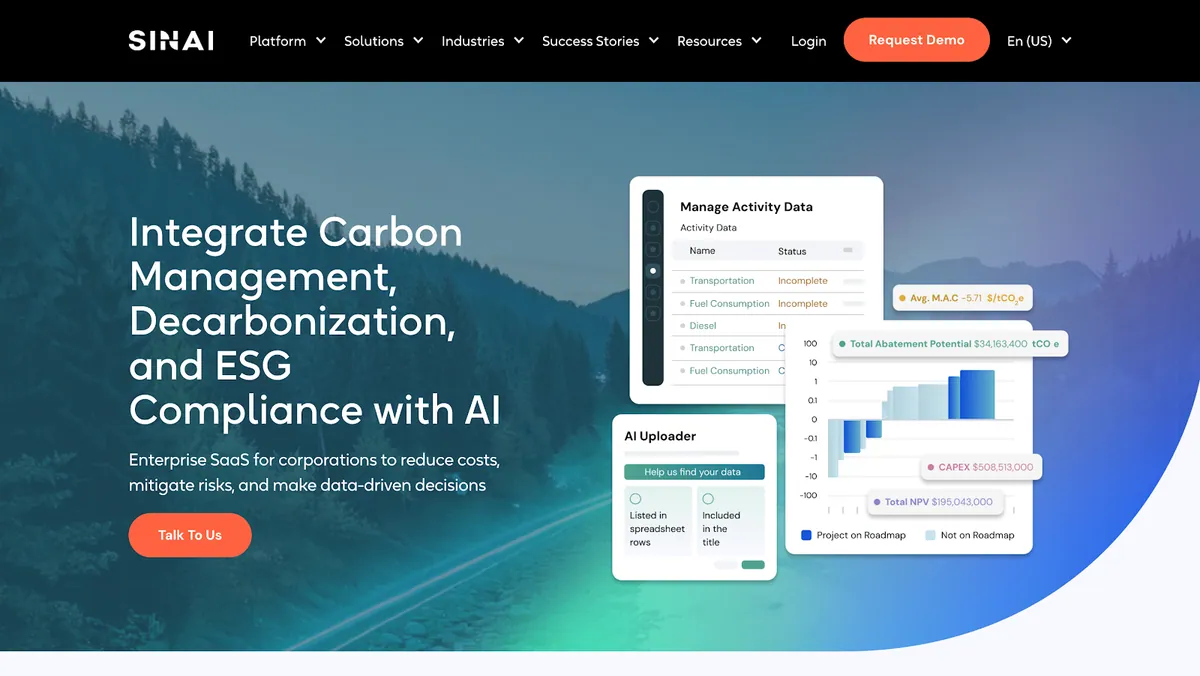
SINAI is designed for corporate teams that need carbon budgeting. It provides granular insights across all levels, from equipment and assets to business units and entire industries.
The platform includes an extensive library that covers over 50,000 emission factors. This supports emissions management that aligns with both global and regional standards.
SINAI technologies are also known for their advanced visualization tools powered by Tableau. They produce more precise emissions calculations while helping you identify inefficiencies through data analytics.
Beyond carbon accounting, SINAI helps you plan your decarbonization journey using interactive MACC curves and dynamic reduction scenarios.
Plus, the platform's financial transition planner computes the total cost savings of mitigation projects. This allows you to prioritize climate actions that combine both profitability and sustainability.
SINAI combines carbon accounting, decarbonization, and ESG (environmental, social, and governance). It provides the necessary tools to track emissions and improve financial decisions.
The platform also generates AI-driven insights and visualizes climate plans using MACC curves. These help you develop cost-effective reduction projects that meet global regulatory standards.
SINAI's sustainability solution requires some time to set up and learn. The financial modeling tools are powerful but add complexity, which may be more than smaller teams need.
In contrast, Aclymate offers user-friendly software that caters to those who want a faster and easier onboarding process.
Best for: Corporations already on Microsoft who want built-in emissions tracking with enterprise data management tools.
When it might not be the best fit: Small businesses with limited budgets and those without complex sustainability data.
Microsoft offers several sustainable solutions to improve ESG data transparency and drive business growth.
Microsoft Sustainability Manager is among its popular products. It uses automated data connections and pre-built calculation methods to track your environmental footprint. This platform also supports carbon, water, and waste data management with calculation models for Scope 1, 2, and 3 emissions.
Meanwhile, the Microsoft Sustainability Cloud solution standardizes complex ESG data for faster analytics and more efficient reporting. It also powers better decisions and outcomes.
Microsoft even offers an Emissions Impact Dashboard. This measures the carbon impact of your cloud usage related to Azure and Microsoft Dynamics, so you can easily estimate avoided emissions.
Microsoft Sustainability brings emissions and ESG data into one place. It provides custom carbon calculations, visual dashboards, and an ESG data estate in Fabric.
The built-in AI tools add forecasting, what-if modeling, and Copilot chat for faster analysis and reporting, all inside the Microsoft stack.
Small to medium-sized companies might find Microsoft Sustainability Solutions too expensive. The Microsoft Sustainability Manager product can cost about $4,000 to $12,000 per tenant every month.
If you're seeking a more affordable solution, consider Aclymate instead. Pricing starts as low as $10 per month for startups under 10 employees. Book a demo today to see Aclymate's platform in action!
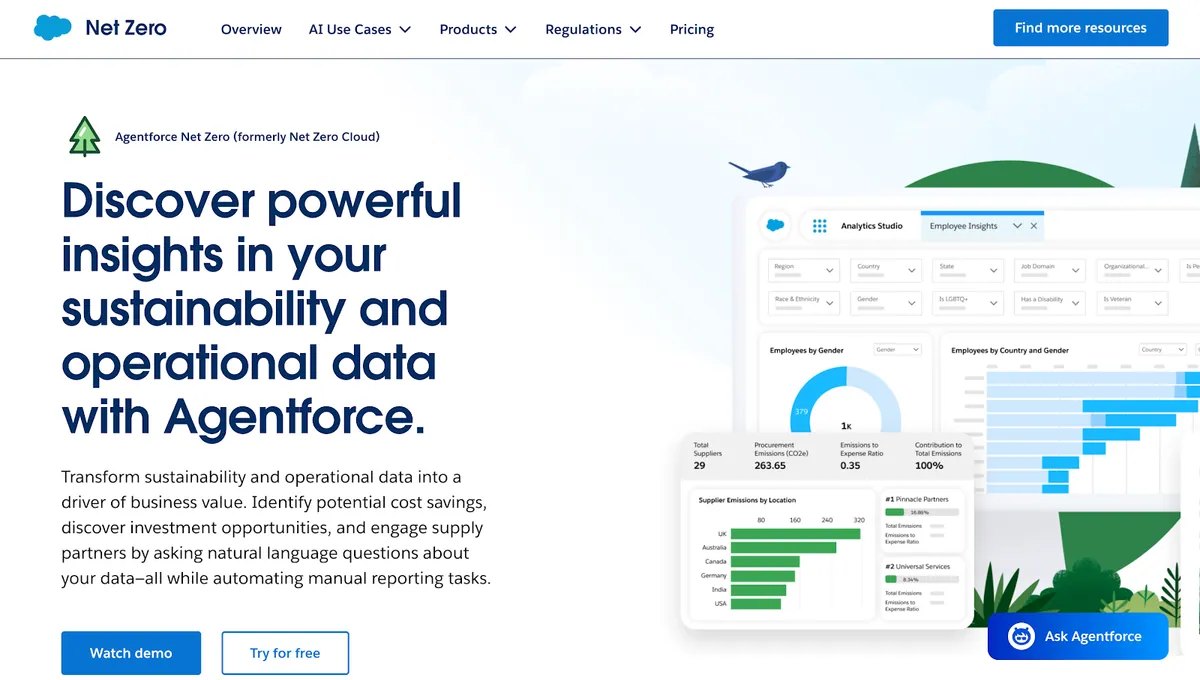
Best for: Enterprises running Salesforce that want emissions management and ESG reporting inside their CRM stack.
When it might not be the best fit: Smaller teams or companies not on Salesforce that expect plug-and-play software.
Agentforce Net Zero uses the greenhouse gas protocol to compute your carbon footprint. It analyzes energy consumption from utility bills, business travel, fleet data, and more to give you an accurate calculation.
The platform also helps you make data-driven, sustainable decisions by forecasting future emissions. At the same time, it measures your company's progress against net-zero goals through what-if analysis.
For disclosures and compliance, Agentforce’s framework-specific report builders align with CSRD, SASB, GRI, and CDP standards. You can create reports in Microsoft Word for easier navigation and seamless collaboration.
Plus, Agentforce stores all your emissions data in a single dashboard. This makes it easier to manage risks and optimize daily operations.
Built on the Salesforce ecosystem, Agentforce Net Zero brings ESG data into one place and turns it into insights you can act on.
It also automates carbon conversion, program analysis, and ESG reporting to improve both accuracy and efficiency of sustainability programs.
Agentforce Net Zero can be complex to set up, especially if your team is new to sustainability reporting. The platform also faces slow performance when handling large datasets.
Aclymate offers user-friendly software and easy setup. It also removes the burden of data management. Climate bookkeepers will handle the hard work for you, including data entry and compliance reporting.
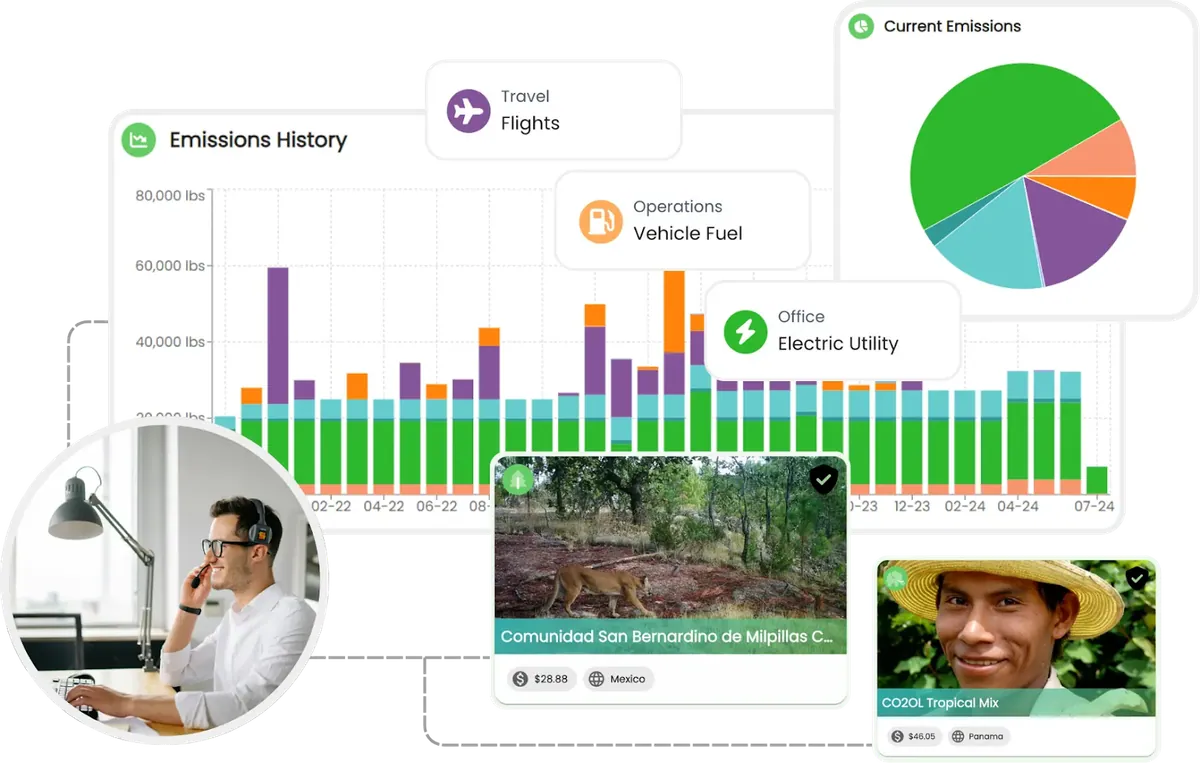
Want carbon accounting done for you? Aclymate provides an all-in-one climate platform to help you measure, offset, reduce, and report emissions alongside energy usage, water consumption, and waste production. It's designed for businesses without a dedicated sustainability team.
Aclymate's Turn Key service gives you access to climate bookkeepers and professional consultants. They will take care of data entry, emissions tracking, risk management, climate disclosures, and stakeholder communication.
Stay compliant and report with confidence, all without hiring a full-time consultant. You can even download audit-ready reports to obtain and maintain certifications like B Corp, EcoVadis, SBTi, and CDP.
Ready to make a real difference? You can also invest in meaningful carbon offset projects from Aclymate's built-in marketplace.
Sign up today to enjoy a 17-day free trial! You can also schedule a demo to learn how Aclymate can reach your climate goals faster than you think.
The right carbon accounting software depends on your specific requirements, sustainability goals, and budget. When evaluating different options, make sure to consider integration capabilities, reporting needs, data security, and team size.
Aclymate is a great option for small to mid-sized firms that want to run a full sustainability program without adding employees or overhead.
Carbon accounting software helps you measure, track, and report greenhouse gas emissions. It gathers bills, fuel data, and supplier inputs. Then, it applies accepted methods to generate reports for certification or regulatory compliance purposes. Some platforms even suggest strategies focused on emission, safety, and liability reduction.
Carbon data collection services combine strong data pipelines, large emission-factor libraries, and supplier engagement. These features ensure accurate carbon emissions calculation.
Most companies and financial institutions use the greenhouse gas protocol for carbon accounting. It covers Scopes 1, 2, and 3 emissions and guides reporting. The best carbon accounting software aligns with this method to match disclosures with buyer and investor expectations.
The cost of carbon accounting solutions ranges from a few hundred dollars for small teams to thousands of dollars for enterprise teams with complex needs. Subscription fees increase with additional user seats, advanced features, Scope 3 depth, and access to expert support.
Get Aclymate's practical sustainability content delivered weekly.

AI is transforming carbon credit verification through satellite monitoring, automated analysis, and anomaly detection. But can technology solve the voluntary carbon market’s credibility problem? Discover the limitations of AI verification and how businesses can evaluate carbon credits while keeping emissions reductions ahead of offsetting.
Read Article

AI is creating new opportunities for businesses, but it also comes with an environmental cost. Carbon offsets can help address some of those emissions, but businesses need to understand what they are offsetting, how offsets work, and why measuring and reducing emissions should come first.
Read Article
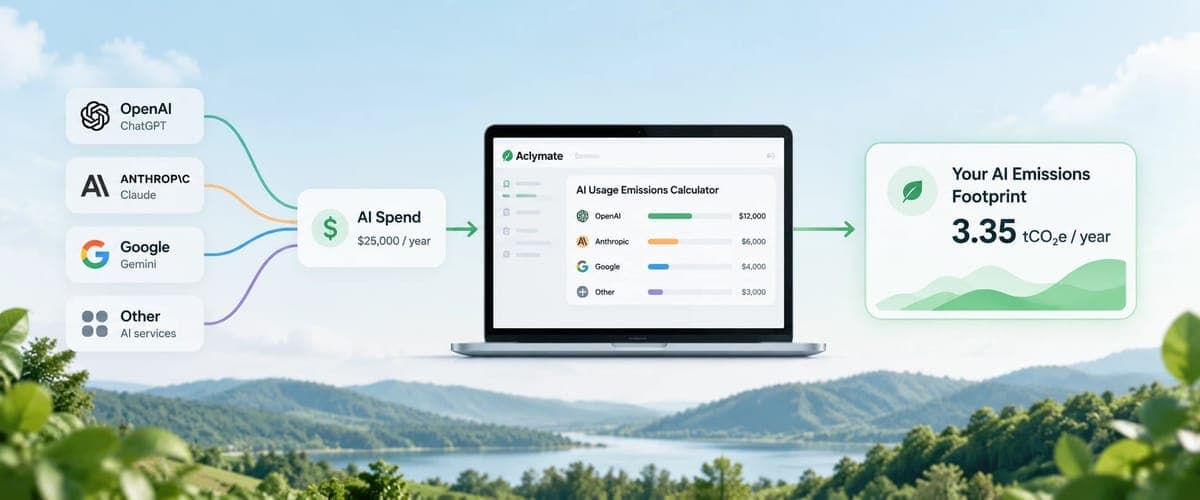
AI carbon emissions are becoming a new consideration for companies adopting ChatGPT, Claude, Gemini, Copilot and other artificial intelligence tools. Here’s how Aclymate estimates the carbon emissions from a company’s AI usage today—and how we expect the methodology to improve as AI providers release better usage and emissions data.
Read Article
Talk with a Sustainability Expert, see a demo, or start free to put the Aclymate platform and experts to work for your team.