← Back to Insights
Bill Zujewski
October 9, 2026

The voluntary carbon market has a credibility problem, and it's not a secret one. For years, investigations into specific forestry and avoidance credits have found that some projects delivered far less real emissions reduction than their certificates claimed, and that gap between paper credits and real impact is exactly what's made buyers, journalists, and regulators skeptical of offsetting as a strategy. AI is now being positioned as part of the fix, and in some real ways, it is. But AI changes how carbon credits are monitored and verified. It doesn't change what a company still needs to do before it relies on them.
AI's role in carbon credits is mostly about monitoring, reporting, and verification, the technical backbone known as MRV. This used to be slow, manual, and expensive: a verifier might visit a forestry project once a year, or rely on landowner-submitted data that was hard to independently confirm. AI is changing that in a few concrete ways:
The overall effect is real: monitoring that used to take months can now happen continuously, and problems that used to go unnoticed for years can now be flagged in near real time. That's a genuine improvement in market infrastructure.
Faster monitoring is not the same thing as guaranteed integrity, and it's worth being precise about the difference. AI can tell you that satellite imagery is consistent with a project's claims, or flag when it isn't. It can't independently establish that a project's baseline was set honestly, that its methodology was appropriate for its credit type, or that the additionality claim (the argument that the reduction wouldn't have happened anyway) holds up. Those are still judgment calls made by accredited validation and verification bodies working against standards like Verra's Verified Carbon Standard or the Gold Standard, and increasingly benchmarked against the Integrity Council for the Voluntary Carbon Market's Core Carbon Principles, which were established specifically to set a consistent quality bar across a market that had lacked one.
This matters for buyers because AI-powered monitoring and AI-generated project ratings are tools that support due diligence, not substitutes for it. A project can pass every automated anomaly check and still be a poor-quality credit if its underlying methodology or baseline assumptions were weak to begin with. The technology is getting faster at catching certain kinds of problems. It's not yet, and may never be, a replacement for independent, accredited human verification against a defined standard.
There's a subtler risk worth naming directly. As AI makes carbon credit verification faster and more sophisticated, it's tempting to treat "AI-verified" or "highly rated" credits as interchangeable with actual emissions reductions in your own operations. They aren't, and conflating the two is one of the more common greenwashing pitfalls, regardless of how well-verified the underlying credit is.
Offsets, even high-integrity ones, work by funding emissions reductions or removals somewhere else in the world. They don't reduce your company's own operational footprint. Under the GHG Protocol, offsets are tracked and reported separately from a company's actual Scope 1, 2, and 3 inventory, precisely so that a reader can tell the difference between what a company has measurably reduced and what it has paid someone else to reduce on its behalf. A claim that blurs that line, however sophisticated the underlying credit verification, is still a claim that overstates what's actually happened.
If your company is considering carbon credits as part of its sustainability strategy, AI-powered tools are a genuinely useful part of due diligence, not a shortcut around it. A practical approach looks like this:
Aclymate is built around getting the fundamentals right before offsets ever enter the picture. The platform calculates your company's actual Scope 1, 2, and 3 emissions using methodology aligned with the GHG Protocol, so you have a real, defensible baseline and a clear view of where reduction efforts will have the most impact, rather than reaching for offsets as a first move.
If and when offsets are part of your strategy, Aclymate keeps that data organized and clearly separated from your operational reductions in your reporting, with the documentation (registry, project type, verification standard) needed to back up the claim if a customer, investor, or auditor asks. Paired with real sustainability experts, Aclymate also helps teams evaluate whether a given credit purchase actually strengthens their story or just adds cost without adding credibility. You can see the full picture on Aclymate's carbon accounting software page, or revisit how these same claim-integrity questions apply more broadly in why AI alone can't make your sustainability claims credible.
AI is making carbon credit monitoring faster, more continuous, and better evidenced than the slow, manual verification processes that built the voluntary carbon market's credibility problem in the first place. That's a real improvement. But faster verification isn't the same as guaranteed integrity, and better-monitored offsets are still offsets, not a substitute for measuring and reducing your own footprint. The companies that get this right use AI-powered tools to strengthen their due diligence, keep offsets clearly separate from real reductions, and build their sustainability story on what they've actually measured and changed.
Ready to build a sustainability strategy grounded in real, measured reductions? Book a demo with Aclymate to see how automated emissions tracking and expert support help you get your own footprint right before offsets ever enter the conversation.
Get Aclymate's practical sustainability content delivered weekly.

AI is creating new opportunities for businesses, but it also comes with an environmental cost. Carbon offsets can help address some of those emissions, but businesses need to understand what they are offsetting, how offsets work, and why measuring and reducing emissions should come first.
Read Article
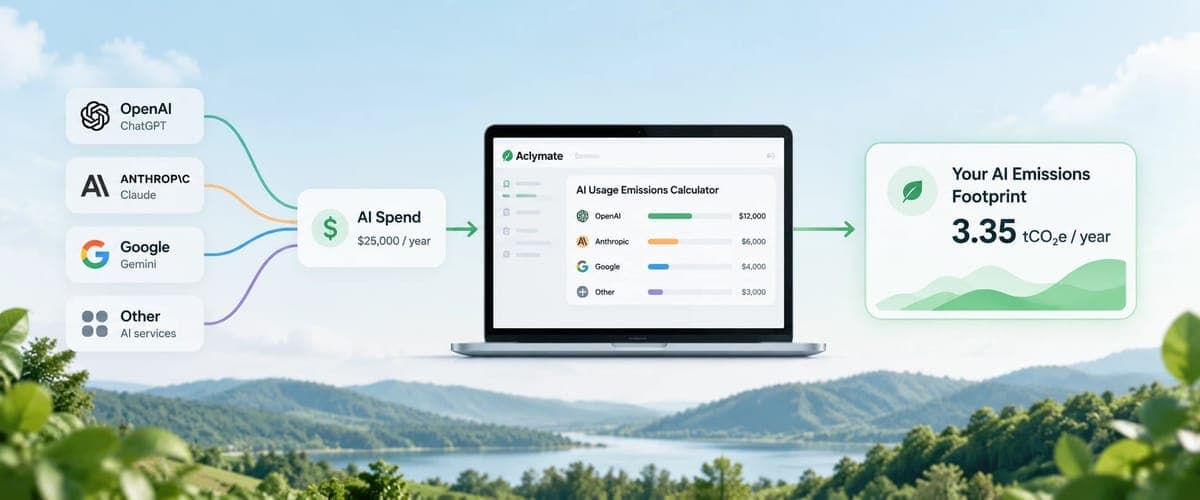
AI carbon emissions are becoming a new consideration for companies adopting ChatGPT, Claude, Gemini, Copilot and other artificial intelligence tools. Here’s how Aclymate estimates the carbon emissions from a company’s AI usage today—and how we expect the methodology to improve as AI providers release better usage and emissions data.
Read Article
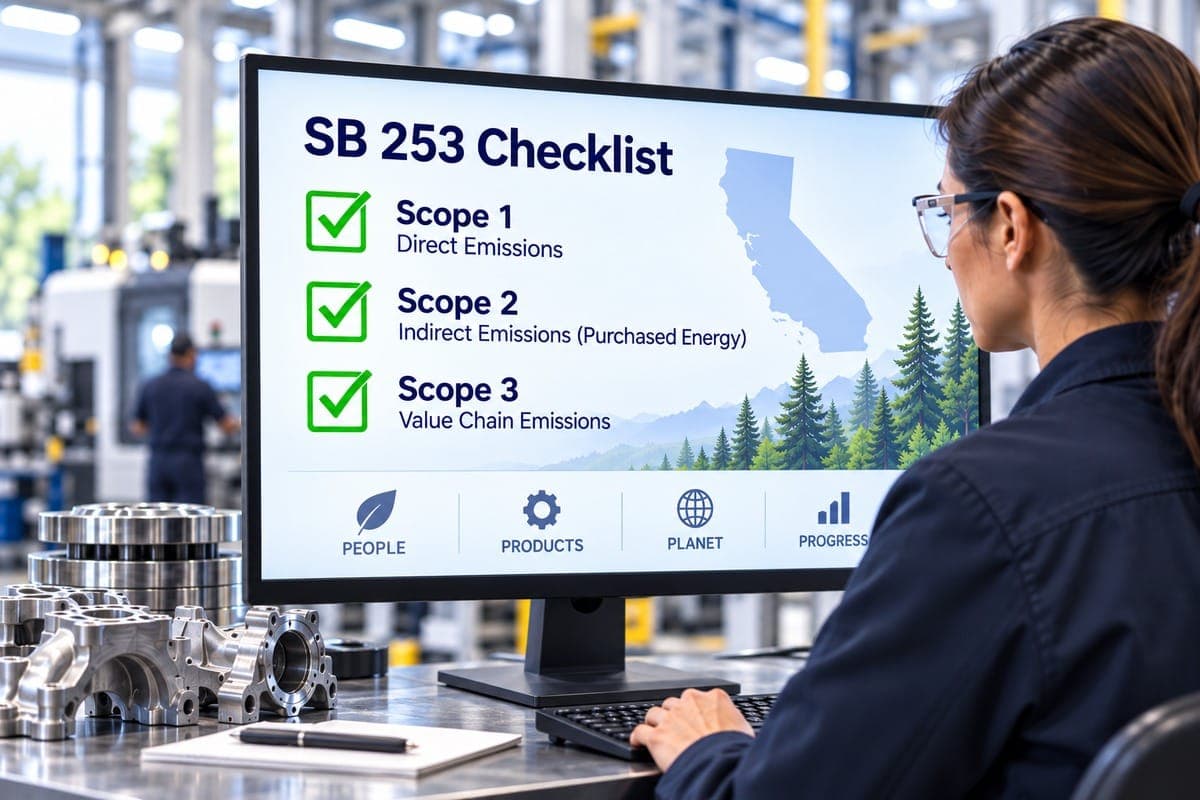
California SB 253 applies to companies over $1B in revenue — but its Scope 3 requirement reaches the automotive suppliers underneath them. What to expect and how to prepare.
Read Article
Talk with a Sustainability Expert, see a demo, or start free to put the Aclymate platform and experts to work for your team.