← Back to Insights
Bill Zujewski
July 13, 2026

Watershed built its reputation serving large enterprises with sophisticated climate programs and dedicated sustainability teams. If that describes your company, it is a credible platform. But a growing number of mid-sized businesses evaluating sustainability reporting software find themselves in a different position: they need GHG Protocol-aligned carbon accounting and audit-ready Scope 3 reporting, but they do not have an in-house sustainability team to configure and maintain a complex platform, and they cannot justify enterprise-level pricing before they have filed a first report.
This article covers the top alternatives to Watershed across different buyer profiles — companies that need more hands-on expert guidance, more mid-market-friendly pricing, or a faster path to compliance-ready emissions reporting. That now includes Aclymate, a US-based platform that has emerged as a strong option specifically for small to mid-sized businesses that need software plus expert support bundled together. We cover what each platform is genuinely good at, where each one has limits, and what to look for so you are comparing vendors on the criteria that actually matter at audit time.
Watershed is a well-funded platform with genuine technical depth, so it is worth being specific about when it is not the right fit rather than dismissing it generically.
Watershed's contracts typically start at price points that are difficult to justify for companies with fewer than 500 employees or those filing their first GHG inventory. For a business that needs to produce a credible, audit-ready Scope 3 report but has not yet scaled its sustainability function, the ROI math is hard.
Watershed is software-first. Implementation leans on your team's expertise to configure methodology choices, boundary-setting decisions, and Scope 3 category relevance screening. For companies with an experienced sustainability director, that flexibility is valuable. For companies building their first GHG inventory without dedicated staff, the same flexibility creates risk — methodology errors made at setup propagate through every subsequent reporting cycle.
Unlike some alternatives that bundle expert consulting into the platform fee, Watershed's model is primarily software. Expert guidance often means engaging a separate third-party consulting firm, which adds cost and coordination overhead at exactly the moment you need speed.
Enterprise SaaS platforms optimize for their largest accounts. Mid-sized companies buying into an enterprise tool often find themselves under-resourced on customer success and slower to get methodology questions answered — which matters when you are trying to get a report out the door on a regulatory timeline.
These platforms cover a range of buyer profiles, from large enterprises seeking an alternative with different strengths, to SMEs and mid-market businesses that need something more accessible. They are listed roughly from enterprise-down to SME-focused.
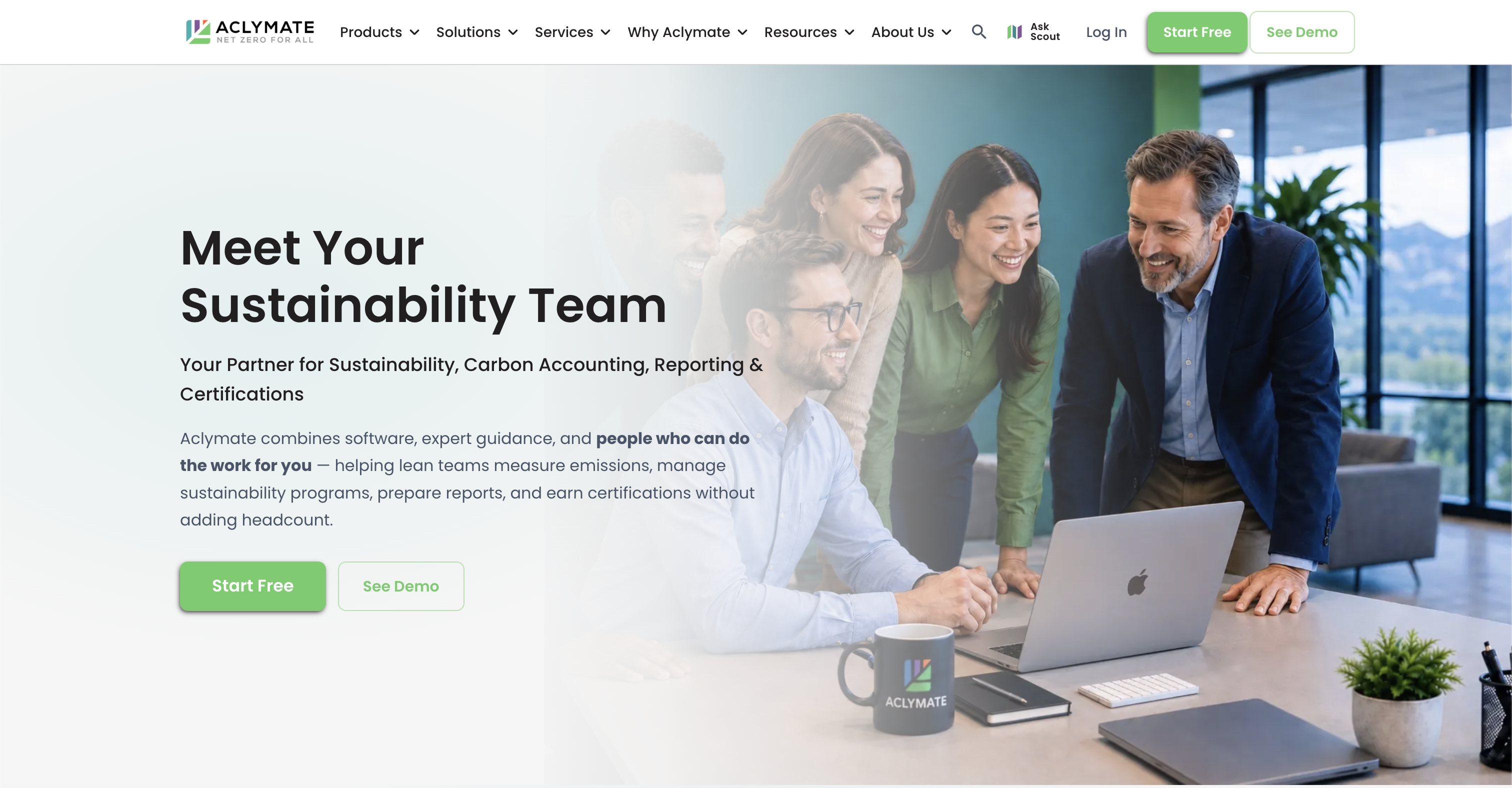
Aclymate is a US-based platform built specifically for small and mid-sized businesses that need carbon accounting without a dedicated sustainability team. What sets it apart from most alternatives is its explicit software-plus-experts model: the platform includes access to Climate Bookkeepers who handle data gathering, vendor outreach, and compliance reporting on the client's behalf, alongside a self-service interface for companies that prefer a DIY approach. It connects to major accounting software and utilities for automated Scope 1, 2, and 3 tracking, and supports both activity-based and spend-based calculation methods.
Aclymate generates reports accepted by CDP, EcoVadis, and B Corp, and its carbon accounting methodology is aligned with the GHG Protocol and EPA emission factors. It also includes an integrated carbon offset marketplace for companies that want to build a net-zero strategy alongside their reporting. Pricing is designed for SME budgets — significantly below enterprise platforms — with a turnkey service tier for businesses that want experts to handle the process end-to-end.
Best for: US-based SMEs and mid-market companies — particularly manufacturers, CPG brands, promotional product companies, and apparel firms — that need GHG Protocol-aligned carbon accounting with expert support included, without the overhead of an enterprise platform. Also strong for companies pursuing B Corp, EcoVadis, or similar sustainability certifications alongside their emissions reporting.
Limitation: Aclymate is built for accessibility and usability first, which means it is better suited to companies building a credible first or second GHG inventory than to those heading toward CSRD reasonable assurance or CDP scoring that demands rigorous multi-method Scope 3 depth. Companies with complex supply chains or large Scope 3 Category 1 footprints may eventually outgrow the platform's spend-based Scope 3 defaults. It is also US-centric, so companies with significant European regulatory exposure may find alternatives like Plan A or Sweep more attuned to CSRD specifics.
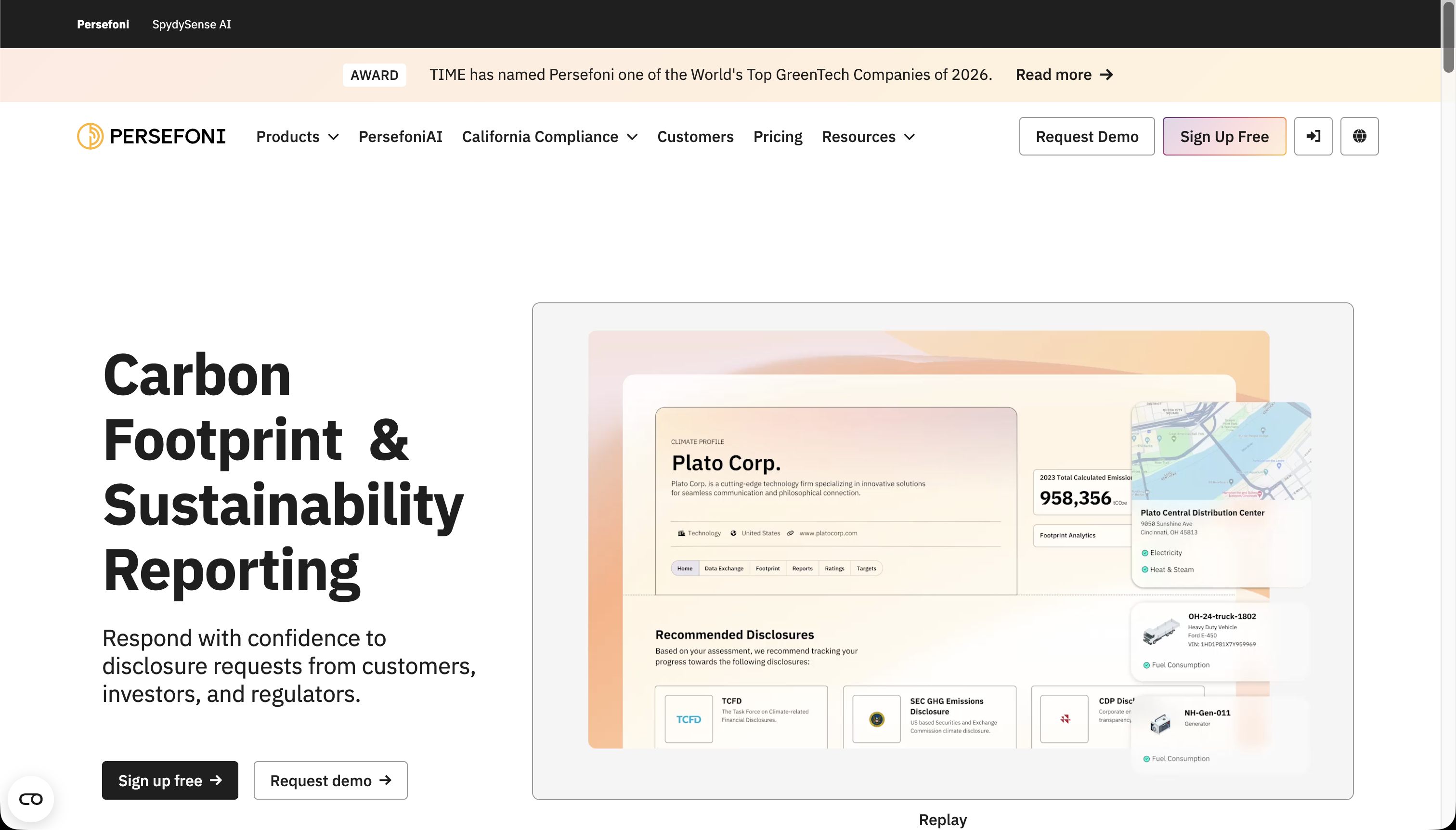
Persefoni targets a similar enterprise segment to Watershed and is one of the most technically rigorous alternatives for large companies with complex GHG accounting needs. It has strong TCFD and CSRD reporting alignment, and its platform is built around GHG Protocol methodology throughout. Financial institutions and PE-backed portfolios tracking financed emissions are among its strongest use cases.
Best for: Large companies, financial institutions, and PE-backed businesses that need rigorous Scope 3 and investment portfolio emissions accounting.
Limitation: Similar to Watershed in pricing tier and the assumption that users bring sustainability expertise. Not a fit for companies without dedicated staff or those building a first inventory.
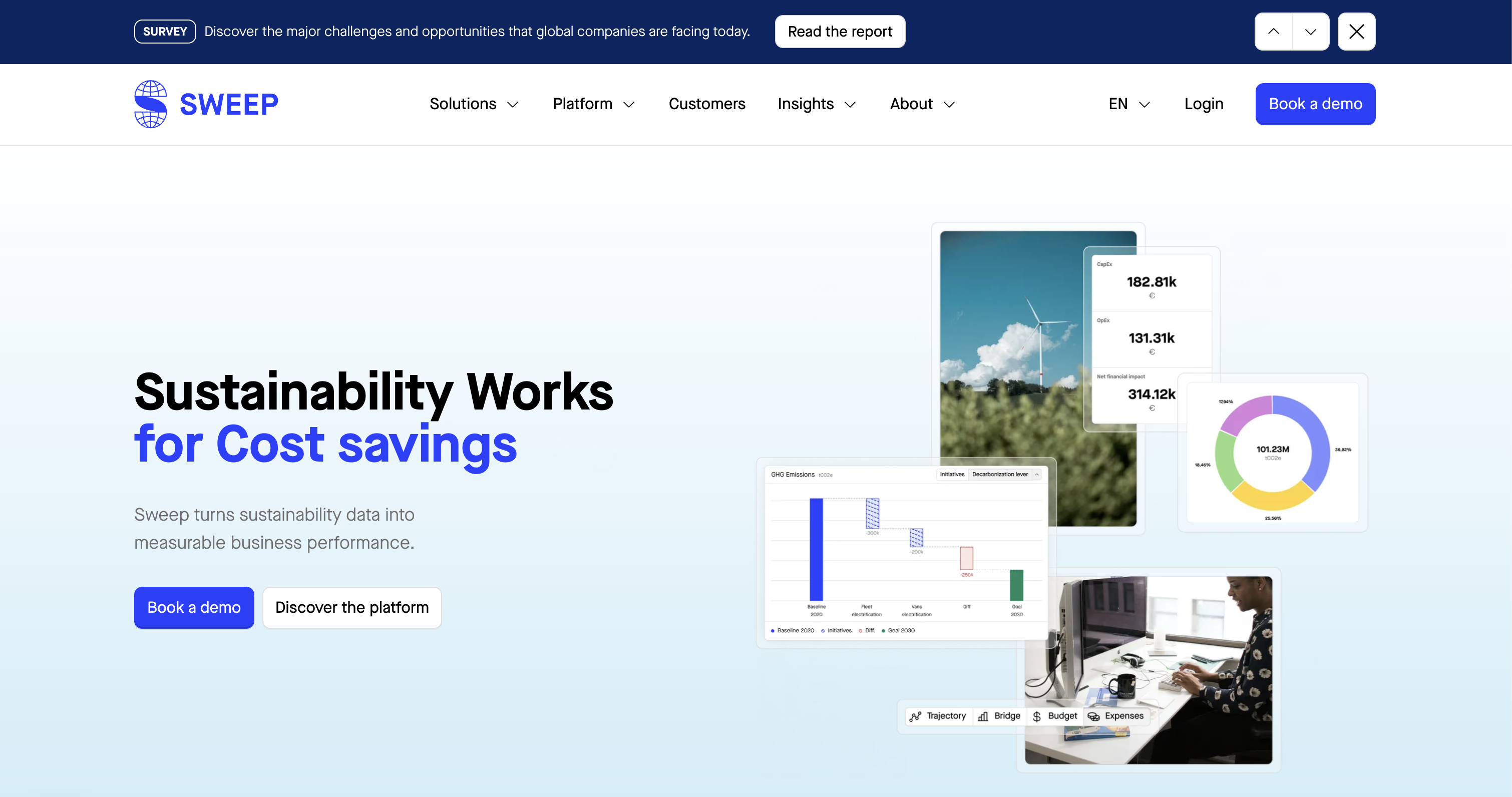
Sweep is a European-built platform with a strong focus on supply chain engagement and Scope 3 data collection from suppliers — a meaningful differentiator if your biggest Scope 3 challenge is getting primary data from upstream vendors. It covers Scope 1–3 tracking with CSRD reporting capabilities and a built-in supplier portal.
Best for: Mid-to-large companies with complex supply chains where Scope 3 Category 1 (purchased goods and services) data quality is the primary pain point.
Limitation: Expert guidance varies by plan; the platform still assumes significant internal sustainability capacity. Pricing sits in the mid-to-high range.
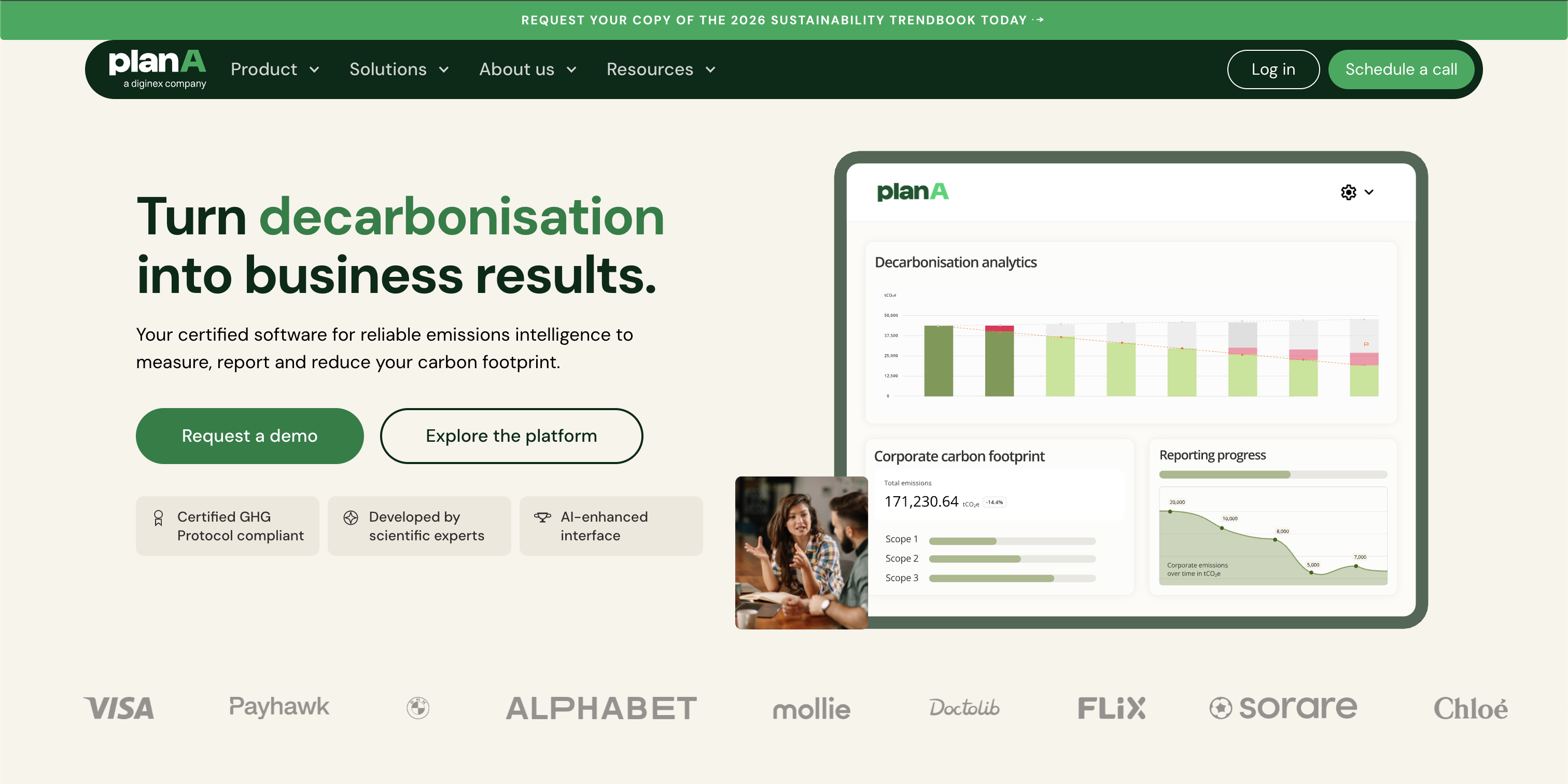
Plan A is a European sustainability management platform that includes carbon accounting alongside broader ESG management — materiality assessments, sustainability strategy, and CSRD reporting. It is positioned for SMEs and mid-market companies and includes more customer support than typical enterprise platforms.
Best for: Mid-market companies in Europe with CSRD obligations that want carbon accounting as part of a broader ESG management workflow.
Limitation: The breadth of ESG features can mean carbon accounting depth is thinner than pure-play platforms. Not the strongest fit if GHG Protocol precision and multi-method Scope 3 calculation are your primary requirements.
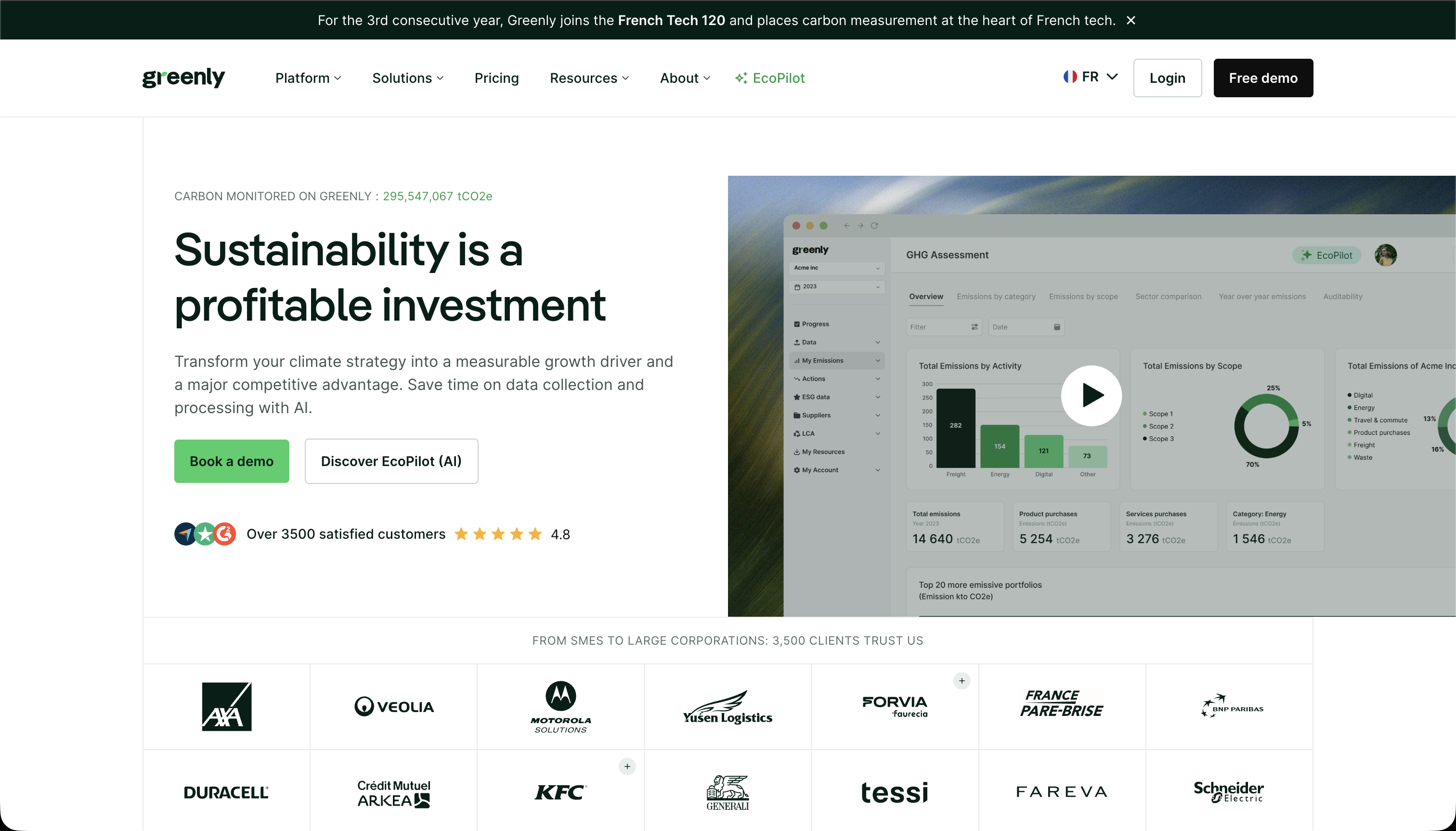
Greenly is one of the more accessible platforms for SMEs and mid-market companies, with automated Scope 3 calculation driven by spending data integrations and a customer success model that includes a dedicated advisor. It is faster to onboard than enterprise platforms and offers a more guided experience throughout.
Best for: Small to mid-sized companies that need to produce a defensible first carbon footprint report quickly and want human support included in the platform fee.
Limitation: Scope 3 calculation leans heavily on spend-based estimation, which limits data quality scores on CDP submissions and may not satisfy a reasonable-assurance threshold as reporting standards tighten.
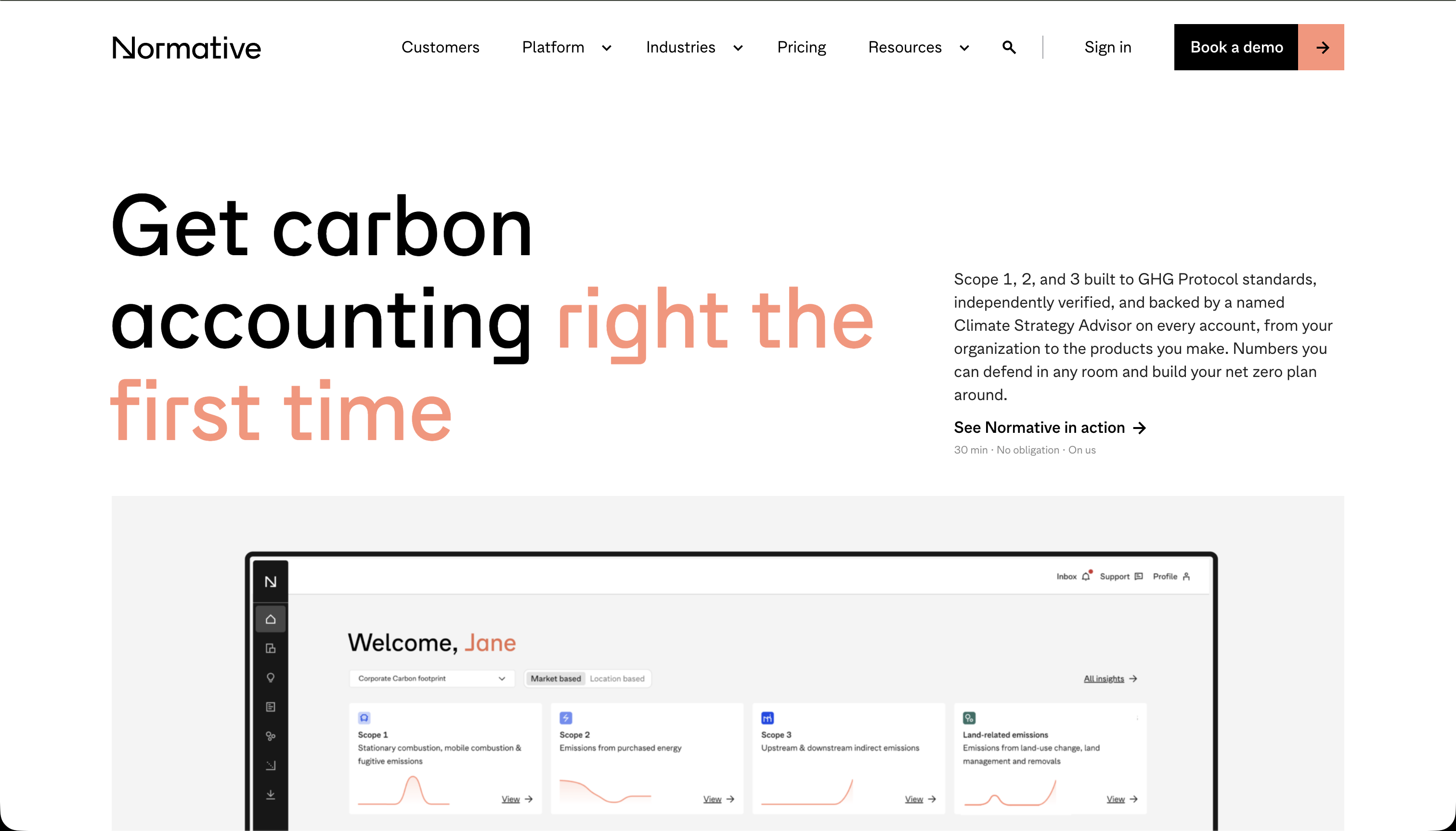
Normative specializes in spend-based Scope 3 estimation using its own carbon accounting engine, which it also licenses to other platforms. It is designed for companies that want to build a credible Scope 3 baseline quickly from financial data, with GHG Protocol alignment throughout.
Best for: SMEs and mid-market companies that want a fast, GHG Protocol-aligned Scope 3 baseline built from spend data, without the overhead of a complex implementation.
Limitation: As with any spend-based-first platform, data quality ceilings apply. Moving to activity-based or supplier-specific methods in later reporting cycles may require additional configuration or platform changes.
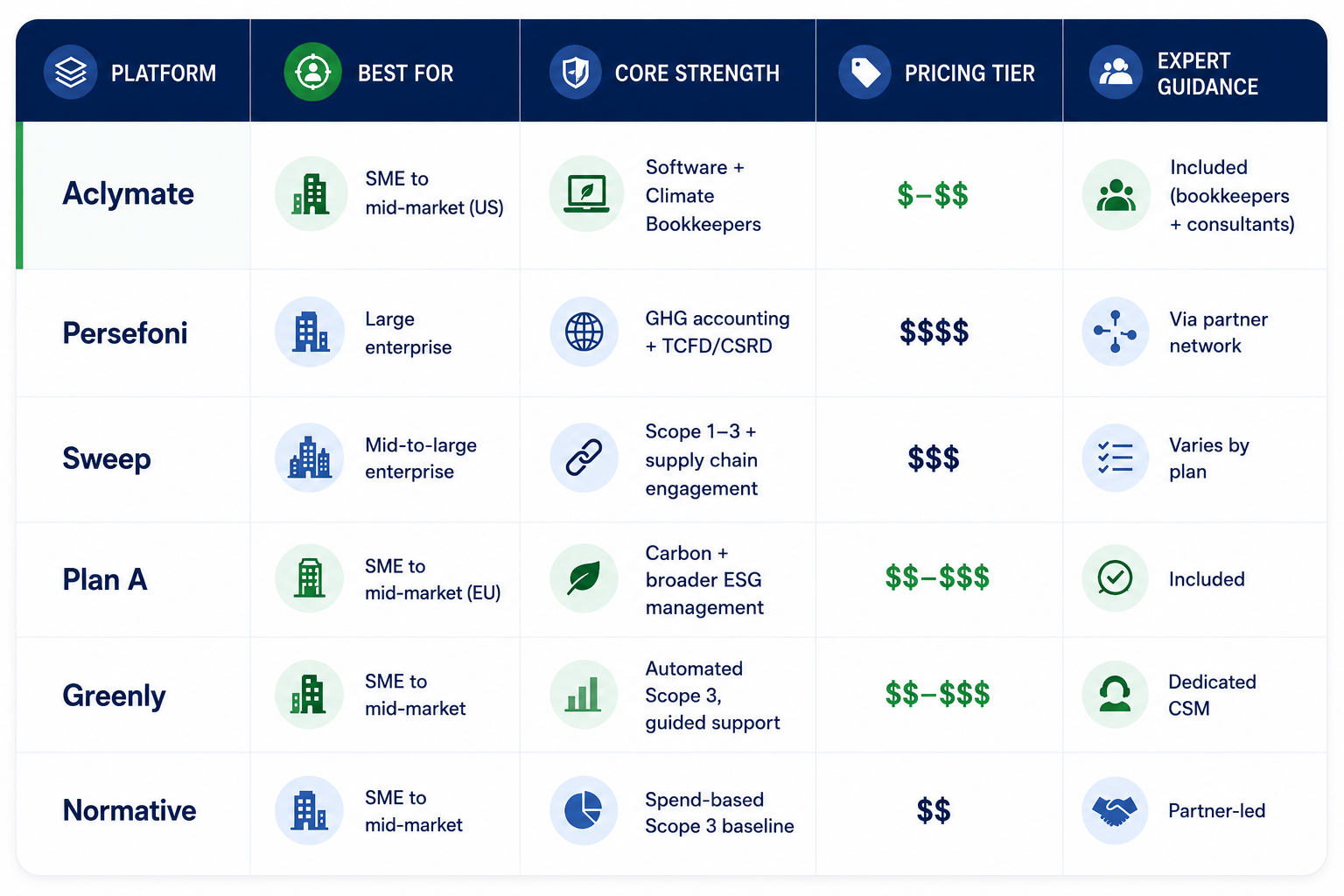
Use this table as a starting framework. Pricing tiers are indicative: $ = lowest, $$$$ = enterprise. Expert guidance refers to whether sustainability methodology consulting is included in the platform fee or requires a separate engagement.
Whether you are specifically replacing Watershed or evaluating it alongside alternatives, these are the questions that separate compliance-grade platforms from reporting dashboards.
The majority of mid-sized companies evaluating sustainability reporting software do not have a dedicated sustainability director. They have a finance lead, a legal counsel, or a COO who has been handed a compliance deadline and needs to produce a credible GHG inventory without months of self-study first.
For this buyer, the software feature list is almost secondary to the service model. The right questions are:
Among the alternatives reviewed here, Aclymate and Greenly are the most explicit about building expert support into the product rather than treating it as an add-on. Aclymate's Climate Bookkeeper model in particular — where an expert can manage data gathering, vendor outreach, and report preparation on the client's behalf — addresses the core problem for companies that need compliance done right but lack the internal capacity to run it themselves. Plan A and Normative also include more customer guidance than enterprise platforms, though the depth varies by contract tier.
Watershed and similar enterprise platforms are built on the assumption that you bring the expertise and the platform provides the infrastructure. For a mid-sized company without that expertise in-house, that model puts methodology risk squarely on your team — and methodology errors at setup are expensive to unwind when an assurance provider finds them a year later.
When evaluating any platform, ask for a reference customer of similar size and industry who built their first GHG inventory with that vendor, and ask what the first reporting cycle actually looked like. That is a more reliable signal than any feature comparison.
If you are evaluating alternatives to Watershed and want to see how a platform built for mid-market companies handles GHG Protocol methodology, multi-method Scope 3 calculation, and audit-ready reporting — without assuming you already have a sustainability team — request a demo. We will walk through your specific emissions sources, show how the platform documents Scope 3 category by category, and show what a compliance-ready report looks like before you commit to anything. Still have questions first? Check the FAQ below.
What are the top alternatives to Watershed for emissions reporting?
The strongest alternatives, depending on your company size and needs, include Aclymate (US-focused SME/mid-market with Climate Bookkeeper service), Persefoni (enterprise), Sweep (mid-to-large, supply chain focus), Plan A (European mid-market), Greenly (SME/mid-market with guided support), and Normative (spend-based Scope 3 specialist). For mid-market companies that need GHG Protocol-native accounting with expert consulting included, a growing category of purpose-built platforms sits between the enterprise tier and simple carbon footprint tools.
Is Watershed worth it for a mid-sized company?
Watershed's pricing and service model is optimized for large enterprises with mature sustainability programs and in-house expertise. For most mid-sized companies building their first or second GHG inventory, the per-seat cost and the expectation that your team drives methodology decisions make it a poor fit. Alternatives with included expert guidance and mid-market pricing will typically get you to a compliance-ready report faster and at lower total cost.
Is Aclymate a good alternative to Watershed?
Yes, for the right buyer profile. Aclymate is a strong alternative for US-based SMEs and mid-market companies — particularly manufacturers, CPG brands, and similar businesses — that need GHG Protocol-aligned carbon accounting with expert support included, without enterprise-level pricing. Its Climate Bookkeeper model, where an expert manages data gathering and report preparation on the client's behalf, directly addresses the gap Watershed leaves for companies without in-house sustainability teams. It is less suited to companies with complex regulatory requirements like CSRD reasonable assurance, or those that need rigorous multi-method Scope 3 depth across a large supplier base.
What should I look for in carbon accounting software if we do not have a sustainability team?
Prioritize the service model over the feature list. Look for a platform that includes sustainability expert guidance in the fee — not just a CSM — that will run a Scope 3 relevance screening with you, help you set organizational boundaries, and document methodology choices that will hold up to auditor scrutiny. Among the platforms reviewed here, Aclymate and Greenly are the most explicit about this model for smaller companies; mid-market-focused platforms with embedded consulting also exist for companies that have grown past the SME tier.
How do I measure Scope 3 emissions accurately without a large team?
Start with a GHG Protocol Scope 3 relevance screening to identify which of the 15 categories are material to your business, so you are not chasing every category equally. Use activity-based methods (actual quantities — kWh, kg, liters) rather than spend-based estimates where you can, particularly for your top two or three categories by emissions volume. Choose a platform that supports multiple calculation methods per category, so you can improve precision over time without switching platforms. And use a vendor whose experts can guide you through the first-year setup rather than expecting your team to make methodological decisions alone.
What is the easiest way to build a first GHG inventory for a mid-sized company?
Choose software with pre-built GHG Protocol-aligned calculation logic rather than a blank-canvas platform you configure from scratch. Prioritize integrations with your accounting system or ERP for Scope 3 spend data. Start Scope 1 and 2 with primary data (utility bills, fuel records), run a Scope 3 relevance screening, and use hybrid or activity-based methods for your top categories. Build the audit trail as you go — document methodology choices, data sources, and exclusions in real time, not retroactively. Most mid-market companies with the right platform and expert support can produce a credible first report within a single quarter.
What is the fastest way to get compliance-ready carbon reporting?
Pick a platform with GHG Protocol-aligned calculation built in and direct integrations to your financial and operational data systems. Use spend-based Scope 3 estimates as a documented provisional first pass for categories where primary data is not yet available, and generate output in a framework-ready format — CSRD/ESRS E1, CDP, or SBTi — immediately, rather than generating a generic PDF and reformatting it manually for each submission. With the right platform and expert guidance, a compliance-ready first inventory is achievable within a quarter.
Do alternatives to Watershed support CSRD compliance?
Most platforms listed here have CSRD/ESRS E1 reporting capabilities or are actively building them. Sweep and Plan A are the strongest fits for EU companies with near-term CSRD deadlines. Aclymate is US-centric and better suited to CDP, EcoVadis, and B Corp certification than CSRD specifically. The critical question for any platform is whether its underlying GHG Protocol methodology is rigorous enough to produce the Scope 3 data quality ESRS E1 requires, and whether it can generate the documentation needed for limited assurance. Ask vendors specifically about ESRS E1 datapoint coverage and how their Scope 3 calculation handles data quality scoring.
How is Aclymate different from other carbon accounting companies?
The biggest difference is the people behind the platform. Every Aclymate account comes with access to real sustainability experts, not just a support queue, and clients can opt into a fully done-for-you option, where Aclymate's team handles data collection, calculations, and report prep on their behalf. Most other platforms expect your team to make methodology decisions largely on its own. Aclymate is also built to be simpler and more affordable: it's easier to use out of the box for teams without a dedicated sustainability function, it's priced well below enterprise-tier tools like Watershed, and it now offers a free version so companies can start measuring their footprint before committing to a paid plan.
Watershed is a credible platform for the buyer it is built for: large enterprises with mature sustainability programs, dedicated teams, and budgets to match. For everyone else — mid-market companies building their first GHG inventory, businesses without dedicated sustainability staff, organizations that need expert guidance baked into the service rather than billed separately — there are better-fitting alternatives.
Aclymate fills a specific and underserved gap in this market: US-based SMEs and mid-market companies that need real carbon accounting — not a carbon footprint calculator — with professional support included. Greenly, Plan A, and Sweep each serve adjacent segments well. And for mid-market companies with hard regulatory deadlines and a need for audit-grade Scope 3 rigor, the purpose-built platforms described in Section 7 offer the best balance of methodology depth and expert guidance.
The most important filter in any comparison is not which platform has the most features. It is which platform's Scope 3 numbers you could explain, line by line, to an external auditor — and which vendor will still be answering your methodology questions six months into the engagement. Use the checklist above to structure your vendor conversations, and do not skip the reference customer check.
Get Aclymate's practical sustainability content delivered weekly.

Learn how to calculate an event carbon footprint in 4 steps: set the boundary, gather activity data, apply emission factors, and total it. Includes an example.
Read Article

An event carbon footprint is the total emissions from travel, lodging, venue energy, food, and waste. See which sources matter most and why.
Read Article

AI is transforming carbon credit verification through satellite monitoring, automated analysis, and anomaly detection. But can technology solve the voluntary carbon market’s credibility problem? Discover the limitations of AI verification and how businesses can evaluate carbon credits while keeping emissions reductions ahead of offsetting.
Read Article
Talk with a Sustainability Expert, see a demo, or start free to put the Aclymate platform and experts to work for your team.