← Back to Mike's Thoughts
Mike Smith
September 29, 2026
6 min read
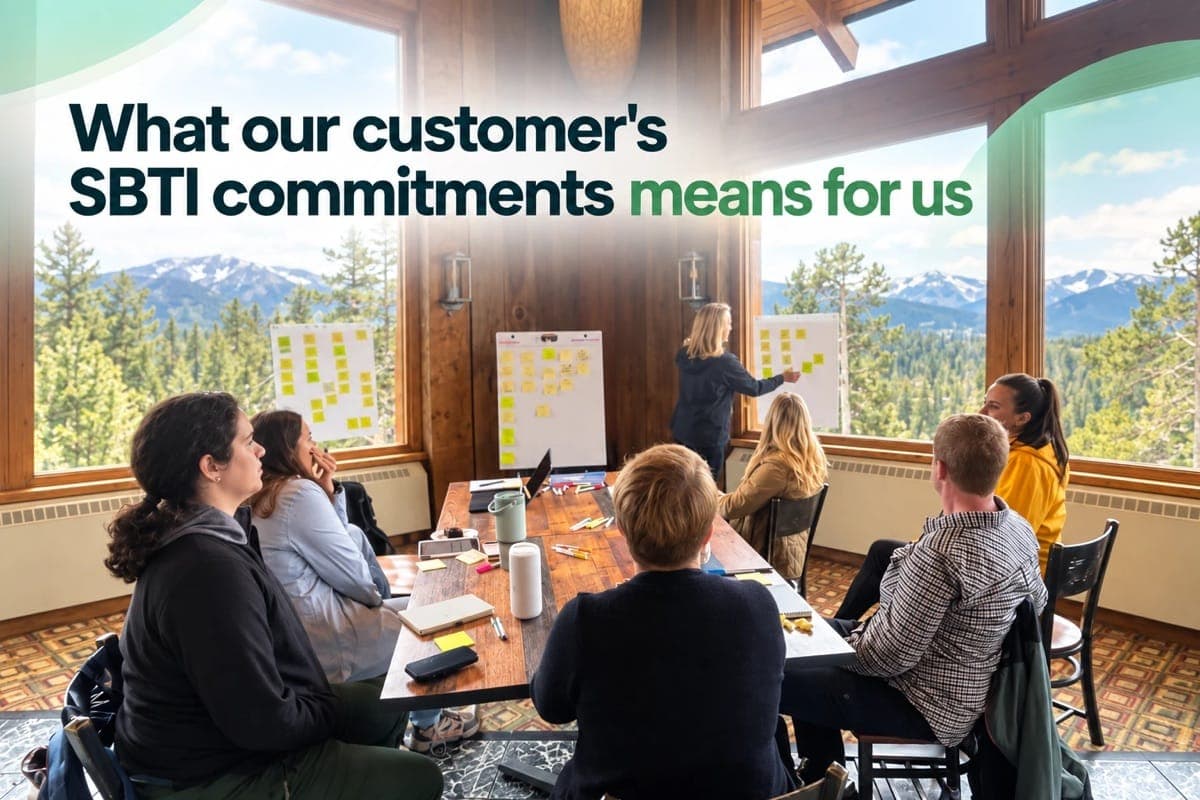
At our recent Proof Over Promises sustainability event in Colorado, I spent some time talking about the Science Based Targets initiative, or SBTi.
One question kept coming up in different forms:
If governments pull back on climate regulation, does all of this sustainability pressure go away?
I don’t think it does.
In fact, one of the most important things to understand about SBTi is that no government created it. It emerged from the sustainability and business community and has been voluntarily adopted by companies around the world.
And it has been adopted at scale. The current SBTi Target Dashboard lists thousands of companies with validated targets or commitments to set them. My presentation made the same larger point: SBTi's authority comes from market adoption rather than legislation.
That makes SBTi something different from regulation.
It is becoming a market standard.
And market standards can be remarkably powerful.
Companies often think about sustainability as a compliance question:
What does the government require us to do?
That is increasingly the wrong question.
A better question is:
What are our customers going to require us to do?
Large companies are under pressure to understand and reduce the emissions associated with their entire value chain. That means they cannot focus only on their own facilities, vehicles, and electricity use.
They also have to understand what is happening across their supply chains.
That is where smaller and mid-sized companies get pulled into the conversation.
Your company may not be directly regulated.
You may not have made a public climate commitment.
You may not even have a sustainability team.
But if one of your largest customers has committed to a science-based target, your emissions can become part of their problem.
That changes the dynamic completely.
For years, sustainability questionnaires often felt like exactly that: questionnaires.
A customer sent one over. Someone filled it out. Procurement checked a box.
That is changing.
Large customers are increasingly asking suppliers for emissions information in RFPs, vendor scorecards, supplier assessments, and purchasing decisions. In my Proof Over Promises presentation, I described this shift as sustainability moving from a questionnaire to a procurement filter.
You can see this mechanism in practice through CDP's supplier engagement and environmental disclosure system, where purchasing organizations can request standardized environmental information from their suppliers.
That distinction matters.
Once sustainability information affects whether you qualify as a supplier, renew a contract, or win new business, it stops being a side project.
It becomes a business requirement.
And this pressure is not only coming from customers.
Companies are seeing it from three directions: buyers asking for better sustainability and emissions information; capital markets, including lenders and insurers, paying greater attention to climate-related disclosure; and competition, where companies that can answer sustainability questions credibly may have an advantage over companies that cannot.
None of those forces depend entirely on federal regulation.
One of the least understood parts of SBTi is the way it can move climate expectations through a supply chain.
For companies with significant Scope 3 emissions, suppliers become an important part of achieving climate goals.
The practical result is straightforward:
The requirement cascades.
In our Proof Over Promises presentation, I called this the contractual bridge between a customer’s climate obligation and its supplier’s actions.
That is why I think companies should pay attention to SBTi requirements even if they have no intention of becoming an SBTi company tomorrow.
The real question may be whether your customers are becoming SBTi companies.
There is also an increasingly complicated mix of climate disclosure requirements around the world.
California is a good example. The state's corporate climate disclosure program includes requirements associated with SB 253 and SB 261, including greenhouse gas reporting requirements for large companies doing business in California. The California Air Resources Board's corporate climate disclosure program provides the current regulatory information.
But the influence of these regulations does not stop with the companies directly covered.
Large businesses depend on suppliers for much of the information they need about their value-chain emissions.
That is why I often describe climate regulation this way:
A regulation somewhere can create a reporting requirement everywhere through Scope 3.
A mid-sized manufacturer in Ohio may never receive a regulatory notice from California or Europe.
But one of its largest customers might.
And that customer may turn around and request sustainability information from its suppliers.
That is how sustainability requirements travel through the economy.
I don’t believe every company needs to rush out tomorrow and make an SBTi commitment.
That would miss the point.
Instead, companies should understand where the pressure is coming from and prepare accordingly.
Are your largest customers setting science-based targets?
If they are, learn what that could mean for suppliers. SBTi provides a useful overview of how companies set science-based targets and the business rationale behind them.
Are customers already asking you for Scope 1, Scope 2, or Scope 3 information?
If those requests are becoming more frequent, that is a signal.
If the terminology itself is still unfamiliar, we wrote a plain-language Aclymate guide to carbon accounting and Scope 1, 2, and 3 emissions.
Are sustainability questions appearing in RFPs or supplier scorecards?
If sustainability is becoming part of procurement, treat it as a commercial requirement rather than a marketing exercise.
Could credible sustainability performance help you differentiate?
Being able to answer a customer’s questions clearly and confidently can itself become a competitive advantage.
And perhaps most importantly:
Do you actually know your carbon footprint?
Because eventually, nearly every serious climate commitment leads back to measurement.
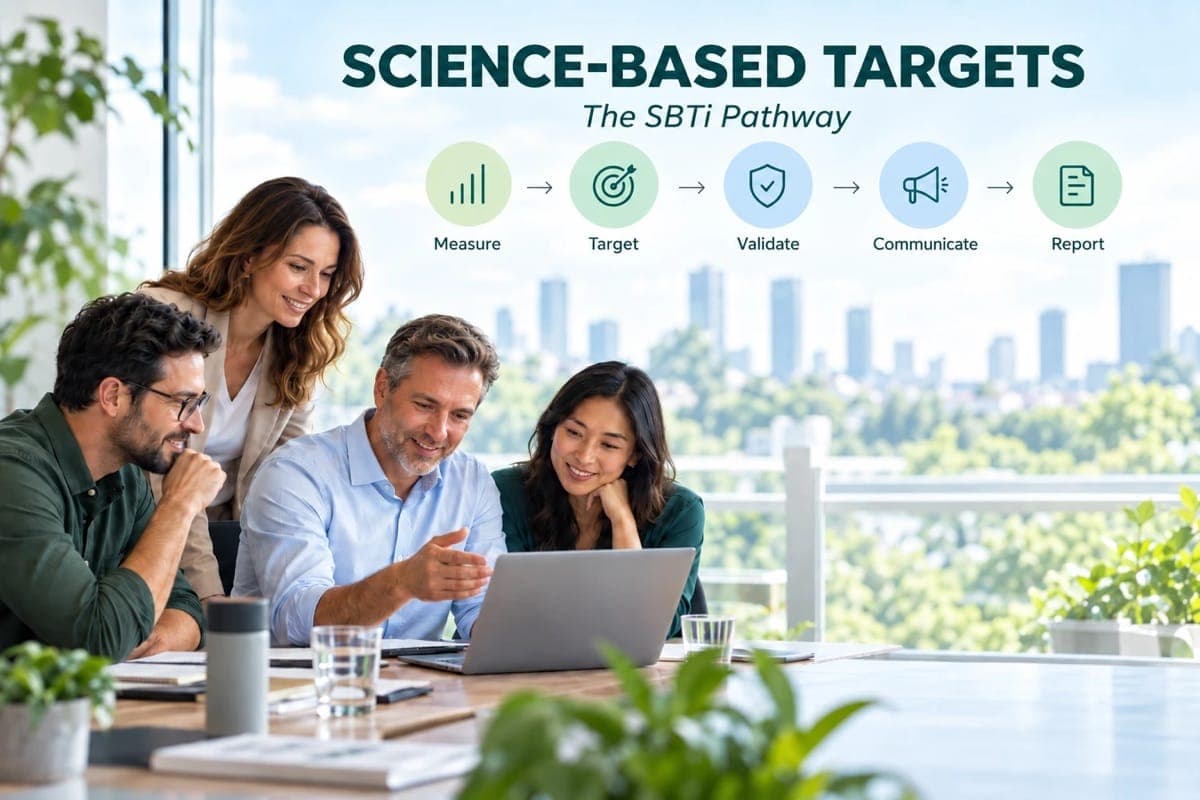
The SBTi pathway we discussed at Proof Over Promises follows a fairly logical progression:
Commit → Develop → Submit → Communicate → Disclose.
During the development stage, companies calculate their Scope 1, Scope 2, and Scope 3 emissions and use that footprint to develop reduction targets. After validation, companies move into ongoing emissions tracking and disclosure.
The foundation for much of corporate emissions measurement is the GHG Protocol Corporate Standard, which provides the widely used framework for companies to prepare corporate greenhouse gas inventories and measure value-chain emissions.
That last point is particularly important.
Setting a target is not the finish line.
It is the beginning of an ongoing management process.
After validation, companies need to track emissions and disclose progress over time.
That requires data, processes, accountability, and usually some combination of software and expertise.
You can technically manage a carbon footprint with spreadsheets.
But as the number of facilities, suppliers, emissions categories, reporting requests, and stakeholders increases, spreadsheets become harder to maintain and harder to trust.
The issue is not simply calculating a number once.
It is building a system that allows you to measure, manage, report, improve, and prove progress year after year.
That is why we increasingly think of carbon accounting as the foundation of a broader sustainability management process rather than as a one-time calculation.
That was the larger theme of our event, and it is what I believe is happening in sustainability more broadly.
For years, companies could make broad sustainability promises.
Increasingly, customers want evidence.
They want emissions data.
They want targets.
They want reports.
They want certifications.
And they want to understand whether the companies in their supply chains are actually making progress.
SBTi is one of the clearest examples of that transition. Its Corporate Net-Zero Standard provides a framework for companies pursuing science-based net-zero targets.
Its influence does not come primarily from a government forcing companies to participate.
It comes from companies deciding that science-based climate targets matter — and then asking their suppliers, partners, and vendors to help them deliver.
That may ultimately prove more durable than any single regulation.
Because when sustainability becomes part of who companies buy from, the market itself becomes the enforcement mechanism.
Aclymate helps companies measure their carbon footprint, manage sustainability programs, prepare reporting, and respond to growing customer and supply-chain requirements.
If you don't yet know your footprint, Aclymate Explorer provides a free starting point for estimating Scope 1, 2, and 3 emissions and identifying the data you may need next.
Start free or talk with a sustainability expert about what SBTi requirements and supplier climate expectations could mean for your business.
SBTi requirements are the criteria the Science Based Targets initiative uses to validate a company's emissions reduction targets as science-based. They cover measuring Scope 1, 2, and 3 emissions, setting reduction targets, getting them validated, and tracking and disclosing progress over time.
No. No government created SBTi. It emerged from the sustainability and business community and has been voluntarily adopted by thousands of companies. Its authority comes from market adoption rather than legislation, which makes it a market standard.
Companies with significant Scope 3 emissions need progress across their value chain to meet their science-based targets. So they ask suppliers for emissions data and climate commitments, and those suppliers ask their own suppliers. The requirement cascades through the supply chain.
Not necessarily. Start by understanding where the pressure is coming from: whether your largest customers are setting science-based targets, whether customers are asking for Scope 1, 2, or 3 data, and whether sustainability questions are appearing in RFPs or supplier scorecards.
With carbon accounting. Companies calculate their Scope 1, 2, and 3 emissions, usually following the GHG Protocol Corporate Standard, and use that footprint to develop reduction targets. After validation, they track emissions and disclose progress over time.
Get Aclymate's practical sustainability content delivered weekly.
From carbon accounting to validation and annual reporting, here's what companies should expect before committing to SBTi.
Read Article
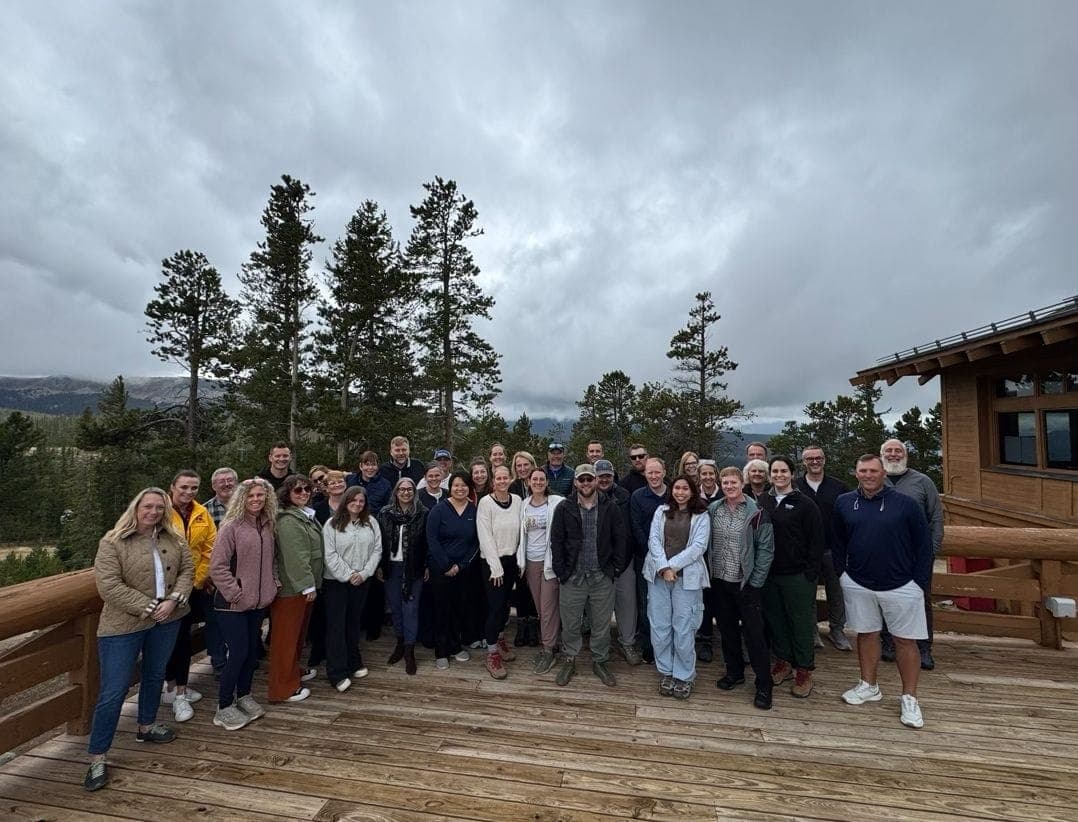
Last September I decided to host the first sustainability conference in the promotional products industry. Forty hours later at Winter Park, here's what we actually built — and what still has to happen.
Read Article

Aclymate CEO Mike Smith shares why he is attending Outdoor Retailer 2026 and what outdoor apparel brands must do to make sustainability practical.
Read Article
Talk with a Sustainability Expert, see a demo, or start free to put the Aclymate platform and experts to work for your team.