← Back to Mike's Thoughts
Mike Smith
September 29, 2026
10 min read
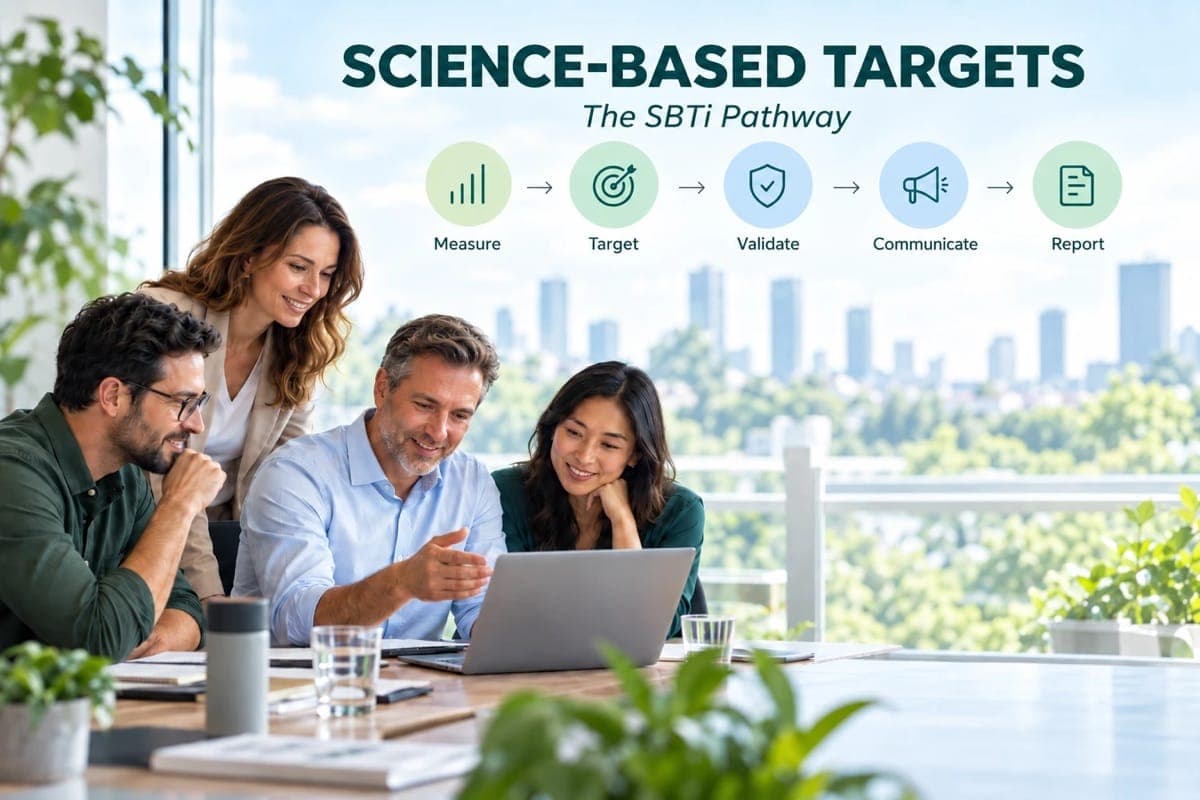
At our recent Proof Over Promises sustainability event, I talked about why the Science Based Targets initiative, or SBTi, is becoming so important to companies and their supply chains.
But once you get past why SBTi matters, there is a much more practical question:
What does it actually take to set a science-based target?
The short answer is that this is not simply a form you fill out or a pledge you make.
You need to understand your emissions. You need people inside the company who can provide data and make decisions. You need to establish realistic reduction targets. You need to submit those targets for validation. And once they are validated, you need to measure and report your progress going forward.
In other words, a science-based target isn't just a sustainability commitment.
It becomes an operating commitment.
Before doing anything else, determine which SBTi validation route applies to your company.
This is particularly important for mid-sized businesses because SBTi provides a streamlined route for companies that qualify as small and medium-sized enterprises, or SMEs.
But don't assume that "SME" simply means you have fewer than 250 employees.
SBTi considers several factors, including Scope 1 and Scope 2 emissions, employee count, turnover, assets, industry, and company structure. You can review the current criteria in SBTi's SME eligibility guidance.
This distinction matters because the SME route is simpler and considerably less expensive than the standard corporate validation route.
For many of the mid-sized companies I talk to, one of my first recommendations would be:
Figure out which path you're on before you build the rest of the project.
At Proof Over Promises, I summarized the operational journey in five steps:
Commit → Develop → Submit → Communicate → Disclose.
SBTi's current guidance treats registration as a separate first step, and a formal commitment is now optional for corporate companies. SMEs go directly toward target validation rather than making a separate commitment. SBTi's official target-setting guide provides the current process.
Regardless of what we call the individual steps, the work itself follows a very logical path.
The most important work often happens before anything is submitted to SBTi.
In my presentation, I gave companies five decisions to make before registering:
I would not underestimate that last point.
It is technically possible to do carbon accounting internally with spreadsheets and available emissions factors. SBTi does not require you to purchase carbon accounting software or hire a consultant.
But someone still has to do the work.
And the first real work is building your emissions inventory.
This is where the project becomes much more than a pledge.
Before you can establish a credible reduction target, you need to know what you're reducing.
That means calculating your greenhouse gas emissions.
SBTi recommends preparing a GHG inventory in accordance with the GHG Protocol. The GHG Protocol Corporate Standard and supporting guidance provide the foundation used by companies to measure organizational emissions.
For most companies, that means understanding:
This is often where companies discover that carbon accounting is not primarily a math problem.
It is a data problem.
Finance may have spend data.
Operations may have fuel and facility information.
HR may have employee and commuting information.
Procurement may have supplier information.
Travel systems contain another set of data.
Utility bills contain another.
No single person necessarily has everything.
If you're just beginning, a tool such as Aclymate Explorer can help establish an initial Scope 1, 2, and 3 footprint estimate and show you where your data gaps are.
That initial footprint is where the SBTi process becomes tangible.
Once you understand your emissions, you can begin modeling a reduction pathway.
In the presentation, I highlighted several pieces of this stage:
I think that last one deserves more attention.
Don't set a target simply because it looks good.
Ask whether the company can realistically execute against it.
Who will own the reduction initiatives?
What needs to change operationally?
What suppliers need to participate?
What capital investments might be required?
How will progress be measured?
A science-based target should eventually become part of the way the business operates—not something that lives in a sustainability presentation.
For many companies, Scope 1 and Scope 2 are relatively manageable.
Scope 3 is different.
You may have hundreds or thousands of suppliers. You may not have primary emissions data from most of them. Procurement systems were rarely designed with carbon accounting in mind.
And suppliers themselves may not know their footprint.
That is why I believe supplier data is going to become one of the biggest sustainability management challenges over the next several years.
Companies initially have to make reasonable estimates. Over time, they can replace assumptions with better supplier-specific information.
The important thing is to build a process that improves.
Tools such as Aclymate Navigator can help companies organize Scope 1, 2, and 3 data, supplier information, reporting, and sustainability records in one system rather than recreating the process every year.
Once you've built the inventory and developed your target, you submit the supporting information to SBTi Services.
This is where SBTi reviews whether your proposed targets meet its criteria.
The supporting materials can include your emissions inventory, methodologies, calculations, target rationale, organizational boundaries, and other technical documentation. My presentation also emphasized something very practical: companies need to be ready to answer reviewer questions quickly.
SBTi Services has published a useful beginner's guide to target validation that walks companies through registration, target development, submission, validation, communication, and disclosure.
This isn't an exam where you hand in your work and walk away.
It's a process.
Questions come up. Assumptions may need clarification. Documentation matters.
That is another reason good carbon-accounting infrastructure makes a difference.
You want to know where your numbers came from.
There are really two costs to think about.
The first is the SBTi validation fee.
The second—and usually more important—is the internal and external cost of actually preparing the company.
Current SBTi Services pricing shows how different the routes can be. SME near-term validation is currently $1,250 to $2,000, depending on the applicable tier. Corporate near-term validation ranges from $13,000 to $26,000 before applicable discounts, depending on company turnover. Combined near-term and net-zero validation carries different fees.
Companies should check the latest SBTi Services validation pricing before budgeting because pricing and service offerings can change.
But don't mistake the validation fee for the cost of the entire initiative.
There is also:
Those are the resources I would think about when deciding whether you're ready.
One of the most important lessons from working with companies on sustainability is that these projects fail when everyone assumes the sustainability manager can handle everything.
They can't.
In the presentation, I outlined the stakeholders I believe need to be involved.
You need an executive sponsor who can unblock decisions.
You need one day-to-day owner who is clearly accountable.
You need finance and procurement, because they hold much of the spend and supplier information required for carbon accounting.
You eventually need marketing and communications to communicate targets accurately.
You may want an external carbon-accounting or sustainability partner to help with the technical work.
And for Scope 3, you will probably need to engage suppliers earlier than you think.
The common failure mode is assigning SBTi to one person who doesn't have the authority or data access needed to get everyone else moving.
That isn't really a sustainability problem.
It's a management problem.
Companies naturally want a simple answer.
"How long until we're SBTi validated?"
The formal review is only one part of the timeline.
The bigger variable is how ready your organization is before you submit.
Do you already have a credible carbon footprint?
Can you access your Scope 3 information?
Have you agreed on your organizational boundary?
Are the right people involved?
Do executives agree with the proposed reduction target?
Do you know what it will take operationally to achieve it?
In the Proof Over Promises presentation, I suggested companies should be prepared for a multi-month process—often 7 to 15 months from initial preparation through the broader project, depending heavily on data quality, company complexity, and readiness.
A well-organized company with good emissions data may move much faster than one beginning with scattered spreadsheets and no defined owner.
Which is why my advice is simple:
Do the groundwork before you start the clock.
This may be the most important point in the entire article.
Once your target is validated, you're not done.
You're beginning.
Companies need to communicate their targets appropriately and then measure and publicly disclose progress over time.
In the presentation, I called this "the start of an ongoing obligation." Companies need to begin annual emissions tracking and disclosure, periodically review their targets, and—where relevant—engage suppliers in the same process.
Think about what that means operationally.
Next year, you need another footprint.
Then another.
You need to compare actual performance with the target.
You need to understand where emissions increased or decreased.
You need to manage reduction initiatives.
You need to respond to customers.
You need supporting evidence.
And increasingly, you need to manage sustainability throughout the year rather than rebuild a report from scratch every twelve months.
That's the transition from carbon accounting to sustainability management.
It's also why we've designed Aclymate around a broader lifecycle of plan, measure, manage, report, improve, and prove. Our sustainability management platform overview explains how those pieces fit together.
No.
That's worth saying clearly.
SBTi does not require you to purchase a carbon-accounting software platform.
You can build an emissions inventory with spreadsheets, internal teams, outside consultants, or some combination of the three.
But ask a slightly different question:
How do we want to manage this for the next five or ten years?
Because if your organization sets a science-based target, you're creating a recurring sustainability management process.
You'll be gathering data.
Tracking progress.
Working with suppliers.
Preparing reports.
Documenting assumptions.
Managing reduction initiatives.
Communicating results.
That's where the business case for having a system and experienced support becomes much easier to understand.
If I were sitting down with a CEO or sustainability leader considering SBTi, I would start here:
1. Do we know approximately what our carbon footprint is?
You don't need perfection on day one, but you need enough information to understand the project.
2. Do we know whether we qualify for the SME route?
That can materially change the complexity and cost.
3. Who owns this internally?
One person needs to be accountable.
4. Is leadership prepared to support the target after it's validated?
Don't commit to a target leadership isn't willing to help achieve.
5. Do we have the systems and expertise to measure progress every year?
Because the project doesn't end when SBTi says yes.
That's when the real work begins.
I like science-based targets because they move sustainability away from vague promises.
They force companies to answer concrete questions:
That's what Proof Over Promises was about.
The target itself isn't the accomplishment.
The accomplishment is building a company capable of delivering against it.
Aclymate helps companies build the carbon-accounting and sustainability-management foundation needed to measure emissions, organize Scope 3 data, prepare reports, and track progress over time.
Whether you're simply trying to understand your footprint or preparing for a formal science-based target, the first step is knowing where you stand.
Start free with Aclymate Explorer or talk with a sustainability expert about what your path to SBTi could look like.
Determine whether you qualify for SBTi's SME route or the standard corporate route. Build a Scope 1, 2, and 3 greenhouse gas inventory following the GHG Protocol. Model a reduction target you can actually deliver, submit it to SBTi Services for validation, then communicate the target and disclose progress every year.
Under current SBTi Services pricing, SME near-term validation costs $1,250 to $2,000 depending on tier, and corporate near-term validation ranges from $13,000 to $26,000 before applicable discounts, depending on turnover. The larger cost is usually preparation: data collection, carbon accounting, employee time, supplier engagement, and ongoing reporting.
Plan for a multi-month process, often 7 to 15 months from initial preparation through the broader project. Timing depends heavily on data quality, company complexity, and how ready the organization is before it submits.
No. SBTi does not require you to buy carbon accounting software or hire a consultant. You can build an emissions inventory with spreadsheets, internal teams, outside consultants, or a combination. But a validated target creates a recurring process of data collection, tracking, and reporting every year.
A streamlined, less expensive validation route for small and medium-sized enterprises. Eligibility depends on several factors, including Scope 1 and 2 emissions, employee count, turnover, assets, industry, and company structure, not simply having fewer than 250 employees.
Get Aclymate's practical sustainability content delivered weekly.
SBTi requirements are reshaping supply chains. Learn what science-based targets mean for carbon accounting, reporting, suppliers, and mid-sized companies.
Read Article
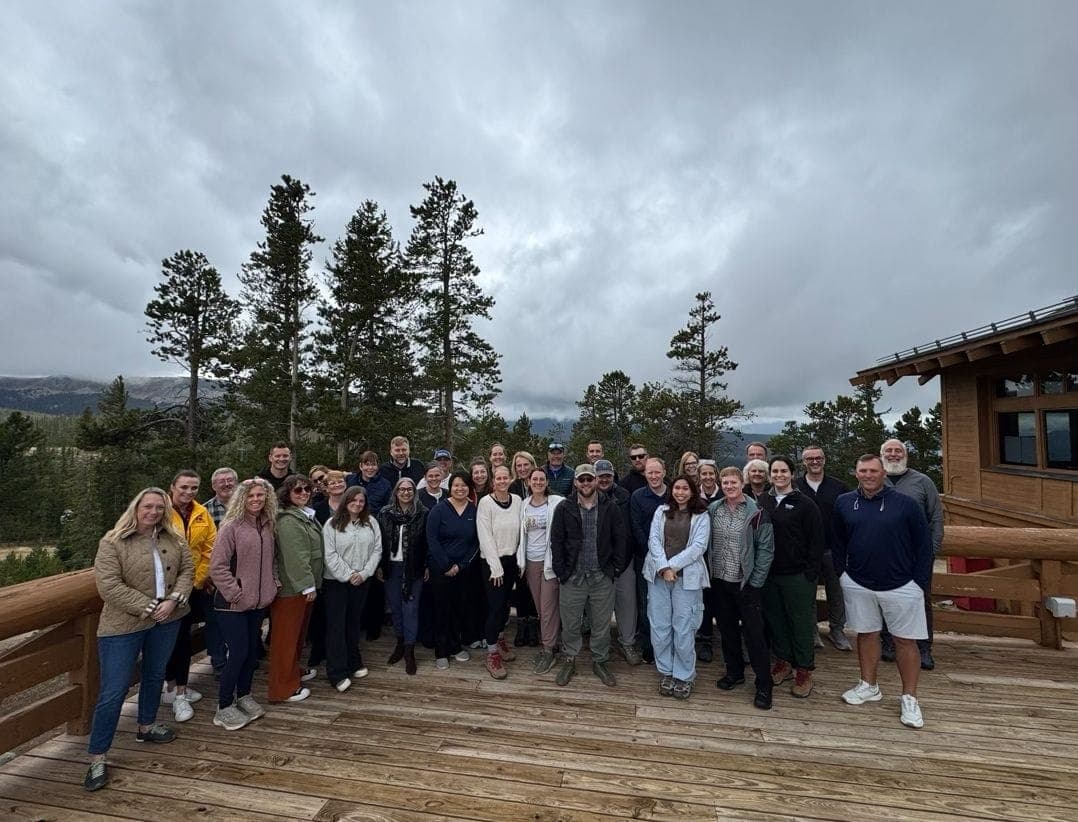
Last September I decided to host the first sustainability conference in the promotional products industry. Forty hours later at Winter Park, here's what we actually built — and what still has to happen.
Read Article

Aclymate CEO Mike Smith shares why he is attending Outdoor Retailer 2026 and what outdoor apparel brands must do to make sustainability practical.
Read Article
Talk with a Sustainability Expert, see a demo, or start free to put the Aclymate platform and experts to work for your team.