← Back to Insights
Juliette Camou
November 6, 2025

The supply chain represents a business's operational backbone, and for small and medium-sized enterprises, it carries substantial weight in determining their overall environmental, social, and governance footprint. Research indicates that companies implementing sustainable supply chains can reduce their greenhouse gas emissions by an average of 50%.
Notably, supply chain emissions dwarf operational emissions by a factor of 26, yet businesses typically concentrate their reduction efforts on operational improvements. The COVID-19 pandemic has accelerated digital transformation within SMBs, introducing new technologies that simultaneously improve efficiency and enable sustainable practices.
A robust sustainable supply chain rests on several foundational elements:
Implementing sustainable practices yields multiple advantages:
Despite clear benefits, SMBs encounter substantial barriers:
SMBs can implement several practical approaches:
Technology serves as a critical enabler:
Effective measurement requires:
B Corporation Certification provides third-party validation of sustainability claims. The process involves:
As of March 2025, approximately 9,576 businesses worldwide hold B Corporation certification, reflecting growing industry momentum toward sustainability validation and reduced greenwashing risk.
Emerging directions include:
Supply chain sustainability represents a complex but worthwhile undertaking for SMBs. By understanding key components, leveraging technology, building collaborative relationships, and pursuing relevant certifications, small and medium-sized businesses can achieve meaningful environmental progress while strengthening their operations and market position.
Why is supply chain sustainability important for SMBs? Supply chain sustainability minimizes environmental impact, reduces operational costs, enhances brand reputation, ensures regulatory compliance, and improves risk management.
What are the key components of a sustainable supply chain? Local sourcing, diverse sustainability-focused suppliers, circular economy principles, and technologies like AI and blockchain create transparency and efficiency.
What challenges do SMBs face? Limited financing, complex reporting requirements, expertise gaps, supply chain vulnerability, and systemic barriers—particularly for minority-owned businesses—impede progress.
How can technology support sustainability? AI, IoT, and blockchain improve decision-making, transparency, and traceability while facilitating data collection and operational efficiencies.
What is the B Corporation certification process? Companies must score 80+ on impact assessment, publicly disclose metrics, integrate stakeholder governance commitments, and undergo verification every three years.
Get Aclymate's practical sustainability content delivered weekly.

AI is creating new opportunities for businesses, but it also comes with an environmental cost. Carbon offsets can help address some of those emissions, but businesses need to understand what they are offsetting, how offsets work, and why measuring and reducing emissions should come first.
Read Article
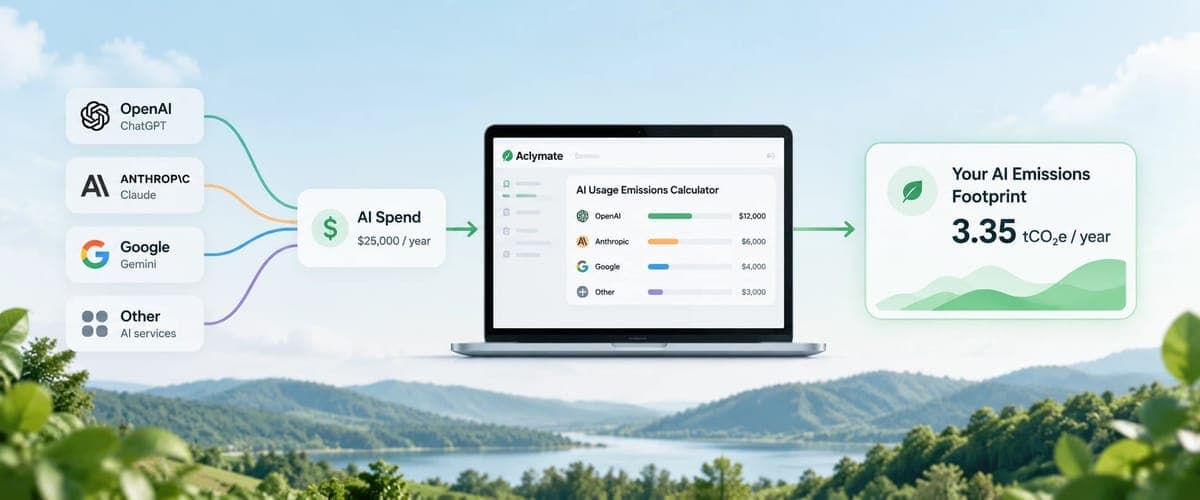
AI carbon emissions are becoming a new consideration for companies adopting ChatGPT, Claude, Gemini, Copilot and other artificial intelligence tools. Here’s how Aclymate estimates the carbon emissions from a company’s AI usage today—and how we expect the methodology to improve as AI providers release better usage and emissions data.
Read Article
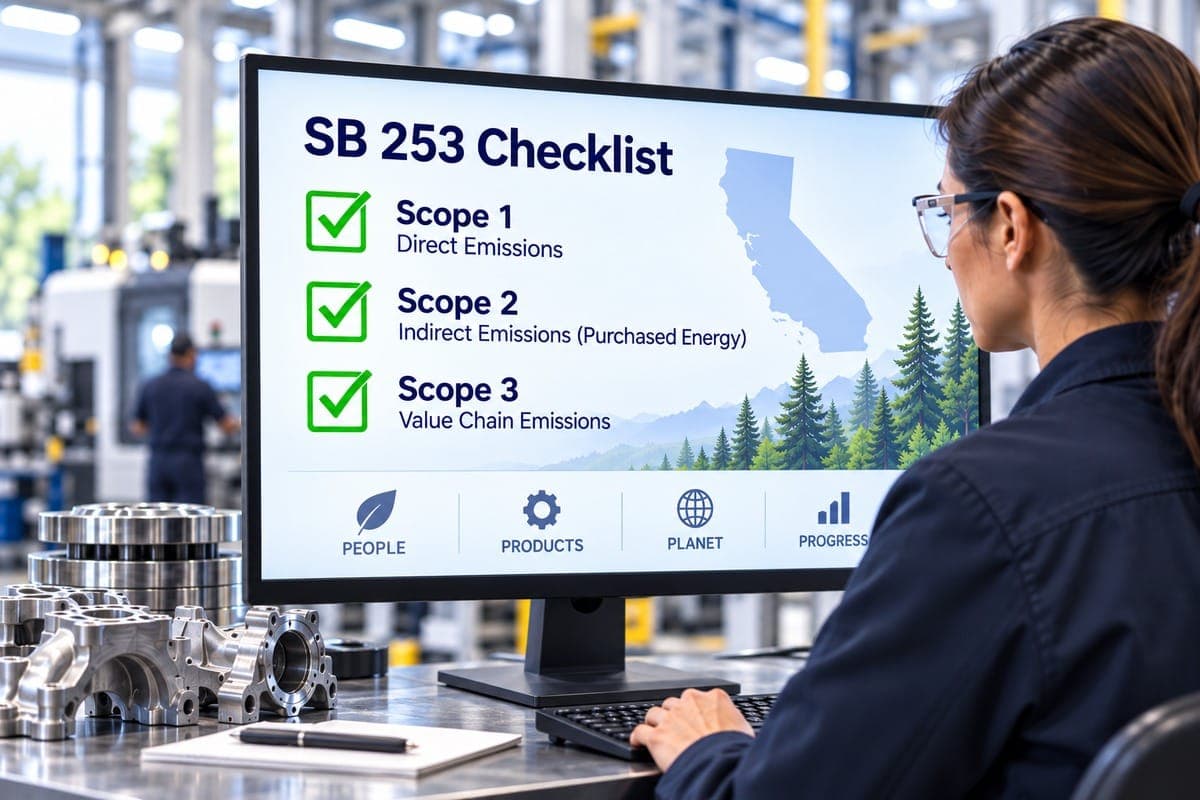
California SB 253 applies to companies over $1B in revenue — but its Scope 3 requirement reaches the automotive suppliers underneath them. What to expect and how to prepare.
Read Article
Talk with a Sustainability Expert, see a demo, or start free to put the Aclymate platform and experts to work for your team.