← Back to Insights
Josephina DiMillo
April 19, 2024
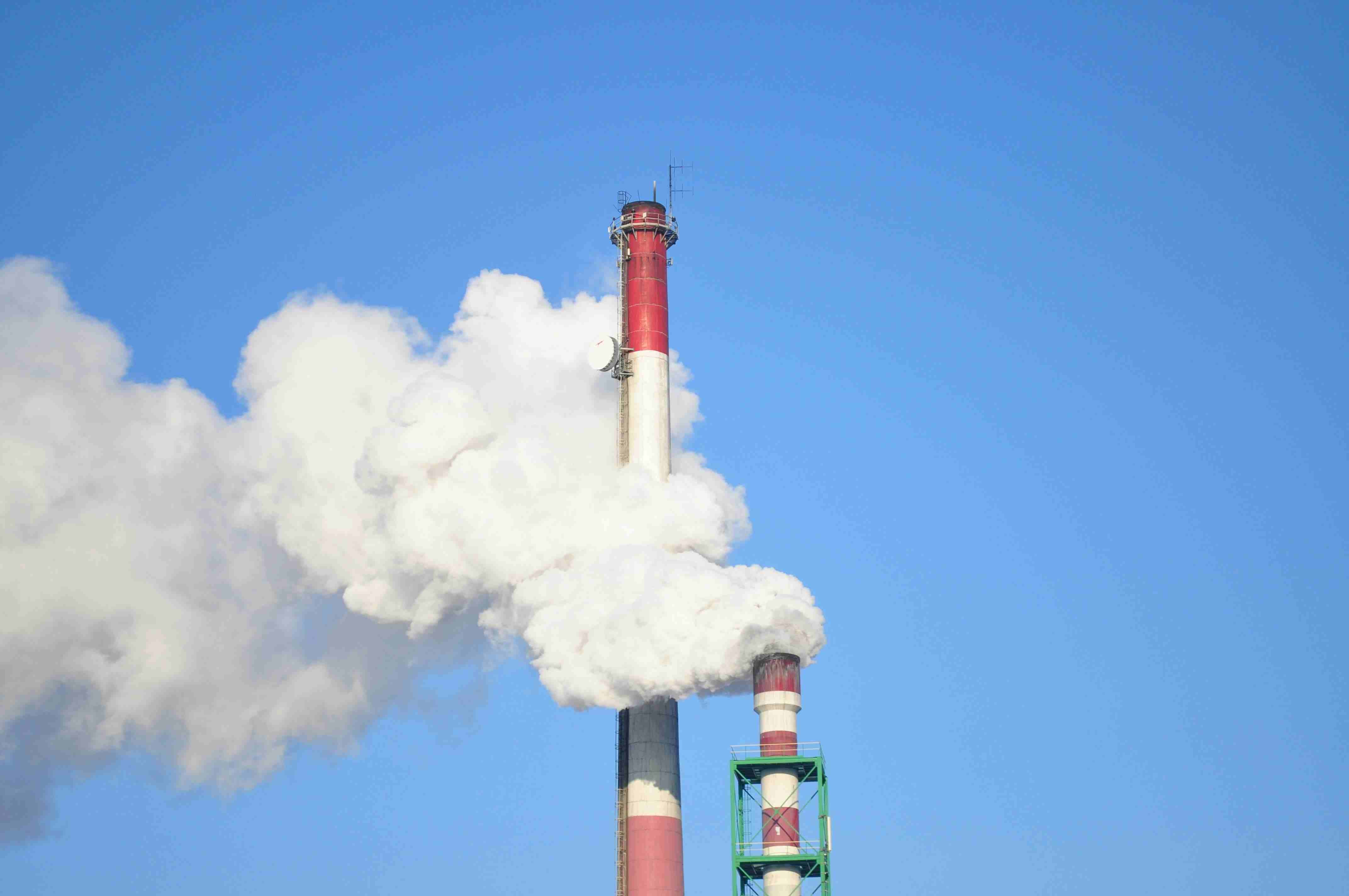
Environmental responsibility and sustainability are becoming increasingly important for both businesses and individuals. As the effects of climate change continue to rise, a larger emphasis is being placed on reducing greenhouse gas emissions. Emissions management, specifically within businesses, is incredibly important for a more sustainable future. Scope 1, 2, and 3 emissions play a crucial role in understanding and addressing our environmental impacts. Let’s dive deeper into greenhouse gas emissions and explore some examples of Scopes 1, 2, and 3.
When certain gases are released into the air, they trap heat and contribute to climate change. These are known as Greenhouse Gas emissions, and managing them is part of climate accounting. There are six main types of Greenhouse Gases, like methane and industrial gases, and they each have different effects on the climate. To simplify, they're all compared to carbon dioxide (CO2), so people often just refer to them all as "carbon" emissions.
Greenhouse Gases are broken down into three different categories, known as Scope 1, 2, and 3 emissions. The term “scope” refers to who is mainly responsible for creating climate pollution.
Scope 1 refers to the greenhouse gas emissions that your company is directly responsible for. These are typically the easiest emissions to measure and manage.
Here are some examples of Scope 1: Emissions from the fuel burned in company vehicles, leaks from company air conditioning, and the gas used to heat your office.
Scope 2 refers to greenhouse gas emissions that are indirectly produced by your company. There are many types of Scope 2-related emissions, but for the majority of people, these are the emissions produced by the electricity you consume. While these emissions occur off-site, they are still a result of your company's consumption habits.
Here are some examples of Scope 2: The electricity used in lighting or manufacturing that was purchased from an electric utility.
Scope 3 covers all the other indirect emissions from your company's entire supply chain. These emissions occur as a result of your company's activities but are not directly owned or controlled by your organization.
**Here are a few examples of Scope 3: **Business travel, employee commuting, downstream use of products, shipping of goods to/from a company, and investments.
Get Aclymate's practical sustainability content delivered weekly.

AI is creating new opportunities for businesses, but it also comes with an environmental cost. Carbon offsets can help address some of those emissions, but businesses need to understand what they are offsetting, how offsets work, and why measuring and reducing emissions should come first.
Read Article
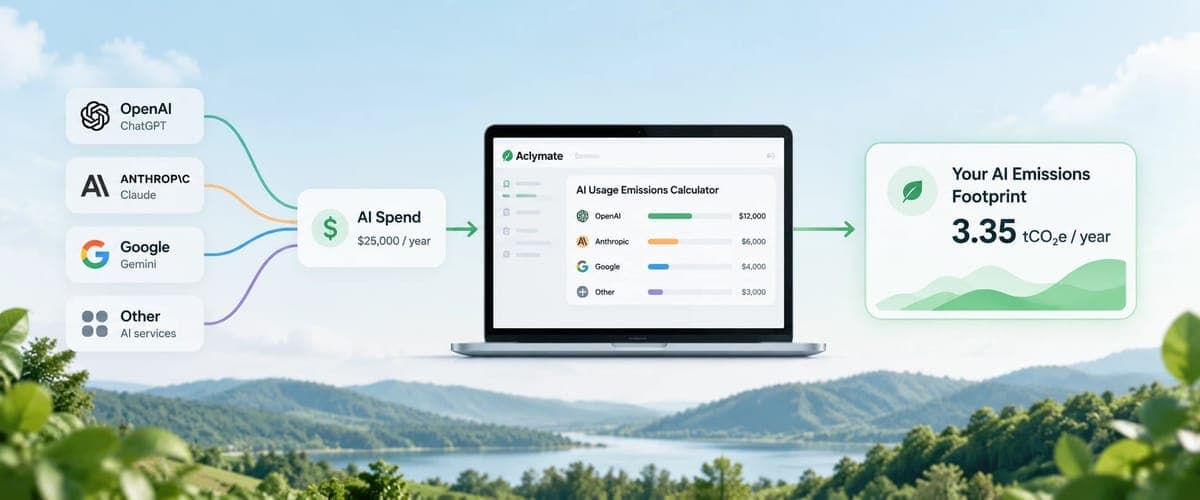
AI carbon emissions are becoming a new consideration for companies adopting ChatGPT, Claude, Gemini, Copilot and other artificial intelligence tools. Here’s how Aclymate estimates the carbon emissions from a company’s AI usage today—and how we expect the methodology to improve as AI providers release better usage and emissions data.
Read Article
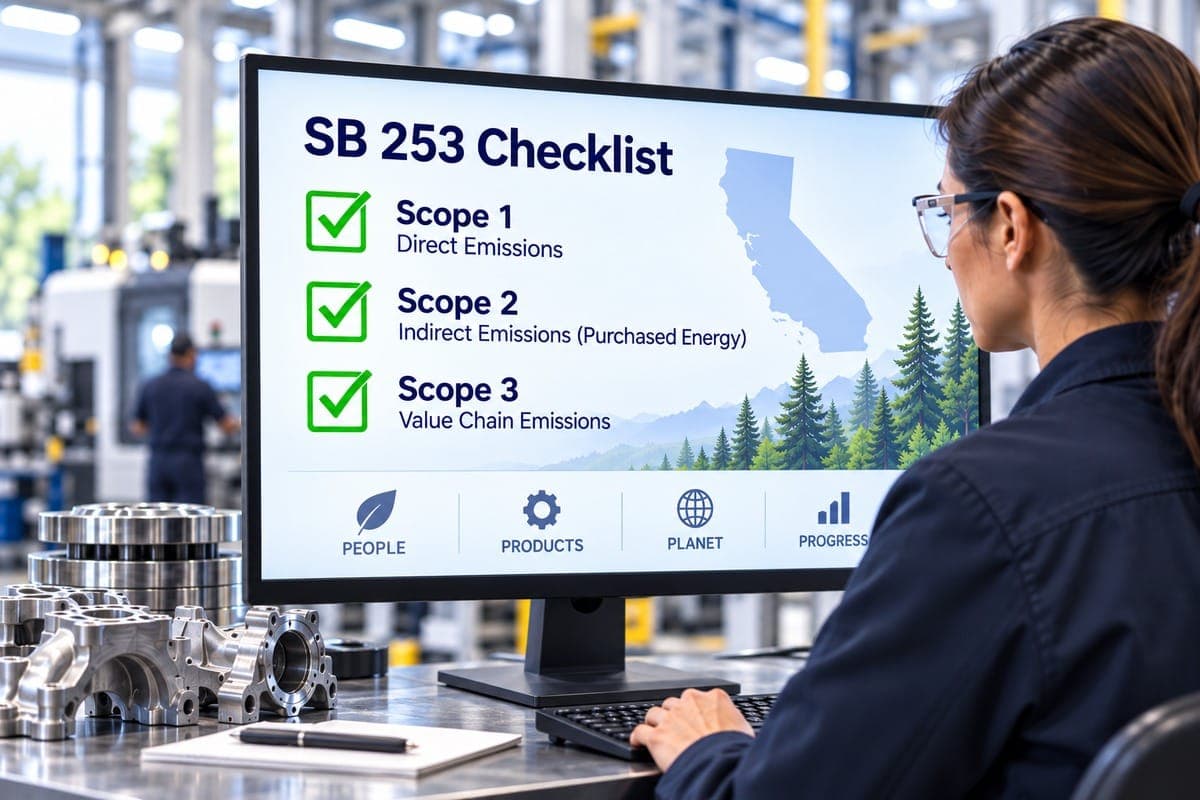
California SB 253 applies to companies over $1B in revenue — but its Scope 3 requirement reaches the automotive suppliers underneath them. What to expect and how to prepare.
Read Article
Talk with a Sustainability Expert, see a demo, or start free to put the Aclymate platform and experts to work for your team.