← Back to Insights
Christie Hao
December 2, 2024

When tackling your company's carbon footprint, understanding how emissions are calculated is foundational. The Greenhouse Gas Protocol provides the framework for measuring greenhouse gas emissions, including spend-based emissions—a critical tool for understanding and reducing environmental impact.
Spend-based emissions use financial data as a proxy to calculate carbon footprints. Organizations apply emissions factors to each dollar spent in given categories to estimate associated greenhouse gases. While less precise than activity-based data, spend-based emissions typically serve as the starting point for businesses establishing baseline emissions inventories.
Spend-based emissions are particularly important for assessing Scope 3 emissions, which cover indirect emissions throughout your value chain. Scope 3 encompasses 15 categories, from purchased goods and services to employee commuting and business travel. When granular data is unavailable, spend-based calculations become the default method for these categories.
According to McKinsey research, "98% of emissions are accounted for by Scope 3 emissions in the retail industry." Ignoring Scope 3 risks overlooking your largest emissions contributor.
Spend-based accounting relies on broad averages, translating dollars spent in specific categories into emissions estimates. However, this approach doesn't account for supplier efficiency, regional differences, or material sourcing specifics. The result is low-resolution data—useful for direction but lacking precision.
Impact potential lies in identifying material contributors—the biggest spend categories driving emissions—and focusing reduction efforts there. Key areas include:
Business Travel Reevaluate travel policies by encouraging remote meetings, switching to efficient transportation like trains or carpools, and implementing carbon budgets alongside traditional expense limits.
Purchased Goods and Services Assess your supply chain by shifting toward vendors with robust sustainability practices, such as those offering carbon-neutral products or using circular manufacturing processes.
Utilities Align facility upgrades with emission reductions through energy-efficient appliances and heating/cooling system retrofits, which simultaneously reduce long-term operational costs.
Once your baseline is established, refine data quality by collaborating with suppliers, requesting detailed reporting, and gathering activity-based information where possible. This higher-resolution data enables more targeted and effective emissions reductions.
Spend-based emissions represent the starting point, not the endpoint, for climate-conscious business strategy. With proper focus, companies can transform insights into actions that meaningfully reduce emissions and advance sustainability.
Get Aclymate's practical sustainability content delivered weekly.

AI is creating new opportunities for businesses, but it also comes with an environmental cost. Carbon offsets can help address some of those emissions, but businesses need to understand what they are offsetting, how offsets work, and why measuring and reducing emissions should come first.
Read Article
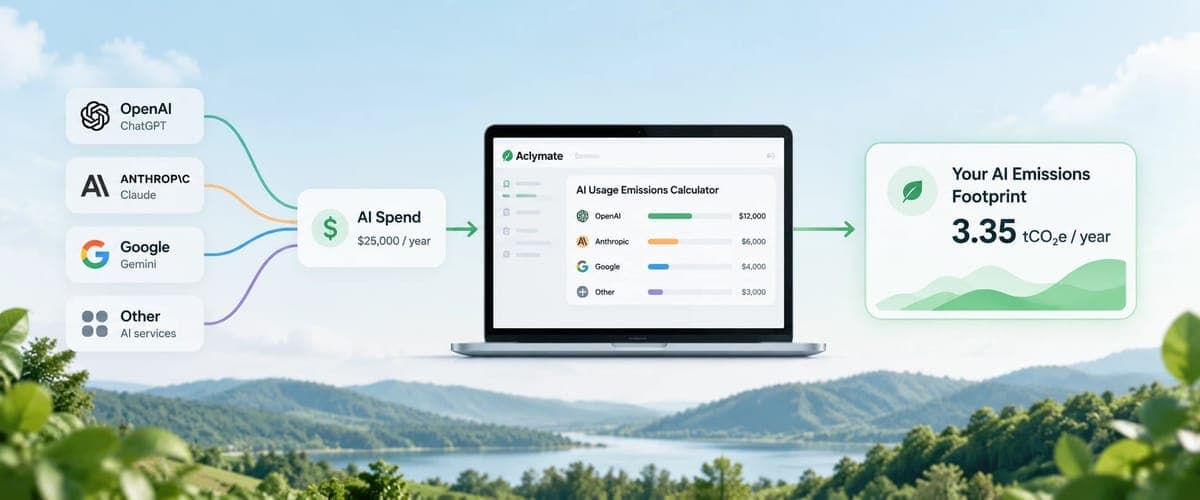
AI carbon emissions are becoming a new consideration for companies adopting ChatGPT, Claude, Gemini, Copilot and other artificial intelligence tools. Here’s how Aclymate estimates the carbon emissions from a company’s AI usage today—and how we expect the methodology to improve as AI providers release better usage and emissions data.
Read Article
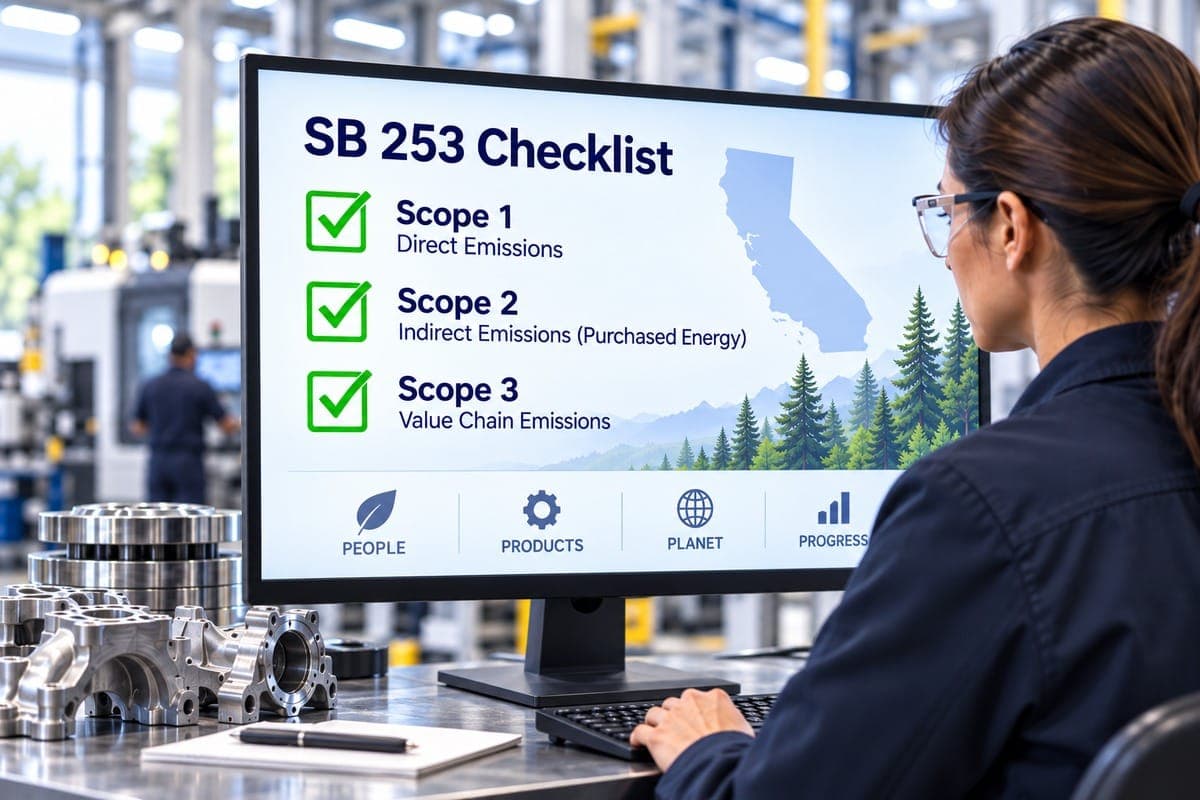
California SB 253 applies to companies over $1B in revenue — but its Scope 3 requirement reaches the automotive suppliers underneath them. What to expect and how to prepare.
Read Article
Talk with a Sustainability Expert, see a demo, or start free to put the Aclymate platform and experts to work for your team.