← Back to Insights
Josephina DiMillo
January 10, 2025

As the New Year begins, it's an ideal moment for organizations to consider their environmental footprint and commit to sustainability goals. Companies have significant influence in creating a more sustainable world.
Here are climate-focused resolutions for both individuals and their organizations in 2025:
While market conditions remain beyond your control, confirming adequate coverage is essential. Climate volatility is reshaping insurance availability and pricing. Environmental challenges like severe weather, temperature extremes, and coastal erosion threaten operational continuity. Proactive risk management prepares organizations for climate-related disruptions.
Begin by examining existing coverage to identify potential vulnerabilities. Consider property protection against weather-related losses and employee safeguards against environmental health hazards. Closing coverage gaps strengthens organizational resilience and ensures protection aligns with current and emerging threats.
Sustainability accelerates through partnership. Embracing diverse viewpoints and cooperative relationships drives meaningful environmental progress. Remaining receptive to shifting circumstances creates opportunities for unexpected collaboration.
Several approaches strengthen business climate partnerships: expanding networks by working with climate-focused institutions and communities; embracing unconventional partners like renewable-focused energy companies or industry competitors pursuing waste reduction; and engaging climate advocates including nonprofits, research institutions, and local organizations offering innovative approaches.
Understanding impact precedes meaningful change. Commit to quantifying, diminishing, and compensating for organizational emissions:
Small actions matter. Addressing organizational carbon impact strengthens brand perception, attracts environmentally conscious stakeholders, and builds customer loyalty.
The imperative for environmental action intensifies. Weather volatility, stakeholder priorities, and regulatory evolution make sustainability imperative. These resolutions strengthen organizational resilience, spark innovation, and demonstrate environmental leadership.
Sustainability transcends ethics—it's economically strategic. Consumers, financial institutions, and team members increasingly prioritize environmentally responsible organizations. Demonstrating commitment positions your business as an industry frontrunner.
Examining coverage, building partnerships, and addressing emissions represent transformative 2025 commitments. Through coordinated effort, 2025 becomes a turning point for meaningful environmental advancement.
Get Aclymate's practical sustainability content delivered weekly.

AI is creating new opportunities for businesses, but it also comes with an environmental cost. Carbon offsets can help address some of those emissions, but businesses need to understand what they are offsetting, how offsets work, and why measuring and reducing emissions should come first.
Read Article
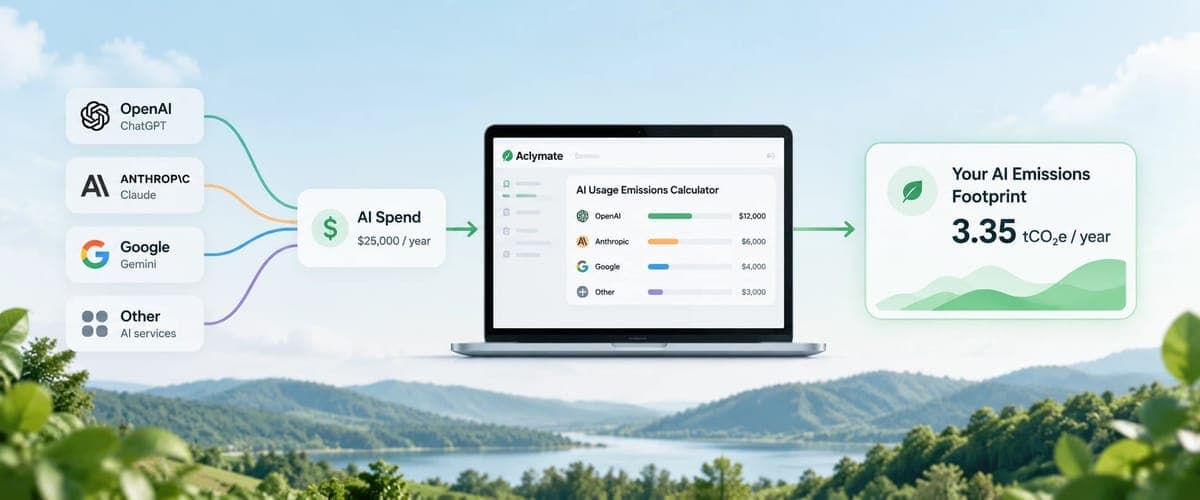
AI carbon emissions are becoming a new consideration for companies adopting ChatGPT, Claude, Gemini, Copilot and other artificial intelligence tools. Here’s how Aclymate estimates the carbon emissions from a company’s AI usage today—and how we expect the methodology to improve as AI providers release better usage and emissions data.
Read Article

California SB 253 applies to companies over $1B in revenue — but its Scope 3 requirement reaches the automotive suppliers underneath them. What to expect and how to prepare.
Read Article
Talk with a Sustainability Expert, see a demo, or start free to put the Aclymate platform and experts to work for your team.