← Back to Insights
Ariel Le
February 14, 2025
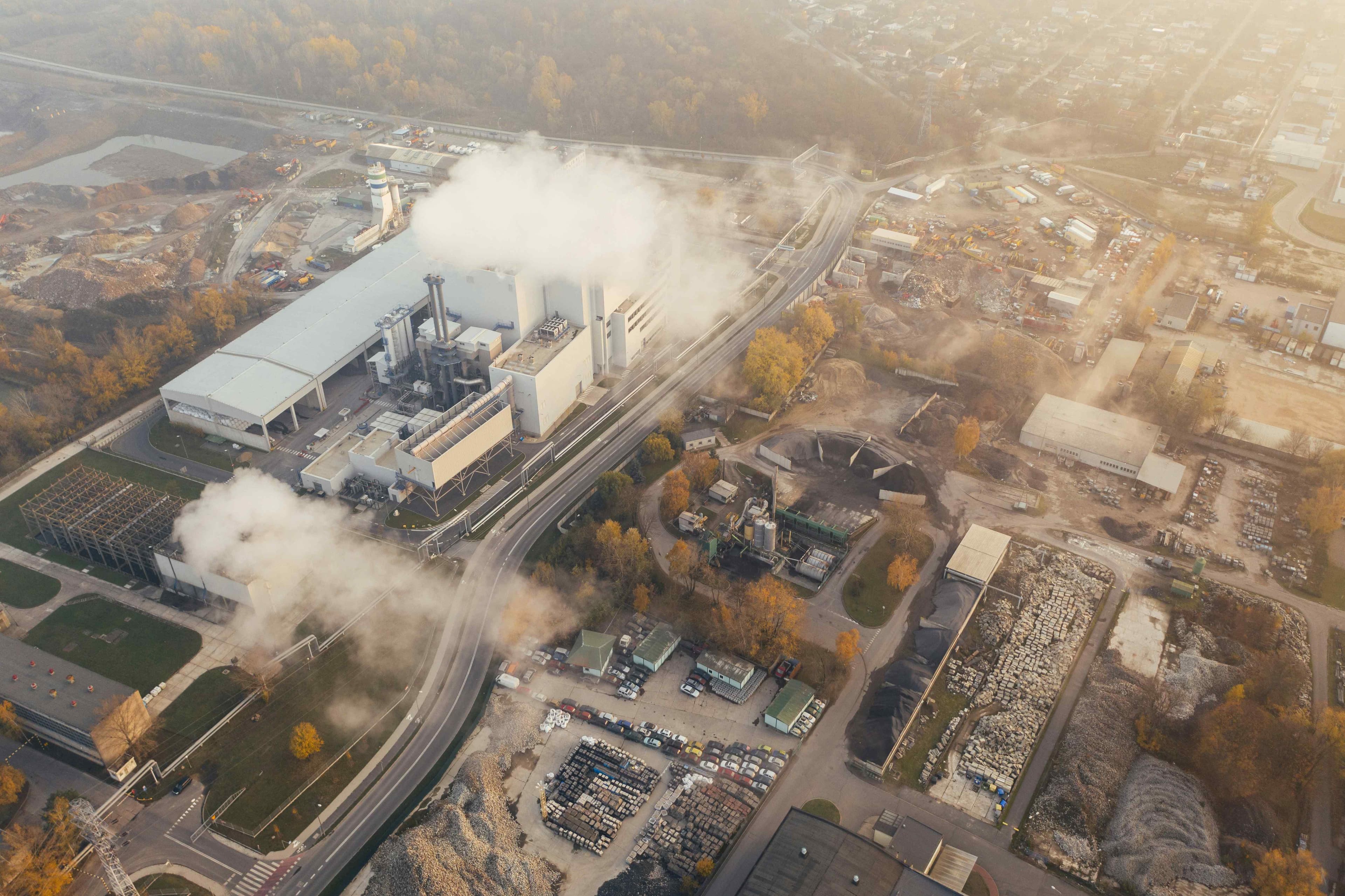
When evaluating a company's environmental impact, identifying emission sources is essential. The Greenhouse Gas (GHG) Protocol establishes accounting standards enabling organizations to track and report emissions across three categories: Scope 1, Scope 2, and Scope 3.
Direct emissions originating from sources owned or controlled by the organization fall under this category. Companies typically prioritize these first due to their straightforward measurement and high impact potential.
Four subcategories encompass Scope 1:
Indirect emissions result from purchasing electricity, steam, heat, or cooling. Though physically generated elsewhere, they're included because they stem from organizational energy consumption.
The broadest category encompasses indirect emissions throughout the entire value chain—upstream production and downstream product use. These prove most challenging to quantify since data often requires estimation.
Upstream (15 total categories):
Downstream:
After data collection, organizations can utilize carbon calculators or engage professionals to analyze results. Companies can then establish reduction targets and implement emissions-reduction strategies. Platforms like Aclymate simplify the entire process, from data collection through reporting.
Get Aclymate's practical sustainability content delivered weekly.

AI is creating new opportunities for businesses, but it also comes with an environmental cost. Carbon offsets can help address some of those emissions, but businesses need to understand what they are offsetting, how offsets work, and why measuring and reducing emissions should come first.
Read Article
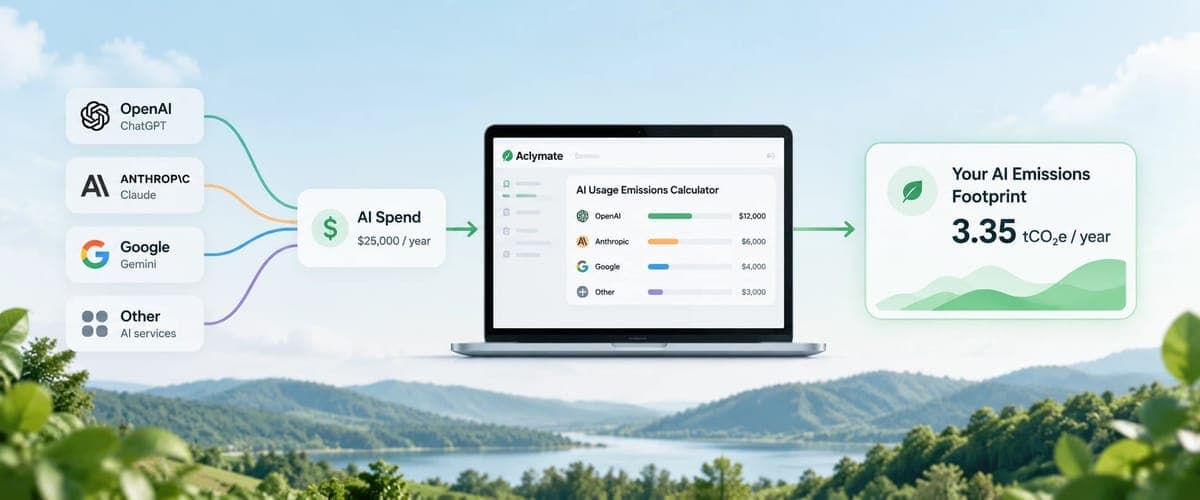
AI carbon emissions are becoming a new consideration for companies adopting ChatGPT, Claude, Gemini, Copilot and other artificial intelligence tools. Here’s how Aclymate estimates the carbon emissions from a company’s AI usage today—and how we expect the methodology to improve as AI providers release better usage and emissions data.
Read Article
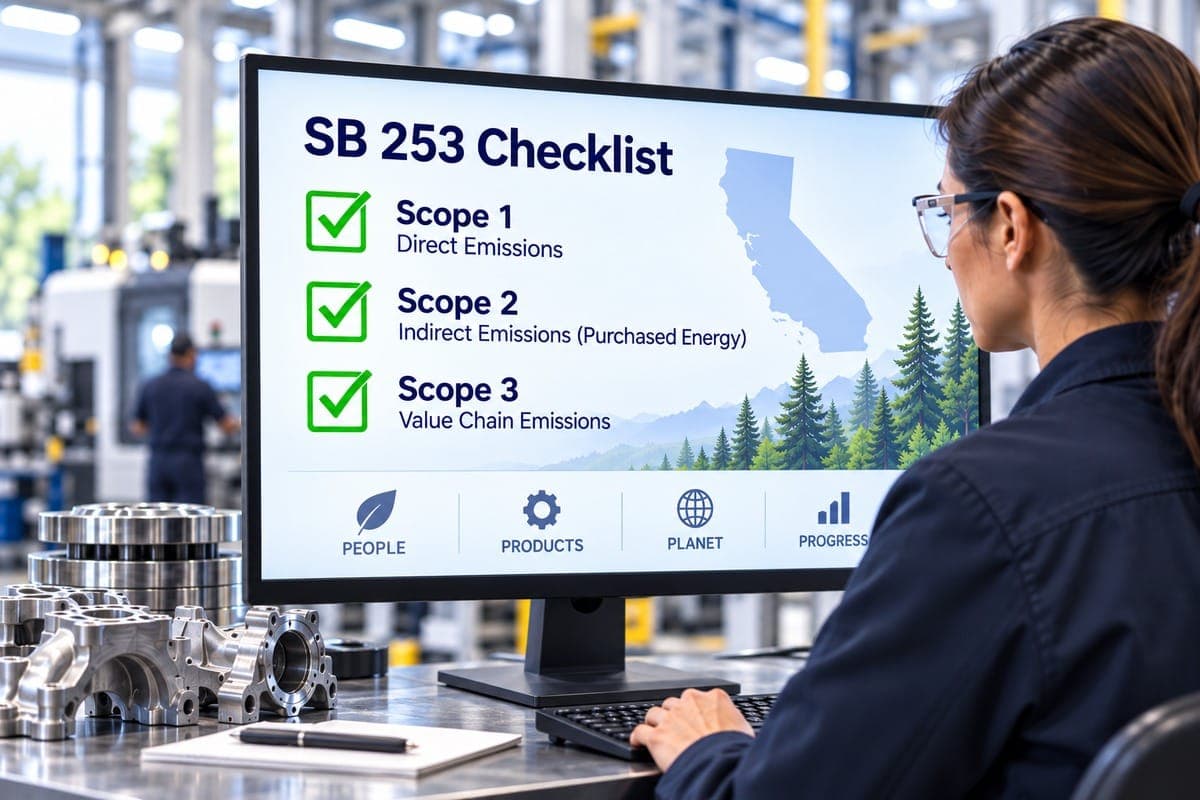
California SB 253 applies to companies over $1B in revenue — but its Scope 3 requirement reaches the automotive suppliers underneath them. What to expect and how to prepare.
Read Article
Talk with a Sustainability Expert, see a demo, or start free to put the Aclymate platform and experts to work for your team.