← Back to Insights
Karenna Bryan
March 8, 2024

The cosmetics industry has dominated the world for centuries. As of 2023, it was worth $528.6 billion and growing daily.
Its modern-day dominance is led by companies and the influencers they partner with working to create awareness and affinity for their products.
If you own a cosmetics company or want to start one, you're likely already aware of the waste and unsustainable practices that are unfortunate staples of the industry. For example, companies that use excessive packaging that can't be recyclable or ingredients that have the potential to hurt both the consumer and the environment.
To start making sustainability work for your brand, you'll find some tips and tricks below. Creating a goal or benchmark of where you want your company to be can be a great first step. Keep reading to learn about steps to take to help your cosmetics business become more sustainable.
The ingredients used in cosmetics can be the most impactful on the environment. One way to create sustainable cosmetics is to focus on biodegradability. According to Science Learning Hub, biodegradability is "a 'biodegradable' object that will break down quickly and safely into harmless compounds by using the action of microorganisms." Another example is focusing on natural ingredients. Using natural ingredients can benefit both the consumers and the company. Removing ingredients such as BHA, BHT, aluminum, DBP, or coal tar dyes is a step towards sustainability and away from potential pollution as well. Palm oil is another popular ingredient for many products, but should be avoided due to its negative environmental impacts, such as deforestation. Most importantly, sourcing domestic ingredients as much as possible can have the biggest impact, especially on reducing emissions from transportation of overseas sourcing. Switching to sustainable ingredients helps both humans and the planet.
In the cosmetics industry, packaging accounts for 70% of the industry's waste. Packaging plays a key role in the amount of plastic waste that comes from a large proportion of the industry. While most packaging can be recycled, the responsibility is then on consumers who must remember to recycle. The use of various packaging materials has changed over time, however; for example, just a few years ago, extravagant packaging and large attention-grabbing PR packages sent to influencers were once popular, but many brands have chosen to limit this in recent years. This is largely because consumers' views have changed, and they value sustainability more. Note that when it comes to packaging, the key to remember is that less is more. Shipping materials are another consideration, and minimizing this packaging can also make a positive impact. Another way to reduce waste is to use refillable packaging. For example, Rose INC has a blush that users can easily remove and replace when the product runs out.
Get Aclymate's practical sustainability content delivered weekly.

AI is creating new opportunities for businesses, but it also comes with an environmental cost. Carbon offsets can help address some of those emissions, but businesses need to understand what they are offsetting, how offsets work, and why measuring and reducing emissions should come first.
Read Article
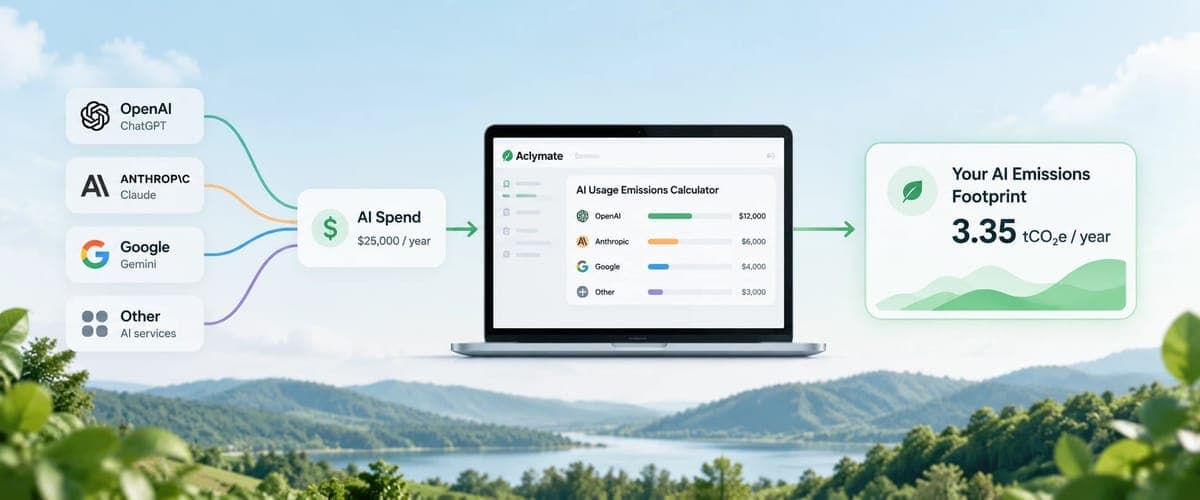
AI carbon emissions are becoming a new consideration for companies adopting ChatGPT, Claude, Gemini, Copilot and other artificial intelligence tools. Here’s how Aclymate estimates the carbon emissions from a company’s AI usage today—and how we expect the methodology to improve as AI providers release better usage and emissions data.
Read Article

California SB 253 applies to companies over $1B in revenue — but its Scope 3 requirement reaches the automotive suppliers underneath them. What to expect and how to prepare.
Read Article
Talk with a Sustainability Expert, see a demo, or start free to put the Aclymate platform and experts to work for your team.